The manufacturer you choose will determine the quality of your products, the reliability of your supply chain, and ultimately the profitability of your business. Yet many importers approach manufacturer selection with less rigor than they would apply to hiring a key employee. They collect a few quotations, check that the supplier has CE certification, and place an order — often discovering the limitations of their due diligence process only after something goes wrong.
This guide presents 10 essential questions to ask any kids electric ride-on car manufacturer before placing an order. These questions are designed to reveal not just whether a manufacturer can produce the product you want, but whether they are the kind of long-term partner who will help your business grow.
Question 1: Can You Provide Current Test Reports for the Specific Models I Want?
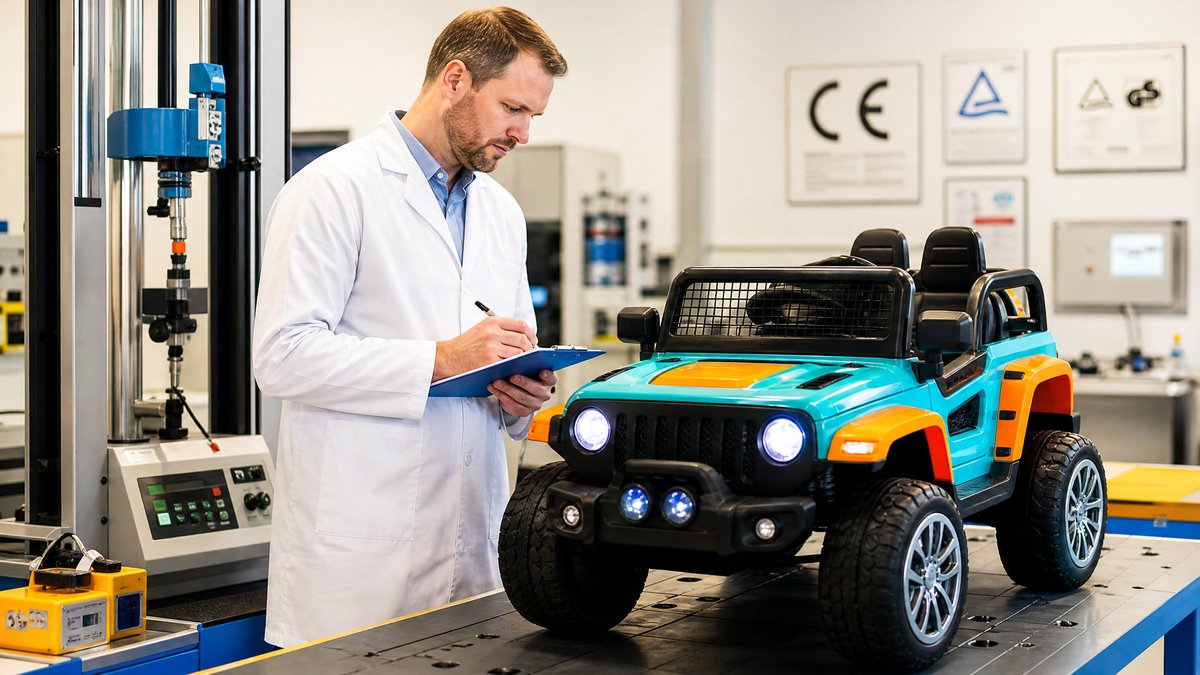
This is the most important question, and the answer will immediately separate serious manufacturers from those who are not ready for your market. The correct answer is: yes, and here are the reports. The reports should be model-specific (not brand-wide), issued by an accredited third-party laboratory, dated within the last 3 years, and covering the specific standards required for your target market (CE/EN71 for Europe, ASTM F963 for the US).
A manufacturer who cannot provide current test reports for specific models, or who provides reports that cover a different model number than the one you are ordering, is not ready to supply your market. Do not proceed until this is resolved.
Question 2: What Is Your Annual Production Capacity?
Understanding production capacity helps you assess whether a manufacturer can scale with your business. A factory producing 50,000 units per year is appropriate for a buyer placing 500-unit orders; it may struggle to prioritize a 5,000-unit order from a new customer. A factory producing 500,000+ units annually has the infrastructure to handle large orders but may not give adequate attention to smaller buyers.
Ask not just about total capacity but about current utilization. A factory running at 95% capacity during your peak season cannot accommodate rush orders or production changes without disrupting other customers' orders.
Question 3: What Is Your Standard Production Lead Time?
For stock products (models already in production), standard lead time should be 15–25 days. For OEM orders requiring custom tooling or significant modifications, lead time is typically 45–90 days for the first production run. Be skeptical of manufacturers who quote lead times significantly shorter than these benchmarks — they may be overpromising, or they may be shipping products that were not produced specifically for your order.
KidsRideCar has supplied wholesale buyers in 60+ countries since 2009. Request our factory profile and certification documents.
Request Factory Profile →Question 4: What Quality Control Processes Do You Have in Place?
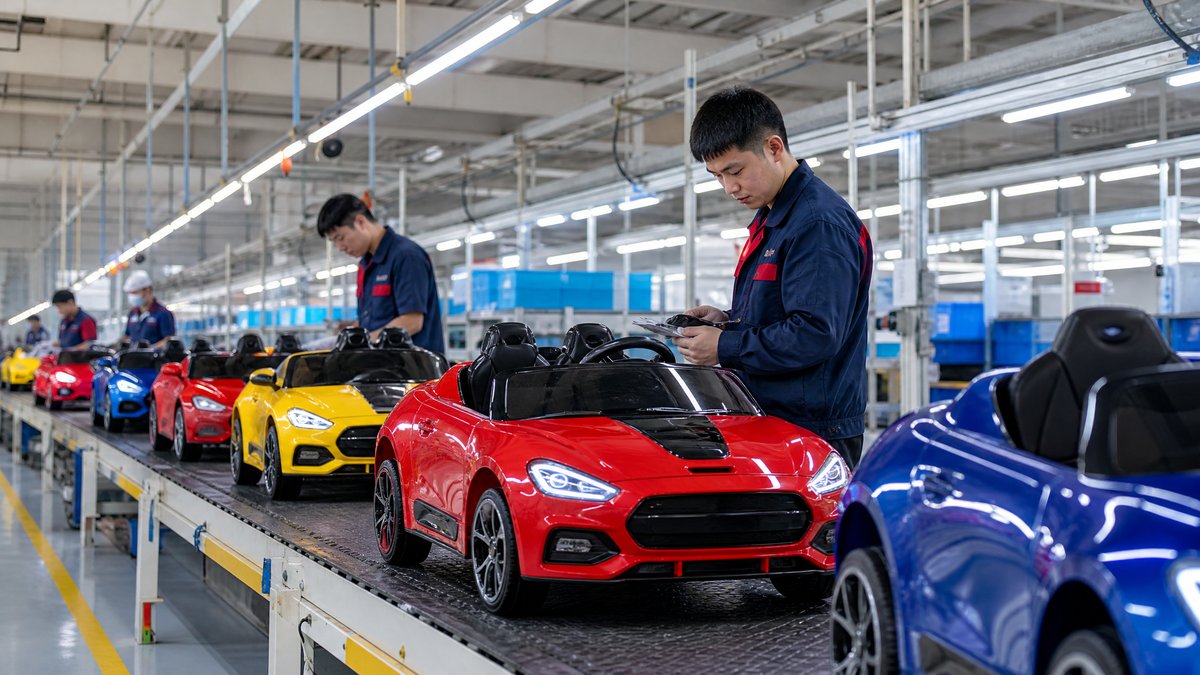
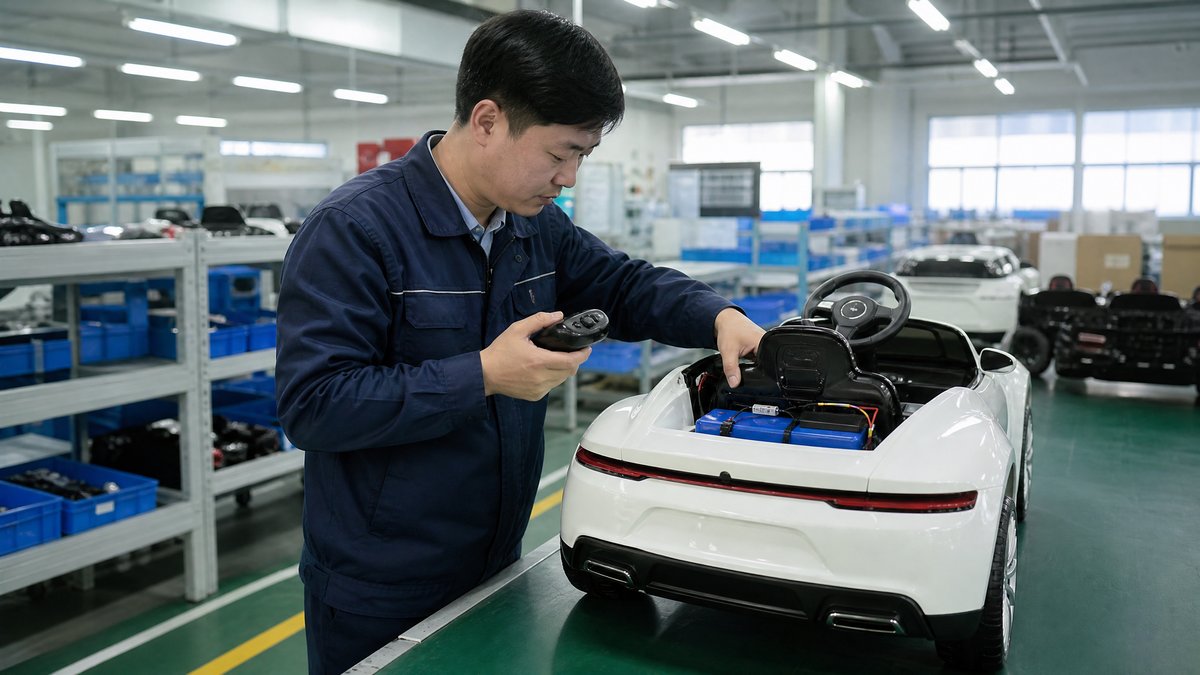
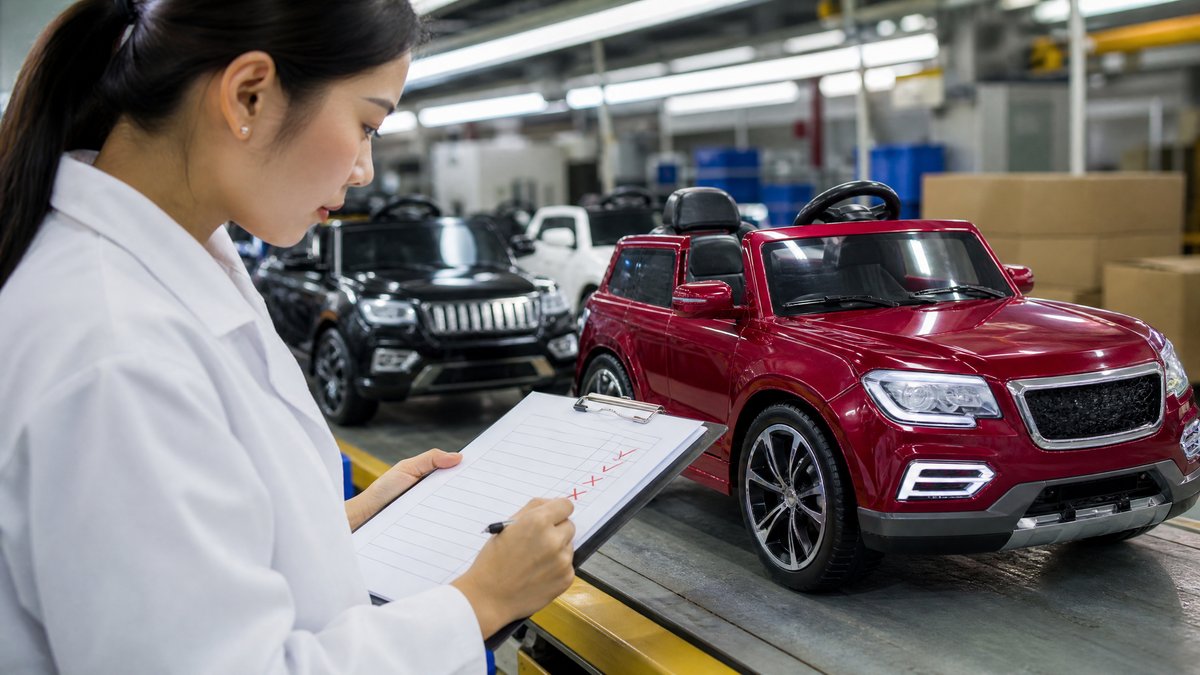
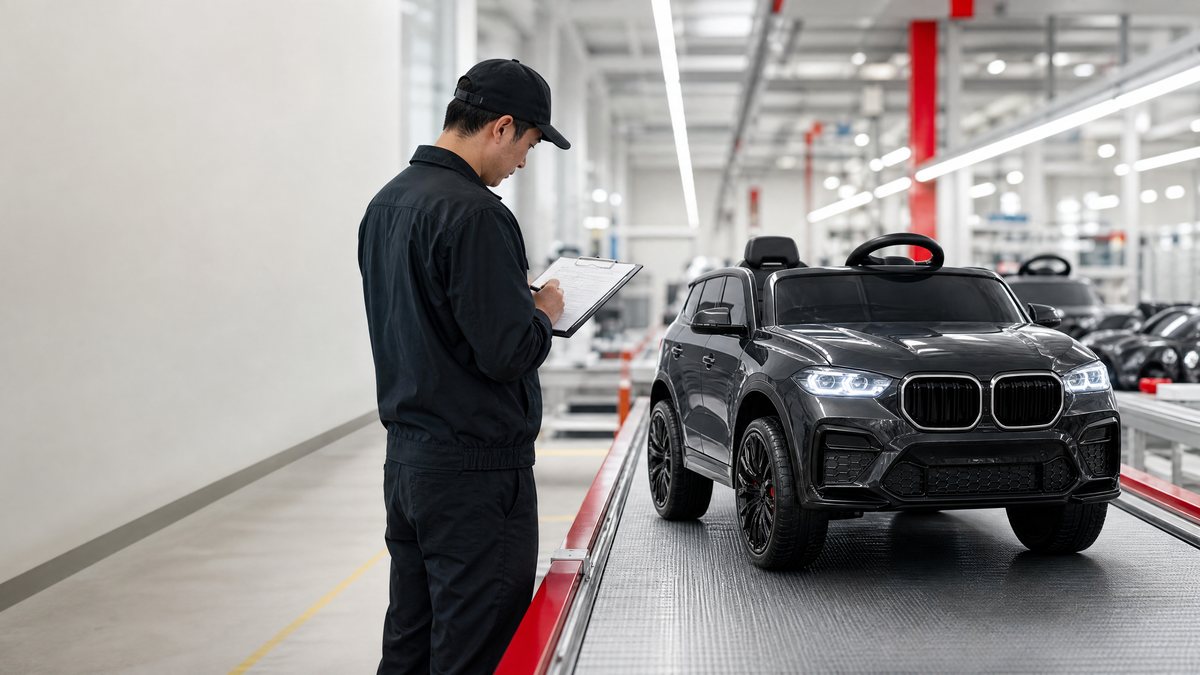
A credible answer to this question should describe specific processes, not vague commitments. Look for: incoming material inspection (checking components from suppliers), in-process quality checks at key production stages, finished product inspection before packaging, and final pre-shipment inspection. Ask whether the factory has an ISO 9001 quality management system certification — this indicates that quality processes are documented and audited.
Question 5: Can You Provide References from Existing International Buyers?
A manufacturer with a track record of successful international supply relationships should be willing to provide references. These references do not need to be direct competitors — they can be buyers in different markets or different product categories. Contact the references and ask specific questions: Was the product quality consistent with samples? Were delivery timelines met? How did the manufacturer respond when problems occurred?
Question 6: What Are Your OEM/ODM Capabilities?
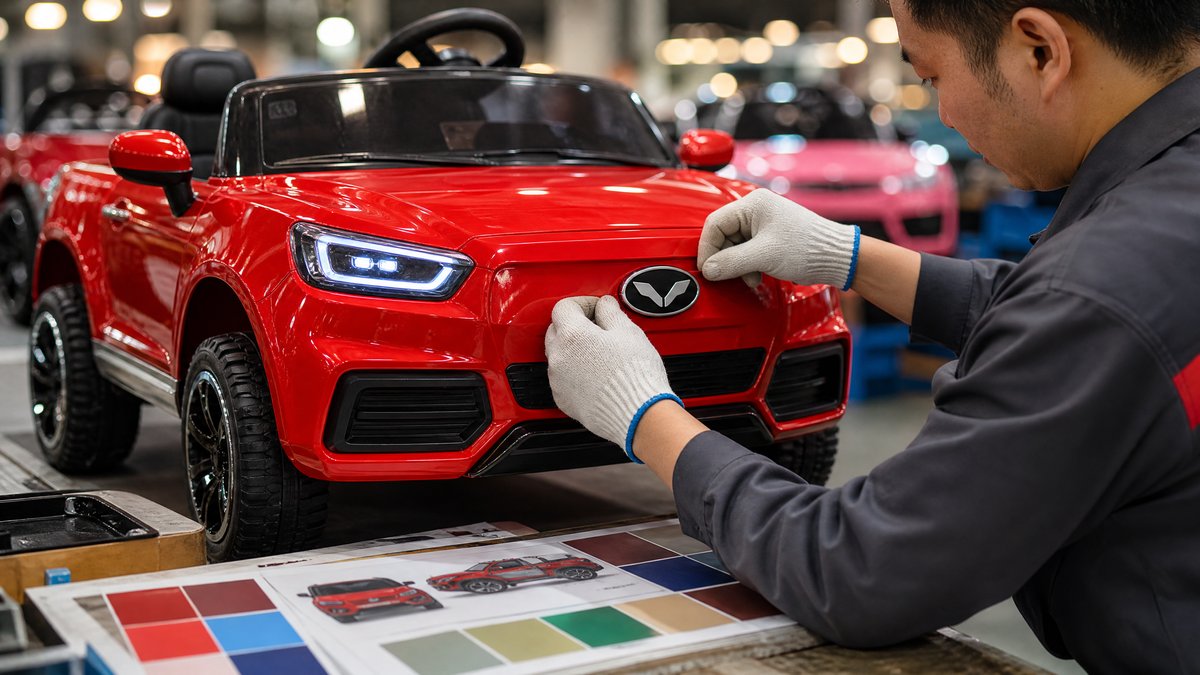
Even if you are starting with stock products, understanding a manufacturer's OEM capabilities is important for long-term planning. Ask about minimum order quantities for OEM orders, the cost and lead time for custom tooling, the range of customization options (color, branding, packaging, feature modifications), and whether the manufacturer has experience with the specific type of customization you might want in the future.
Question 7: What Happens If Products Are Found to Be Non-Conforming?
How a manufacturer answers this question reveals their attitude toward quality accountability. A good manufacturer will have a clear process: they will request documentation of the defects, investigate the root cause, and offer a remedy — replacement units, credit, or repair — depending on the nature and extent of the non-conformance. Be wary of manufacturers who deflect responsibility or make it difficult to discuss quality issues.
Question 8: What Spare Parts Are Available and at What Cost?
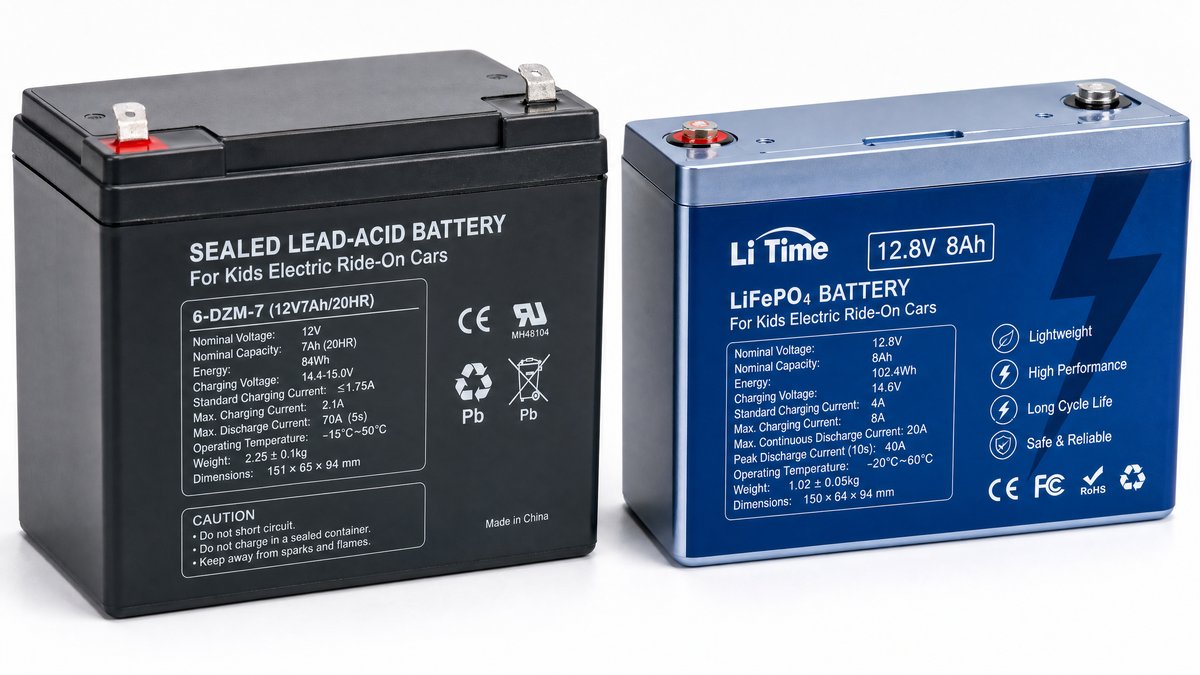
Kids electric ride-on cars have components that will eventually need replacement: batteries, motors, remote controls, chargers, and body panels. A manufacturer who cannot supply spare parts is forcing you to either absorb warranty costs or disappoint customers. Ask specifically about battery availability (the most commonly replaced component), pricing, and minimum order quantities for spare parts.
Question 9: What Are Your Payment Terms and Minimum Order Quantities?
Standard payment terms for established supplier relationships are 30% deposit before production and 70% balance before shipment or against Bill of Lading. For new relationships, some manufacturers require 50% deposit. MOQs for stock products are typically 50–100 units per model; for OEM orders, 200–500 units is common. Be cautious of manufacturers with unusually low MOQs (under 20 units) — they may be trading companies rather than factories, or they may be selling products made for other customers.
Question 10: Can I Visit Your Factory?
A manufacturer who welcomes factory visits is demonstrating confidence in their operations. A manufacturer who discourages or refuses factory visits is raising a red flag. Even if you cannot visit in person, ask whether the manufacturer will facilitate a third-party factory audit by an inspection company such as SGS, Bureau Veritas, or QIMA. The cost of an audit ($300–$500) is trivial compared to the cost of a failed order.
Quick Reference: 10 Questions and What to Look For
| Question | Green Flag | Red Flag |
|---|---|---|
| 1. Test reports | Model-specific, current, from accredited lab | Brand-wide, expired, or unavailable |
| 2. Production capacity | Matches your order volume with headroom | At full capacity or vague answer |
| 3. Lead time | 15–25 days for stock, 45–90 for OEM | Unrealistically short or vague |
| 4. Quality control | Specific processes, ISO 9001 certified | Vague commitments, no documentation |
| 5. References | Willing to provide, references respond positively | Refuses or references unresponsive |
| 6. OEM capabilities | Clear process, documented MOQs and costs | No OEM experience or vague answers |
| 7. Non-conformance policy | Clear process, accepts responsibility | Deflects responsibility |
| 8. Spare parts | Available, priced, documented | Not available or no clear process |
| 9. Payment terms | Standard 30/70, reasonable MOQs | Unusual terms or very low MOQs |
| 10. Factory visits | Welcomes visits and audits | Discourages or refuses |
Frequently Asked Questions
How long should the manufacturer selection process take?
A thorough manufacturer selection process typically takes 4–8 weeks: 1–2 weeks to identify and shortlist candidates, 1–2 weeks to conduct due diligence (document review, reference checks), 1–2 weeks to request and evaluate samples, and 1–2 weeks to negotiate terms and finalize the purchase agreement. Rushing this process to save time almost always costs more time and money later.
Is it better to work with one manufacturer or multiple?
For most buyers, starting with a single primary manufacturer and building a deep relationship is more effective than spreading orders across multiple suppliers. A single manufacturer who knows your business, understands your quality standards, and values your account will prioritize your orders and be more responsive to problems. Diversifying to a second manufacturer makes sense once your volume is large enough that supply chain risk justifies the additional management complexity.
What is the difference between a factory and a trading company?
A factory manufactures the products themselves; a trading company sources products from factories and resells them. Trading companies are not inherently bad — some have strong quality control processes and add genuine value — but they add a cost layer and have less control over production quality. For buyers who want direct factory relationships, lower prices, and OEM capabilities, working directly with a factory is preferable.
Choosing the right manufacturing partner is the single most important decision in building a successful kids electric ride-on car import business. The 10 questions in this guide are designed to give you the information you need to make that decision with confidence. A manufacturer who answers all 10 questions clearly and positively is a manufacturer worth working with. One who struggles to answer basic questions about certifications, quality control, or references is telling you something important about how they will perform when your order is on the production line.
Official references
Explore these external resources for current regulatory and trade guidance. Confirm requirements with the relevant authority before placing an order.
Ready to Start?
Factory-Direct · CE & ASTM Certified · MOQ from 50 Units
Our export team works with buyers in 60+ countries. Get a quote within 24 hours.
China's leading kids electric ride-on car manufacturer. 500,000+ units shipped annually to 60+ countries. CE, ASTM & EN71 certified.