When maintaining electric ride-on vehicles for children, commercial rental fleets, or retail inventories, encountering unexpected mechanical or electrical behaviors is common. One of the most frequently reported issues by end-users, parents, and commercial operators is when a ride-on car refuses to drive straight and instead begins spinning continuously in circles. This rotational malfunction can be alarming for young drivers and frustrating for adults attempting to diagnose the root cause. Understanding why this phenomenon occurs requires a systematic, safety-first approach to troubleshooting modern dual-motor and multi-gear toy vehicle architectures.
For B2B distributors, retail buyers, fleet operators, and conscientious parents, having a structured diagnostic framework ensures minor operational glitches are resolved safely and efficiently without compromising vehicle integrity or safety certifications. Electric ride-on cars are sophisticated miniature electric vehicles equipped with specialized gearboxes, electronic control units (ECUs), 2.4G remote receivers, and independent driving mechanisms. When power delivery becomes asymmetrical between left and right drive wheels, rotational torque imbalances occur, resulting in circular motion. This troubleshooting guide explores mechanical, electrical, and remote-control factors contributing to circular spinning, outlines safe inspection protocols, and establishes clear boundaries for professional intervention.
Before attempting any diagnostic evaluation, adult supervision and adherence to the manufacturer's specific user manual are absolute prerequisites. Under no circumstances should operators attempt to dismantle internal motor housings, probe live electrical circuits, measure voltage with multimeters, or bypass factory protection mechanisms. If any unusual odors, smoke, unusual heat, exposed wiring, damaged charging components, or persistent mechanical failures are observed, the vehicle must be immediately powered down, disconnected from charging sources, kept away from children, and referred to qualified technical personnel or the manufacturer. Request a wholesale quote for bulk inquiries, replacement parts guidance, or commercial fleet support.
Understanding Dual-Motor Drive Systems and Torque Imbalance
To effectively resolve a ride-on car that spins in circles, one must first understand fundamental propulsion mechanics of modern children's electric vehicles. The vast majority of contemporary two-seater and large single-seater ride-on cars utilize a dual-motor rear-wheel-drive configuration. In this setup, each rear wheel is independently driven by its own dedicated 12V or 24V electric DC motor housed within a sealed plastic gearbox assembly. Power is distributed from the central electronic control unit (ECU) simultaneously to both motors, allowing the vehicle to move forward and backward in a synchronized manner.
Under ideal operating conditions, both motors receive identical electrical current and rotate at equivalent revolutions per minute (RPM). However, when a ride-on car spins in circles, it is an unmistakable physical indicator of asymmetrical propulsion or locked steering geometry. Specifically, if one rear motor receives power while the opposite motor remains stationary, or if one wheel rotates in reverse while the other rotates forward, the vehicle will pivot around the stationary or counter-rotating wheel. Similarly, if a front steering linkage is jammed rigidly to one extreme angle while power is applied to the rear, the vehicle will execute tight circular maneuvers rather than traveling linearly.
Identifying whether the root cause is mechanical, electrical, or software-based requires methodically isolating each potential point of failure. Operators must never assume that a spinning vehicle indicates permanent motor burnout; frequently, the issue stems from external debris, disconnected wiring harness terminals, pinched switch contacts, or temporary remote-control signal desynchronization. By following a structured external inspection checklist, commercial operators and retail technicians can quickly evaluate the vehicle while strictly adhering to manufacturer guidelines and safety protocols.
Step-by-Step External Inspection and Diagnostic Framework
The initial phase of diagnosing a ride-on car that spins in circles involves a thorough visual and tactile external inspection. Technicians and supervisors should never disassemble internal components during this initial screening. Instead, focus entirely on accessible exterior assemblies, wheels, gearboxes, and visible linkage points.
First, examine rear drive wheels and tires. Each wheel is typically mounted onto a metal or high-strength plastic axle sleeve driven by the gearbox output gear. Check whether both wheels are securely locked onto their respective drive pins or splines. It is common for a drive pin to slip out of alignment during heavy outdoor play, particularly when operating on uneven terrain such as gravel, grass, or sloped surfaces. If a drive pin has dislodged, the motor inside the gearbox will spin freely without transferring rotational torque to the wheel, causing the opposite wheel to drive the vehicle entirely in a pivoting circle.
Second, inspect wheel wells and gearboxes for foreign debris entanglement. Long hair, carpet fibers, plastic packaging, dirt, or playground mulch can wrap tightly around the axle shaft between the wheel hub and gearbox housing. If severe debris accumulation binds one rear wheel while allowing the other to spin freely, asymmetrical resistance will force the vehicle into a circular path. Carefully clearing visible external obstructions without using sharp metallic tools that could scratch or puncture plastic housing is essential.
Third, evaluate the front steering mechanism and linkage assembly. On models equipped with electronic steering motors or mechanical linkage bars, ensure front wheels are not physically jammed or obstructed by foreign objects. If the steering servo or linkage is stuck in a hard-left or hard-right position while rear motors drive forward, the vehicle will spin continuously. Verify that all exterior steering linkage clips are intact and that no structural components are visibly bent or fractured from impact.
Evaluating Switches, Forward/Reverse Selectors, and Wiring Connections
Once external mechanical obstructions and wheel mountings have been ruled out, attention shifts to accessible electrical connection points and control switches. Modern ride-on cars feature foot accelerators, dashboard forward/reverse toggle switches, high/low speed selectors, and wiring harnesses routing power from the main battery to the central control board and individual drive motors.
Inspect the dashboard forward/reverse selector switch and the accelerator pedal switch. These switches manage polarity and current flow to drive motors. If moisture, dust, or particulate matter infiltrates switch housings, or if internal contacts become oxidized or misaligned, electrical current may fail to reach one rear motor. When one motor is starved of electrical current while the other receives full voltage, differential propulsion causes the vehicle to spin upon acceleration. When inspecting switches and wiring connectors, operators must exercise extreme caution. Never pull forcefully on wires, never attempt to solder or modify internal wiring harnesses without manufacturer authorization, and never probe circuits with improvised testing tools.
Furthermore, inspect visible wiring harness connections near the rear axle and motors. Many ride-on cars utilize push-on terminal spade connectors to link the main wiring loom to motor terminals. During rigorous outdoor use, vehicle vibration can cause these spade connectors to loosen or partially detach. If the positive or negative lead on one motor slips off entirely, that motor will cease functioning, leading directly to the circular spinning symptom. Technicians should verify that visible connectors are firmly seated. If a connector appears loose, gently push it back into place by the insulated boot while the vehicle's master power switch is turned completely off. Under no circumstances should users attempt to measure battery voltage, test live terminals, or bypass internal circuit protection fuses.
Troubleshooting Remote Control and Receiver Asymmetry
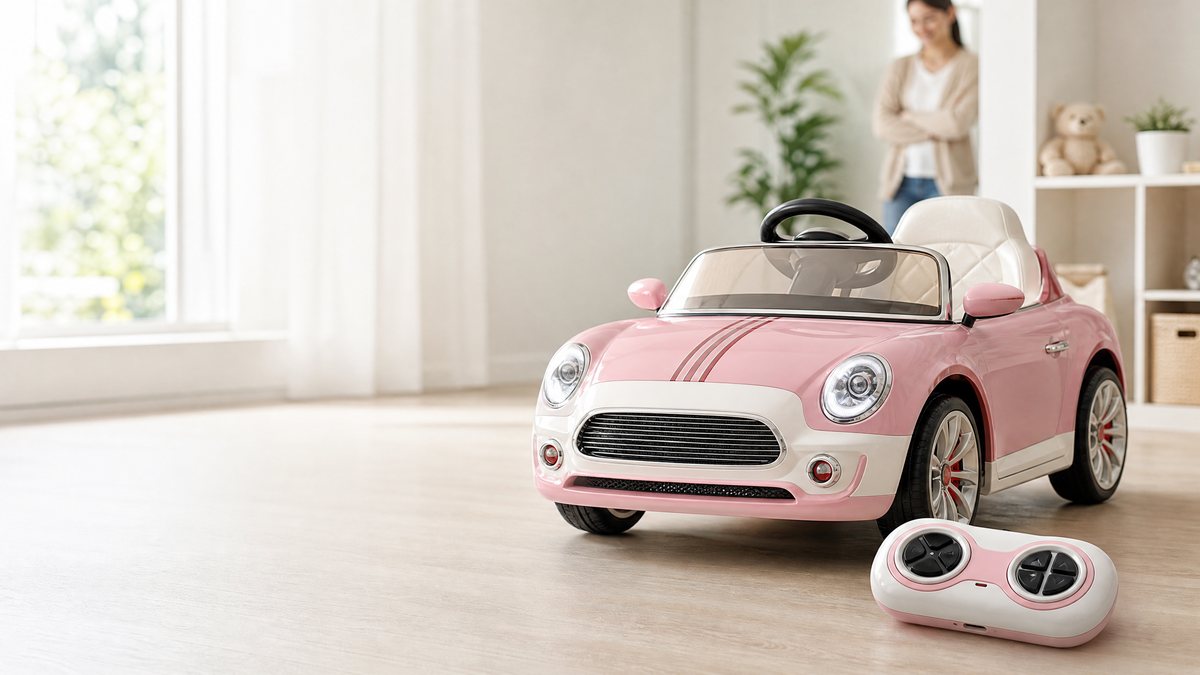
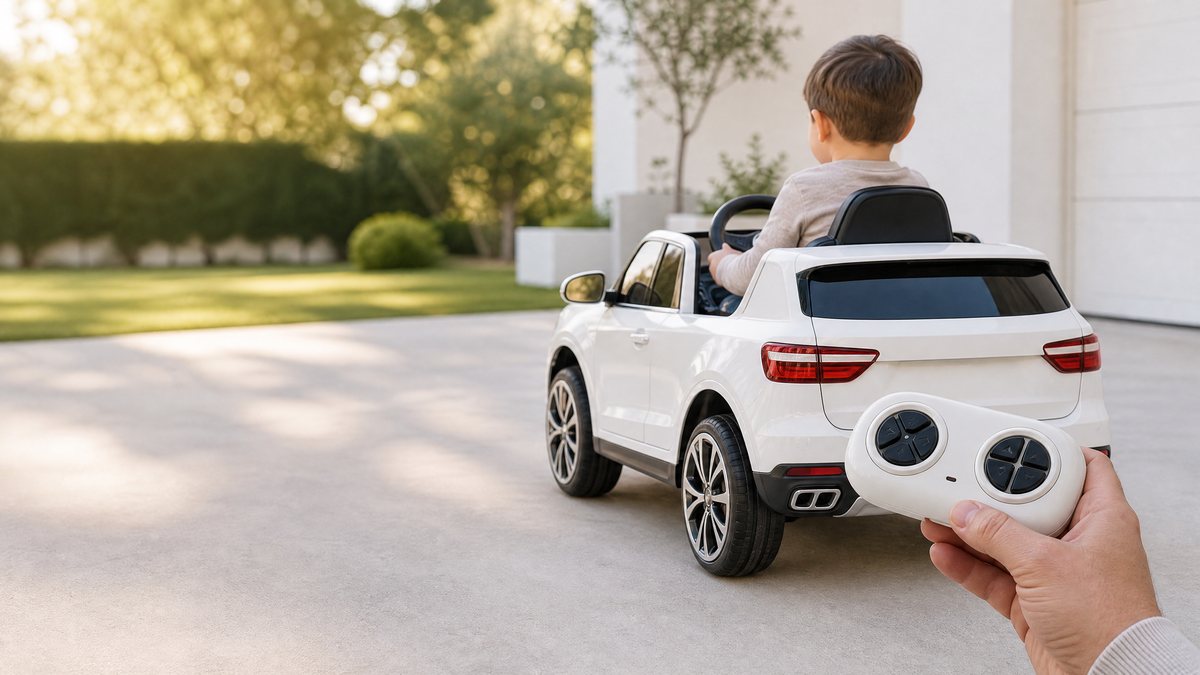
In addition to manual accelerator operation, the vast majority of premium ride-on cars feature 2.4G Bluetooth or infrared parental remote control systems. These remote systems override manual dashboard controls, transmitting digital steering and throttle commands directly to the vehicle's onboard receiver motherboard. Remote-control anomalies can frequently manifest as erratic driving behavior, including unexpected spinning.
If a ride-on car spins in circles exclusively when operated via the parental remote control—while driving relatively straight under manual foot pedal operation—the issue typically points to remote calibration, signal interference, or receiver channel output asymmetry. The 2.4G remote control unit transmits independent digital packets for throttle speed and steering servo actuation. If the remote control's steering joystick or potentiometer is out of calibration, or if the onboard receiver board experiences temporary signal corruption, it may continuously command full right or left steering while applying forward drive to only one side.
To troubleshoot potential remote-control desynchronization, follow the manufacturer's official re-pairing procedure outlined in the user manual. Typically, this involves powering down the vehicle, removing batteries from the remote control, waiting thirty seconds, re-inserting remote batteries, holding the pairing button until the LED indicator flashes, and powering on the vehicle while keeping remote controls stationary. If interference persists in environments with heavy Wi-Fi or radio frequency congestion, testing the vehicle in an open outdoor area away from electronic interference sources is recommended. Should remote motherboard signal processing fail entirely, contact authorized service channels for certified replacement receiver modules rather than attempting unauthorized electronic component modifications.
Diagnostic Comparison of Ride-On Car Spinning Symptoms
To assist commercial fleet operators, retail technical staff, and parents in rapidly isolating circular spinning anomalies, the following diagnostic matrix correlates specific operational symptoms with probable exterior causes, initial inspection steps, and recommended safety-compliant actions.
| Observed Symptom | Probable Exterior Cause | Initial Inspection Step | Recommended Action |
|---|---|---|---|
| Vehicle spins rapidly in place when pressing accelerator. | One rear wheel drive pin dislodged or axle gear stripped. | Inspect rear wheel hubs to verify both wheels rotate synchronously. | Realign drive pin or secure clip. Stop use if internal gear teeth are stripped. |
| Vehicle drives in wide circles during outdoor operation. | Debris wrap, grass, or twine bound around axle hub. | Visually check gap between rear wheels and gearbox housing. | Carefully remove external debris by hand without damaging plastic components. |
| Vehicle pivots in circles when using parental remote. | Remote control steering calibration drift or desynchronization. | Test manual foot pedal operation to check if linear driving works. | Perform manufacturer-specified 2.4G remote re-pairing procedure. |
| One side of vehicle remains motionless while other drives. | Loose motor spade connector or oxidized switch contact. | Check visible wiring harnesses near rear motors for loose terminals. | Ensure master power is off, gently re-seat loose insulated terminal boots. |
This structured comparison highlights the importance of methodical observation. By separating external mechanical and control variables from complex internal electronics, operators can diagnose common issues safely while preserving warranty coverage and ensuring child safety.
When to Contact Authorized Service or Request Manufacturer Support
While many instances of ride-on cars spinning in circles can be resolved through straightforward external inspections, re-seating loose motor connectors, clearing minor debris, or re-pairing parental remote controls, certain situations require professional intervention. Retailers, commercial fleet managers, and individual owners must recognize the technical boundaries where DIY inspection ends and authorized service begins.
If systematic inspection reveals that internal gearbox casing components are cracked, internal motor windings emit a burning odor, or the central motherboard exhibits physical burn marks or water ingress, immediate discontinuation of use is mandatory. Attempting to repair internal electronic control units, modify motor gearing ratios, or substitute non-genuine replacement parts compromises vehicle safety certifications and may violate manufacturer warranties. Professional service technicians equipped with certified replacement parts and specialized testing equipment must handle internal electrical overhauls.
For wholesale buyers, commercial rental operators, and retail partners seeking reliable replacement components, bulk accessories, or technical guidance, establishing a direct relationship with experienced manufacturers is invaluable. Ensuring access to genuine, factory-tested replacement gearboxes, wiring harnesses, and control boards guarantees long-term fleet reliability and customer satisfaction. Request a wholesale quote to discuss commercial partnership opportunities, spare parts inventory stocking, and professional fleet maintenance solutions tailored to your business requirements.
Frequently Asked Questions (FAQs)
1. Is it safe for a child to continue riding if the car only spins in circles?
No. Immediate cessation of operation is required. Allowing a child to operate a vehicle with steering or propulsion asymmetry creates unpredictable handling and loss of control. Always power down the vehicle and move it to a safe staging area.
2. Can I replace a broken motor or gearbox myself?
Minor external adjustments, such as re-securing drive pins or clearing external axle debris, can be performed following the user manual. However, replacing internal motors, gearboxes, or wiring harnesses should only be performed by qualified repair personnel using certified replacement parts.
3. Why does my ride-on car drive straight manually but spin when using the remote?
This behavior typically indicates a digital communication or calibration mismatch between the 2.4G parental remote control and the vehicle's onboard receiver board. Re-pairing the remote or replacing exhausted remote batteries usually resolves the issue.
4. What should I do if I notice a burning smell or smoke when the car spins?
Immediately turn off the master power switch, disconnect the battery harness if accessible without dismantling internal housings, keep children away, and stop all charging. Contact the manufacturer or qualified technical service personnel immediately.
Conclusion and Operational Best Practices
Diagnosing and resolving a ride-on car that spins in circles requires patience, a methodical approach, and an unwavering commitment to safety. By systematically evaluating external wheel mountings, clearing minor debris, inspecting visible terminal connections, and checking remote calibration, operators can identify and resolve common torque asymmetry issues. Always prioritize adult supervision and adhere strictly to the manufacturer's user manual.
Request a wholesale quote to explore our comprehensive catalog of premium ride-on vehicles and dedicated B2B support services.
Official References
1. U.S. Consumer Product Safety Commission (CPSC) - General Toy Safety Education and Playground Equipment Guidelines. Note: CPSC educational materials provide general safety guidance and do not replace model-specific user manuals or manufacturer maintenance instructions.
2. ASTM International - Standard Consumer Safety Specification for Toy Safety (ASTM F963). Industry guidelines regarding electrical safety, mechanical integrity, and remote-control operational parameters for children's motorized ride-on vehicles.
3. International Electrotechnical Commission (IEC) - Safety of Household and Similar Electrical Appliances (IEC 60335). Reference standards governing low-voltage DC motor controls and battery charging safety limits in consumer electric toys.
Official references
Explore these external resources for current regulatory and trade guidance. Confirm requirements with the relevant authority before placing an order.
Ready to Start?
Factory-Direct · CE & ASTM Certified · MOQ from 50 Units
Our export team works with buyers in 60+ countries. Get a quote within 24 hours.
KR
Written by KidsRideCar
China's leading kids electric ride-on car manufacturer. 500,000+ units shipped annually to 60+ countries. CE, ASTM & EN71 certified.