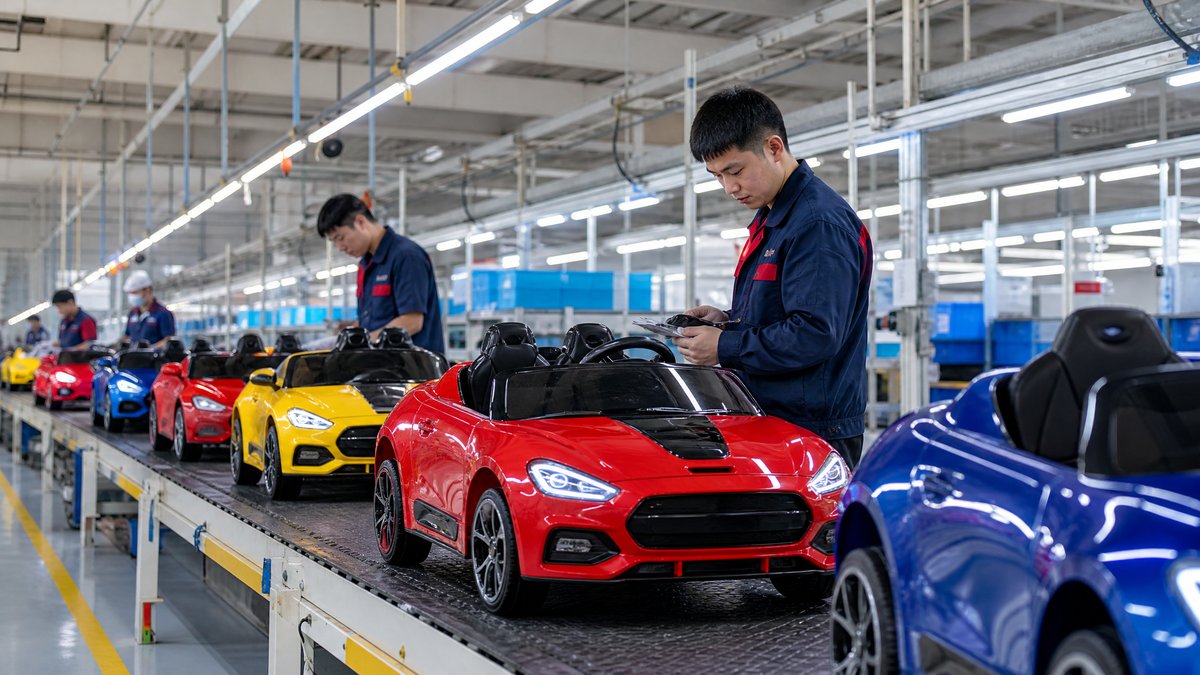
For professional importers, global distributors, and specialized retailers within the juvenile products sector, the strategic categorization of juvenile electric vehicles based on their intended terrain suitability is a fundamental pillar of successful inventory management. A generalized approach to sourcing these products often leads to significant after-sales challenges, including elevated return rates and mechanical failures. Determining which smooth surfaces, greenery, or outdoor environments are appropriate for specific models depends on the power delivery tier, motor strength, wheel composition, and chassis architecture. Generally, base power level models are engineered strictly for indoor polished surfaces, while standard power level models provide the versatility required for flat pavement and well-maintained residential greenery. For the high-growth adventure segment, enhanced power level four-wheel-drive vehicles are the industry standard for navigating thicker greenery and loose stone paths. However, suitability is not universal; procurement professionals must verify the specific model documentation, current supplier evidence, appropriate product markings, and applicable destination-market requirements before finalizing a sourcing strategy.
The Terrain Spectrum: A Comprehensive Professional Assessment
When building a professional product portfolio, procurement agents must categorize vehicles by their intended operating theater. A mismatch between a vehicle mechanical limitations and the end-user backyard environment is the primary driver of premature component fatigue.
Polished Surfaces and Controlled Indoor Environments
Polished surfaces—including hardwood, laminate, ceramic tiles, and finished concrete—present the lowest rolling resistance. In these environments, the motor does not need to overcome significant inertia. For retailers targeting urban markets, base power level and entry-level standard power models are highly effective. These vehicles typically utilize hard synthetic wheels. While cost-effective, these wheels are designed specifically for low-traction environments. Importers should be aware that these models often lack the torque required to transition even from a smooth floor to a thick rug. From a professional perspective, these models represent a high-volume segment ideal for large-scale retail where price sensitivity is paramount.
Residential Greenery and Flat Outdoor Surfaces
Greenery is a deceptive terrain that introduces a variable load on the drivetrain. Resistance fluctuates based on grass height, moisture levels, and soil density. A standard power level two-wheel-drive vehicle that performs well on a dry, short lawn may struggle on lush, damp greenery. For professional buyers, the greenery-ready designation should be reserved for models equipped with at least standard power systems and high-traction synthetic tires. High-traction tires provide the necessary grip to prevent wheels from spinning without progress. Furthermore, the motor heat dissipation capabilities become critical, as constant resistance leads to higher internal temperatures. Importers should prioritize suppliers who use reinforced gearboxes to withstand the increased torque requirements.
Rugged Outdoor Paths and Mixed Terrains
The rugged outdoor category includes stone driveways, dirt trails, and wood-chip paths. These environments require high ground clearance, independent suspension, and high-torque motors. Vehicles must clear small obstacles without the chassis bottoming out, which can damage the undercarriage. Importers serving the adventure niche should prioritize enhanced power systems with four-wheel-drive configurations. A four-wheel-drive setup ensures power is distributed across all wheels, reducing the likelihood of the vehicle becoming stuck. In these scenarios, mechanical stress on steering linkage and axles is higher, necessitating high-tensile metal components.
Technical Attributes and Terrain Performance
A professional procurement agent must evaluate the internal components that define a vehicle terrain versatility. Understanding these attributes is key to matching the right product to the right market.
Power Tiers and Stall Torque
Power levels are often a shorthand for capability, but motor strength is equally important. A standard power system with a pair of robust motors provides higher stall torque—the force a motor exerts when at a near-standstill—than a system with weaker motors. This is crucial for starting on non-smooth surfaces. Importers should request detailed motor specifications, specifically looking for high-strength motors for outdoor models. A gradual start feature is also beneficial, as it prevents wheels from instantly digging into soft soil.
Tire Composition and Traction Interface
The tire is the only point of contact between the vehicle and the terrain, making its composition a significant factor in traction.
| Interface Type | Best Suited Terrain | Professional Advantages | Professional Considerations |
|---|---|---|---|
| Hard Synthetic | Indoor / Pavement | Lowest cost, lightweight | Lower traction, audible noise |
| Enhanced Grip Synthetic | Greenery / Stone / Pavement | Puncture-proof, excellent grip | Higher cost than base synthetic |
| Solid High-Traction | All-Terrain / Damp Soil | Maximum durability, superior grip | Premium cost, adds weight |
For professional importers, enhanced grip synthetic tires are the ideal choice for mid-range outdoor models. They offer a significant upgrade in traction and are quieter on hard surfaces. While solid high-traction tires offer ultimate grip, they add weight and logistics complexity that may not be suitable for all retail channels.
Chassis Architecture and Ground Clearance
A low-profile vehicle style will always be limited to smooth ground due to minimal clearance. Conversely, an utility vehicle style with a raised chassis is designed for uneven surfaces. Importers should evaluate the approach and departure angles to ensure bumpers won't scrape when transitioning to a sloped lawn. A sufficient vertical gap is recommended for vehicles intended for greenery or light off-road use.
Decision Framework: Matching Product to Market Terrain
Distributors should use a structured framework to select products based on the dominant terrain in their target geographic region.
| Market Segment | Primary Terrain | Recommended Specifications | Key Procurement Priority |
|---|---|---|---|
| Urban Residential | Indoor / Smooth Pavement | Base or Standard Power, Synthetic | Compact size, low noise |
| Suburban Housing | Driveways / Dry Lawns | Standard Power, Enhanced Grip, Two-Wheel-Drive | Battery longevity, aesthetic appeal |
| Rural Property | Thick Greenery / Stone / Dirt | Enhanced Power, Four-Wheel-Drive, Enhanced Grip | Torque, ground clearance |
| Adventure Focus | Inclines / Uneven Trails | Enhanced Power, Four-Wheel-Drive, High-Strength | Chassis reinforcement |
Documentation and Evidence for Outdoor Use
Sourcing vehicles for outdoor use requires scrutiny regarding documentation. Importers must ensure manufacturers provide comprehensive evidence.
Standard Verification and Evidence
All vehicles must meet regional requirements. For outdoor models, attention should be paid to mechanical strength evidence, ensuring axles and steering can withstand uneven terrain. Stability assessments are vital, verifying the vehicle does not tip on a slope. Importers should request stability evidence for models intended for sloped surfaces.
Energy System and Charging Safety
Outdoor use places a higher drain on the energy source, leading to increased heat. Importers must verify energy packs carry legitimate markings. Charging units should be equipped with overcharge protection and thermal cut-offs. In high-heat regions, thermal management is a critical safety factor. For any technical concerns regarding energy performance, users should stop using the product immediately and seek manufacturer-approved or qualified support.
Weight Threshold and Real-World Assessment
Terrain resistance reduces functional weight threshold. A vehicle rated for a specific weight on a flat floor may only transport a lower weight effectively on a grassy incline. Professional distributors should ask for real-world weight assessment reports on various surfaces. This data is invaluable for setting consumer expectations and reducing warranty claims. Overloading on high-resistance terrain is a primary cause of motor fatigue.
Supplier Verification and Bulk Quality Checks
Distributors must implement supplier verification focused on terrain performance during procurement.
Motor Durability and Thermal Assessment
Request factory logs for motor life-cycle assessments under load. A reliable supplier will have data showing how many hours a motor runs at maximum resistance before failure. During factory audits, verify that motors are equipped with thermal protection to prevent damage during a stall.
Tire Material and Density Consistency
Verify that tire material matches the approved sample. Substituting high-density materials with lower-density alternatives compromises outdoor performance. Inspectors should check hardness during pre-shipment inspection. Consistent density is essential for maintaining balance and traction.
Chassis and Axle Reinforcement
For off-road models, the axle-to-chassis connection is critical. Inspect reinforcement in these areas. Verify axles are high-tensile metal and mounting points are robust. For any mechanical concerns, remove the product from service and consult the manufacturer for qualified support.
Maintenance and Longevity for Outdoor Models
Ensuring the longevity of juvenile electric vehicles intended for outdoor use requires a proactive approach to maintenance, primarily focused on external visual assessments. Importers should educate their retail partners and end-users on the importance of regular checks to prevent minor issues from escalating into significant mechanical concerns.
External Visual Assessments
Before every outdoor excursion, an initial visual check of the vehicle exterior is recommended. This includes inspecting the tires for debris, ensuring the chassis is free from mud accumulation, and verifying that all external components are securely attached. If any part appears loose or damaged, the user should stop use immediately. For any internal concerns or structural issues, the product should be referred to manufacturer-approved support.
Cleaning and Storage Protocols
After use on greenery or stone paths, the vehicle should be wiped down with a dry or slightly damp cloth to remove dust and grass clippings. It is essential to avoid using high-pressure water or submerging the vehicle, as this can damage the internal energy housing and connections. Storing the vehicle in a temperature-controlled, dry environment will help preserve the integrity of the materials and the energy system.
Qualified Support and Professional Assessment
If a vehicle exhibits unusual behavior, such as a reduction in travel rate or abnormal sounds, seek qualified support. Distributors should maintain a network of manufacturer-approved centers for non-destructive assessments. Avoid any attempts to perform internal inspections of the vehicle propulsion assembly, as this may impact safety and warranty.
Strategic Marketing for Global Markets
Terrain suitability should dictate marketing strategy and distribution channels.
* North American Suburban Market: High demand for standard and enhanced power vehicles capable of handling large backyards. Marketing should emphasize backyard adventure.
* European Urban Market: Licensed standard power vehicles are popular for parks and sidewalks. Focus on realism and maneuverability.
* Middle Eastern and Australian Markets: High heat and dusty conditions require superior protection for gearboxes and high-strength motors.
Clear communication regarding terrain limits minimizes returns. Product listings should explicitly state recommended surfaces. Providing a terrain capability assessment helps consumers make informed choices. Importers should also provide an initial use checklist to help consumers verify performance in a safe, controlled manner.
Frequently Asked Questions
Q: Can juvenile electric vehicles be used on wet greenery or during precipitation?
A: While many outdoor models feature enclosed components, they are generally not resistant to significant moisture. Moisture can lead to oxidation of internal connections and failure of the control system. Users should avoid wet conditions and store the vehicle in a dry area. If exposed to moisture, stop use immediately and seek manufacturer-approved or qualified support.
Q: Why does the vehicle move significantly slower on greenery than on the pavement?
A: This is due to rolling resistance. Greenery absorbs energy, requiring the motor to exert more force. A travel rate reduction on greenery is normal, but if the vehicle stalls or motors become excessively hot, the terrain exceeds design limits. In such cases, move the vehicle to a smoother surface.
Q: Does using the vehicle on rough terrain impact the warranty?
A: Warranty terms vary. Most cover manufacturing defects under normal use. Using a pavement-optimized vehicle on a rugged trail may be considered inappropriate use and could impact the warranty. Importers should clearly define intended use in localized documentation.
Q: How should professional buyers communicate terrain limits to their customers?
A: Transparency is essential. Importers should provide clear surface suitability icons on packaging and listings. An initial use guide encouraging an external visual check of assembly and energy connection before the first outdoor run can prevent common errors. For technical difficulties, customers should contact the retailer qualified support team.
Q: What are the signs that a terrain is too challenging for a specific model?
A: If the vehicle struggles to maintain momentum, the motors produce unusual sounds, or the wheels spin without moving the chassis forward, the terrain is likely too demanding. In these instances, the user should immediately transition to a flatter, smoother surface to prevent component fatigue.
Q: Is adult supervision necessary for outdoor use?
A: Yes, adult supervision is always recommended for outdoor use to ensure the vehicle is operated within its intended environment and to monitor for any changes in terrain that might pose a challenge to the vehicle mechanical capabilities.
Request a wholesale quote
Official references
Explore these external resources for current regulatory and trade guidance. Confirm requirements with the relevant authority before placing an order.
Ready to Start?
Factory-Direct · CE & ASTM Certified · MOQ from 50 Units
Our export team works with buyers in 60+ countries. Get a quote within 24 hours.
KR
Written by KidsRideCar
China's leading kids electric ride-on car manufacturer. 500,000+ units shipped annually to 60+ countries. CE, ASTM & EN71 certified.