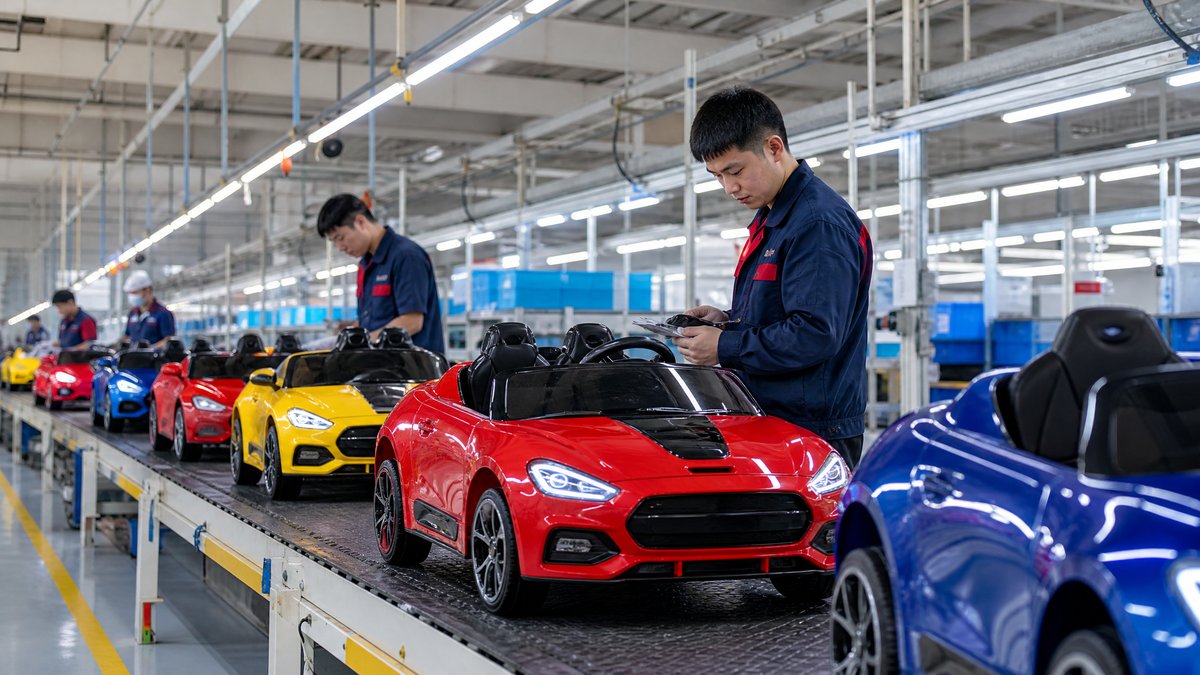
New distributors can negotiate a more workable MOQ by reducing launch complexity before asking for a lower number. Start with a small, focused SKU range; explain your sales channel and replenishment plan; ask whether colors, variants, or compatible models can be mixed; and frame the first order as a documented pilot with a path to repeat business. The aim is not simply the lowest possible MOQ—it is an order you can receive, merchandise, support, and reorder responsibly.
For importers, wholesalers, distributors, and retailers, MOQ discussions work best when they are tied to a credible launch plan. A supplier still has to manage materials, production setup, packaging, quality control, and shipment planning. Your job is to show how a smaller initial commitment can lead to a predictable, lower-risk long-term account for both parties.
> Important: Confirm the specification, included accessories, battery configuration, packaging, documentation, and applicable market requirements for the selected model and destination market before placing an order. Battery transport and dangerous-goods requirements are shipment- and mode-specific; verify them with the responsible carrier, freight forwarder, and relevant authority.
Why MOQ Exists in Kids Electric Ride-On Car Supply
MOQ is a production-planning tool, not only a sales condition. In ride-on toys, a supplier may need to coordinate components, colors, decals, cartons, battery-related packing requirements, assembly capacity, inspection, and export documentation. A request that looks like “just a few units” can create disproportionate setup and inventory risk when it involves a new finish, special packaging, branded artwork, or a non-standard configuration.
A useful negotiation begins by finding out which constraint the MOQ is protecting:
- Component purchasing: Certain parts may be obtained in batches from upstream suppliers.
- Production efficiency: A run may require changeovers, line scheduling, or dedicated quality checks.
- Color or branding: Custom paint, decals, manuals, cartons, and inserts may each have their own minimums.
- Packaging and transport: Carton dimensions, load planning, and battery-related handling can affect what is practical to ship.
- After-sales readiness: A distributor needs enough commonality across the launch range to stock sensible spare parts and train its team.
Instead of opening with “Can you reduce MOQ?”, ask, “Which part of this configuration creates the MOQ, and what can we standardize or combine to make a pilot order feasible?” That question moves the conversation from price pressure to joint problem-solving.
Prepare Before You Negotiate
A new account has less transaction history, so replace missing history with a concise, evidence-based launch brief. It does not need to disclose confidential business information. It should demonstrate that your request is operationally thought through.
Bring a One-Page Distributor Launch Brief
Include:
1. Destination market and intended sales channels — for example, specialty retail, e-commerce, regional wholesale, or a combination.
2. Target customer and positioning — entry, mid-market, premium, or a specific use case. Avoid claiming a product feature until it is confirmed for the exact model.
3. Proposed launch assortment — a small list of candidate models and color choices, ranked by priority.
4. Pilot-order objective — what you will evaluate: sell-through, carton handling, returns, accessory demand, or retail feedback.
5. Reorder trigger and forecast range — state assumptions transparently rather than presenting guesses as commitments.
6. Operational contacts — who will handle product approval, shipping, receiving, merchandising, and after-sales support.
This brief gives the supplier useful information without forcing you to overpromise. It also makes it easier to discuss a phased order rather than an all-or-nothing MOQ exception.
Separate Standard Product From Custom Work
New buyers often combine too many changes in their first request: a new model, special color, proprietary logo, customized carton, altered accessories, and a small quantity. Each change can create a separate minimum, approval step, cost driver, or compliance question.
For a first order, consider keeping the core product and packaging as standard as possible. If branding is essential, ask which element has the least effect on minimums—for example, a standard-label arrangement versus a fully custom carton—then confirm what is actually available. Treat any custom option as quotation- and sample-dependent.
Use SKU Rationalization to Create a Stronger MOQ Request
A broader range may feel safer because it offers choice. For an untested launch, it can instead dilute inventory, complicate merchandising, and make replenishment harder. SKU rationalization means choosing a small range that covers distinct buyer needs without creating unnecessary variation.
A practical launch assortment often has clear roles, such as:
- Traffic driver: A broadly appealing model intended to attract attention.
- Step-up option: A differentiated model for customers seeking another form factor or feature set.
- Controlled test: One limited-quantity model used to learn whether a niche style deserves a reorder.
Do not select roles based on unverified claims. Build them from the product data, confirmed configuration, local channel feedback, and your ability to support the items after sale.
Buyer-Facing Comparison: Wide Launch vs. Rationalized Pilot
| Decision area | Broad first order with many SKUs | Rationalized pilot with a focused range |
|---|---|---|
| Inventory exposure | Stock is spread across many combinations; slow variants can be harder to identify and clear. | Demand signals are easier to read because fewer variables are introduced. |
| MOQ discussion | Several small requests may be below the supplier’s practical thresholds. | Volume can be concentrated in priority models or common components. |
| Merchandising | More choice, but more product information, images, and display decisions to manage. | A clearer launch message and simpler staff training. |
| After-sales planning | More parts, manuals, and configuration differences to track. | A more manageable basis for spare-parts and support planning. |
| Reorder decision | Harder to determine whether the model, color, channel, or price position caused weak demand. | Easier to evaluate a defined pilot and plan a next order. |
| Customization risk | Multiple custom requests can multiply minimums and approval work. | Standardize first; add customization after the base range is proven. |
A Simple SKU-Rationalization Checklist
Before requesting a concession, check whether every proposed SKU has a job:
- [ ] Does each model serve a distinct customer or channel need?
- [ ] Can you reduce color choices without weakening the launch?
- [ ] Can common packaging, manuals, and spare-part planning be used where appropriate?
- [ ] Have you separated standard configurations from custom requests?
- [ ] Can you support the selected models with product information, receiving checks, and after-sales processes?
- [ ] Have you confirmed that the selected model—not a similar model—meets your destination-market and customer requirements?
If the answer is no, reduce the assortment before negotiating. A disciplined request is usually more persuasive than a large list of marginal variants.
Plan a Mixed Container Around Commercial Logic, Not Empty Space
A mixed-container conversation should start with the business case, then move to physical loading. The objective is not merely to “fill a container.” It is to combine demand, carton data, cash flow, and replenishment into a shipment that your operation can handle.
Ask the supplier or logistics partner for the confirmed carton dimensions, gross weight, packing method, loading plan, and model-specific shipping information. Do not assume models with similar photos have interchangeable carton footprints or battery arrangements. Confirm whether a mixed load is allowed, whether the mix is by model, color, or carton quantity, and whether any item must remain in full-carton increments.
Mixed-Container Planning Worksheet
| Planning question | Why it matters | What to request or decide |
|---|---|---|
| Which SKUs are launch priorities? | Prevents container space going to unproven fringe variants. | Rank models as core, secondary, and test. |
| What are the exact carton details per selected configuration? | Carton size and weight affect loadability and receiving. | Confirmed carton dimensions, weight, quantity per carton, and packing method. |
| Are mixed models or colors accepted? | Supplier policy may differ by model, component, or packaging. | Written confirmation of allowable mix and any minimums per variant. |
| What is the channel-level demand assumption? | Stops the plan from being driven only by freight utilization. | A conservative allocation by channel or customer type. |
| Which items need spare parts or support stock? | After-sales capability influences the viable launch range. | Recommended parts list and availability, confirmed for the selected models. |
| What transport requirements apply to the battery configuration? | Battery shipping rules and carrier acceptance can affect packing and routing. | Current documents and confirmation from the forwarder/carrier for the chosen shipment. |
| What is the reorder plan? | A pilot succeeds only if the next decision is defined. | Review date, data to collect, and likely replenishment logic. |
Ask for Two or Three Loadable Scenarios
Rather than submitting one rigid quantity list, request options such as:
- Core-heavy scenario: More cartons of the most commercially important model(s), with a small test allocation.
- Balanced scenario: A controlled mix across the focused launch range.
- Pilot-first scenario: A modest order built around standard configurations, with a stated review point before expanding colors or custom work.
Have the supplier confirm whether each scenario is feasible under its production and packing rules. Have your freight forwarder confirm the applicable transport approach. The final decision should consider landed-cost planning, inventory capacity, and market requirements—not only carton utilization.
Structure a Pilot Order That a Supplier Can Say Yes To
A pilot is not simply a smaller purchase order. It is a mutual learning plan with clear boundaries. It gives a new distributor a way to validate operations and demand while giving the supplier a credible path to repeat production.
Define the Pilot’s Scope
A strong pilot usually states:
- The selected models, configurations, and any approved color mix.
- Which elements are standard and which, if any, require separate confirmation.
- The documents you need before shipment and the responsible party for each.
- The inspection or acceptance process you will use, agreed in advance.
- The sales and operational measures you will review after arrival.
- A timeframe or trigger for discussing replenishment—without presenting a forecast as a binding promise unless it is one.
For a first order, do not let “pilot” become a vague label. Specify what success looks like operationally: for example, receiving accuracy, product-content readiness, retailer feedback, support-ticket patterns, and reorder interest. The supplier does not need your confidential data; it does need a realistic reason to reserve attention for a smaller order.
Offer Concessions That Reduce Supplier Risk
If you request flexibility, consider what you can standardize in return. Depending on the supplier’s actual policy, a distributor may be able to offer:
- Fewer colors or fewer configuration combinations.
- Standard packaging and standard printed materials for the first order.
- Full-carton ordering where required.
- A clearer forecast window for potential replenishment.
- Earlier confirmation of artwork, labels, or operational documents.
- A defined approval process so the production schedule is not delayed by repeated changes.
Never agree to terms you cannot execute. The best first-order relationship is built on credible commitments, not optimistic promises.
Negotiation Questions to Send Before You Ask for a Lower MOQ
Use questions that expose the path to a workable order. The following list can be copied into an inquiry email or supplier call agenda.
MOQ and Configuration Questions
1. What is the MOQ for the selected model and standard configuration, and what changes if we mix models or colors?
2. Is the MOQ driven by the vehicle, a color, a battery configuration, packaging, accessories, or branding?
3. Can different standard models be combined toward a total order threshold? If yes, what are the rules?
4. Must each SKU or color be ordered in full-carton increments?
5. Which options are standard, and which options are custom or sample-dependent?
6. What is the smallest practical pilot mix you can support without changing the standard production process?
Documentation, Quality, and Market-Readiness Questions
7. What model-specific specification sheet, packing list, instructions, labels, and product documentation can you provide for our review?
8. What records or reports are available for the selected configuration, and what is their validity for our destination market? We will verify our own applicable obligations.
9. What are the model-specific battery details and what shipping documentation or handling information will the forwarder need?
10. What pre-shipment inspection points can be agreed in writing, and how are discrepancies handled?
11. What spare parts are available for the selected models, and how are part numbers, packaging, and future availability managed?
12. What information must we provide, and by when, to avoid delaying production or shipment?
Commercial and Logistics Questions
13. Can you provide two or three mixed-order scenarios using our ranked model list and confirmed carton data?
14. What is the quoted trade term, and which party is responsible for freight booking, insurance, customs clearance, duties, and destination handling?
15. What payment and order-change milestones apply to a pilot order?
16. If the pilot performs as planned, what information would you need to plan a repeat order more efficiently?
Write down answers and add them to the purchase order or agreed specification pack where appropriate. Verbal assurances should be converted into written, model-specific confirmation.
Make Compliance and Battery Verification a Gate, Not a Footnote
MOQ does not replace import due diligence. Before committing to a configuration, verify the market requirements that apply to your role, product, and destination. Requirements may change and may differ across markets, sales channels, and product configurations.
For U.S. imports, the U.S. Consumer Product Safety Commission (CPSC) provides import resources and explains that it works with U.S. Customs and Border Protection to identify and examine imported consumer-product shipments.[CPSC Import Resources][cpsc-imports] For EU-bound toys, the European Commission provides toy-safety guidance for manufacturers, importers, distributors, and public authorities, and states that toys placed on the EU market must meet applicable requirements.[EU Toy Safety][eu-toy-safety]
Battery transport requires equally careful verification. PHMSA’s *Lithium Battery Guide for Shippers* is scenario-based and directs shippers to requirements that vary by battery type, configuration, size, and transport circumstances.[PHMSA Lithium Battery Guide][phmsa-lithium] That is why a generic statement that a ride-on car is “ready to ship” is not enough. Confirm the battery configuration, shipment method, current carrier/forwarder acceptance conditions, packaging, markings, documentation, and destination-specific requirements for the selected model.
> Practical rule: Do not approve a pilot order until product specifications, documentation, labeling, battery transport information, and destination-market obligations have been reviewed for the exact model and intended sale market. Consult the relevant regulator, qualified compliance adviser, carrier, and customs professional where needed. This article is commercial guidance, not legal or regulatory advice.
A Negotiation Email Framework
Keep the first request concise and specific. This structure is more useful than an unsupported demand for a low MOQ:
> Subject: Pilot-order MOQ and mixed-load inquiry — [destination market]
>
> Hello [Name],
>
> We are preparing a focused launch of kids electric ride-on cars for [market/channel]. Our initial assortment is limited to [number] priority standard configurations, ranked as [core / secondary / test].
>
> Could you please confirm the MOQ and full-carton rules for each selected model, whether these configurations can be mixed, and which option best fits your normal production and packing process? Please also provide model-specific carton data, available documentation, battery shipping information, and any customization minimums.
>
> We would like to evaluate a pilot order with a defined review period and build a repeat-order plan based on validated sell-through and operational feedback. We are open to standard packaging and a simplified color mix if that helps make the pilot practical.
>
> Thank you,
> [Name / Company / Country / Channel]
Need a model-by-model MOQ conversation? Send your target market, sales channel, and a short priority list to info@kidsridecar.com. Ask for the available standard configurations and confirm the details for your selected models before making a commitment.
Image Planning
| Image | Suggested dimensions | Placement | English caption | Alt text | English AI prompt |
|---|---|---|---|---|---|
| Distributor pilot-order planning meeting | 1600 × 900 px | Below the answer-first introduction | A focused launch plan makes MOQ discussions more practical. | B2B distributor team reviewing a focused pilot order for kids electric ride-on cars | Photorealistic editorial B2B scene, diverse adult wholesale team in a bright showroom or office reviewing printed product catalog pages, carton layout sketches, and an assortment planning board for children’s electric ride-on cars; a few generic unbranded ride-on cars visible in the background; professional, practical mood; clean composition with generous negative space on the left for web headline overlay; no logos, no readable brand names, no certification badges, no invented text, no prices, 16:9. |
| SKU rationalization board | 1400 × 875 px | Beside or immediately after the SKU-rationalization checklist | A smaller, role-based assortment can clarify a first-order plan. | Assortment planning board comparing core, secondary, and test ride-on car SKUs | Clean isometric business illustration of an assortment planning board with three clearly separated groups labelled only by simple abstract icons for core, secondary, and test; generic miniature kids electric ride-on car silhouettes in several shapes; colored inventory markers and cartons; modern B2B procurement visual style; no real brand logos, no claims, no technical specifications, no prices, no unreadable microtext, 8:5. |
| Mixed-container loading plan | 1600 × 1000 px | In the mixed-container planning section, after the worksheet | Confirm carton and loading data before agreeing to a mixed shipment. | Warehouse team reviewing a mixed container loading plan with cartons for ride-on cars | Realistic warehouse logistics scene with adult logistics staff examining a tablet that shows a simple container loading diagram, alongside neatly stacked plain cartons sized for children’s ride-on cars and a partly loaded shipping container; emphasize organized planning rather than a full container claim; no visible logos, no hazardous-goods labels, no readable shipping marks, no prices, no certification symbols, 16:10. |
| Supplier–distributor negotiation call | 1400 × 875 px | Before the negotiation-email framework | Ask model-specific MOQ, documentation, and shipping questions before committing. | Buyer and supplier discussing a pilot order for kids electric ride-on cars by video call | Professional photorealistic split-screen video meeting between a wholesale buyer and a manufacturer sales representative discussing a pilot order; each has generic unbranded kids electric ride-on car product sheets and a simple checklist visible; calm collaborative tone; no company names, no logos, no readable screens, no documents with certifications or performance claims, no pricing, 8:5. |
Internal-Link Suggestions for Publication
Use only pages that are relevant to the buyer’s next step. Confirm the links remain live at publication.
- Contextual link after the launch-brief section: Explore KidsRideCar’s wholesale kids electric ride-on car range. Use this for readers who need to narrow a candidate assortment.
- Related-guides block near the conclusion: Read the KidsRideCar Blog. Use this for buyers who want additional sourcing and product-planning guidance.
- Supplier-background link where factory discussion is relevant: Learn more about KidsRideCar. Use only when the reader is evaluating supplier fit.
FAQ: Negotiating MOQ for Kids Electric Ride-On Cars
Can a new distributor negotiate MOQ without an order history?
Yes, but the request is more credible when it reduces supplier complexity. Present a focused assortment, explain your channel and pilot objective, and ask what can be standardized or combined. A supplier may not be able to reduce every minimum, but it may be able to suggest a feasible mix within its normal process.
Is a mixed container always the best way to lower risk?
Not necessarily. A mixed shipment can reduce concentration in one model, but it also increases planning, receiving, cataloging, and support complexity. Use a mix only when each SKU has a clear commercial role and the supplier confirms the mix is operationally allowed.
Should we request custom logos or packaging in the first order?
Only if the commercial benefit justifies the added setup, approval, and minimum-order implications. Many new distributors first validate standard configurations and then introduce branding after they understand demand. Ask the supplier which custom elements affect MOQ and request written, model-specific confirmation.
What should a pilot order measure?
Measure both demand and operational readiness: channel response, sell-through signals, carton handling, receiving accuracy, content completeness, return reasons, product-support needs, spare-parts requirements, and reorder interest. Define the measures before shipment so the next-order decision is based on evidence.
Can a supplier’s general certificates or catalog claims be used for any model and country?
Do not assume so. Verify that specifications, reports, labels, instructions, battery information, and market requirements apply to the selected model, configuration, and destination market. For official guidance, consult the relevant regulator or market authority; U.S. and EU examples are listed in the references below.
Who confirms battery shipping requirements for a ride-on car order?
The responsible shipper and the transport chain must use current, shipment-specific requirements. Ask for the exact battery and packing information for the selected model, then verify the route and documentation with your freight forwarder, carrier, and applicable authority. PHMSA’s guide is a useful U.S. reference, but it does not replace destination- or carrier-specific confirmation.[PHMSA Lithium Battery Guide][phmsa-lithium]
Conclusion: Negotiate the Launch Plan, Not Just the Number
A workable MOQ for kids electric ride-on cars comes from better order design: a focused SKU plan, confirmed carton and transport data, a realistic mixed-load proposal, and a pilot with a defined path to reordering. Ask suppliers what drives their minimums, trade flexibility for standardization where it makes sense, and keep every product, battery, and market-requirement assumption subject to verification for the selected model and destination.
When you are ready to build a practical pilot assortment, email KidsRideCar with your destination market, selling channels, shortlisted models, and expected launch timing. Request model-specific MOQ, packing, documentation, and battery transport details so the discussion starts with facts.
[cpsc-imports]: https://www.cpsc.gov/Imports "U.S. Consumer Product Safety Commission — Import Resources"
[eu-toy-safety]: https://single-market-economy.ec.europa.eu/sectors/toys/toy-safety_en "European Commission — Toy Safety in the EU"
[phmsa-lithium]: https://www.phmsa.dot.gov/training/hazmat/lithium-battery-guide-shippers "U.S. DOT PHMSA — Lithium Battery Guide for Shippers"
Official references
Explore these external resources for current regulatory and trade guidance. Confirm requirements with the relevant authority before placing an order.
Ready to Start?
Factory-Direct · CE & ASTM Certified · MOQ from 50 Units
Our export team works with buyers in 60+ countries. Get a quote within 24 hours.
KR
Written by KidsRideCar
China's leading kids electric ride-on car manufacturer. 500,000+ units shipped annually to 60+ countries. CE, ASTM & EN71 certified.