In the fast-paced world of B2B wholesale, the efficiency of after-sales service is often the deciding factor between a thriving partnership and a strained business relationship. For distributors of battery-powered ride-on cars, quality issues—ranging from minor cosmetic scuffs to functional inconsistencies—are an inevitable part of large-scale logistics and manufacturing. However, the bottleneck in resolving these issues rarely lies in the manufacturer’s inability to provide a remedy; instead, it frequently stems from a lack of clear, actionable documentation at the point of intake. When a distributor receives a complaint from a retailer or an end-consumer, the speed at which that issue is resolved depends almost entirely on the quality of the evidence gathered.
Vague reports such as "the car doesn't work" or "the battery is bad" trigger a cycle of follow-up questions that can add days or even weeks to the resolution timeline. In a professional B2B environment, documentation is not just a record; it is a communication tool designed to minimize friction. This guide outlines a comprehensive workflow for distributors to document ride-on car quality issues with precision, ensuring that claims are processed efficiently without the need for technical diagnosis or risky internal inspections.
The Strategic Importance of Documentation in B2B After-Sales
For a distributor, every day a product sits in a warehouse or a customer’s home awaiting a resolution is a day of lost capital and potential reputational damage. Effective documentation serves three primary purposes in the wholesale cycle:
1. Verification of Claim Validity: It provides objective proof that the issue exists and falls within the scope of the agreed-upon service terms.
2. Root Cause Analysis for Manufacturers: High-quality photos and descriptions allow the factory’s quality control team to identify if an issue is an isolated incident or a batch-wide trend, leading to better production standards.
3. Audit Trails for Compliance: In many markets, children’s toys are subject to strict regulatory oversight. Maintaining a clear paper trail of quality issues and their resolutions is essential for safety compliance and legal protection.
By standardizing the documentation process, distributors can transform their after-sales department from a cost center into a value-added service that builds trust with both their suppliers and their retail clients.
Phase 1: Establishing a Standardized Intake Workflow
The first step in preventing delays is ensuring that the right information is collected the moment a problem is reported. Distributors should provide their retail partners with a standardized "Quality Incident Report" (QIR) template. This prevents the "information drip" where details emerge slowly over several emails.
A standardized intake process should require:
- The date the issue was discovered.
- The condition of the outer packaging upon arrival.
- A clear distinction between "out-of-the-box" failures and issues that occurred after assembly or use.
- The specific model and color of the unit.
By setting these expectations early, distributors ensure that the evidence they receive is consistent and ready for immediate escalation to the manufacturer.
Phase 2: Identifying the Unit with Precision
Every ride-on car in a wholesale shipment is part of a specific production run. Without the correct identifiers, a manufacturer cannot track the issue back to a specific batch or component supplier. Distributors must prioritize the collection of the following identifiers:
Serial Numbers and Batch Codes
Most reputable ride-on car manufacturers place a serial number or batch code sticker on the chassis of the car, often near the battery compartment or on the underside of the frame. This code is the "fingerprint" of the unit. Documentation must include a clear, legible photo of this sticker. If the sticker is missing or damaged, this should be noted immediately as it may affect the warranty claim process.
Order and Shipment Identifiers
Distributors should link every quality report to a specific Proforma Invoice (PI) or Bill of Lading (BOL). This helps determine if the issue is related to a specific transit route or a particular container. Including the shipping label from the outer carton is also vital, as it often contains internal tracking numbers used by the factory’s logistics team.
Phase 3: Capturing Safe Visual Evidence
Visual evidence is the most critical component of a quality claim. However, capturing this evidence must be done safely and systematically. Distributors should never instruct staff or customers to perform invasive inspections, such as opening sealed motor housings or cutting wire harnesses, to take photos.
Photography Best Practices
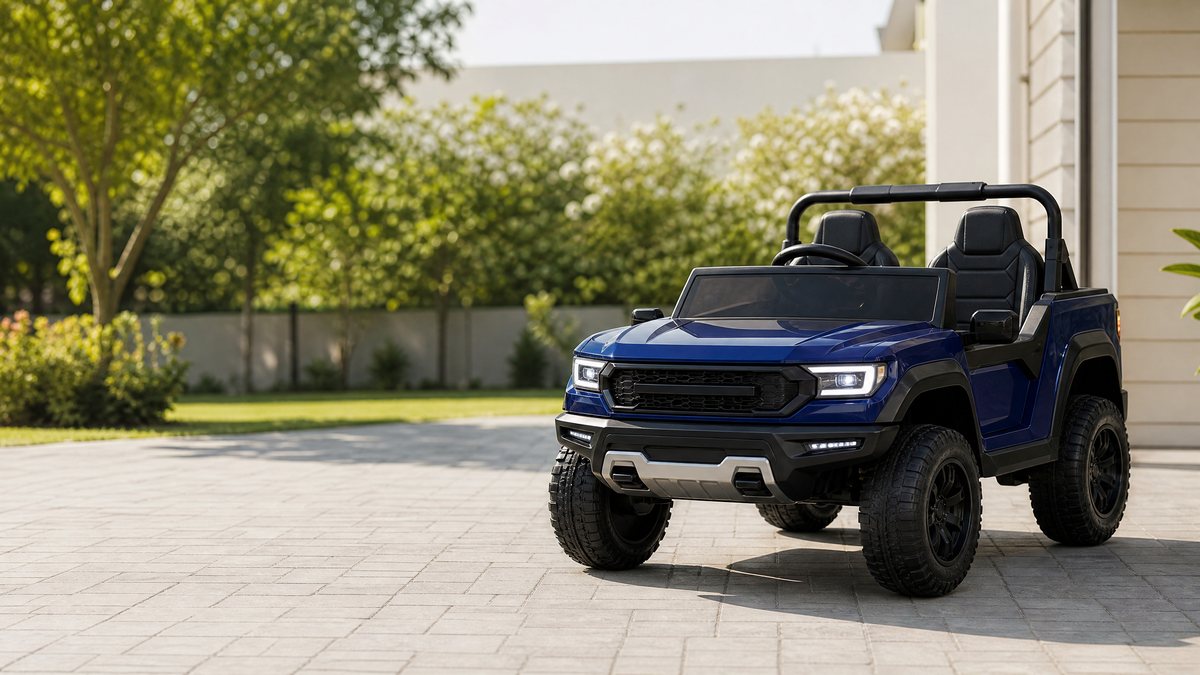
- The Context Shot: Take a photo of the entire unit from a 45-degree angle. This confirms the model and its overall condition.
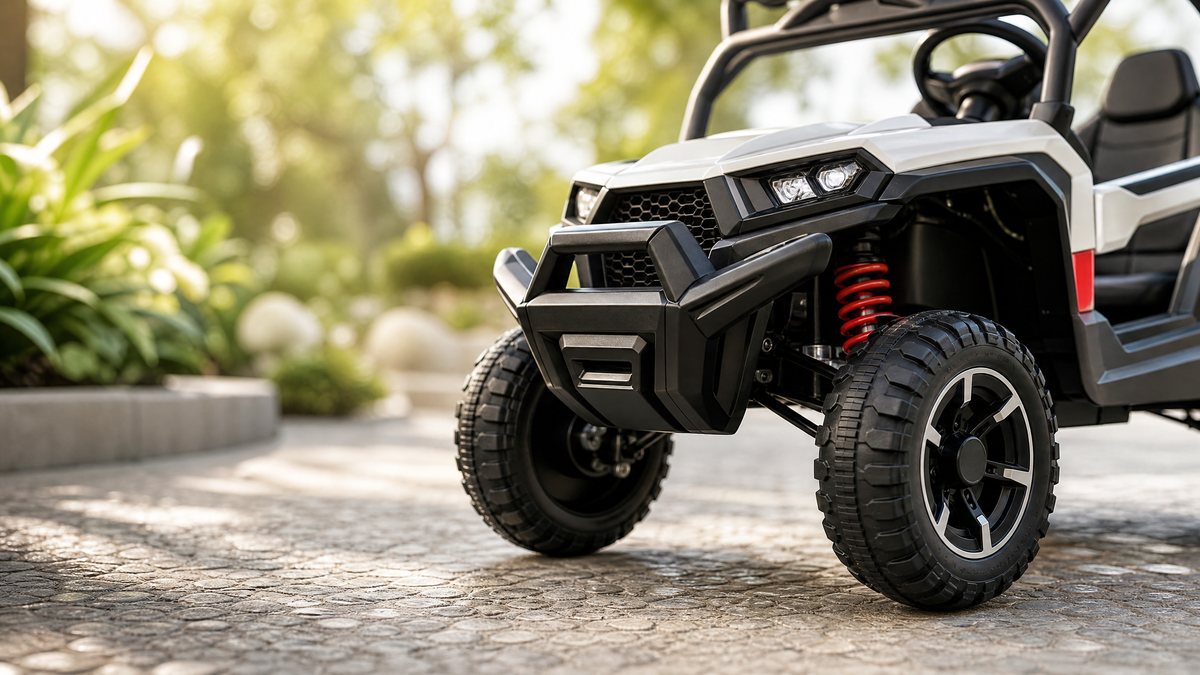
- The Detail Shot: Use a macro setting or move closer to the specific defect (e.g., a cracked plastic fender, a frayed seat belt, or a misaligned wheel).
- Lighting and Clarity: Photos should be taken in well-lit areas. Avoid using a flash directly on reflective plastic surfaces, as this can obscure the defect.
- Packaging Photos: If the damage is cosmetic, photos of the corresponding area on the outer carton are essential to determine if the damage occurred during transit or at the factory.
Video Evidence for Functional Symptoms
For issues that cannot be captured in a still photo—such as a steering wheel that makes an unusual sound or a remote control that fails to pair—a short video (15–30 seconds) is necessary.
- Focus on the Symptom: The video should clearly show the action being taken (e.g., pressing the start button) and the resulting symptom (e.g., the dashboard lights flickering but the motor not engaging).
- Audio Clarity: If the issue involves noise, record in a quiet environment so the manufacturer’s engineers can hear the specific sound profile.
- Safe Operation: Ensure the car is on a flat, stable surface during the video. Never attempt to film while the car is being driven in a hazardous manner.
Request a wholesale quote
Phase 4: Writing Objective Symptom Descriptions
When describing a quality issue, the goal is to be as objective as possible. Avoid using technical jargon or diagnosing the fault. Instead, describe the behavior of the product in relation to the instructions provided in the user manual.
Inaccurate Description: "The controller is fried and needs a new PCB." (This is a diagnosis, not a description.)
Professional Description: "When the remote control is turned on according to page 8 of the manual, the indicator light flashes red, but the vehicle does not respond to steering inputs. The batteries in the remote have been replaced with new, verified units."
By framing the description around the manual and external controls, the distributor provides the manufacturer with the facts needed to make their own technical assessment. This approach also avoids promising specific parts or repairs to the end-user before the manufacturer has confirmed the solution.
Phase 5: Record Keeping and Centralized Storage
Distributors should maintain a centralized digital repository for all quality-related documentation. This allows for historical analysis—for example, identifying if a specific model has a recurring issue with a particular plastic component.
- Naming Conventions: Files should be named consistently. Example: `[OrderNumber]_[Model]_[IssueDate]_Photo1.jpg`.
- Cloud Accessibility: Using a shared cloud drive ensures that the sales, logistics, and after-sales teams all have access to the same set of facts when communicating with the supplier.
- Retention Policy: Define a documentation-retention approach that matches the buyer’s written project terms and internal record-keeping needs. The retained records should remain organized enough to support a later supplier or authority inquiry when appropriate.
Phase 6: Professional Escalation and Communication
Once the evidence is gathered, the way it is presented to the manufacturer determines the speed of the response. The "One-Email" rule is a best practice in B2B communication: all identifiers, photos, videos, and descriptions for a single unit should be contained within one email or one ticket submission.
The Escalation Email Structure
1. Subject Line: Include the Model Number and the nature of the issue (e.g., "Urgent: Model KR-850 Steering Issue - Order #12345").
2. Summary: A brief overview of the situation (e.g., "We have received a report of a non-functional remote on a unit from the July shipment").
3. Evidence Links: Clear links to the photos and videos.
4. Proposed Next Steps: Reference the existing service level agreement (SLA) or written contract regarding how such issues are typically handled (e.g., "Please review the attached evidence and advise on the next steps as per our distribution agreement").
Distributors should avoid making demands or emotional appeals. A professional, evidence-based approach is much more likely to result in a fast, favorable resolution.
B2B Comparison Table: Documentation Quality Benchmarks
The following table compares common documentation mistakes with the professional standards required for rapid resolution in the ride-on car industry.
| Feature | Incomplete Documentation (Causes Delays) | Professional Documentation (Speeds Up Resolution) |
|---|---|---|
| Product ID | "The red Jeep model" | High-resolution photo of the Serial Number/Batch Code sticker. |
| Visuals | One blurry photo of the whole car. | Multiple clear photos (Context, Detail, Packaging) and a symptom video. |
| Description | "It's broken" or "Doesn't move." | Objective description: "Motor does not engage when pedal is pressed; battery reads 12.6V." |
| Packaging | No mention of the box condition. | Photos of the outer carton, including any dents or punctures. |
| Reference | No mention of the user manual. | Confirmation that manual-specified startup procedures were followed. |
| Storage | Scattered in various email threads. | Centralized digital folder with standardized naming conventions. |
Verification and Compliance: The Distributor's Responsibility
It is important for distributors to remember that while manufacturers provide support, the ultimate responsibility for market compliance and customer safety often rests with the local distributor. All documentation workflows should be designed to align with the specific laws of the distributor’s region.
- Contractual Agreements: The specific procedures for returns, replacements, and spare parts are governed by the signed written agreement between the distributor and the supplier. Distributors must verify these terms regularly.
- Safety Reporting: If a quality issue involves a potential safety hazard (such as visible smoke or overheating), documentation should be escalated immediately, and the unit should be quarantined.
- Third-Party Advice: This guide provides practical workflow suggestions. For market-specific regulatory, contractual, or filing questions, distributors should verify requirements with the appropriate competent authority and their own written arrangements.
Frequently Asked Questions
What if the serial number sticker is missing from the unit?
If the serial number is missing, distributors should provide the original shipping label from the box and the specific Proforma Invoice number. Where it can be captured without removing parts, a photo of accessible exterior model markings or the underside of the car may also help the supplier compare the unit against its production records.
How many photos are considered "enough" for a claim?
The written claims process should define the evidence it needs. In many cases, useful records include a whole-unit view, a close-up of the visible issue, available model or serial markings, and the outer packaging condition. For a functional concern, a short video taken during normal use in accordance with the manual may be useful if the supplier requests it.
Should I allow my technicians to open the motor or battery casing to document internal faults?
No. Distributors should never instruct anyone to open sealed components or perform internal repairs. Doing so can void warranties, compromise safety certifications, and expose individuals to electrical hazards. Documentation should focus entirely on the external, visible symptoms.
How does documentation help with transit-related damage claims?
Clear photos of the outer carton taken at delivery can help create a contemporaneous record for the carrier, supplier, insurer, or other party named in the written shipping terms. The effect of that evidence depends on the applicable contract, carrier process and local requirements, so buyers should follow the agreed notification and claim procedure.
Can I promise my retail customer a full refund based on my documentation?
Distributors should wait for the manufacturer’s assessment before promising specific remedies to their clients. While documentation speeds up the process, the final decision on whether a unit is replaced, repaired via spare parts, or credited depends on the manufacturer’s analysis and the terms of the B2B contract.
Conclusion
In the competitive landscape of children’s ride-on cars, the ability to resolve quality issues without delaying the supply chain is a significant competitive advantage. By implementing a rigorous documentation workflow—focusing on precise identifiers, clear visual evidence, and objective descriptions—distributors can ensure that every claim is handled with professional efficiency.
Remember that the goal of documentation is not just to "fix a car," but to maintain the integrity of the B2B relationship. When information flows clearly from the distributor to the manufacturer, the path to a resolution becomes shorter, costs are reduced, and the focus can return to what matters most: growing the business and delivering joy to the end-users.
Request a wholesale quote
Official references
Explore these external resources for current regulatory and trade guidance. Confirm requirements with the relevant authority before placing an order.
Ready to Start?
Factory-Direct · CE & ASTM Certified · MOQ from 50 Units
Our export team works with buyers in 60+ countries. Get a quote within 24 hours.
KR
Written by KidsRideCar
China's leading kids electric ride-on car manufacturer. 500,000+ units shipped annually to 60+ countries. CE, ASTM & EN71 certified.