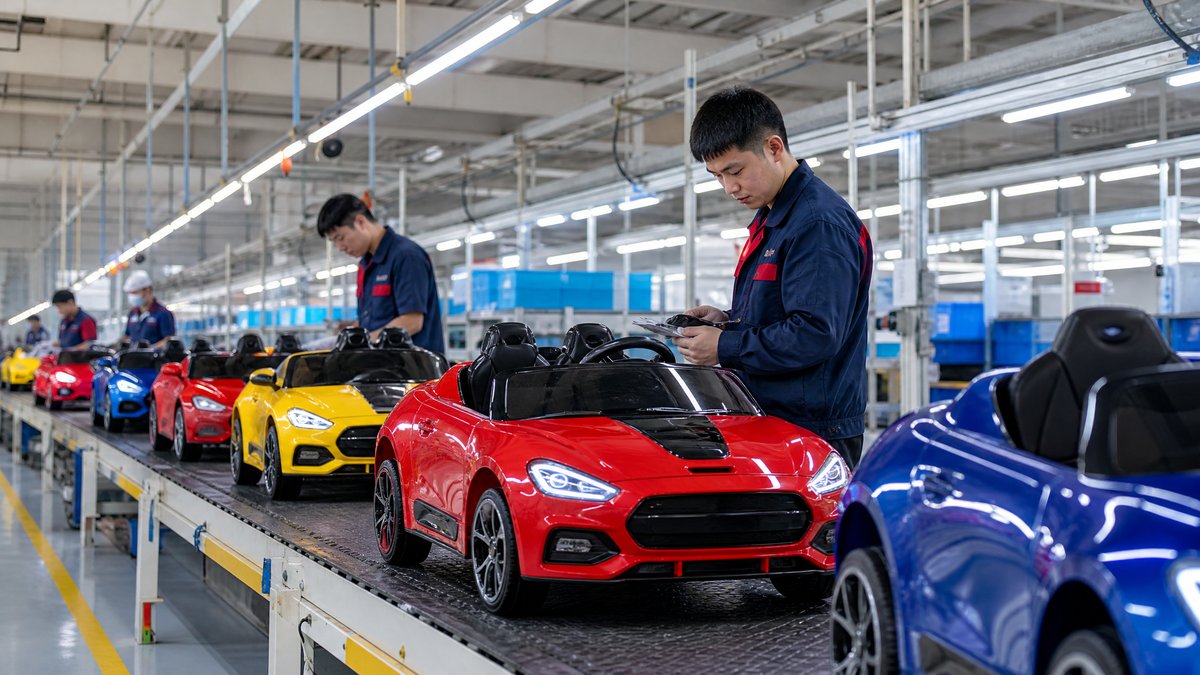
Retailers can plan a kids ride-on car demonstration area by treating it as a controlled product-information space, not an unsupervised play zone. Use a compact, visible footprint; select a few representative models; decide who may operate each unit; and support the area with clear signs, trained staff, and a repeatable check routine. This lets families assess size, seating, controls, and features while protecting product condition and keeping the store orderly.
For importers, distributors, and store buyers, the plan should begin before the purchase order is finalized. A model that looks appropriate in a catalog may need more assembled floor space, closer staff attention, or different stock storage than the store can support. Build the area around the store format, approved product instructions, and current destination-market requirements.
Set a clear purpose and model mix
Decide whether the experience will be static viewing, staff-led explanation, adult-assisted access, or a limited operating demonstration. Record that decision in the store procedure. A supervised, limited demonstration is generally easier to manage than an open-access area and avoids unclear expectations about use, terrain, or performance.
Choose a small range that represents the assortment without crowding the floor. For example, a retailer might display one entry-level SKU, one feature-led SKU, and one larger-format SKU. Select actual configurations that staff can explain and that buyers can replenish. Before allocating a unit, confirm the manufacturer-stated age guidance, maximum load, intended-use boundaries, assembly status, included items, and battery and charger information. Do not assume that a voltage, body style, or feature is suitable for every child.
Design the layout for visibility and control
Plan from the assembled dimensions of the selected models, rather than carton measurements. Allow room for adult access, product-information cards, doors or seats to be opened where applicable, and a clear customer route. Avoid ramps, uneven or wet surfaces, loose mats, steps, and paths leading into general foot traffic. A compact marked boundary can distinguish the area from the aisle without presenting it as a track.
Any fixture, barrier, or floor marking should be stable, visible, and suitable for the local retail environment. Before opening, retailers should verify current destination-market requirements as well as relevant landlord, insurer, and local authority expectations.
Establish supervision and condition rules
Make it clear that adults remain responsible for children in the area. Staff can explain the product and manage the demonstration, but they should not override manufacturer instructions or age grading. If an operating demonstration is permitted, it should follow the approved documentation and have limits staff can apply consistently.
Create a short procedure for opening, supervised demonstrations, busy-period pauses, and closing. It should identify when a unit is removed from use, who can approve its return, and how observed damage is logged. A visual check can cover the exterior, wheels, accessible controls, labels, loose parts, seating or restraint components where supplied, and the condition of any displayed charger or cable.
Staff should not disassemble products, change wiring, bypass safeguards, or attempt repairs in the sales area. Isolate a unit with a suspected fault and follow the agreed supplier or service process. Signs should use straightforward language, such as adult supervision required, follow staff direction, and refer to product instructions before purchase and use. Review final wording against local requirements and the actual store procedure.
Use factual product information
The demonstration area should answer the questions that delay a purchase. Use model-specific cards rather than broad category claims. A card may identify the SKU, dimensions, manufacturer-stated age and load guidance, included items, available colors, listed features, assembly status, and charging information supplied by the manufacturer.
Keep comparisons factual. State that a display has a listed feature or supplied accessory rather than promising ride time, terrain capability, or a particular child outcome. If an item is optional or varies by production version, identify the exact display configuration. This helps keep the display unit, online listing, and delivered carton aligned.
A QR code is useful only when it links to a maintained page, such as the current product listing, approved manual, assembly support page, or retailer help page. Assign someone to check cards, links, availability messages, and product versions after a range refresh.
Connect the floor plan to procurement
Include display needs in supplier discussions rather than solving them after delivery. Ask whether a display sample is available, which configuration will be supplied for the destination market, what product documents and approved images are available, and how changes will be communicated. Request current, model-specific information instead of relying only on early catalog images.
A demo unit is not necessarily identical to saleable stock. Record its SKU, configuration, receipt condition, display-only accessories, and any serial or batch identification available. This supports accurate staff training and product content.
For assistance matching product documentation and samples to your store concept, contact KidsRideCar’s B2B team.
Train staff and improve the setup
Train staff for accurate explanation and safe escalation, not high-pressure selling. They should know the demo rules, where approved model information is held, how to explain included versus optional items, and when to stop a demonstration. Use verified answers to common questions such as “What comes in the box?” and “Which configuration is displayed?”
FAQ
How large should a kids ride-on car demonstration area be?
There is no universal size. Base it on fully assembled model dimensions, adult circulation, staff visibility, and the approved operating method. Keep a clear customer route, and do not use carton measurements as a substitute for a floor plan.
Should customers be allowed to drive the display model?
Only if the retailer has a documented, supervised procedure consistent with manufacturer instructions, stated age guidance, and applicable local requirements. Many stores may prefer static or staff-led demonstrations. Adult supervision remains important whenever children are in the area.
What information should be displayed beside each model?
Show verified, model-specific information: SKU, dimensions, manufacturer-stated age and load guidance, included items, configuration, listed features, assembly status, and a route to current instructions. Avoid unsupported performance or suitability claims.
How can a retailer reduce demo-unit after-sales issues?
Use a daily visual check, restrict access to trained staff, record issues promptly, and remove a unit from use when a concern is identified. Keep its displayed configuration documented and route faults through the agreed supplier or service process rather than making unofficial alterations in store.
What should a buyer ask a supplier before ordering a display model?
Ask for current product documents, exact configuration details, display-sample terms, packaging and assembly information, approved marketing assets, change-notification procedures, and after-sales contact routes. Confirm what destination-market labeling and compliance information needs verification before launch.
Conclusion
A well-planned kids ride-on car demonstration area is a tool for guided product evaluation, not an uncontrolled activity space. Limit the model range, design for visibility and circulation, apply adult-supervision and manufacturer-instruction boundaries, and keep product information current. Connecting the floor plan to procurement, documentation, and staff routines can make the experience more helpful for customers and more manageable for the business.
To discuss display samples, product data, or B2B assortment planning, email KidsRideCar.
Official references
Explore these external resources for current regulatory and trade guidance. Confirm requirements with the relevant authority before placing an order.
Ready to Start?
Factory-Direct · CE & ASTM Certified · MOQ from 50 Units
Our export team works with buyers in 60+ countries. Get a quote within 24 hours.
KR
Written by KidsRideCar
China's leading kids electric ride-on car manufacturer. 500,000+ units shipped annually to 60+ countries. CE, ASTM & EN71 certified.