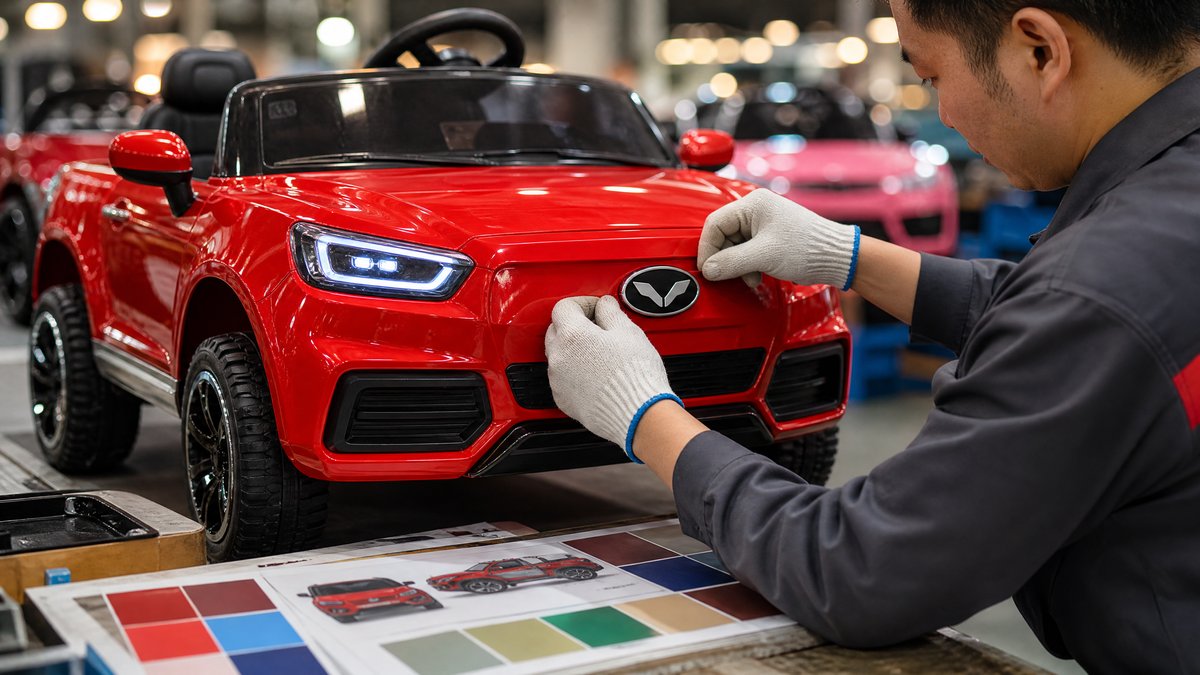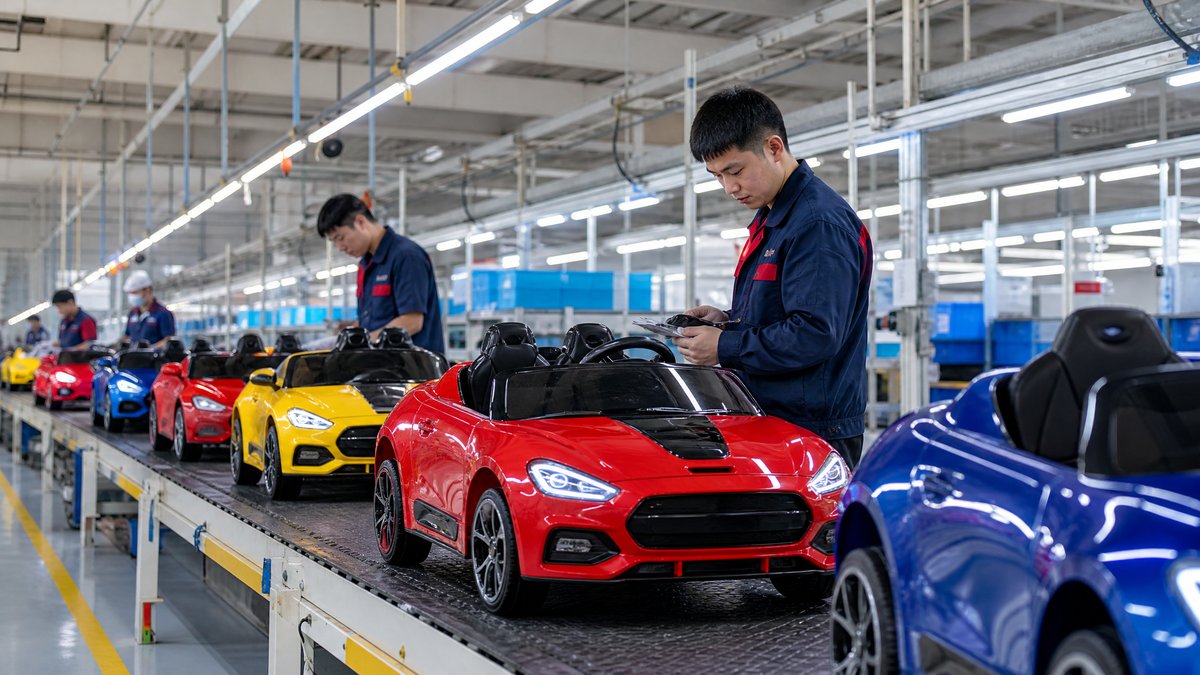
An OEM buyer should include the approved SKU and configuration, carton and internal pack-out specifications, artwork and label files, destination-market language requirements, logistics marks, approval criteria, and a written change-control process in a kids ride-on car packaging brief. The objective is simple: the supplier should be able to pack the correct product consistently without guessing, and the buyer should have a clear standard for sample approval and production review.
For ride-on cars, packaging is not just a printed retail box. It can affect component protection, warehouse handling, online fulfillment, retailer presentation, and the customer’s first assembly experience. A disciplined brief turns preferences into checkable instructions before mass production.
Set the Scope and Document Control
Start with a project header: buyer and supplier names, model/SKU, carton revision, destination market, target production period, and contacts authorized to approve artwork and quality. Give the brief a document number and revision date. This helps prevent use of an outdated logo, language panel, or packing arrangement.
State what the brief covers. Identify the retail carton, internal protection, accessory bags, manual, charger box if separate, shipping marks, pallet labels, and any e-commerce overpack. List variants separately when a color, battery specification, plug, remote control, or accessory set differs. One generic carton instruction may not fit every SKU.
Define the Exact Product and Pack-Out
Describe the item inside the carton, not only the product family. Include the approved model code, color or finish, relevant power configuration, plug type, accessory list, and sample revision.
Specify carton and internal layout
Record the requested carton style and any buyer preference for retail finish or material. Confirm final dimensions plus gross and net weight from a production-ready packaging sample rather than treating preliminary estimates as final logistics data.
Use a component checklist for the pack-out. It may identify:
- Main vehicle body and separately packed parts;
- Wheels, seat, steering components, windscreen, or other detachable items relevant to the model;
- Charger, remote control, hardware, and batteries where supplied;
- Manual, warranty card, or other printed inserts; and
- Protective materials, separators, bags, ties, and the location of every item.
Add an annotated photo or packing diagram where possible. “Protect well” cannot be inspected consistently. “Keep the charger in the marked accessory compartment and separated from the painted body panel by the approved protective material” can be checked.
Define the protection objective and parts that must not contact one another. If a buyer has a material or sustainability preference, state it; otherwise, ask the factory to propose a workable arrangement for approval. Any pack-out change may affect dimensions, handling, cost, and the assembly experience.
Provide Controlled Artwork, Labels, and Copy
Attach or link controlled artwork and state the file name, revision, panel allocation, barcode position, and required clear space. Identify each language version by market and SKU. Retail claims, feature icons, imagery, age guidance, and model descriptions should match the approved product configuration.
Separate information into three groups:
1. Retail-facing artwork: brand, product name, images, and shopper information.
2. Product and traceability information: model/SKU, requested production or batch identification, barcode data provided by the buyer, and relevant importer details where applicable.
3. Logistics information: carton quantity, dimensions and weight fields, handling marks, shipping marks, and country-of-origin wording where required.
Do not add compliance symbols, safety claims, or market-specific statements just because they appear on another product or listing. The importer or brand owner should verify current destination-market requirements and provide approved wording.
Set a proofing workflow: the supplier submits a digital proof; the buyer checks copy, language, SKU, barcode data, and layout; the buyer sends written approval; and a printed carton sample or production-representative proof is reviewed before mass printing. Record whether the factory must wait for written sign-off.
Translate Distribution Needs Into Instructions
Explain how the cartons will move after production. Note whether units will be floor-loaded, palletized, stored at a distribution center, sent to marketplace fulfillment, or shipped individually. If a retailer or fulfillment operator has current labeling or pallet rules, attach the written specification and name the party responsible for confirming it.
Ask the supplier to state the proposed carton count, pallet pattern where relevant, and handling limitations it can support. Apply orientation arrows or lifting cautions only when appropriate to the final pack-out. Do not say a design “passes” a test without a defined method, criteria, and documented result.
Approve the Sample and Check Production
Treat packaging as an approval gate. Before mass production, examine a complete packed sample of the correct vehicle configuration. Compare carton copy to the approved artwork, scan the intended barcode if applicable, compare the contents to the pack-out list, inspect protection around visible surfaces and loose components, and confirm that manuals and accessories match the SKU.
Write acceptance points that can be observed, such as:
- Correct revision code and artwork on the carton;
- All listed components and inserts present;
- No unapproved protective-material substitution;
- Required labels placed as approved; and
- No visible damage to the sample’s product or retail carton at review.
Include carton artwork and pack-out in the production quality checklist. Agree how deviations will be photographed, reported, dispositioned, and closed. The supplier’s lot reference and approved sample photos can make later discussions faster and more evidence-based.
Control Changes After Approval
Specify that prior written approval is required for changes to carton text, barcode, dimensions, material, protective insert design, accessory placement, printed-item supplier, language version, or any element affecting retail presentation or logistics data.
Use a simple change request: reason, affected SKUs and orders, before-and-after files or photos, expected impact, proposed effective date, and approval signatures or written releases. Ask the supplier to identify remaining old cartons and not mix revisions without direction. If an artwork or labeling error is discovered, review options such as relabeling or rework against current destination-market requirements before making a decision.
For a packaging brief template or review of your OEM pack-out requirements, email KidsRideCar.
FAQ
Should an OEM packaging brief include the product manual?
Yes. List the manual title, revision, languages, file owner, and carton location. The brief does not replace review of the manual itself. Verify that the final manual and labels match the approved configuration and current destination-market requirements.
Who should approve ride-on car carton artwork?
Name one authorized approver or approval group. Brand, commercial, compliance, and operations teams may review, but the supplier needs one controlled written release before printing. Retain the approved proof and revision identifier with purchase and quality records.
How detailed should the pack-out diagram be?
It should let a packing operator and inspector locate every component and protective element consistently. Use numbered callouts, component names, quantities, orientation, and photos or illustrations where useful. Tie the diagram to a specific SKU revision rather than a generic vehicle family.
Can buyers request different packaging for e-commerce?
Yes, provided the supplier assesses the product configuration and fulfillment route. State whether it is a separate retail carton, outer overpack, or added protection, and keep its SKU, artwork, and approval route distinct from standard retail packaging.
What if the supplier proposes a packaging substitution?
Require a written change request before use. It should identify the change, reason, affected SKUs and orders, and expected effect on dimensions, weight, appearance, protection, or logistics. Review the proposal and sample evidence, then approve or reject it in writing.
Conclusion
A strong OEM packaging brief makes packaging a controlled part of the product specification. It identifies the final configuration, gives the factory usable artwork and pack-out evidence, connects cartons to their distribution route, and documents sample, production, and change approvals. This preparation reduces avoidable ambiguity while keeping the buyer responsible for verifying market-specific obligations.
To discuss a packaging brief for a planned kids ride-on car OEM project, contact KidsRideCar by email.
Official references
Explore these external resources for current regulatory and trade guidance. Confirm requirements with the relevant authority before placing an order.
Ready to Start?
Factory-Direct · CE & ASTM Certified · MOQ from 50 Units
Our export team works with buyers in 60+ countries. Get a quote within 24 hours.
KR
Written by KidsRideCar
China's leading kids electric ride-on car manufacturer. 500,000+ units shipped annually to 60+ countries. CE, ASTM & EN71 certified.