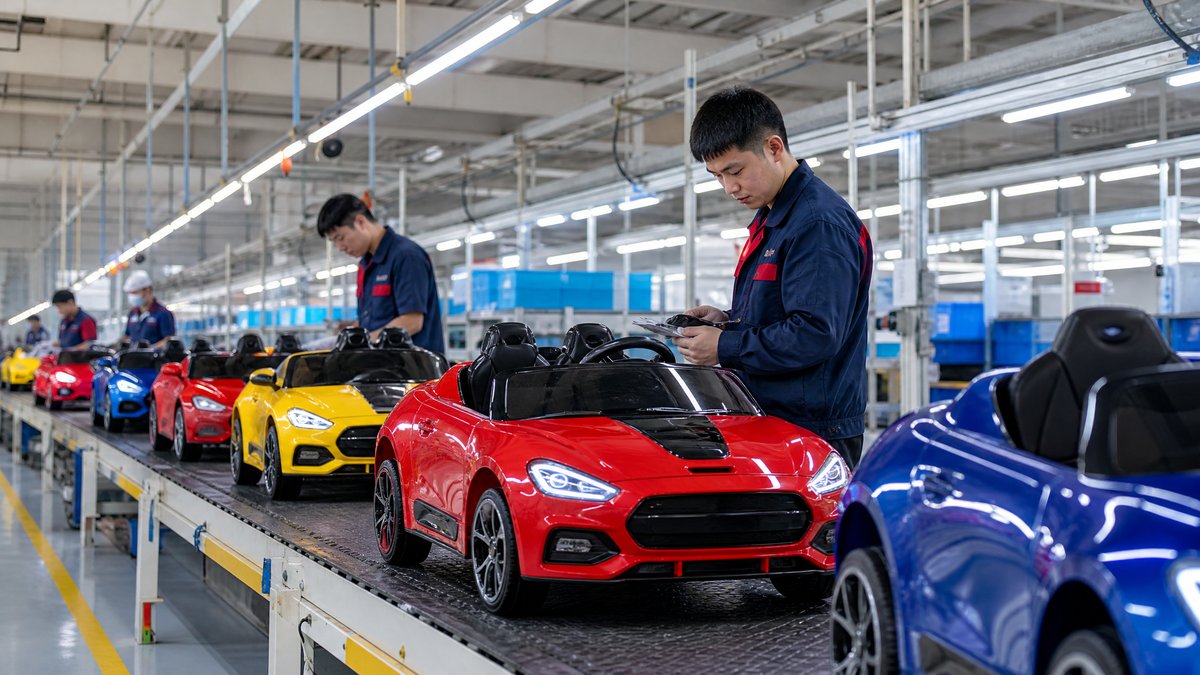
For professional importers, global distributors, and specialized retailers, the process of sourcing motorized play vehicles for children is a task that demands extreme diligence and a structured approach to verification. These products are not merely toys; they are complex mechanical and electrical assemblies that must perform reliably within the hands of young users. The commercial success of a business-to-business partnership in this sector depends heavily on the importer's ability to verify the integrity of the supplier, the quality of the manufacturing process, and the accuracy of the provided documentation. A failure to perform these checks can lead to significant business risks, including product recalls, brand damage, and inventory that does not meet the expectations of the destination market.
Directly answering the core requirement: Importers should verify that a supplier provides comprehensive written model documentation, current supplier evidence of product safety, and appropriate product markings that align with applicable destination-market requirements. Furthermore, it is essential to conduct a thorough external visual check of all samples and verify that the factory operates under a robust quality management system. Readers must verify the exact model’s current manual, written specifications, and applicable supplier reports before proceeding with any importation or distribution activity. Reliance on verbal promises or generic marketing materials is insufficient for professional procurement.
Establishing a Professional Verification Framework
A successful sourcing strategy begins with a model-neutral framework that can be applied to any supplier or product line. This framework focuses on several primary pillars: documentation, manufacturing, and physical assessment. By following a systematic approach, importers can ensure that they are making informed decisions based on evidence rather than assumptions.
The Documentation Pillar
The first step in the framework is the collection and verification of all written records. This includes not only the product specifications but also the evidence of how the product was assessed for safety. Importers should request a complete dossier for each model, which includes the user manual, the list of materials used, and the results of any professional assessments conducted by the manufacturer or third-party entities.
The Manufacturing Pillar
The second pillar involves assessing the factory's ability to produce consistent quality over time. A single high-quality sample does not provide an assurance that a full shipment will meet the same standards. Importers must verify the supplier's internal quality control procedures, their history of production, and their willingness to accept external non-destructive assessments.
The Physical Assessment Pillar
The final pillar is the direct evaluation of the product itself. This should always be limited to an external visual check and tasks explicitly described in the exact model’s current manual. Importers should look for signs of quality in the finish, the sturdiness of the assembly, and the clarity of the markings. Any concerns identified during this phase should be directed to manufacturer-approved support for clarification.
Documentation and Supplier Evidence
In the world of business-to-business sourcing, documentation is the currency of trust. Importers must move beyond surface-level claims and demand deep, verifiable evidence of product integrity. This is particularly important for motorized vehicles, where the internal components are not visible to the naked eye.
Written Model Documentation
Every product should be accompanied by detailed written model documentation. This document should outline the intended use of the vehicle, the age group for which it is suitable, and the specific features included in that model. Importers should verify that this documentation is clear, professionally presented, and available in the language of the destination market.
Current Supplier Evidence
Instead of relying on outdated or generic reports, importers should insist on current supplier evidence. This means that the reports provided should be recent and specific to the exact model being purchased. These reports should confirm that the materials used in the construction of the vehicle have been assessed for safety and are free from harmful substances. This written supplier confirmation is a vital part of the risk management process.
Appropriate Product Markings
Appropriate product markings are the visible indicators that a product has been designed with specific market requirements in mind. Importers should verify that all necessary labels, warnings, and instructional markings are present and permanently attached to the vehicle. These markings should provide clear information to the end-user about how to use the product safely and what precautions to take.
Factory Assessment and Manufacturing Integrity
A supplier's manufacturing capability is the foundation of a long-term business-to-business relationship. Importers should seek out partners who demonstrate a commitment to excellence through their operational practices.
Quality Management Systems
The core requirement for an importer is to verify that the factory has a functional quality management system. This means the supplier has a documented process for inspecting raw materials, monitoring the assembly line, and performing a final check on every finished unit. Importers should ask for a description of these processes and, if possible, evidence of recent internal audits.
Technical and Engineering Support
A professional manufacturer should have a dedicated team of engineers who can provide qualified support for their products. Importers should verify the supplier's ability to answer technical questions and provide guidance on product features. This engineering support is crucial for resolving any issues that may arise during the distribution process and for ensuring that the products remain in a functional state.
Product Assessment Framework
To help importers organize their verification efforts, the following table outlines the key areas of focus during a non-destructive assessment.
| Assessment Area | Verification Focus | Evidence Required |
|---|---|---|
| External Finish | Smoothness of surfaces, absence of sharp edges, and paint quality. | External visual check of multiple samples. |
| Structural Integrity | Sturdiness of the frame and secure attachment of all external parts. | Manual-led setup and physical inspection. |
| Instructional Clarity | Readability and completeness of the user manual and warning labels. | Review of written model documentation. |
| Power Source Safety | Secure housing of the energy source and quality of connection points. | Written supplier confirmation of safety features. |
| Functional Features | Operation of lights, sounds, and movement controls as described. | External check following manual instructions. |
Technical Documentation and Power Systems
The propulsion and energy systems of a ride-on car are its most critical components. Because these systems are internal, importers must rely on technical documentation and supplier assurances to verify their quality.
Energy Storage and Housing
The energy source for a motorized vehicle must be housed in a way that prevents unauthorized access and protects the user. Importers should verify that the energy housing is robust and that the connection points are secure and well-insulated. The written specifications should detail the storage volume and the expected usage duration, but these claims should be verified against current supplier evidence.
Propulsion Assembly and Drive Casing
The propulsion assembly, which includes the drive casing and the internal motors, should be designed for durability and quiet operation. Importers should verify that the drive casing is made from high-quality materials that can withstand the stresses of regular use. It is important to remember that importers should never attempt to access the drive casing or alter the internal circuitry. Any concerns regarding the propulsion assembly should be referred to qualified support.
External Visual Checks and Manual-Led Setup
Safety is the paramount concern when sourcing products for children. Importers must adhere to a strict protocol when evaluating and setting up samples to ensure that they do not inadvertently create risks.
The Importance of the Manual
The user manual is the definitive guide for the safe operation and setup of the vehicle. Importers should never attempt any setup actions that are not explicitly described in the manual. A well-written manual will provide step-by-step instructions, clear diagrams, and important safety warnings. If a manual is missing or unclear, the importer should stop use if there is a concern and contact the manufacturer for a replacement.
Non-Destructive Assessment
All inspections performed by the importer should be non-destructive. This means that the vehicle should not be taken apart, and no internal components should be accessed. The focus should be on what can be seen and felt from the outside. This includes checking for loose parts, ensuring that all fasteners are tight, and verifying that the steering and wheels move freely.
Qualified Professional Support
For any tasks that go beyond the scope of the user manual, such as addressing an electrical issue or a mechanical failure, importers must seek qualified professional support. Attempting to restore or fix internal components without the proper training and tools can lead to further damage and may void the manufacturer's assurance of safety.
Logistics and Border Requirements
The final stage of the sourcing process is ensuring that the goods can be successfully transported and cleared through customs in the destination market.
Destination-Market Requirements
Every region has its own set of rules regarding the importation of motorized toys. Importers must verify that their products align with these requirements before the goods leave the factory. This may involve specific labeling, additional documentation, or the use of certain materials. A failure to meet these requirements can lead to entry delays or even border issues.
Documentation for Clearance
A professional documentation package for customs clearance should include the commercial invoice, the packing list, and the necessary supplier reports. Importers should verify that all information is accurate and consistent across all documents. For example, the description of the goods on the invoice should match the description in the written model documentation.
Frequently Asked Questions
Q: How can I verify the quality of a new supplier without visiting the factory?
A: While a factory visit is ideal, you can perform a thorough verification by requesting extensive written model documentation and current supplier evidence of their manufacturing processes. You should also order multiple samples for a non-destructive assessment and ask for references from other business-to-business partners in your region.
Q: What should I do if the appropriate product markings are not present on the samples?
A: If the samples do not have the required markings for your destination market, you should contact the supplier immediately. Ask them to provide a written plan for how they will ensure that the bulk production includes all necessary labels and warnings. You should not proceed with a large order until you have seen evidence that the supplier understands and can meet your specific market requirements.
Q: Is it safe to perform a manual-led setup of the vehicle myself?
A: Yes, as long as you follow the instructions in the manual exactly and do not attempt any actions that are not described there. The setup process is designed to be straightforward and should only involve external assembly tasks. If you encounter any difficulties or if the instructions are unclear, you should stop use if there is a concern and seek manufacturer-approved support.
Q: How often should I request updated supplier evidence for a recurring order?
A: It is a good practice to request updated documentation at least once a year or whenever there is a significant change to the product design or the materials used. This ensures that your records remain current and that the product continues to align with the latest destination-market requirements.
Q: What is the best way to handle a technical concern with a motorized vehicle?
A: The first step is to consult the troubleshooting section of the user manual. If the issue cannot be resolved through the steps described there, you should contact the manufacturer's technical support team or a qualified professional. You should never attempt to access the drive casing or alter the internal circuitry yourself, as this can be dangerous and will void your warranty.
Conclusion
Sourcing kids' electric ride-on cars is a complex but rewarding endeavor for importers. By implementing a rigorous verification framework that focuses on documentation, manufacturing integrity, and physical assessment, you can minimize risk and build a strong, successful brand. Remember to always prioritize evidence over claims, follow the guidance provided in the user manual, and seek qualified support for any technical concerns.
Request a wholesale quote
Official references
Explore these external resources for current regulatory and trade guidance. Confirm requirements with the relevant authority before placing an order.
Ready to Start?
Factory-Direct · CE & ASTM Certified · MOQ from 50 Units
Our export team works with buyers in 60+ countries. Get a quote within 24 hours.
KR
Written by KidsRideCar
China's leading kids electric ride-on car manufacturer. 500,000+ units shipped annually to 60+ countries. CE, ASTM & EN71 certified.