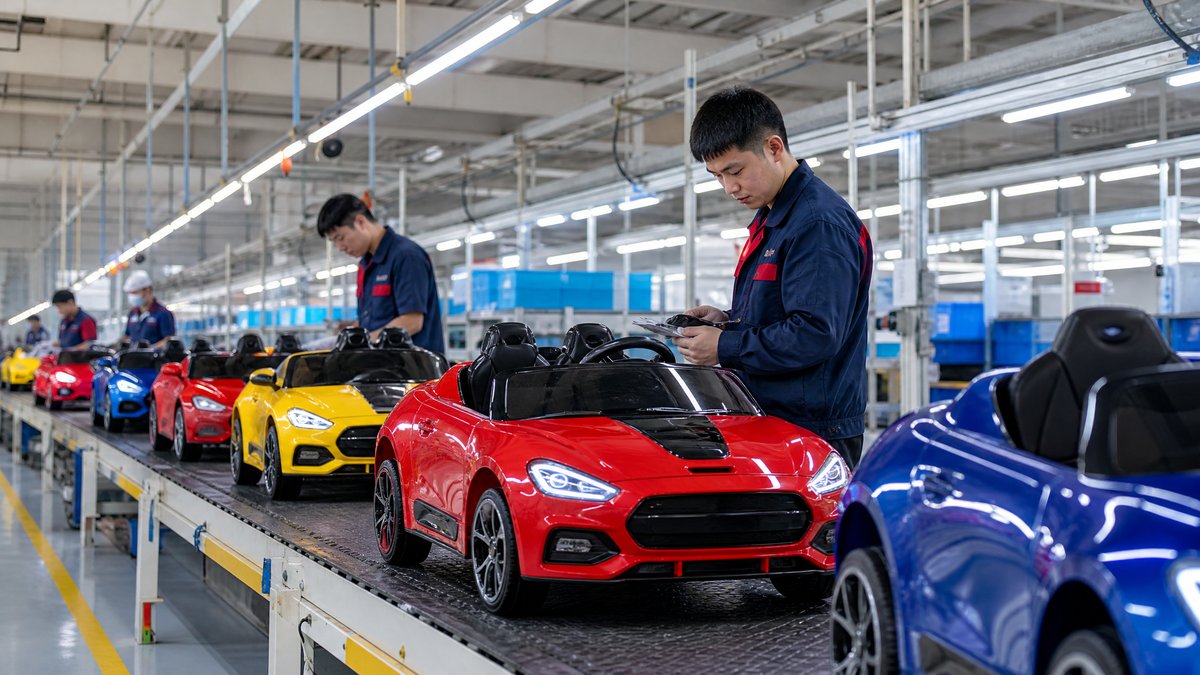
Buyers should write an RFQ (request for quotation) as a structured purchasing brief that lets suppliers quote the same requirement on the same basis. State the product configuration, destination market, quantities, commercial terms, packaging, documentation, and the format you want for the reply. This makes it far easier to compare quotations than asking only for a “best price.”
For kids electric ride-on cars, a brief request such as “quote a 12V car” leaves important differences unresolved. Suppliers could quote different batteries, motors, accessories, cartons, controls, or order conditions. A good RFQ distinguishes what is required from what is preferred and asks suppliers to disclose any variation. It should support a buying decision, not replace product approval, contract review, or verification of current destination-market requirements.
Define the project before listing specifications
Start with a short description of the project. Identify your role—importer, distributor, retailer, wholesaler, marketplace seller, or OEM buyer—and state whether the inquiry is for a new range, repeat purchase, private-label program, or seasonal assortment. Name the intended destination country or countries and sales channel, such as e-commerce, store retail, dealer supply, or rental use.
This context helps a supplier prepare a relevant response on packaging, language, charger options, and available documents. It does not shift compliance responsibility to the supplier. Before ordering or selling, buyers should verify the current requirements that apply in each destination market, including product, labeling, documentation, and battery-transport requirements where relevant.
Describe the ride-on car in quote-ready terms
Attach a model reference, catalog page, photo, drawing, or sample reference whenever possible. If alternatives are welcome, say so, but place them outside the mandatory specification. For each requested SKU, specify the items that matter to your program:
- Vehicle style, seating configuration, requested colors, and included accessories
- Manufacturer-stated age grading and maximum user load
- Battery chemistry, rated voltage, capacity, charger specification, and whether a remote control is requested
- Motor and drive configuration, requested speed settings, wheel and seat materials, and other relevant features
- Retail carton, inner protection, barcode, SKU marking, and required languages
- Included manual, assembly materials, spare-parts expectations, and product-content assets needed for listings
Ask the supplier to state each deviation in a dedicated column. “Remote included,” for example, does not confirm the requested battery or carton. Do not request electrical modifications, battery changes, bypasses, or removal of safety features to meet a target price. Evaluate products as designed and retain manufacturer instructions for assembly, charging, use, and service.
Separate mandatory, preferred, and optional items
Use three labels throughout the RFQ: mandatory, preferred, and optional alternative. Mandatory requirements may include destination market, specified configuration, packaging language, or a required document review. Preferred items could include a color, finish, or listing asset. Optional alternatives allow a supplier to propose a practical variant without presenting it as a direct match.
For an OEM inquiry, identify the logo files, carton artwork, barcode data, or copy you will provide. Request approval steps, MOQ, setup or artwork charges, lead-time assumptions, and any tooling discussion. Keep product and brand approval separate from a general quotation.
Specify how suppliers should quote
Request a table with one row per model and configuration. Ask for currency, unit price, quantity tiers, quotation validity, and the trade term with named place or port. If you need more than one Incoterm, ask for separate quotations rather than comparing unlike figures.
The reply should make inclusions and exclusions clear. Request separate lines for unit price, samples, custom packaging or artwork, spare parts, and conditional charges. Ask for carton dimensions, gross and net weight, units per carton, and a loading estimate. Confirm planning figures before shipment.
Also request MOQ by model, color, and customized component; mixed-SKU options; proposed payment terms; and indicative sample and production timing. Treat timing and capacity as assumptions until terms are agreed.
Request evidence and safety information carefully
State the destination market and ask the supplier to list the documentation available for the exact quoted configuration. Useful identifying details include the document title, product reference, date, issuing body, and any stated limitation. Depending on the market and product, materials may include manuals, labels, declarations, test reports, and battery or charger information.
Avoid a vague promise of “all certificates.” Requirements vary by market, configuration, age grading, battery arrangement, and channel. Verify current requirements before purchase, import, marketing, or sale. Retain manufacturer instruction boundaries and appropriate adult-supervision messaging in safety or age-grading materials.
Ask how the supplier identifies the model and communicates changes between quotation, sample, and production. Agree acceptance criteria separately; do not assume them from a quotation.
Include packaging, content, and after-sales needs
Tell suppliers how the item will reach customers: retail carton, e-commerce fulfillment, or distributor network. Request packaging specifications or photos, shipping marks, assembly contents, and language requirements. Confirm who approves final artwork, manuals, labels, and listing copy.
For service planning, request a spare-parts list, part-identification method, availability assumptions, and defect-reporting process. Do not promise a warranty scope before confirming actual supplier support.
A clear RFQ also requests current photos, dimensions, feature lists, and assembly information for online use. Confirm that content matches the final configuration and may be used.
A practical RFQ checklist
Use this concise structure when drafting your request:
1. Project: buyer type, destination market, sales channel, order window, and contact.
2. Products: model references, quantities, required configuration, preferred features, colors, and accessories.
3. Commercial basis: price tiers, currency, requested Incoterm and named place, MOQ, and proposed payment terms.
4. Packaging and content: carton needs, marks, languages, barcodes, manuals, and listing assets.
5. Documentation: configuration-specific list of available reports, labels, manuals, declarations, and battery or charger information.
6. Reply format: price inclusions, deviations, carton data, customization charges, sample process, and timing assumptions.
Send the same core document to each shortlisted supplier, then log follow-up answers in a comparison sheet. Review the complete offer—not only the headline price—against the configuration, evidence, packaging, communication, and service plan.
Need a buyer-ready RFQ worksheet for your planned assortment? Email KidsRideCar’s B2B team.
FAQ
Should I put a target price in the RFQ?
You may include a planning target, but not as the only decision factor. Ask suppliers to show assumptions and deviations. If you have no target, request price tiers and clear inclusions.
Can one RFQ cover several models?
Yes. Give each model or configuration its own row or attachment, with quantities, colors, accessories, and mandatory requirements stated separately. This avoids mixing specifications between products.
What should I ask for before requesting a sample?
First narrow the list with the proposed configuration, packaging information, and available documentation. Record the exact sample configuration and approved changes; do not assume a sample defines future production.
How should I handle age grading and safety wording?
Request the manufacturer’s proposed age grading, warnings, and instructions. Verify current local requirements before using them in listings, labels, or manuals, and preserve adult-supervision guidance and manufacturer instructions.
Is an RFQ enough to approve production?
No. Before production, confirm the final configuration, artwork, packaging, terms, documentation review, and any sample or quality-approval process in writing.
For help converting product requirements into a supplier-ready inquiry, contact KidsRideCar.
Conclusion
A strong RFQ for kids electric ride-on cars gives every supplier a common, traceable basis for quotation. By defining the configuration, commercial basis, documentation request, packaging needs, and response format, buyers can compare offers more accurately and move to the next approval stage with fewer assumptions. Verify market-specific requirements and final product details before committing to an order or launch.
Official references
Explore these external resources for current regulatory and trade guidance. Confirm requirements with the relevant authority before placing an order.
Ready to Start?
Factory-Direct · CE & ASTM Certified · MOQ from 50 Units
Our export team works with buyers in 60+ countries. Get a quote within 24 hours.
KR
Written by KidsRideCar
China's leading kids electric ride-on car manufacturer. 500,000+ units shipped annually to 60+ countries. CE, ASTM & EN71 certified.