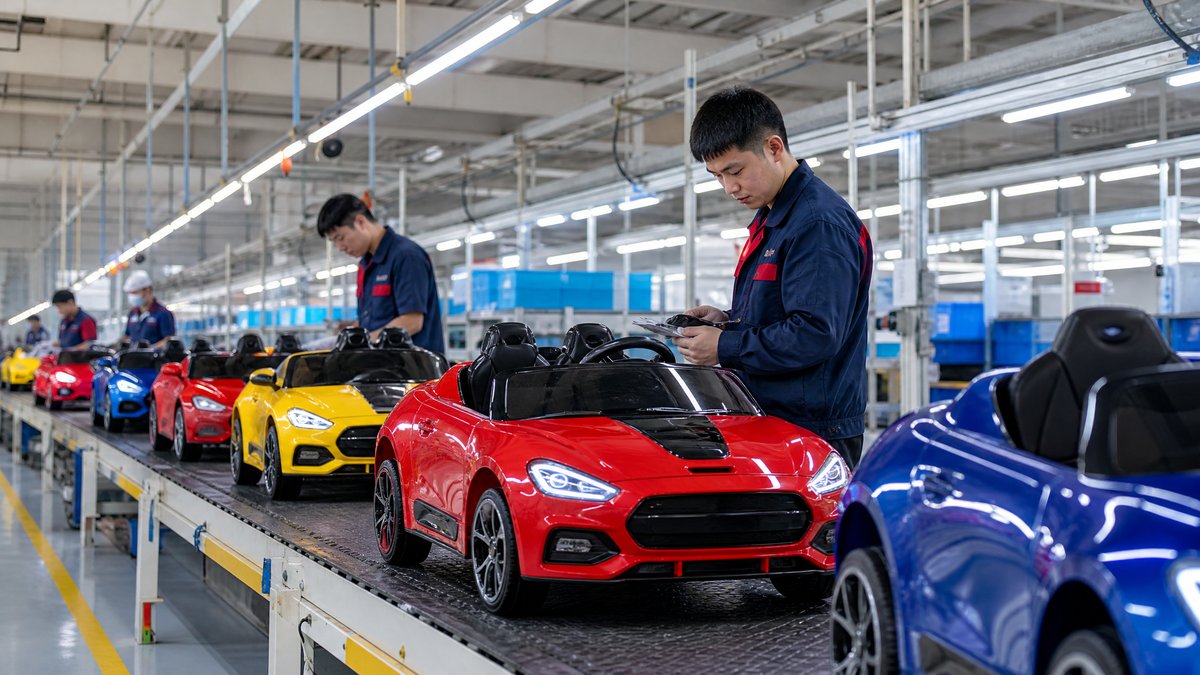
Buyers should compare motor configurations as a complete drive system, not by motor count or a wattage label alone. The practical comparison is: how many driven wheels the design has, where the motors sit, which gearboxes and control components they use, how the battery and vehicle load are matched, and whether the supplier can document and repeat that specification. A configuration that suits a compact, single-seat SKU on smooth surfaces may not be the right commercial fit for a larger body, two seats, or the retail use case a buyer intends to serve.
For B2B procurement, set the intended product position and environment, then put every agreed drive-system detail into sample approval and purchase documents. “Dual motor” describes only one part of the configuration.
Start With the Product Brief, Not the Motor Label
Before comparing quotations, define each SKU’s age range, stated maximum load, seating layout, dimensions, expected surface types, speed modes, remote-control requirement, and destination market. This gives suppliers the same basis for proposing a configuration.
State the commercial goal too: entry SKU, feature-led mid-tier, or larger-format model. Do not promise that a model will handle every terrain, gradient, or user weight.
Compare the Whole Motor Configuration
Motor count and driven-wheel layout
Ask whether the vehicle uses one drive motor, two drive motors, or another arrangement, and identify exactly which wheel or axle each motor drives. A single-motor configuration may be appropriate for certain compact designs. A two-motor arrangement can provide drive at both sides of an axle or at two driven wheels, depending on the design. Do not assume that two motors automatically mean two independently controlled wheels, all-wheel drive, or a stated performance outcome.
Motor-to-gearbox pairing
The gearbox is central to how a motor’s rotation reaches the wheel. Compare the motor and gearbox as a matched assembly: the supplier’s part number, physical fitment, output interface, mounting method, wiring connector, and stated interchangeability. A motor quote without gearbox information is incomplete for sourcing purposes.
Ask whether the left and right assemblies use the same approved part number and whether a replacement assembly is supplied as a motor-and-gearbox unit or as separate components. This matters for spare-parts planning, service instructions, and avoiding accidental substitution. Do not advise consumers or service teams to alter gear ratios, bypass protection, or mix unapproved motor assemblies; use only manufacturer-approved replacement parts and procedures.
Controller, pedal, remote, and speed-mode logic
Ask the supplier to describe pedal operation, forward/reverse selection, speed modes, soft-start behavior if fitted, remote-control priority where applicable, and specified stop behavior. Do not accept vague claims that a remote or speed mode is “safer” without product-specific documentation.
Battery and electrical-system matching
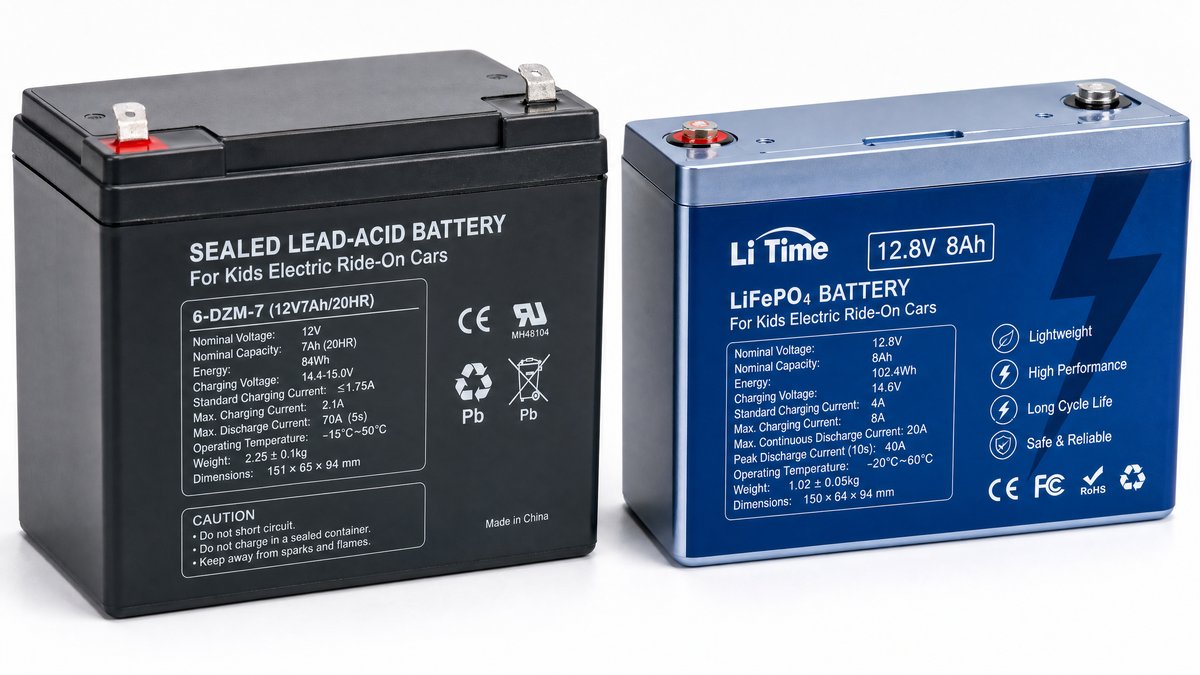
The motor configuration must be evaluated with the specified battery, charger, wiring, and control components. Voltage alone does not describe the entire electrical system, and capacity alone does not prove suitability for a particular use. Ask the supplier to list the approved battery chemistry, nominal voltage, capacity marking, connector, charger specification, and any relevant protective components as part of the exact SKU specification.
Do not specify battery rewiring, voltage upgrades, connector changes, or mixed chargers and packs. Require the approved combination and current charging, storage, and warning information. Verify current destination-market requirements before sale.
Use a Side-by-Side Configuration Matrix
Create a comparison sheet for every supplier sample or quotation. This prevents marketing terms from obscuring material differences.
| Comparison point | What to record | Why it matters |
|---|---|---|
| Drive layout | Motor count; driven wheel/axle; placement | Defines the architecture being quoted |
| Drive assemblies | Motor and gearbox part numbers; left/right differences | Supports sample matching and spare-parts control |
| Electrical system | Approved battery, charger, controller, harness, connectors | Confirms the matched system rather than a voltage claim |
| Controls | Pedal, direction switch, speed modes, remote priority | Aligns listing copy, manual content, and product behavior |
| Mechanical interface | Mounting, wheel/axle connection, wiring protection | Helps identify serviceability and production consistency |
| Documents | BOM, wiring diagram, user manual, parts list, test or compliance records where applicable | Creates an auditable approval file |
| Change control | Revision number and written approval process | Prevents unreviewed substitutions in production |
Use neutral listing wording, such as “two drive motors as specified for this model,” rather than claiming superior power or terrain capability without support in the product documentation.
Turn the Sample Into an Approved Production Standard
Put the approved motor configuration into the purchase order and quality agreement. Include the vehicle model, motor/gearbox assemblies, controller and battery specification, acceptable component revision process, required documents, and the method for approving any substitution before mass production. Require notice and written approval for changes that could affect the drive system, controls, instructions, labels, or compliance file.
Align Motor Configuration With Service Planning
Request a spare-parts list with the compatible vehicle model and revision, description, and ordering method for drive assemblies, controllers, harnesses, batteries, and chargers. Ask how the factory identifies model revisions so the correct part reaches the correct unit.
Train teams to collect the model identifier, symptom description, and evidence before directing users to the manual or an approved service route. Do not recommend bypasses, non-approved batteries, wiring changes, or internal repairs. For a child with special needs, adult supervision is required and use must remain within manufacturer-approved instructions and accessories.
Request a motor-configuration comparison sheet from KidsRideCar before finalizing your next ride-on car RFQ.
FAQ
Is a dual-motor kids ride-on car always the better wholesale choice?
No. Dual motor describes motor count, not the entire design or its suitability. Compare the drive layout, gearbox pairing, controller, battery system, intended SKU position, approved documentation, and spare-parts support. A configuration is a better choice only when it fits the defined product brief and can be consistently supplied.
What should an RFQ say about the motor system?
Specify the vehicle model and intended use case, then request the motor count, driven-wheel layout, motor-and-gearbox part numbers, controller, battery, charger, harness/connectors, control functions, BOM revision, spare-parts list, and proposed change-control process. Ask suppliers to identify anything that differs between the quotation and the sample.
Can buyers compare motor wattage across suppliers directly?
Not reliably by itself. Labels and catalog descriptions may not show the complete operating conditions or matched components. Evaluate wattage only alongside the motor/gearbox assembly, controller, battery, vehicle configuration, supplier documents, and permitted product claims. Do not turn a single label value into an unsupported performance promise.
How can an importer prevent component substitutions after sample approval?
Attach the approved BOM and configuration matrix to the purchase documentation, record component and revision identifiers, retain sample records, and require written approval before substitutions. During inspection, check accessible components and documentation against the approved reference. A clear escalation path for proposed changes is as important as the initial specification.
What documentation should retailers retain for motor-related support cases?
Retain the approved product specification, BOM revision, manuals, supplier service guidance, parts list, purchase order, and change approvals. For each support case, record the unit model or batch identifier, reported issue, evidence received, and manufacturer-approved resolution. This supports consistent service without giving unsafe repair advice.
Conclusion
Motor configuration comparison is a specification-control exercise, not a race for the largest number on a label. Buyers who define the intended SKU, map the full drive system, compare documented assemblies side by side, and lock the approved configuration into sample and production controls are better positioned to source responsibly. Verify current requirements in the destination market and keep product claims limited to what the final, documented model can support.
Email KidsRideCar to discuss a documented drive-system specification for your next B2B ride-on car program.
Official references
Explore these external resources for current regulatory and trade guidance. Confirm requirements with the relevant authority before placing an order.
Ready to Start?
Factory-Direct · CE & ASTM Certified · MOQ from 50 Units
Our export team works with buyers in 60+ countries. Get a quote within 24 hours.
KR
Written by KidsRideCar
China's leading kids electric ride-on car manufacturer. 500,000+ units shipped annually to 60+ countries. CE, ASTM & EN71 certified.