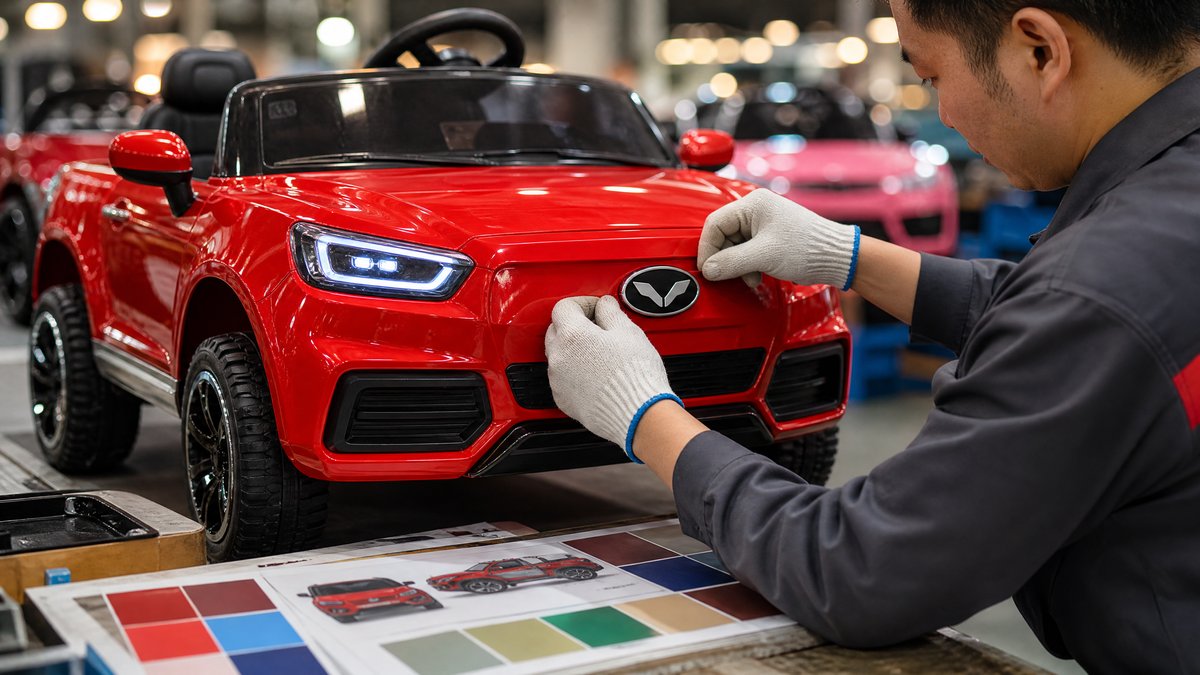
Buyers should approve color samples through a written, component-by-component process—not from a color name, rendering, or supplier photograph alone. Request physical samples in the intended material and finish, review them under agreed conditions, retain an identified master, and link approval to the production specification.
For kids ride-on cars, color affects more than styling. The body shell, wheels, seat, trim, decals, carton, and online imagery shape a shopper’s impression. Yet a screen shade may look different in molded plastic, painted parts, seat material, or printed artwork. A disciplined process manages these differences before volume production; unlike materials need not look identical in every light.
Build a usable color brief
Start with a brief that removes subjective language. Phrases such as “luxury red” or “the usual pink” leave too much to interpretation. Identify the model and revision, destination market, approver, and feedback deadline.
List every surface that needs review, such as the body shell, grille, dashboard, wheel covers, seat, steering wheel, remote control, decals, carton, and inserts. State the intended appearance: gloss, matte, texture, metallic-looking, pearl-effect, transparent, or tinted. Include private-label packaging coordination where needed.
A physical brand swatch or recognized color-system reference communicates direction, but is not a complete production standard. Screen settings, compression, lighting, and editing can alter digital color. Retain and identify a physical reference where brand consistency matters.
Request production-representative samples
The best approval sample uses the intended material, pigment method, finish, and molding or painting route. An early chip, hand-painted panel, or borrowed part can support discussion, but may not predict the finished product.
Ask the supplier to state what each item represents. A molded body-panel plaque, painted component, seat insert, and printed decal proof are not interchangeable. Thickness, texture, gloss, backing color, and process can change perceived color.
Review visible components rather than the body panel alone. Exact uniformity across molded plastic, printed graphics, and seat materials may not be realistic. Decide whether the relationship is acceptable and intentional, such as matte trim against a glossy body.
Each sample should have a record with the model, part, material or process, color reference, finish, date, supplier contact, and revision. Photograph the identifier, but treat the labeled physical sample as controlling evidence. This prevents approval of one version while the supplier refers to another.
Use repeatable visual review conditions
Color depends on light. A panel may appear warmer in daylight, cooler indoors, or more reflective under retail lights. Buyers need not claim laboratory-level measurement, but visual review should be repeatable.
Compare the sample with the agreed reference in neutral daylight where practical. If it will mainly be displayed indoors, also check representative indoor light. Review normal viewing angles, especially for glossy or metallic-looking finishes. Record uneven tone, unexpected sparkle, inconsistent gloss, flow marks, or mismatched paired components.
For teams in different countries, consistent photographs and a short video can support discussion. They do not replace physical review. If buyer and supplier each retain a matched, labeled sample, later production conversations can refer to the same standard.
Turn approval into a production standard
A message saying “looks good” is too vague for an OEM or wholesale order. Attach a concise approval record to the purchase order, product specification, or quality agreement. It should state:
1. The approved sample ID, model, part, color description, finish, and revision.
2. The physical master retained by the buyer and the corresponding supplier sample.
3. The components and materials covered, plus any intended variation.
4. The requirement for written approval before changing colorant, material, paint, surface process, artwork, or source.
5. The next comparison point: first-off component, pilot run, or pre-shipment inspection.
Precision helps. “Blue body” is broad. “Approved sample CS-07: molded main body shell, blue, glossy finish, revision B” is much easier for purchasing, quality, merchandising, and production teams to apply. Add internal SKU or artwork codes where applicable.
Check color before release and shipment
Sample approval is a gate, not the last check. Before release, ask the supplier to confirm that the approved reference is accessible to responsible production and quality teams. For a new model, a brand-critical shade, or a large order, buyers may choose to compare first-off or pilot-run components with the retained master before full output is authorized.
The inspection plan can include visual review of selected finished units and key parts against the standard. The objective is to identify a meaningful departure early, not to demand an unrealistic identical appearance on every unlike surface. Record the sample ID, component, viewing context, observations, and supporting photographs. If a significant difference appears, seek a written disposition before the affected goods are released.
Keep commercial materials aligned too. Carton artwork, product photography, listings, and retailer information should reflect the approved finish. If imagery was created from a rendering or early sample, update it after final color approval.
For help organizing a color approval pack around a model and brand brief, email KidsRideCar.
Avoid predictable approval gaps
Do not approve a color from a compressed image or generic name alone. Do not overlook seats, trim, decals, or packaging when they are commercially visible. Do not discard the master sample or let several untracked versions circulate.
Treat a requested pigment, resin, finish, or supplier change as a formal change request, not merely a cosmetic adjustment. Ask what parts and materials may be affected, review an updated sample when appropriate, and update the approval record before use. Buyers should verify current destination-market requirements and obtain appropriate qualified advice on any product, labeling, documentation, or marketing implications of a change.
Keep color approval separate from claims about safety, age grading, or compliance. Those matters require product-specific review and evidence. When associated material discusses use or age suitability, follow manufacturer instructions and applicable requirements, and clearly preserve adult-supervision boundaries.
FAQ
Should buyers approve a Pantone or other color-system reference by itself?
No. A reference helps express the intended shade, but it does not show how it will appear on the actual molded or finished material. Use it with a physical, production-representative sample and a written part-and-finish description.
How many samples should a buyer request?
Request enough to cover all color-critical visible materials, rather than selecting an arbitrary number. This commonly includes the body, key trim, seat material, wheel appearance, decals, and packaging proof when those elements influence product presentation.
Can a video call replace a physical color sample?
No. A video call is useful for discussion, but camera settings and lighting can distort appearance. Use it as supporting communication, then decide against a labeled physical reference that both parties can identify.
What if the factory needs to change pigment or material after approval?
Ask for a formal change request explaining the affected part, process, and expected visual impact. Request a revised sample where warranted and give written approval or rejection before the change is used. Clearly mark obsolete references.
Who should give the final approval?
Name one accountable commercial approver, while inviting quality, brand, or merchandising colleagues to contribute when relevant. The supplier should receive one consolidated decision naming the approved sample ID and revision.
For a coordinated review of samples, specifications, and production checkpoints, contact the KidsRideCar team.
Conclusion
A reliable color approval process for kids ride-on cars is physical, specific, and documented. Define every affected component, review production-representative samples under repeatable conditions, retain a labeled master, and make approval part of the controlled production standard. Recheck the result at an appropriate production stage and formally manage later changes. These steps reduce avoidable misunderstandings and support consistent product presentation across the order.
Official references
Explore these external resources for current regulatory and trade guidance. Confirm requirements with the relevant authority before placing an order.
Ready to Start?
Factory-Direct · CE & ASTM Certified · MOQ from 50 Units
Our export team works with buyers in 60+ countries. Get a quote within 24 hours.
KR
Written by KidsRideCar
China's leading kids electric ride-on car manufacturer. 500,000+ units shipped annually to 60+ countries. CE, ASTM & EN71 certified.