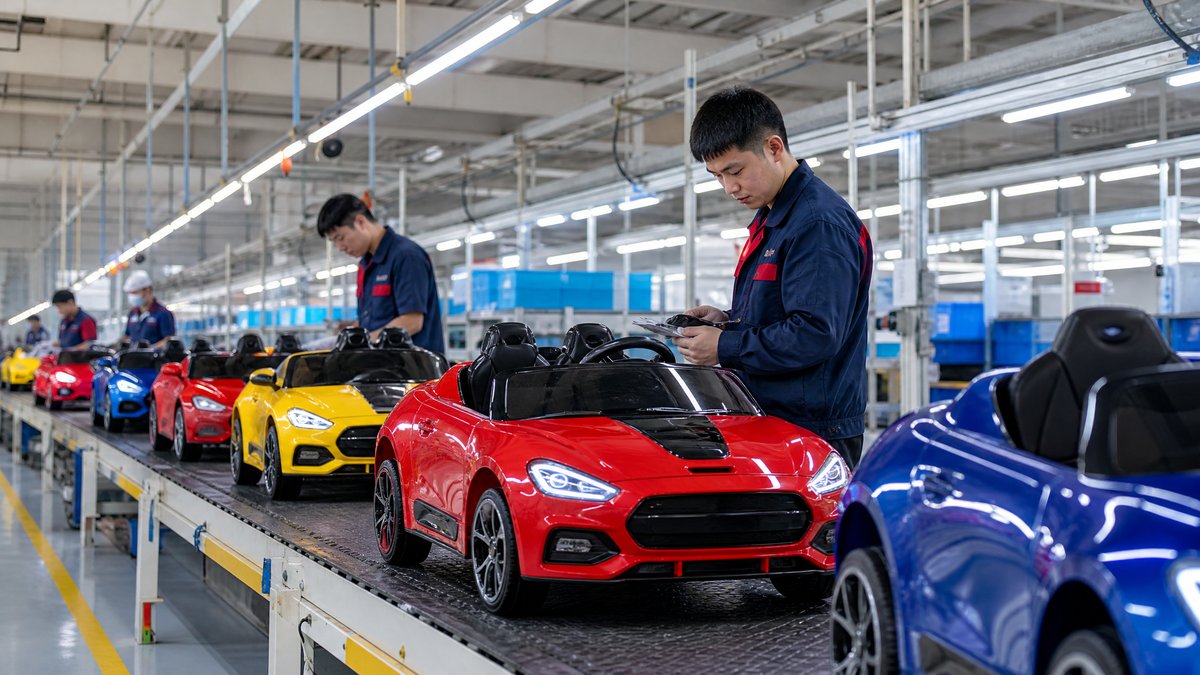
In the competitive landscape of miniature vehicular toys, the assurance of user well-being is a prerequisite for sustainable commercial success. Importers, wholesalers, and retail chains must navigate a complex landscape of physical engineering and material science to ensure that the products they bring to market maintain the highest levels of structural soundness. This comprehensive analysis focuses on five primary pillars of product integrity: the balance of the vehicle, its resilience under excessive weight, the durability of its steering and rolling components, the containment of its power source, and the clarity of its instructional markings.
It is imperative to note that all safety evaluations are highly specific to individual models. Before finalizing any procurement strategy or conducting a non-destructive assessment, stakeholders must consult the written model documentation provided by the manufacturer. All setup and maintenance activities should follow the manual-led setup instructions, and any concerns regarding the operational status of a vehicle should prompt an immediate decision to stop use if there is a concern. For technical matters, seeking qualified or manufacturer-approved support is the recommended course of action.
Stability Engineering: The Foundation of Physical Balance
The physical balance of a miniature vehicle is the most critical factor in preventing accidental tip-over events. When a young user operates a motorized toy, the interaction between the center of mass and the ground contact points determines whether the vehicle remains upright during various maneuvers. For business-to-business buyers, evaluating this aspect requires a deep understanding of how weight is distributed across the chassis.
High-quality manufacturers prioritize a low-slung center of mass. By positioning the heaviest components, such as the power cell and the propulsion units, at the lowest possible point within the frame, the vehicle gains a natural resistance to lateral tipping. When reviewing current supplier evidence, professional buyers should look for engineering diagrams that show these heavy elements situated beneath the seating area or within the lower floorboard structure. A vehicle with a high-slung weight distribution is inherently less stable when traversing inclined surfaces or performing turns.
Furthermore, the proportional distance between the wheels, often referred to as the track width, plays a significant role in lateral stability. A broader base of support provides a more stable platform, which is especially important for models designed to resemble rugged outdoor vehicles. These models often have higher ground clearance to mimic the aesthetic of full-sized off-road machines, but this increased height must be offset by a wider stance to maintain proper balance. Importers should prioritize designs where the width of the vehicle is substantial relative to its height, ensuring that the lateral force generated during steering does not exceed the threshold of stability.
The longitudinal distance between the front and rear axles, known as the wheelbase, is equally important for preventing forward or backward tipping. During sudden changes in movement, such as rapid acceleration or deceleration, a vehicle with a short wheelbase may experience a shift in weight that causes the front or rear wheels to lose contact with the ground. This phenomenon, often seen in compact models with high-tier power configurations, can be mitigated by extending the frame to provide a longer support base. Professional buyers should favor models that demonstrate a balanced ratio between the length of the vehicle and its power output, as this ensures that the front of the car remains firmly planted during all phases of operation.
Structural Resilience and Overload Protection
The ability of a vehicle to withstand forces beyond its standard operational parameters is a key indicator of manufacturing quality. Structural resilience encompasses both the physical frame of the vehicle and the internal systems that manage energy flow. For a professional buyer, ensuring that a product can handle multiple times its intended load without structural failure is essential for long-term durability.
The choice of materials used in the construction of the chassis is the first line of defense against structural collapse. High-quality ride-on cars utilize reinforced polymers or composite materials that offer a high strength-to-weight ratio. In premium models, an internal sub-structure made of metallic alloys provides additional support, ensuring the vehicle maintains its shape under pressure. When sourcing, business-to-business professionals should request detailed information on the material composition and the results of static pressure tests. A well-engineered car should support a weight that is multiple times the maximum recommended mass, providing a substantial margin of safety.
Beyond physical weight, the vehicle must also be protected against the stress of excessive energy flow within its internal systems. This often occurs when the propulsion units are forced to operate under high-resistance conditions, such as climbing steep inclines or moving through dense surfaces like thick grass. To prevent damage to the internal components, professional-grade models incorporate thermal regulation mechanisms and current management systems. These systems monitor the heat generated by the internal components and temporarily pause operation if the temperature exceeds a safe threshold. This prevents permanent damage and ensures the longevity of the propulsion assembly.
Mechanical Integrity: Wheels and Steering
The wheels and steering components are the primary points of interaction between the vehicle and the environment. Their reliability is paramount for maintaining control and ensuring a smooth ride.
The method by which the wheels are secured to the axles is a critical engineering detail. In low-cost models, simple snap-on mechanisms or plastic clips are often used, but these can fail over time, leading to the detachment of a wheel during use. For business-to-business sourcing, it is recommended to prioritize vehicles that use mechanical locking systems, such as heavy-duty pins or threaded fasteners with locking features. These systems provide a much higher level of security and are less likely to be compromised by the vibrations and impacts associated with regular use.
A well-designed vehicle must also account for the gaps between moving parts to prevent the risk of injury. Engineering standards dictate that clearances between the wheels and the body of the car must be carefully managed. Gaps should be either very narrow, to prevent small objects or fingers from entering, or sufficiently wide to ensure that nothing can become trapped if it does enter. During a non-destructive assessment of a sample, professional buyers should verify that these clearances are maintained throughout the full range of steering movement.
To prevent the vehicle from being turned at an angle that could compromise its balance, robust steering limiters should be integrated into the design. These mechanical stops prevent the front wheels from rotating beyond a pre-defined arc, ensuring that the vehicle remains stable even during sharp maneuvers. Importers should verify that these limiters are made of durable materials and are securely integrated into the steering assembly, as they must be able to withstand the force applied by a user during vigorous play.
Power Source Integrity and Containment
The power source is one of the most important components to evaluate from a safety perspective. Because it stores and releases energy, it must be managed with extreme care to prevent thermal events or chemical exposure.
The area where the power cell is housed must be designed to prevent unauthorized access, particularly by young users. High-quality designs ensure that the power cell enclosure is secured with fasteners that require a specific tool to remove. This ensures connection points and internal circuitry remain protected. Furthermore, the enclosure should be heat-resistant and include ventilation to allow for the dissipation of thermal energy during charging.
For business-to-business importers, the availability of comprehensive documentation is as important as the physical product itself. When sourcing vehicles with advanced power cells, it is essential to obtain current supplier evidence that confirms the stability of the power source during transport and use. This includes detailed reports on the chemical composition and the results of rigorous stress tests performed by independent laboratories. Without this written supplier confirmation, a buyer cannot be certain of the product's long-term reliability.
A well-engineered electrical system includes multiple failsafes to prevent short circuits. These include internal fuses positioned close to the power source to intercept surges, as well as insulated connectors that prevent incorrect connections. Additionally, charging systems should automatically stop the flow of energy once the power cell has reached its full storage volume, preventing risks associated with overcharging.
Labeling and Risk Communication
Clear and permanent labeling is the final layer of protection for both the user and the distributor. It ensures that the product is used within its engineered limits and that all residual risks are clearly communicated.
All ride-on vehicles must feature appropriate product markings that are easy to read and permanent. These markings should include information on the intended age group, the maximum weight the vehicle can support, and the number of users it is designed to carry. Furthermore, clear warnings regarding the use of the vehicle near water, in traffic, or on steep inclines must be prominently displayed. For business-to-business entities, ensuring labels are provided in the primary language of the destination market is critical for regulatory alignment.
To ensure accountability throughout the supply chain, each product should include markings that identify the manufacturer or the importer of record. This traceability is essential for managing any potential issues that may arise after the product has entered the market. Professional buyers should verify this information is present on the product and packaging, as it is a fundamental requirement for international markets.
Sourcing and Use Framework for Business-to-Business Professionals
The following framework outlines a model-neutral approach to evaluating ride-on car safety for importers.
Procurement Evaluation Matrix
| Category | Evaluation Criteria | Verification Method |
|---|---|---|
| Stability | Low-slung center of mass and broad base | Review of engineering diagrams and physical assessment |
| Resilience | Ability to withstand multiple times the rated load | Request for static load test results and material data |
| Mechanical | Secure wheel attachment and pinch point clearance | Non-destructive assessment of samples and tool-based checks |
| Power Source | Secure enclosure and thermal management | Verification of documentation and enclosure inspection |
| Communication | Permanent and clear risk-related markings | Visual audit of labels and language verification |
Professional Procurement Checklist
* Document Review: Collect and verify all written model documentation and current supplier evidence before placing an order.
* Sample Assessment: Perform a non-destructive assessment on production-grade samples to verify that the physical product matches the engineering claims.
* Label Audit: Ensure all appropriate product markings are present, correctly translated, and permanently attached to the vehicle.
* Packaging Check: Verify that the packaging is sufficient to protect the vehicle's integrity during international transit, preventing damage to the steering or power systems.
* Qualified Support: Establish relationships with manufacturer-approved support centers to handle technical queries or maintenance needs.
Frequently Asked Questions
Q: How can a professional buyer verify the stability of a new model without performing destructive tests?
A: Business-to-business entities should request a comprehensive center of mass analysis and written supplier confirmation regarding the vehicle's performance on inclined surfaces. Additionally, performing a non-destructive assessment on a sample by checking the ratio between the track width and the overall height can provide a strong indication of the vehicle's inherent balance.
Q: What should be the primary focus when evaluating the power system of a ride-on car?
A: The focus should be on the containment and protection of the power source. Buyers should ensure the power cell is housed in a secure enclosure that requires a tool for access and that the system includes multiple layers of thermal and current protection. Reviewing the written model documentation for evidence of these features is essential for ensuring product reliability.
Q: Are there specific requirements for the language used on product labels and instructions?
A: Yes, for successful regulatory alignment, all appropriate product markings and instructional materials must be provided in the primary language of the market where the product will be sold. This includes all safety warnings, age recommendations, and assembly instructions. Importers should perform a visual audit of these materials to ensure they meet all applicable destination-market requirements.
Q: What is the recommended course of action if a technical issue is discovered after the product has been sold?
A: The most important step is to advise the user to stop use if there is a concern immediately. Distributors should then coordinate with manufacturer-approved support or qualified support to address the issue. Users should never be encouraged to perform their own maintenance or to take apart internal components, as this can compromise the vehicle's integrity.
Request a wholesale quote
Official references
Explore these external resources for current regulatory and trade guidance. Confirm requirements with the relevant authority before placing an order.
Ready to Start?
Factory-Direct · CE & ASTM Certified · MOQ from 50 Units
Our export team works with buyers in 60+ countries. Get a quote within 24 hours.
KR
Written by KidsRideCar
China's leading kids electric ride-on car manufacturer. 500,000+ units shipped annually to 60+ countries. CE, ASTM & EN71 certified.