Introduction
A two-seater can make a retail assortment more useful for siblings, shared play and family venues, but the larger body and carton also affect freight, merchandising and after-sales support.
For importers, wholesalers, retailers and rental operators, match the configuration with the intended channel, confirm product information with the supplier, and compare delivered-cost and support requirements. This guide explains how to evaluate a 2 seater kids ride-on car wholesale opportunity, including trucks and golf-cart-style vehicles, without relying on unverified claims. Final age guidance, load limits, electrical specifications, packaging, compliance and operating suitability must be confirmed for the exact model and destination.
Why buyers choose two-seater models
The main commercial advantage is assortment flexibility: one vehicle can be presented as a sibling product, shared gift, venue attraction or larger display model. Two seats do not automatically mean that every child combination is suitable. Request the model’s age guidance, seating configuration, load information and supervision instructions, including whether separate footwells and parent controls are provided.
A larger product also affects warehouse and delivery economics. Obtain assembled and packed dimensions, and confirm whether the carton includes the accessories, charger, remote, hardware and printed materials.
Vehicle-type comparison: car, truck and golf cart
Two-seater ride-on cars
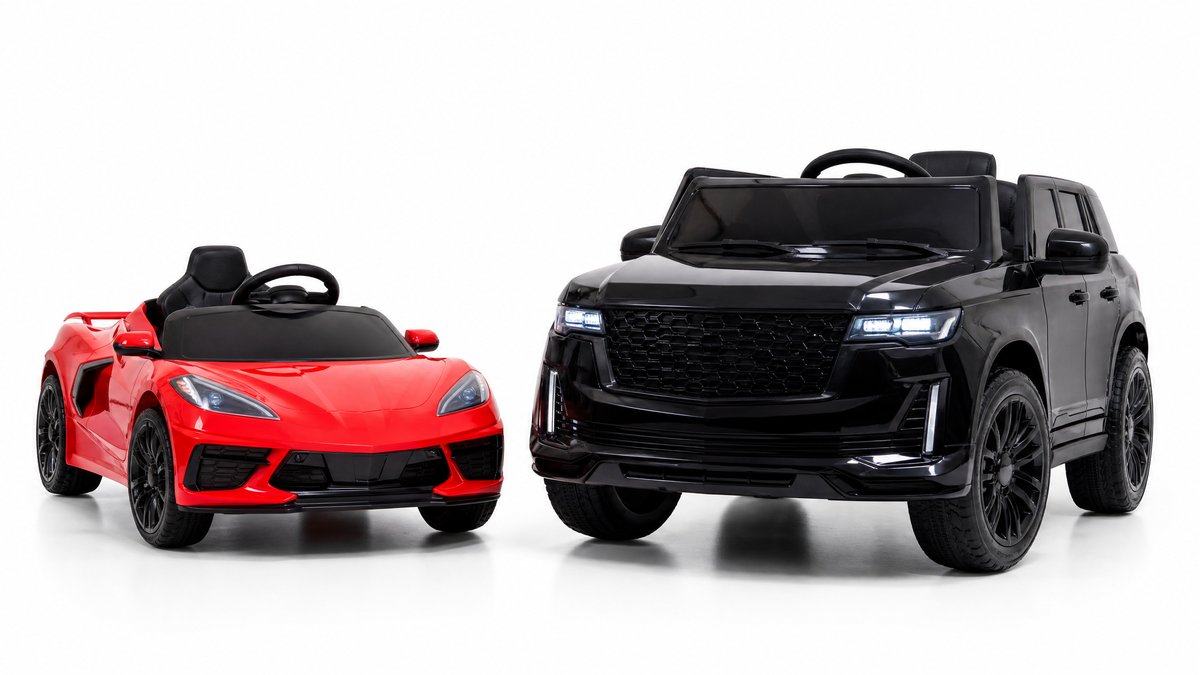
A two-seater ride-on car is often selected for mainstream toy retail, online merchandising and gift-oriented assortments. Compare the body width, seat spacing, entry access, windshield or canopy components, wheel design and dashboard layout. For online sales, request clear images showing both seats and the actual control area. A product page should not imply that a two-seater has a particular drive system, battery voltage or accessory unless that information is confirmed for the SKU.
For a 2 seater kids ride on car wholesale order, ask the supplier to separate standard configuration from optional features. Examples may include a parent remote, lights, sound functions, soft-start behavior, seat belts, EVA-style wheels or suspension components. The commercial value of an option depends on whether it is included in the quoted unit and whether it changes packaging or documentation.
Two-seat kids’ trucks
A two-seat truck can appeal to retailers looking for utility styling, construction themes or a visually distinctive display. The buyer should examine the seat arrangement, steering clearance, body panels, loading access and carton protection around protruding parts. If a supplier markets the product as a 2 seat kids ride-on truck supplier offering, request a model-specific data sheet rather than comparing only the product name.
Clarify whether the truck bed is decorative or intended for a defined use. Do not publish unsupported carrying claims for the bed, and do not assume that a truck-style body has the same operating characteristics as a passenger-style car. Ask for a list of included parts, warnings and intended-use instructions.
Two-seat golf-cart-style vehicles
A golf-cart-style vehicle may fit resort-themed retail, outdoor toy channels, amusement venues or family entertainment projects. A 24V kids golf cart wholesale inquiry should identify whether 24V refers to the complete vehicle system, the battery arrangement or another component description. Request the battery type, charger specification, connector information and product manual for the exact model. Voltage alone is not enough to compare suitability or operating results.
Golf-cart styling can also create assumptions about outdoor use. Buyers should ask which surfaces and environments the supplier’s instructions cover, whether the model is intended for private play or commercial operation, and what supervision controls are available. Any venue operator should review local requirements and create an operating SOP before putting units into service.
Carton and container questions
Two-seater products often require more careful packing and freight planning than compact single-seat units. Add the following fields to your supplier comparison sheet:
- Product dimensions when assembled, including mirrors, canopy, steering components or other removable parts.
- Carton length, width, height and gross weight, with the unit of measurement clearly stated.
- Number of cartons per vehicle and whether accessory cartons are separate.
- Carton protection around wheels, seats, body edges and fragile decorative parts.
- Pallet requirements, if any, and whether pallets are included in the freight quotation.
- Carton marks, SKU labels, country-of-origin information and handling marks required by your logistics process.
- Packaging photographs from all sides, including internal protection where available.
- Loading assumptions for the proposed shipment, to be confirmed with the forwarder.
Do not calculate container quantity from product dimensions alone. The usable loading plan depends on carton orientation, stacking instructions, palletization, weight limits, mixed-SKU loading and the forwarder’s confirmation. Request a packing list with cartons per SKU and compare it with the commercial invoice and purchase order before shipment.
For e-commerce channels, ask whether the master carton is suitable for parcel handling or needs extra last-mile protection. An ocean-transport carton may not provide the same experience through residential delivery. Check your own packaging and carrier requirements.
Product information for retailers
A wholesale product page or catalog entry should make the two-seater’s differences easy to understand. Request a standardized data sheet for every model, including:
1. Model name, model number and revision date.
2. Product category: ride-on car, truck, golf-cart-style vehicle or another defined type.
3. Recommended age range and supervision notes, subject to market review.
4. Number and layout of seats.
5. Assembled dimensions and product weight.
6. Carton dimensions, gross weight and packing quantity.
7. Battery and charger description, including voltage and compatibility information.
8. Drive configuration and control method, stated only as confirmed for the model.
9. Included accessories and parts supplied in the carton.
10. User manual, warnings, assembly requirements and care instructions.
11. Available replacement parts and the information needed to identify them.
12. Approved product images, lifestyle images and usage restrictions for those assets.
A catalog should distinguish confirmed data from optional configuration. For example, “parent remote available” is not the same as “parent remote included.” Likewise, “24V model available” does not confirm that every color, body style or two-seat variant uses that system. Record the exact SKU and configuration in the purchase order. Prepare customer-service answers from the supplier’s current manual, including assembly, charging, suitable surfaces and replacement-parts requests. For parts planning, a [kids ride-on car replacement parts catalog](/kids-ride-on-car-replacement-parts-catalog-distributors) can help organize model references.
Two-seater RFQ checklist
A useful RFQ reduces back-and-forth and makes supplier quotations comparable. Include the following fields in your request:
Commercial fields
- Target sales channel: retail stores, e-commerce, distributor, rental venue or mixed.
- Destination country, city and delivery point.
- Requested models, colors and estimated quantities by SKU.
- Whether you need a mixed-model order or a single-model order.
- Requested trade term or quotation basis, to be reviewed with your forwarder.
- Target sample quantity and sample configuration.
- Branding, packaging and language requirements.
- Required quote validity period and payment-term proposal for discussion.
Technical and packaging fields
- Two-seat layout and intended user profile.
- Battery and charger configuration for each model.
- Parent remote, control modes and other included features.
- Assembled dimensions, carton dimensions and gross weight.
- Cartons per unit, units per pallet and loading assumptions.
- Included accessories, assembly parts and printed documents.
- Replacement-parts availability and model-identification method.
- Product photos, specification sheets and manual files for review.
Documentation fields
- Packing list and commercial invoice format.
- Product labels, warnings and instruction languages.
- Supplier-provided test or compliance documents relevant to the destination and exact configuration.
- Battery and charger documentation where applicable.
- Quality-control or pre-shipment inspection arrangements.
- Warranty terms, claims evidence requirements and escalation contacts.
Ask the supplier to mark every item as standard, optional, unavailable or requiring confirmation. This prevents a catalog image from becoming an accidental purchase specification. For country-specific safety, labeling, import and tax requirements, confirm the current rules with a qualified local adviser, customs broker or relevant authority. A supplier can provide technical files, but that does not replace the importer’s own market review.
Comparing samples and quotations
Order or review a sample before approving a larger purchase when the product is important to a new category or channel. Use a written scorecard covering seat layout, fit and finish, steering operation, wheel alignment, control response, packaging condition, assembly clarity and the completeness of the document pack. Do not alter wiring, battery protection, charger components or other electrical systems during evaluation. Escalate suspected faults to the supplier or an appropriately qualified service provider.
When comparing quotations, separate the following cost and risk factors:
- Unit price by exact configuration.
- Sample and tooling charges, if applicable.
- Packaging and labeling charges.
- Inland transport, export handling and freight assumptions.
- Destination charges, duties, taxes and broker fees, which require current confirmation.
- Inspection, documentation and service-support costs.
- Replacement-part ordering process and expected availability, to be confirmed rather than assumed.
A lower unit quote may not be the lower total procurement cost if it excludes packaging upgrades, documentation work, spare parts or destination charges. Keep a model-level comparison so a two-seat truck is not compared with a golf-cart-style product that has a different configuration and packing plan.
First-order workflow for importers and distributors
1. Define the channel, destination and intended assortment.
2. Shortlist two-seat cars, trucks and golf-cart-style models using model numbers, not only marketing names.
3. Send the same RFQ fields to each supplier.
4. Review the data sheet, carton plan, manuals and available compliance documents.
5. Request a sample or documented sample review for shortlisted configurations.
6. Record approved changes in writing, including colors, accessories, labels and packaging.
7. Confirm the purchase order against the approved configuration and packing list.
8. Arrange inspection and document collection before shipment according to your risk plan.
9. Prepare receiving, customer-service and replacement-parts procedures before launch.
10. Review the first order and update the assortment based on actual returns, questions and service needs.
This workflow also suits a 2 seater kids golf cart supplier inquiry. For commercial use, clarify supervision, charging, storage, cleaning, inspection and operator training before delivery.
FAQ
What should buyers check on a two-seater?
Confirm the exact model, seat layout, age guidance, load information, dimensions, battery and charger configuration, controls, included accessories, warnings, carton data and replacement-parts process. Verify each point against the supplier’s current documentation and your destination-market requirements.
How can two-seater models affect packaging?
They may require larger cartons, different internal protection, additional assembly steps or different loading assumptions. Request assembled and packed dimensions, gross weight, cartons per unit and loading photographs or plans. A freight forwarder should confirm the final shipment assumptions.
What product details should appear in a catalog?
Include model number, images, seat count, dimensions, carton data, confirmed electrical configuration, included features, age guidance, warnings, manual availability, packaging languages and support information. Clearly label optional features so retailers do not publish inaccurate specifications.
Are two-seat cars automatically suitable for rental venues?
No. Commercial operation requires a separate review of the model’s intended use, supervision controls, charging and storage process, maintenance plan, local rules and venue SOP. Ask the supplier for relevant operating documentation and confirm suitability before making a rental purchase.
How should a buyer compare a 24V kids golf cart wholesale quotation?
Compare the exact 24V configuration, battery and charger documents, seat layout, included accessories, carton dimensions, service support, compliance evidence and total delivery assumptions. Do not use voltage as a substitute for a complete model comparison.
Ask for the KidsRideCar catalog and request model-specific data sheets, carton details and documentation for your target market.
Conclusion
Sourcing two-seater ride-on vehicles successfully requires more than choosing a popular body style. Importers and distributors should compare the intended channel, seat configuration, product data, carton plan, electrical documentation, service support and market obligations at SKU level. Two-seat cars, trucks and golf-cart-style vehicles may serve different retail or commercial purposes, so a clear RFQ and written sample-approval process are essential.
Send your product requirements to KidsRideCar to discuss a wholesale quotation, sample review or OEM/ODM requirements. Confirm all final specifications, packaging, compliance documents and commercial terms with the supplier before placing an order.
References
- ICC — Incoterms® rules
- U.S. Consumer Product Safety Commission — Business guidance
- GS1 — Product identification and standards
Official references
Explore these external resources for current regulatory and trade guidance. Confirm requirements with the relevant authority before placing an order.
Ready to Start?
Factory-Direct · CE & ASTM Certified · MOQ from 50 Units
Our export team works with buyers in 60+ countries. Get a quote within 24 hours.
KR
Written by KidsRideCar
China's leading kids electric ride-on car manufacturer. 500,000+ units shipped annually to 60+ countries. CE, ASTM & EN71 certified.