Introduction
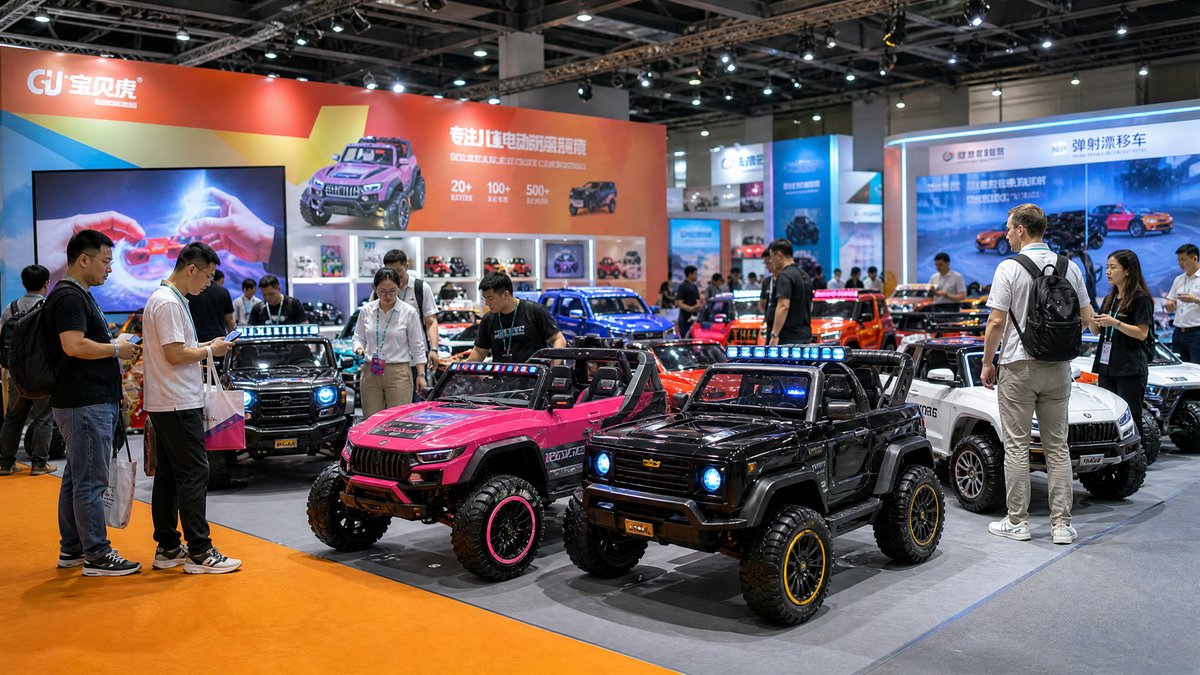
A kids ride-on car rental project can look simple from the customer’s perspective: choose a vehicle, follow the route, and return it. For an importer, distributor, shopping mall operator, event organizer, or birthday-party rental company, the real project includes fleet selection, venue approval, transport, setup, supervision, charging, storage, cleaning, branding, and post-event handling.
Permanent mall attractions and short-term events should not be planned in the same way. A mall may need a repeatable operating zone, durable signage, staff routines, and secure overnight storage. A birthday party or community event may need a smaller mixed fleet, fast setup, temporary branding, and a clear collection schedule. This guide provides a practical procurement framework without assuming a particular vehicle specification, price, capacity, certification, or local legal outcome. Confirm the final model, documents, operating procedure, and market requirements with the supplier and relevant local authorities.
Permanent Mall vs Short-Term Event Projects
Start by defining the operating model. The same ride-on car may be quoted for both applications, but the supporting requirements can differ significantly.
A permanent shopping mall project typically needs:
- A fixed operating area, customer queue, entry and exit points, and pedestrian separation.
- Consistent opening and closing inspections across multiple shifts.
- A charging and storage room with controlled staff access.
- Durable customer instructions, operating rules, and venue-approved signage.
- A spare-parts and service process that supports repeated operation over time.
- A documented incident, cleaning, maintenance, and warranty workflow.
A short-term event needs a different checklist:
- Event date, setup window, operating hours, dismantling deadline, and collection point.
- Venue access rules, loading restrictions, parking arrangements, and weather contingency.
- Temporary barriers, route markings, staff positions, queue management, and customer briefing.
- Portable charging or an agreed battery-handling plan based on the exact product instructions.
- A transport plan that protects vehicles and separates ready, charging, and held units.
A birthday-party rental company may need compact packaging, predictable loading, quick visual inspection, and simple operator training for temporary staff. A ride-on car fleet for community events may also require a written route plan because the surface, crowd flow, and supervision arrangements can change from one location to another. Do not describe an outdoor event as suitable until the surface, weather exposure, venue rules, and product documentation have been reviewed.
Build a Fleet and Layout Brief
Before requesting a quote, prepare a one-page project brief. It gives a shopping mall ride-on car attraction supplier or event rental supplier the information needed to recommend a realistic package rather than quote vehicles in isolation.
Include:
- Venue type and city or country.
- Permanent, seasonal, one-day, or recurring operation.
- Indoor or outdoor location, floor type, route length, slopes, thresholds, and restricted areas.
- Expected operating days, daily hours, peak periods, and number of sessions or riders to be planned for.
- Target customer profile and the supervision model, subject to local rules and the model’s documentation.
- Number of vehicles requested by model, seating layout, voltage, color, and accessories.
- Storage dimensions, charging location, cleaning facilities, and staff access.
- Required manuals, warning labels, spare parts, remote-control instructions, and maintenance information.
- Branding requirements for vehicles, barriers, tickets, uniforms, signage, and promotional materials.
- Delivery address, loading access, setup support, and post-event collection requirements.
For a permanent installation, draw a simple floor plan showing the route, queue, charging area, emergency access, staff station, and storage. For an event, add a setup sequence and a teardown sequence. The plan does not need to promise a specific number of riders or revenue. It should instead show how the operator will control the environment.
Fleet Selection and Operating Controls
Vehicle selection should follow the venue brief, not the other way around. Compare models using documented fields such as overall dimensions, carton dimensions, seating layout, battery and charger specification, wheel configuration, control method, remote-control availability, restraint features where supplied, and cleaning access.
Avoid relying on generic claims such as “fast,” “all-terrain,” or “commercial grade.” Ask the supplier to explain what the claim means for the exact model and intended surface. If a product is being considered for indoor use, confirm turning space, floor protection, noise expectations, and cleaning requirements. If outdoor use is proposed, confirm the acceptable surface and weather limitations with the supplier.
For a mixed fleet, record each model separately. Do not assume that all vehicles use the same charger, battery, remote, receiver, wheel, or replacement part. A model matrix can include:
| Field | Model A | Model B | Model C |
|---|---|---|---|
| Asset ID format | Confirm | Confirm | Confirm |
| Battery and charger | Supplier specification | Supplier specification | Supplier specification |
| Seating layout | Confirm | Confirm | Confirm |
| Approved operating surface | Confirm | Confirm | Confirm |
| Cleaning method | Confirm | Confirm | Confirm |
| Spare parts reference | Confirm | Confirm | Confirm |
The table is a planning tool, not a substitute for model-specific documents. Ask the supplier to complete and approve the technical fields before ordering.
Branding and Promotional Materials
Branding can make a rental attraction easier to recognize, but it must not create confusion about who operates the activity or what the vehicle is approved for. Separate product branding, venue branding, event branding, and sponsor branding in the brief.
Request artwork requirements before designing files. Confirm logo dimensions, print method, color references, placement, removable decals, packaging marks, barrier graphics, ticket or wristband information, and approval responsibility. For private-label or co-branded projects, record who owns the artwork and which party approves the final proof.
Ask the supplier whether branding is applied to the vehicle, carton, manual, labels, or separate promotional materials. Do not assume that a logo change also updates safety information or model identification. Warning statements, age guidance, operating instructions, and importer or distributor details may require a separate review according to the destination market. For example, U.S. CPSC guidance identifies labeling and instructional-literature considerations for battery-operated and certain ride-on toys [1].
For event marketing, prepare customer-facing material that explains the operating boundary, supervision expectation, route rules, session process, and what happens if weather or venue conditions require a pause. Avoid publishing unverified claims about speed, runtime, load, safety, or suitability.
Transport, Setup and Storage
Transport planning should begin before the purchase order. Request carton dimensions, gross and net weights, packing photos or diagrams where available, pallet information if applicable, loading requirements, and the supplier’s recommended handling instructions. Use current freight quotations from a forwarder for the actual destination and shipment terms; do not build a budget around an invented rate.
For a temporary event, confirm:
1. Who receives the shipment and checks the packing list.
2. Whether the venue has a loading dock, lift, stairs, time window, or vehicle restrictions.
3. How vehicles move from the loading point to the operating area.
4. Where cartons, tools, chargers, and spare parts are stored during operation.
5. Who supplies barriers, signs, floor protection, and cleaning equipment.
6. How vehicles are counted and photographed before and after the event.
7. How damaged cartons or missing parts are recorded and escalated.
Storage should keep vehicles, chargers, and spare parts protected from unauthorized access, moisture, excessive heat, and impact, subject to the product instructions. Keep charging equipment organized by model. Do not place a vehicle back into service after transit damage until it has been inspected by the responsible trained person. Do not dismantle energized electrical or battery systems as part of an event setup. If lithium batteries are shipped by air, requirements depend on configuration and watt-hour rating, so the shipper should use current dangerous-goods guidance for the exact battery [2].
Event Staffing and Post-Event Handling
A successful rental project needs clear ownership. Assign one project lead, one venue contact, and named staff for setup, customer briefing, charging, inspection, and incident escalation. A short training session should cover the exact vehicle controls, route, customer flow, pre-use check, stop-work conditions, and closing procedure.
At opening, staff should verify vehicle identity, visible body condition, wheels, controls, remote operation where applicable, restraints where supplied, battery and charger areas, labels, and cleanliness. Test vehicles in the designated area before customers arrive. Any abnormal noise, stopping behavior, damaged cable, liquid exposure, or collision history should trigger a hold status and supplier or qualified-service escalation. A proactive inspection and incident-review process is consistent with OSHA guidance on identifying hazards, periodic inspections, and corrective actions [3].
At closing, count every unit and accessory, record damage and customer reports, remove debris, separate charging and held units, and photograph significant exceptions. For recurring events, maintain an asset history rather than treating each event as a new project. This record supports maintenance planning, warranty communication, and decisions about which models belong in future venues.
Event RFQ Checklist
A useful RFQ should allow suppliers to answer the same questions in the same format. Include:
- Project type: mall attraction, birthday party, trade event, community event, or recurring rental.
- Destination, venue access details, indoor or outdoor use, route surface, and operating dates.
- Quantity by model, seating layout, colors, branding, and required accessories.
- Vehicle, carton, battery, charger, and remote-control specifications.
- Manuals, warnings, labels, maintenance instructions, parts list, and available compliance documents.
- Sample or pilot requirement, inspection points, artwork approval process, and packaging review.
- Spare vehicle, spare charger, battery, wheel, remote, or other parts request, with compatibility confirmed by model.
- Shipping basis, delivery assumptions, setup responsibilities, storage requirements, and collection plan.
- Commercial warranty coverage, exclusions, claim evidence, service contacts, and escalation procedure.
- Quote validity, payment terms, Incoterm, and any assumptions requiring confirmation.
Ask the supplier to separate vehicle cost, custom branding, packaging, spare parts, documents, freight assumptions, and setup support. This makes it easier to compare a permanent mall package with an event-only package and prevents a low vehicle price from hiding missing operational items.
FAQ
What information should an event buyer include in an RFQ?
Include the event type, destination, dates, setup and teardown windows, venue access, indoor or outdoor conditions, route surface, quantity by model, branding, charging or storage plan, required documents, spare parts, shipping basis, and commercial warranty questions. This gives suppliers enough context to separate vehicle supply from event operations.
How should mall and party projects differ?
A mall project usually needs a repeatable route, permanent signage, shift-based inspections, secure charging and storage, and a longer-term maintenance process. A birthday-party project often prioritizes transportability, fast setup, temporary branding, simple staff instructions, and a documented handover at the end of the event. Both require model-specific checks and local review.
What should be planned for storage and charging?
Plan controlled access, model-labeled charging positions, protected storage for vehicles and accessories, cable management, cleaning access, and a process for separating ready, charging, and held units. Confirm the battery, charger, connector, and handling instructions with the supplier. Never substitute chargers or modify energized systems without approved technical guidance.
How should a community event handle changing weather or surfaces?
Add a written pause or relocation procedure to the event plan. Confirm the product’s acceptable operating conditions with the supplier, inspect the route before opening, and keep vehicles out of service if conditions exceed the approved operating environment. Local venue rules and professional safety advice should also be followed.
Conclusion
Shopping mall, event, and birthday-party ride-on car projects succeed when the operating environment is planned as carefully as the fleet. Define the venue, map customer flow, select models from documented requirements, approve branding, organize transport and storage, train staff, and record the condition of every vehicle before and after use. Confirm market-specific compliance, insurance, labeling, and safety obligations with qualified local advisers rather than treating a supplier statement as a universal legal conclusion.
Request a wholesale quote for your mall or event fleet with the venue type, model mix, quantity, route conditions, destination, branding needs, and operating dates.
Ask for the KidsRideCar catalog and rental project materials to discuss vehicle options, spare-parts planning, documentation, and OEM/ODM requirements.
References
[1]: https://www.cpsc.gov/Business--Manufacturing/Business-Education/Toy-Safety "U.S. CPSC Toy Safety Business Guidance"
[2]: https://www.iata.org/en/programs/cargo/dangerous-goods/lithium-batteries/ "IATA Batteries and Dangerous Goods Guidance"
[3]: https://www.osha.gov/safety-management/hazard-identification "OSHA Hazard Identification and Assessment"
Official references
Explore these external resources for current regulatory and trade guidance. Confirm requirements with the relevant authority before placing an order.
Ready to Start?
Factory-Direct · CE & ASTM Certified · MOQ from 50 Units
Our export team works with buyers in 60+ countries. Get a quote within 24 hours.
KR
Written by KidsRideCar
China's leading kids electric ride-on car manufacturer. 500,000+ units shipped annually to 60+ countries. CE, ASTM & EN71 certified.