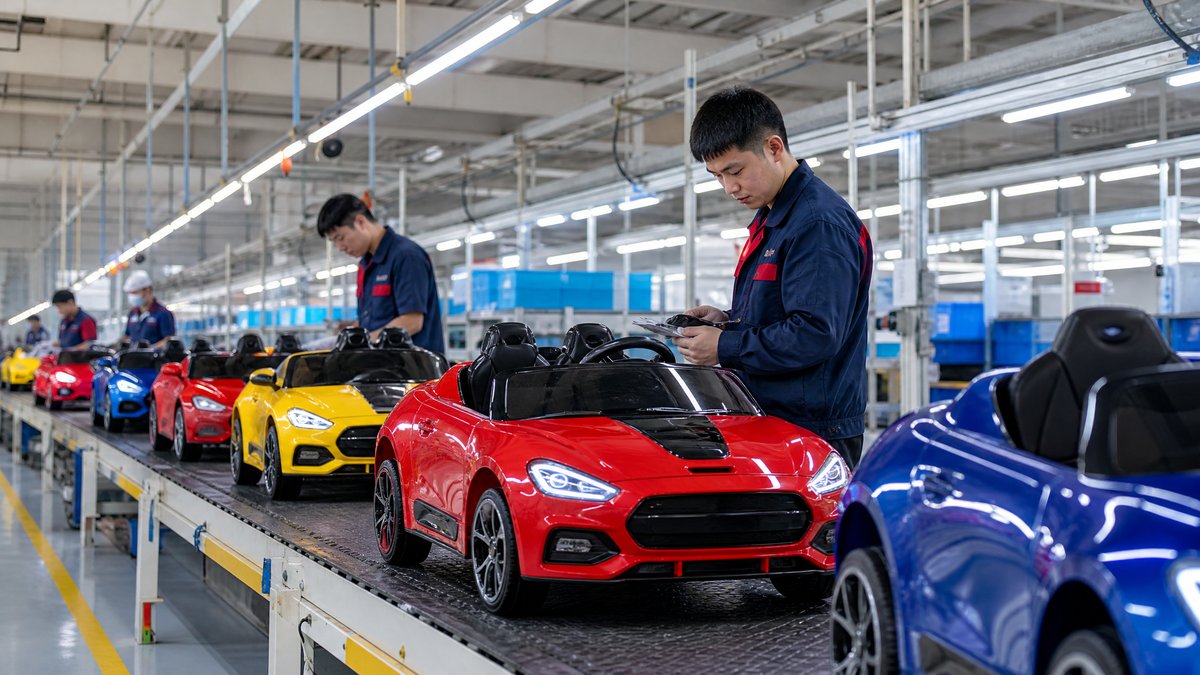
For professional entities engaged in the international procurement of recreational vehicles for children, the verification of technical specifications is a fundamental component of operational risk management. Importers, distributors, and retailers must navigate a complex landscape where the physical scale, weight-bearing potential, and intended user demographic of a product dictate its market viability and logistical efficiency. This guide provides a comprehensive framework for business-to-business professionals to conduct these checks with professional rigor, ensuring that every unit added to a commercial portfolio meets the highest standards of structural integrity and developmental suitability.
To answer the title directly: the process of checking these critical parameters requires a systematic multi-stage audit involving written model documentation, current supplier evidence, and non-destructive assessment. However, all such checks are conditional. Professional buyers must prioritize the specific instructions found in the exact model’s current manual and rely on written supplier confirmation for all performance-related queries. This approach ensures that procurement decisions are grounded in factual evidence rather than marketing generalities.
The Professional Framework for Verifying User Demographics
In the global trade of children's vehicles, the concept of an intended age range is a multifaceted specification that bridges the gap between developmental psychology and structural engineering. For a business-to-business distributor, verifying this range is essential for aligning products with the correct market segment and ensuring that the end-user experience is both safe and appropriate.
Developmental Alignment and Feature Verification
A child's developmental milestones dictate the types of control systems and safety features required for a vehicle. When auditing a supplier's recommendations, professional buyers should look for a clear alignment between the intended maturity level and the vehicle's functional design.
For the youngest users, those in the earliest stages of motor skill development, the verification process should focus on the presence of comprehensive supervisory controls. These systems allow an adult to manage the vehicle's direction and movement, providing a necessary layer of oversight. Buyers should look for soft-start mechanisms that ensure smooth transitions, preventing sudden movements that could startle or discomfort a small child.
As children move into middle childhood, their coordination and spatial awareness improve. For this demographic, the verification should shift toward the ergonomics of the cockpit and the simplicity of the steering mechanisms. The goal is to provide a vehicle that encourages independent play while maintaining a high degree of stability. Professional buyers should request current supplier evidence that the vehicle's center of gravity is optimized for the physical height and weight typical of this age group.
For older children approaching the pre-teen years, the focus of verification must be on structural durability and the sophistication of the control interface. These vehicles often feature more robust materials and higher-tier power configurations to accommodate larger frames. In these cases, written model documentation is vital to ensure that the vehicle's performance characteristics remain within the boundaries of appropriate destination-market requirements.
Evaluating Physical Scale and Logistical Footprint
The physical dimensions of a ride-on vehicle are a primary driver of both landed costs and retail performance. For a business-to-business operation, even minor variations in spatial footprint can have a profound impact on the bottom line.
Volumetric Efficiency and Shipping Optimization
For the procurement professional, the packaging dimensions are often more critical than the assembled size of the product. These figures determine the volumetric efficiency of a shipment, which directly influences the per-unit freight cost. By optimizing the way a product is packaged—perhaps by requesting that certain external components be detached for transit—an importer can significantly increase the number of units that fit within a standard shipping container.
Professional buyers should implement a protocol for verifying these dimensions that includes requesting a detailed loading plan from the manufacturer. This plan should illustrate how the units will be stacked and secured, providing a clear picture of the total volume required for a specific order. Verifying these figures early in the sourcing process allows for more accurate budgeting and prevents unexpected logistical overhead.
Market Suitability and Storage Considerations
The assembled dimensions of the vehicle also play a crucial role in its market appeal. In urban environments where living space is at a premium, smaller models with a compact footprint are often more desirable. Conversely, in suburban or rural markets with large outdoor areas, larger models and multi-seater configurations may be preferred.
Importers should conduct a non-destructive assessment of the product's scale by comparing it to common household items or by requesting photos of the vehicle alongside a child of the intended age. This visual evidence helps to ground the numerical specifications in reality, providing a better sense of how the product will fit into the consumer's life.
Structural Tolerance and Weight-Bearing Potential
Understanding a vehicle's weight-bearing potential is essential for ensuring long-term durability and user satisfaction. Business-to-business buyers must distinguish between the weight a vehicle can support while stationary and its performance under a dynamic load.
Static vs. Dynamic Load Considerations
Static load refers to the maximum weight the vehicle's frame can support without experiencing structural failure or deformation. While this is an important metric, it does not provide a complete picture of the vehicle's capabilities. Dynamic load, or the weight the vehicle can carry while in motion, is the more critical specification for professional buyers.
A vehicle's dynamic load-bearing potential is determined by the synergy between its structural materials, its power system, and its propulsion mechanism. If a vehicle is overloaded beyond its intended structural tolerance, the internal systems may experience excessive strain. To verify these limits, buyers should request written supplier confirmation regarding the materials used in the chassis and the torque characteristics of the motors.
Materials and Structural Integrity
The materials used in the construction of the vehicle—such as reinforced plastics or metal sub-frames—are the primary indicators of its structural integrity. During the verification process, importers should inquire about the thickness of the plastic components and the presence of any internal bracing. A vehicle designed for higher weight-bearing will typically feature a more robust chassis and higher-quality wheels, such as those made from dense foam materials rather than hollow plastic. These features help to distribute weight more evenly and provide a smoother experience on various surfaces.
Model-Neutral Sourcing and Verification Framework
To maintain a consistent standard of quality across a diverse product portfolio, business-to-business professionals should adopt a model-neutral framework for technical verification. This protocol ensures that every potential addition to the inventory is subjected to the same level of scrutiny.
Step One: Documentation Audit
The first step in the verification process is a thorough review of all written model documentation. This includes the technical data sheets, the user manuals, and any available supplier evidence regarding performance and safety. Buyers should look for consistency across these documents and ensure that all claims are backed by factual data.
Step Two: Visual and Physical Assessment
Once the documentation has been reviewed, the next step is a non-destructive assessment of the physical product. This may involve inspecting a sample unit for build quality, verifying the dimensions with a manual-led setup, and performing an external visual check of all primary components. The goal is to confirm that the physical product matches the description provided in the documentation.
Non-Numeric Comparison of Vehicle Categories
The following table provides a generalized comparison of common ride-on vehicle categories based on their typical scale and intended use. Professional buyers should use this as a starting point for their own market-specific analysis.
| Vehicle Category | Intended Demographic | Primary Spatial Footprint | Structural Profile |
|---|---|---|---|
| Compact Roadster | Early Developmental Stages | Minimal and Space-Efficient | Lightweight and Agile |
| Executive Sedan | Middle Childhood | Moderate and Balanced | Sturdy and Refined |
| Rugged Utility Vehicle | Middle to Late Childhood | Large and Dominant | Robust and Heavy-Duty |
Operational Boundaries and Maintenance Guidelines
To ensure the safety and longevity of kids' electric ride-on vehicles, it is essential to adhere to strict operational boundaries and maintenance protocols. For business-to-business entities, communicating these boundaries to the end-consumer is a key part of providing a professional service.
External Visual Checks and Manual-Led Setup
All maintenance and assembly tasks should be conducted in strict accordance with the manufacturer's instructions. Users should be encouraged to perform regular external visual checks to ensure that the wheels are secure, the bodywork is intact, and there are no visible signs of wear or damage. These checks should be non-invasive and should not involve any attempt to access the vehicle's internal systems.
A manual-led setup is the only appropriate way to prepare a vehicle for use. This process ensures that all components are correctly aligned and that the vehicle is configured according to the manufacturer's safety standards. If any part of the setup process is unclear, the user should be directed to seek manufacturer-approved support.
Technical Boundaries and Qualified Support
The internal systems of a ride-on vehicle—including the power source, the control boards, and the propulsion mechanism—are off-limits to the end-user and the distributor alike. Attempting to alter or investigate these components can lead to serious safety risks and will almost certainly void any existing warranties.
Professional buyers should clearly communicate that the following actions are strictly prohibited:
* Attempting to access or investigate the internal power storage area.
* Making any changes to the vehicle's internal connections or control logic.
* Trying to alter the vehicle's movement rate or power output.
* Accessing any sealed housings related to the motor or the propulsion mechanism.
If a vehicle exhibits any unusual behavior—such as a failure to move, a loss of power, or an inability to accept a charge—it should be removed from service immediately. In these situations, the only appropriate course of action is to contact manufacturer-approved support or a qualified professional for a non-destructive assessment. Stop use if there is a concern to ensure the continued safety of the user.
Frequently Asked Questions
Q: How can an importer verify the structural integrity of a new model without performing destructive tests?
A: Importers should rely on a combination of written supplier confirmation and a thorough external visual check. Requesting detailed photographs of the internal chassis and inquiring about the specific materials used in construction can provide significant insight into the vehicle's weight-bearing potential.
Q: What is the most effective way to optimize shipping costs for large ride-on vehicles?
A: The most effective strategy is to work closely with the manufacturer to improve volumetric efficiency. This may involve a manual-led setup where certain external parts, such as steering wheels or mirrors, are packaged separately to reduce the total spatial footprint of each unit.
Q: Why is it important to strictly follow the manufacturer's intended age range?
A: The intended age range is based on a careful assessment of a child's developmental milestones and the vehicle's ergonomic design. Using a vehicle that is inappropriate for a child's maturity level can lead to a poor user experience and may compromise safety.
Q: What should a retailer do if a customer reports a technical issue with a vehicle's power system?
A: The retailer should immediately advise the customer to stop use if there is a concern. The customer should be directed to the manufacturer's user manual for basic troubleshooting steps that do not involve internal access.
Conclusion
For the business-to-business professional, the verification of age range, physical scale, and weight-bearing potential is a continuous process that requires diligence and a commitment to factual accuracy. By implementing a rigorous sourcing framework and prioritizing written model documentation, importers and distributors can build a robust product line that stands up to the scrutiny of the modern market.
At KidsRideCar, we pride ourselves on providing our partners with the current supplier evidence and technical support needed to succeed. we encourage all our clients to maintain a focus on external visual checks and to always refer to the exact model’s current manual for operational guidance. By respecting the technical boundaries of these products and seeking qualified support when needed, we can ensure a safe and enjoyable experience for the next generation of young drivers.
Request a wholesale quote
Official references
Explore these external resources for current regulatory and trade guidance. Confirm requirements with the relevant authority before placing an order.
Ready to Start?
Factory-Direct · CE & ASTM Certified · MOQ from 50 Units
Our export team works with buyers in 60+ countries. Get a quote within 24 hours.
KR
Written by KidsRideCar
China's leading kids electric ride-on car manufacturer. 500,000+ units shipped annually to 60+ countries. CE, ASTM & EN71 certified.