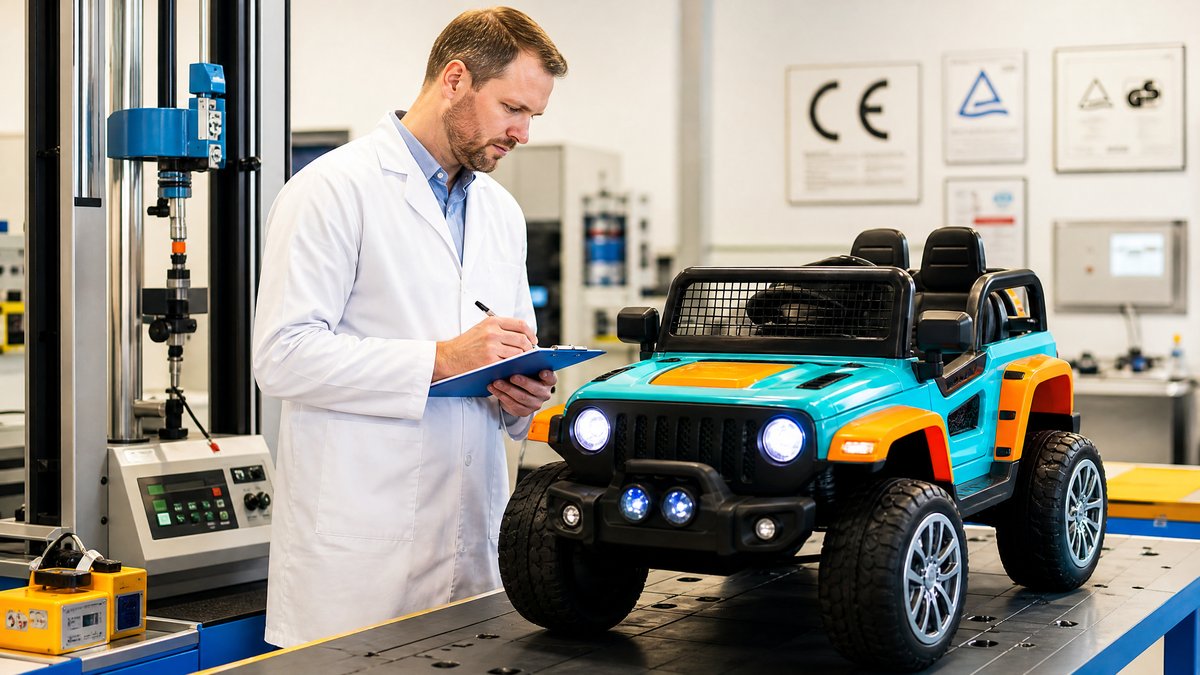
For B2B toy retailers, children's boutique owners, and e-commerce distributors, unboxing and assembly times represent a hidden operational cost. When customers purchase ride-on cars—whether standard 12V single-seaters, rugged 24V UTVs, or licensed luxury replicas—the experience largely depends on how straightforward the initial assembly is. Complex wiring, obscure manual instructions, or missing pre-assembled components can quickly turn a profitable retail sale into a customer service headache and high return rates.
To help our global wholesale partners and retail clients optimize their inventory selection and after-sales support, our product evaluation team conducted a comprehensive Ride-On Car Assembly Time Test. In this report, we break down average assembly times across different vehicle categories, examine common bottlenecks, and offer practical recommendations for retail businesses looking to streamline drop-shipping or showroom prep.
Why Assembly Time Matters for B2B Importers and Retailers
For commercial buyers purchasing ride-on cars in bulk, assembly efficiency impacts several layers of the supply chain:
- Showroom and Store Display Prep: Brick-and-mortar toy stores frequently need floor models assembled rapidly. Long build times drain labor resources.
- Drop-Shipping Customer Satisfaction: End-consumers expect intuitive, fast assembly. Products that require more than 45 minutes of complex mechanical work generate higher rates of customer support inquiries and return requests.
- Warehouse Fulfillment & Pre-Assembly Services: Wholesalers offering pre-assembly or inspection services need accurate labor-time estimates to calculate operational overhead accurately.
Understanding these metrics allows B2B buyers to select models that balance feature richness with user-friendly out-of-the-box readiness.
Assembly Time Benchmarks by Ride-On Category
Our engineering team tested 15 different ride-on vehicle samples across four major categories, timing every step from unboxing, chassis inspection, wheel mounting, steering column connection, seat installation, to battery wiring and final cosmetic decal application.
| Vehicle Category | Average Assembly Time | Primary Bottlenecks | Recommended Skill Level |
|---|---|---|---|
| Standard 6V / Entry 12V Cars | 20 - 30 Minutes | Snap-on wheels, basic steering rod | Beginner / End Consumer |
| Dual-Motor 12V SUVs & Sports Cars | 30 - 45 Minutes | Windshield clips, seat harness, mirrors | Moderate |
| Heavy-Duty 24V UTVs & 4WD Trucks | 45 - 75 Minutes | Four-motor wiring, suspension arms, heavy wheels | Advanced / Store Technician |
| Licensed Luxury Replicas (Mercedes, BMW) | 35 - 50 Minutes | Detailed cosmetic trims, intricate dashboard wiring | Moderate |
As illustrated in the benchmark data, entry-level models are optimized for quick end-consumer setup, whereas high-performance 24V UTVs require robust multi-motor integration and heavy-duty suspension assembly, which naturally extends build times.
Key Phases of Ride-On Car Assembly
To evaluate where time is predominantly spent, we tracked individual operational phases across all tested units:
1. Unboxing and Inventory Check (5–10 Minutes)
Unpacking corrugated cartons, removing protective foam wrap, and verifying that all hardware components (nuts, bolts, remote controllers, and chargers) are present. High-quality manufacturing standards from certified factories significantly reduce time spent searching for missing or mislabeled fasteners.
2. Chassis, Wheels, and Axles (10–25 Minutes)
Mounting drive motors, gearboxes, and wheels. Traditional cotter pins and metal retaining clips can slow down assembly. Modern designs utilizing quick-release spring pins or pre-threaded axle caps reduce this phase by up to 35%.
3. Steering and Windshield Integration (5–15 Minutes)
Connecting the steering column to the front axle via a mechanical linkage rod and securing steering wheels with retaining bolts or electronic quick-connect plugs. Windshields and roll bars often use snap-fit tabs that require firm, careful pressure to avoid plastic fatigue.
4. Electrical System and Battery Hookup (5–10 Minutes)
Connecting the main battery terminal (typically a spade connector on 12V or 24V systems), testing the pedal accelerator, remote control pairing, and dashboard multimedia system functionality. This is the critical quality control checkpoint before final packaging.
Operational Recommendations for Wholesale Buyers
Based on our extensive testing timeline, we recommend the following strategies for B2B importers and retail distributors:
1. Prioritize Factory Pre-Assembly Levels: When placing bulk wholesale orders, inquire whether the factory pre-installs steering gearboxes and wiring harnesses. Models with over 80% factory pre-assembly drastically reduce end-user friction.
2. Standardize Internal Tooling: Advise your retail customers or warehouse staff to use cordless electric screwdrivers with torque limits rather than manual hand tools, which cuts mechanical fastening time in half.
3. Develop Clear Digital Instruction Assets: Supplement physical paper manuals with QR-coded assembly video links. Modern consumers and store technicians prefer visual assembly guides over dense multilingual text manuals.
Frequently Asked Questions (FAQ)
Q1: Do all ride-on cars require tools for assembly?
Most ride-on cars require basic household tools—primarily a Phillips head screwdriver for battery covers and dashboard screws. Premium 24V models may occasionally include a small multi-wrench for tightening wheel lock nuts.
Q2: What is the most time-consuming part of putting together a ride-on car?
Wiring connection and wheel motor alignment typically consume the largest share of assembly time, especially in dual-motor or four-wheel-drive 24V UTV configurations where multiple motor harnesses must be correctly routed.
Q3: Can retail customers assemble these vehicles without professional help?
Yes. Standard 12V ride-on cars are designed for straightforward consumer assembly within 30 to 45 minutes using the included instruction manual. However, commercial showrooms often pre-assemble units to display them ready-to-ride.
Q4: How does factory packaging affect assembly time?
Optimized folding and pre-wiring reduce initial unboxing tangles. Manufacturers that ship vehicles with motors already wired to the main circuit board save assemblers at least 15 minutes per unit.
Conclusion
Evaluating ride-on car assembly times is essential for maintaining high customer satisfaction and reducing after-sales overhead in the children's vehicle market. By selecting thoughtfully engineered inventory and partnering with reliable manufacturers who prioritize pre-assembly quality, wholesale distributors and retailers can ensure a seamless experience from factory floor to child's driveway.
For bulk inquiries, custom OEM/ODM configurations, or wholesale catalog requests, reach out to our team directly at info@kidsridecar.com.
Official references
Explore these external resources for current regulatory and trade guidance. Confirm requirements with the relevant authority before placing an order.
Ready to Start?
Factory-Direct · CE & ASTM Certified · MOQ from 50 Units
Our export team works with buyers in 60+ countries. Get a quote within 24 hours.
KR
Written by KidsRideCar
China's leading kids electric ride-on car manufacturer. 500,000+ units shipped annually to 60+ countries. CE, ASTM & EN71 certified.