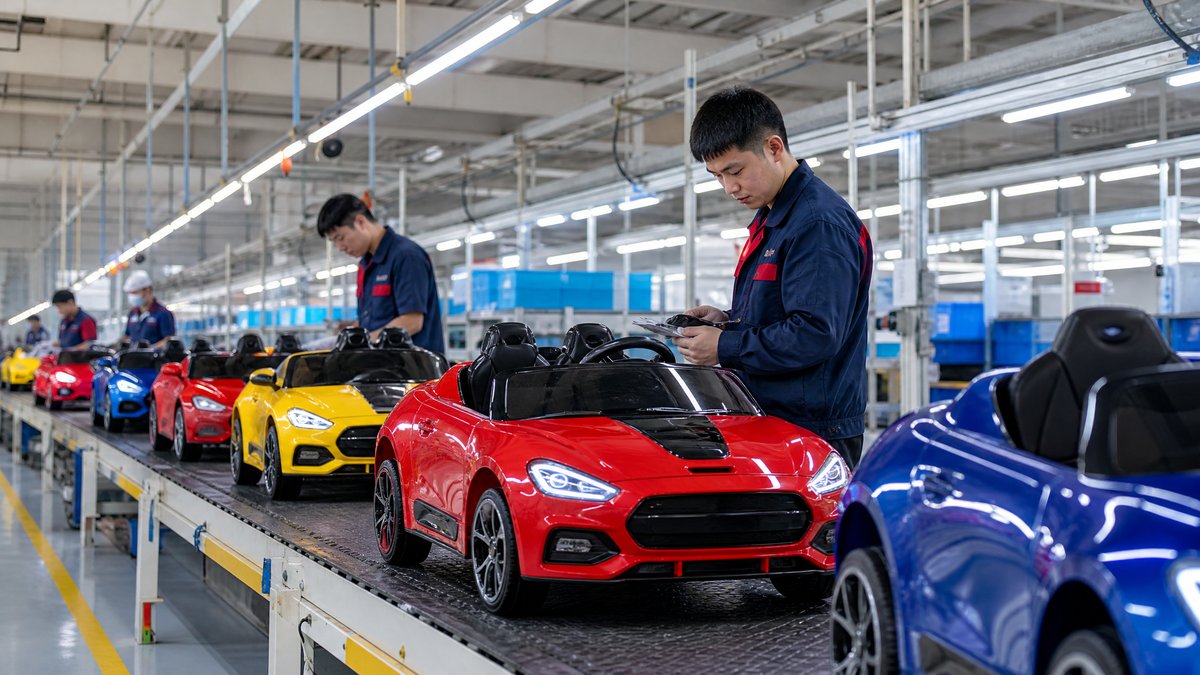
For wholesale importers, distributors, and retailers entering the specialized market of children’s motorized vehicles, the selection process extends far beyond aesthetic appeal or individual toy features. Choosing the right inventory is a strategic exercise in balancing market demand, appropriate product markings, and operational efficiency. A newcomer in the sourcing space must navigate a complex landscape of written model documentation, current supplier evidence, and supplier reliability to ensure a sustainable and profitable business model. The fundamental answer to how a beginner should choose kids electric ride-on cars lies in a structured decision sequence that prioritizes written supplier confirmation, appropriate energy systems, and the verification of manufacturing standards. However, it is imperative that readers verify the exact model’s current manual, written specifications, applicable destination-market requirements, and current supplier evidence before finalizing any procurement decisions, as product standards and local requirements are subject to frequent updates.
The Wholesale Decision Sequence: A Strategic Framework
The most common mistake for new importers is selecting products based on personal preference rather than data-driven market requirements. A professional decision sequence begins with identifying the target demographic and the primary use environment. This involves segmenting your potential customers into specific buyer personas. For instance, a retailer targeting urban apartment dwellers will prioritize compact models with quiet foam tires that will not mark indoor surfaces. Conversely, a distributor focusing on rural or suburban markets may find higher demand for rugged vehicles capable of navigating grass, gravel, and uneven inclines. Understanding whether your end-user is a gift-giver looking for a festive birthday present or an outdoor enthusiast looking for a sturdy miniature vehicle will dictate the aesthetic and functional requirements of your inventory.
Once the demographic is defined, the buyer must assess the energy-to-terrain ratio. This involves understanding how motor strength and energy storage translate to real-world performance. Beginners should typically start with a balanced portfolio to mitigate risk: a suggested mix might include a majority of mid-range models, which are the current market standard for versatility, along with a smaller portion of entry-level models for the youngest users, and a selection of high-performance models for older children. This diversification allows the importer to test various price points and consumer segments while minimizing the risk of overstocking a single niche. Furthermore, consider the physical size of each vehicle; beginners should ensure their selection covers a range of dimensions to accommodate different age groups, from toddler models to larger dual-seater vehicles.
Product Specifications and Performance Metrics
Understanding the components of a ride-on car is essential for accurate product positioning and after-sales support. For wholesale buyers, the focus should be on the reliability of the energy system and the durability of the moving parts.
Energy Systems and Motor Configuration
* Low Energy Systems: These are generally designed for the youngest users. They usually feature a single motor and are restricted to flat, indoor surfaces. While they offer the lowest entry price point, they have limited climbing ability and pace.
* Standard Energy Systems: Often considered the most popular choice for most retailers, these typically utilize dual motors—one for each rear wheel—and can handle paved driveways and short grass. They offer a balance of pace and battery life that appeals to a broad consumer base.
* Enhanced Energy Systems: Aimed at older children and adventurous play, these often feature high-torque motors and can reach a brisker pace. Importers should verify the configuration of the energy system, as this affects torque and longevity.
Energy Storage and Duration
Energy storage is a key metric for consumer satisfaction. A higher storage rating generally translates to a longer duration of use but also increases the heaviness and charging time of the vehicle. Beginners should request detailed specifications on the energy chemistry—typically lead-acid for cost-effectiveness or lithium-based options for weight reduction and faster charging cycles. It is critical to ensure that all energy units come with the necessary written model documentation and safety data sheets. These documents are non-negotiable for international shipping; without them, cargo may be flagged, leading to significant delays during international shipping and arrival.
Regulatory Requirements and Product Standards
In the toy industry, safety is not just a feature; it is a prerequisite. Beginners must familiarize themselves with the specific requirements of their destination market before placing a bulk order. Failure to provide the correct documentation can lead to shipment delays, financial penalties, and brand damage.
| Market Region | Primary Requirement Category | Key Focus Areas |
|---|---|---|
| North America | Regional Toy Standards | Material safety, mechanical stability, energy testing. |
| Europe | Regional Safety Directives | Chemical limits, electrical safety, appropriate product markings. |
| Middle East | Regional Conformity | Assessment for toys exported to specific countries. |
| International | Global Safety Guidelines | General requirements for mechanical and physical properties. |
When evaluating a new model, beginners should ask the manufacturer for a comprehensive documentation folder. This folder should contain recent reports from accredited third-party laboratories. Key items to verify include the appropriate product markings for the specific market and the written supplier confirmation of quality. It is also crucial to pay attention to chemical safety, specifically the limits on materials and heavy metals. For wholesale importers, a single batch of toys found to exceed these limits can lead to a total recall, which is financially devastating. Ensure that the manufacturer uses high-quality plastic rather than recycled materials, as recycled plastics often contain trace amounts of prohibited substances.
Supplier Verification and Procurement Quality Assurance
For a beginner, the transition from selecting a product to selecting a partner is the most critical phase of the sourcing journey. A manufacturer’s ability to produce a high-quality sample does not always provide absolute assurance of the consistency of a large production run. Therefore, supplier verification must be a multi-layered process involving factory assessments and international quality management standards. Professional importers should prioritize manufacturers who hold recognized management credentials. For those concerned with ethical sourcing and social responsibility, looking for social responsibility audits is recommended. These credentials indicate that the factory operates under standardized processes, which reduces the likelihood of production errors and ensures a higher baseline of quality.
Never skip the sample phase. A beginner should order at least two samples of each model: one for a non-destructive assessment and one for showroom display. During the evaluation, pay close attention to the plastic quality, the fit and finish of the body panels, and the responsiveness of the remote control. It is also advisable to test the actual duration of use against the manufacturer’s claims. As orders scale, implementing an inspection protocol becomes mandatory. Most professional buyers use a standard quality limit. This involves a third-party inspector visiting the factory when the order is nearly complete to check for issues in aesthetics, functionality, and packaging. For beginners, a standard inspection is typically sufficient, focusing on primary safety and cosmetic issues.
Licensed vs. Unlicensed: The Retail Strategy
A significant decision point for beginners is whether to invest in licensed models—such as officially branded automotive ride-ons—or unlicensed generic models. This choice fundamentally alters the marketing strategy and the retail price point. Licensed vehicles carry the prestige of real automotive brands and are often built with higher-quality molds, more realistic interior details, and premium paint finishes. From a wholesale perspective, licensed models offer higher perceived value and easier marketing, as the brand recognition does the heavy lifting. However, they also come with higher wholesale costs due to fees and stricter quality controls. Importers must ensure the manufacturer holds a valid agreement for the specific territory to avoid disputes.
Unlicensed vehicles are often designed to resemble popular vehicles without using specific logos. They are significantly more cost-effective and allow for higher margins at lower retail price points. For beginners focusing on high-volume, budget-conscious markets, unlicensed models are often the safer initial investment. When choosing unlicensed cars, focus on unique features like oversized wheels, specialized lighting kits, or integrated media players to differentiate the product from competitors. A balanced inventory often includes both categories to capture different segments of the market.
Logistics, Storage, and Inventory Management
The wholesale relationship does not end when the container leaves the port. Beginners must understand the operational boundaries of logistics and storage to protect their margins and reputation. Most kids' motorized cars are shipped in sturdy packaging, which is relatively bulky. Importers should request the volume measurement for each model. A standard large container holds a specific volume. Beginners should work with their manufacturer to optimize the mix of large and small models to maximize container utilization and reduce the per-unit shipping cost. Some manufacturers offer partial assembly to save space, but this increases the setup time for the end-user.
Inventory storage and energy unit care are equally critical. One of the most common causes of issues is improper storage. Certain energy units naturally lose their charge over time. If a vehicle sits in a warehouse for many months without attention, the energy unit may become permanently damaged. Importers should implement a first-in, first-out inventory system and advise retailers to maintain the units if they remain in stock for long periods. Proper climate control in the warehouse—avoiding extreme temperatures—will also prolong the life of the electronic components and the plastic bodywork.
Safety Boundaries and After-Sales Support
It is vital to establish clear support terms with the manufacturer. Typically, manufacturers provide a small percentage of free spare parts—such as extra motors, remote controls, and switches—with each bulk order to cover minor needs. As an importer, your role is to provide basic support to your retailers based on the provided manual. However, for any complex energy issues, structural concerns, or issues involving the power system, the standard protocol is to advise the end-user to stop use if there is a concern and contact manufacturer-approved support or assistance from a qualified professional.
Beginners should never encourage or instruct users to perform internal work, look inside energy areas, or attempt to change the internal connections. Such actions can create significant hazards, void quality markings, and increase concerns. All maintenance checks should be an external visual check and guided by the official manufacturer's manual. For instance, checking for loose fasteners or ensuring the charging area is clear of debris are acceptable manual-led tasks. Any task requiring the accessing of the product's core systems must be handled by professionals. By maintaining these strict boundaries, wholesale entities protect their customers and their own business interests.
Frequently Asked Questions
Q: What is the benefit of a modern remote control system for these vehicles?
A: A modern remote control provides a unique, interference-free connection between the controller and the vehicle. This is a critical safety feature for beginners to look for, as it ensures that one controller will not accidentally affect another vehicle in a shared play area. It also typically features a button that allows an adult to take control instantly, providing peace of mind during use under adult supervision.
Q: How should I manage the storage of motorized vehicles in my warehouse?
A: Importers should implement a system that ensures older stock is sold first. It is also important to maintain the energy units by following the manufacturer's recommendations for periodic attention if the vehicles are stored for an extended period. Keeping the warehouse at a moderate temperature and away from moisture will help protect the electronic components and the overall condition of the product.
Q: What should I do if a customer reports a technical issue with a vehicle?
A: Your first step should be to refer to the written model documentation and the user manual for basic troubleshooting that can be performed through an external visual check. If the issue involves the internal energy system or structural integrity, you should advise the customer to stop use if there is a concern and seek manufacturer-approved support or assistance from a qualified professional. Never attempt or suggest internal maintenance or alterations.
Request a wholesale quote
Official references
Explore these external resources for current regulatory and trade guidance. Confirm requirements with the relevant authority before placing an order.
Ready to Start?
Factory-Direct · CE & ASTM Certified · MOQ from 50 Units
Our export team works with buyers in 60+ countries. Get a quote within 24 hours.
KR
Written by KidsRideCar
China's leading kids electric ride-on car manufacturer. 500,000+ units shipped annually to 60+ countries. CE, ASTM & EN71 certified.