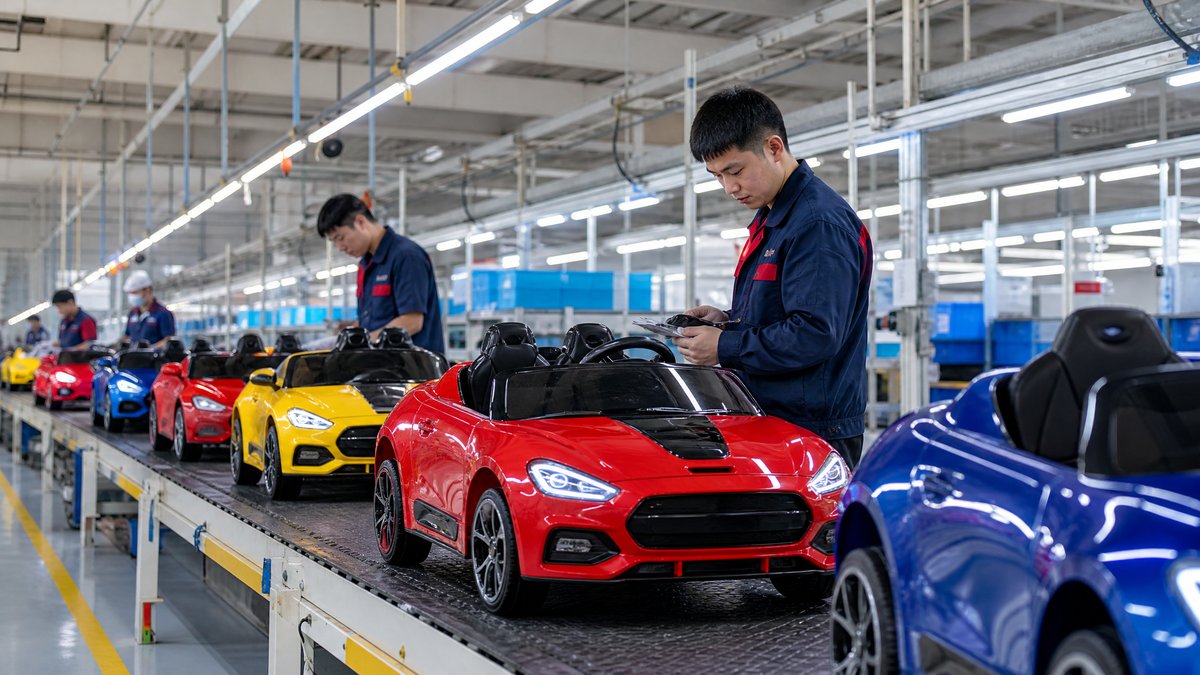
For business-to-business importers, distributors, and large-scale retailers in the juvenile products industry, the selection of four-wheel electric ride-on cars has evolved from simple aesthetic choices to a complex evaluation of electronic safety architectures. Selecting the ideal parental remote control systems, movement tiers, and supervision features requires a multi-faceted approach that balances user experience with stringent risk management. At a fundamental level, professional buyers should prioritize advanced wireless technology for interference-free operation, electronic gentle-start systems to protect the vehicle's components and the child's comfort, and robust parental priority logic that ensures adult intervention always takes precedence over manual controls. However, it is imperative for all professional stakeholders to recognize that these features must be verified against the specific model's current user manual, written model documentation, current supplier evidence, and the applicable destination-market requirements before any procurement commitment is finalized.
The Strategic Importance of Supervision Features in Business-to-Business Procurement
In the competitive global market for juvenile vehicles, the supervision suite of a product is no longer a luxury add-on but a primary value driver and a critical tool for risk mitigation. For a wholesaler or e-commerce distributor, these features serve as the first line of defense against product returns and consumer concerns. A ride-on car equipped with high-tier parental controls directly addresses the primary concern of the modern consumer: the well-being of their child during play.
From a business perspective, advanced supervision features represent a significant reduction in operational risk. Products that offer precise control and various movement tiers are less likely to be involved in incidents that result in warranty claims for broken components or damaged internal parts. Furthermore, by sourcing vehicles with adaptable movement settings, importers can target a wider age demographic with a single product line, effectively increasing inventory turnover and optimizing warehouse space. In the current global regulatory environment, where requirements have introduced stricter physical expectations, the quality of these electronic supervision systems is a key differentiator for high-volume buyers.
Selecting Parental Remote Control Technology: The Shift to Advanced Wireless Systems
The most critical technical decision in the sourcing process involves the wireless technology utilized for the parental remote. For professional importers, the choice between legacy systems and modern digital systems is a matter of both safety and product reliability.
The Superiority of Modern Wireless Systems
Legacy ride-on cars often utilized older frequencies which are highly susceptible to electromagnetic interference from other electronic devices, power lines, and even physical obstacles. For modern business-to-business sourcing, advanced digital wireless technology has become the industry benchmark for several reasons:
* Digital Pairing and Anti-Interference: Unlike older systems where multiple cars could be affected by a single remote on the same frequency, modern systems use a unique digital handshake. This pairing ensures that a specific remote only communicates with its assigned vehicle, preventing unexpected interactions in public spaces like parks or showrooms.
* Frequency Management: Professional-grade systems utilize technology that allows the signal to move between different frequencies within the designated band. If one frequency experiences congestion, the system automatically switches to a clear one, ensuring a stable and consistent connection.
* Consistent Operational Range: While the range can vary based on environmental factors, modern systems typically provide a reliable range that is strategically optimal for business-to-business applications. This range allows the child sufficient freedom while keeping them within the supervisor's immediate line of sight.
Evaluating Remote Interface and Ergonomics
When assessing a manufacturer's remote control unit, importers should look beyond the internal circuitry. The physical interface must be intuitive for the end-user. Key features to look for include:
* Tactile Indicators: Visual cues that clearly show the current movement setting (Low, Medium, High) allow the supervisor to monitor the vehicle's state without looking away from the child.
* High-Contrast Immediate Halt Function: A dedicated, easily accessible button is a non-negotiable safety feature. This button should immediately cease power to the movement system, overriding all other inputs.
* Build Quality: Since the remote is a high-touch component, the materials used should be durable enough to withstand accidental drops, reducing the frequency of replacement part requests.
Movement Management Frameworks: Implementing Gentle-Start Technology
Movement control is often the most scrutinized feature by both retailers and parents. However, for business-to-business buyers, the method of acceleration is just as important as the maximum travel rate itself.
The Benefits of Gentle-Start Systems
Standard, low-cost ride-on cars often use simple systems that deliver the full energy potential to the motors the moment the pedal is pressed. This results in a sudden, jerky movement that can be distressing for younger children and damaging to the vehicle.
Professional-grade models utilize gentle-start technology, which ramps up the energy delivery over a brief window. The benefits of this system for the business-to-business supply chain are significant:
* Mechanical Longevity: By eliminating the initial torque spike, gentle-start reduces the mechanical stress on the gearboxes and internal parts. This leads to a lower rate of component failure and fewer warranty-related returns.
* Power Source Health: Sudden high-energy draws are taxing on the power source. Smoother power delivery helps maintain the chemical stability of the energy unit over many cycles, extending the overall lifespan of the product.
* User Comfort and Safety: The gradual ramp-up prevents sudden jolts, making the vehicle safer for toddlers who may not yet have the strength or balance to handle abrupt acceleration.
Multi-Tier Configurations for Market Versatility
A versatile product line should offer tiered movement settings, allowing retailers to market the same vehicle to different age groups. A typical configuration might include:
* Initial Tier: A gentle walking pace, ideal for beginners and indoor use.
* Intermediate Tier: A brisk walking pace, suitable for most outdoor sidewalk environments.
* Advanced Tier: Reserved for older children and more capable off-road models.
Importers should ensure that the higher settings can be restricted by the parent, either via a physical switch or a setting on the remote, to ensure the vehicle remains appropriate for the child's developmental stage.
Integrated Supervision Ecosystems: Active and Passive Layers
Beyond the remote control, a comprehensive supervision strategy involves several integrated features that work together to ensure a safe play environment.
Parental Priority Logic
This is perhaps the most critical electronic safety feature for modern ride-on cars. The vehicle's internal logic must be programmed so that parental priority control always takes precedence over manual inputs. If a child attempts to steer toward a hazard while the parent is steering away, the remote signal must take precedence. Professional buyers should verify this logic during sample assessment, as it is a key requirement for many international markets.
Mechanical Supervision and Physical Safety
* Restraint Systems: While basic belts are common, multi-point harnesses offer superior protection, particularly in models designed for uneven terrain.
* Secured Doors: High-sided doors with internal safety latches prevent accidental falls during turns. Importers should check the durability of these latches during their quality control inspections.
* Energy Indicators: A visible indicator on the dashboard allows the supervisor to monitor remaining usage duration, preventing the vehicle from stalling in an unsafe or inconvenient location.
Business-to-Business Sourcing Framework: Feature Selection and Quality Verification
To assist in the selection process, the following table compares standard toy-grade configurations with premium business-to-business-grade specifications:
| Feature | Standard Configuration | Premium Business-to-Business Specification |
|---|---|---|
| Wireless Technology | Basic Frequency Systems | Advanced Digital Pairing |
| Acceleration Logic | Instant On/Off | Electronic Gentle Start |
| Halting System | Passive Coasting | Immediate Remote Halt Function |
| Control Priority | Shared Input | Full Parental Priority |
| Movement Selection | Single Tier | Multiple Tiers |
| Restraint System | Basic Lap Belt | Multi-Point Harness |
| Door Security | Simple Latches | Internal Safety Locks |
Adherence to Requirements and Market Standards
The regulatory landscape for ride-on toys has become more stringent in major global markets. Importers must be diligent in verifying that their suppliers' products meet the latest expectations.
Key Focus Areas for Product Verification
Professional buyers should focus on the following areas when evaluating a supplier's documentation:
* Mechanical and Physical Properties: Including stability and halting requirements.
* Electrical Safety: Covering the integrity of the energy system and internal connections.
* Wireless Communication: Ensuring the remote and receiver meet regional standards for frequency use.
* Material Safety: Verifying that all plastics and coatings meet non-toxic requirements.
When reviewing a supplier's evidence, importers should look for current reports from recognized laboratories. It is not enough to have a general mark; the underlying documentation must prove that the specific supervision features, such as the remote range and the halt function, have been tested and validated.
Quality Control and Supplier Verification for Importers
For high-volume buyers, the verification of supervision features should be an integral part of the factory audit and pre-shipment inspection process.
Documentation Review
Before placing an order, importers should request and review the following:
* Functional Logic Documentation: Evidence showing how the parental priority and immediate halt functions are programmed.
* User Manual Clarity: Ensure the manual provides clear, accurate instructions for pairing the remote and using the supervision features. A poorly translated manual is a significant liability.
* Component Specifications: Verify the quality of the control units and remote units being used in production.
Non-Destructive Assessment and Inspection
During a pre-shipment inspection, the following assessments should be conducted on a random sample of the order:
* Remote Range Assessment: Confirm the remote maintains a stable connection at a significant distance in an outdoor environment.
* Priority Verification: With the vehicle in motion via the foot pedal, engage the remote to ensure it immediately takes control.
* Immediate Halt Assessment: Verify that the halt function on the remote stops the vehicle and prevents any further movement until the function is disengaged.
* Mechanical Integrity: Check the restraint systems and door locks for proper function and secure attachment.
Application Context: Environmental Factors and Feature Selection
The target market and intended use environment should dictate which supervision features an importer prioritizes.
For urban retailers focusing on sidewalk and driveway use, precision steering and advanced remotes are paramount for navigating tight spaces. In contrast, for rural or off-road markets, movement tier selection and high-torque systems are more critical for handling varied surfaces. In commercial or rental scenarios, such as at a shopping mall or amusement park, durability is the primary concern; importers may even request customized units that limit the travel rate to a permanent safe level to minimize wear and tear on the fleet.
Frequently Asked Questions
Q: What is the recommended operational range for a parental remote control?
A: While many advanced systems are technically capable of reaching significant distances, the industry-recommended safe operational range is one that ensures the supervisor remains close enough to visually identify potential hazards, such as uneven terrain or small obstacles, that the remote control cannot correct from a distance.
Q: Can a remote control from one ride-on car model be used on a different model?
A: Generally, no. Even if two models use similar technology, the internal control units and the specific digital pairing protocols are often unique to each manufacturer or even each product line. Attempting to use a non-matching remote can lead to unpredictable behavior. Importers should ensure that their suppliers provide clearly labeled, model-specific remotes for each shipment.
Q: How does the gentle-start feature affect the vehicle's ability to handle inclines?
A: The gentle-start feature only affects the initial moments of the acceleration phase to prevent jerky movements. Once the vehicle has completed this ramp-up period, the motor receives the full energy potential as dictated by the selected movement tier. For markets where varied terrain is common, business-to-business buyers should prioritize high-torque configurations in addition to the gentle-start feature.
Q: What should an importer do if the remote control fails during a sample assessment?
A: If a remote control fails to pair or loses connection within the specified range, the importer should immediately request written supplier confirmation regarding the batch's quality. It is advisable to conduct a non-destructive assessment of the internal control unit and seek manufacturer-approved support to identify if the issue is an isolated component failure or a systemic production flaw.
Request a wholesale quote
Official references
Explore these external resources for current regulatory and trade guidance. Confirm requirements with the relevant authority before placing an order.
Ready to Start?
Factory-Direct · CE & ASTM Certified · MOQ from 50 Units
Our export team works with buyers in 60+ countries. Get a quote within 24 hours.
KR
Written by KidsRideCar
China's leading kids electric ride-on car manufacturer. 500,000+ units shipped annually to 60+ countries. CE, ASTM & EN71 certified.