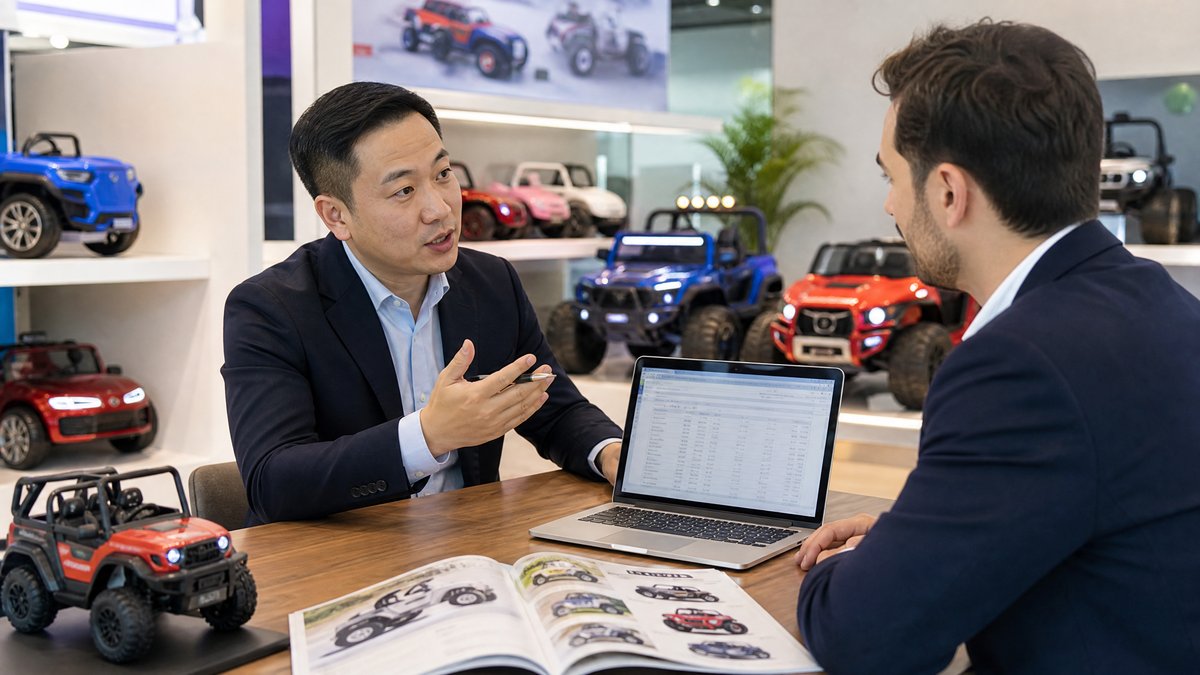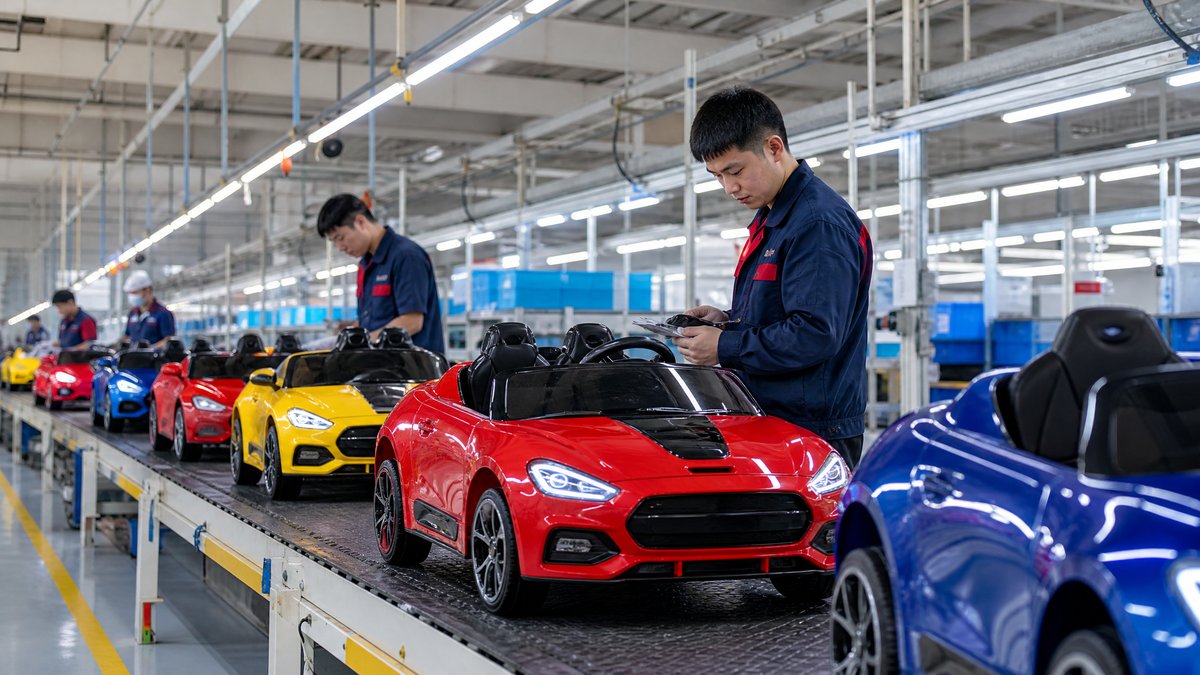
Wholesalers should treat single-seat and two-seat ride-on cars as different assortment roles, not merely smaller and larger versions of the same item. Single-seat models can create accessible entry points, expand body-style choice, and potentially simplify display or storage. Two-seat models can support a more premium family-use proposition and stronger showroom presence, but can require more careful carton, inventory, and service planning. The right mix depends on the target channel, retail price architecture, warehouse capacity, and the supplier’s documented specifications. Compare approved configurations side by side; do not choose solely by the number of visible seats.
Set the Intended Retail Position First
Decide what each seating format must accomplish in the range before asking for quotations. A single-seat ride-on car may fit a value or mid-tier line, a compact display, a gift promotion, or a catalog aimed at one child. A two-seat model may be offered as a higher-ticket alternative for families drawn to a larger-looking product or shared-play concept. These are merchandising hypotheses, not guaranteed demand, so validate them against your retailers’ feedback and prior sales.
Seating capacity should be only one differentiator. Body style, age grading, remote-control configuration, battery system, finish, accessories, and packaging also shape the customer proposition. Avoid charging more for a two-seat body without a clear, documented product story that a retailer can explain accurately.
Define the target customer and channel
Ask retail partners what shoppers actually prioritize: compact size, visual appeal, a particular style, a stated age range, or a target price. Specialty toy stores, online sellers, mass retailers, and rental operators may have different needs. Do not assume that a two-seat design permits two children to ride together. Use only the exact model’s manufacturer-stated occupancy, age, and maximum-load information.
Compare the Physical Product, Not the Seat-Count Label
“Single-seat” and “two-seat” describe a layout, not a consistent size, feature level, usable seat space, or quality standard. Request a current specification sheet and compare the approved configuration line by line.
| Comparison point | What to request | Why it matters |
|---|---|---|
| Dimensions and weight | Product and carton dimensions; net and gross weight | Supports container, storage, display, and delivery planning. |
| Seating details | Seat measurements, layout, stated occupancy | Keeps listings and sales claims accurate. |
| Stated limits | Manufacturer age guidance and maximum load | Must match manuals, labels, and product pages. |
| Configuration | Listed battery, controls, wheels, remote, lights, accessories | Makes quotations comparable. |
| Included items | Standard versus optional components | Prevents an incomplete or misleading price comparison. |
| Support | Assembly materials, spare-parts list, warranty terms | Affects retail readiness and after-sales planning. |
Ask the supplier to confirm standard and optional components in writing. Similar body shells may be quoted with different wheels, seat materials, battery types, remotes, or accessory packages. A lower price may represent a different configuration rather than a better buy.
Model the Commercial Impact Across the Supply Chain
Two-seat products may use more material or carton cube than a smaller single-seat alternative, but calculate the actual effect from current packing data rather than a rule of thumb. Compare ex-works or agreed trade-term price, packing, freight, insurance where applicable, duty and tax treatment, destination handling, storage, marketplace fees, and an after-sales allowance.
Larger cartons can affect container utilization, warehouse slots, retail back-room capacity, parcel options, and return freight. They may also support a higher planned retail position. Model balanced, single-seat-led, and two-seat-led purchase orders. Review unit margin, profit per container, working capital, and expected capital turn together.
Confirm current destination-market requirements before importing or selling. Classification, labeling, documentation, duty, and other obligations can change; use appropriate qualified local advice or official sources for your market.
Verify Safety Information and Compliance Readiness
Evaluate safety information model by model, irrespective of seat count. Request current documentation relevant to the destination market, product labels and artwork, user instructions, age grading, warnings, traceability information where required, and available test reports or declarations. Have qualified parties confirm that the actual approved product and documentation meet current destination-market requirements. Documents for another market, run, or configuration should not be assumed to apply.
Retail and distributor content should repeat only the manufacturer’s stated age, load, occupancy, and operating guidance. It should also state that children require adult supervision and users must follow the manufacturer’s instructions. Do not make electrical, battery, braking, or structural modifications, and do not present a two-seat layout as proof that two riders are permitted.
Use a Structured Sample Approval Process
Photos and abbreviated quotations are not enough for a final range decision. Review samples using the same checklist: finish, fit of visible parts, packaging condition, instruction clarity, labels, declared included items, and basic operation only in accordance with the manufacturer’s instructions. Record findings with dated photos and a written correction list.
For a two-seat candidate, confirm that actual seating layout matches the description and that the carton protects large visible surfaces. For a single-seater, assess whether product imagery communicates its scale clearly and whether optional features can be confused with standard content.
Before mass production, issue a signed specification record that links the SKU to its color, components, packaging artwork, manuals, labels, configuration, spare-parts list, and inspection criteria. This helps prevent errors where models share a body style or similar name.
Build a Manageable Assortment
For many buyers, a controlled mix of both formats is more useful than an all-or-nothing decision. Use single-seat models for compact or value-conscious demand and choose two-seat models selectively where the channel has suitable space and a credible premium proposition. Limit colors and feature combinations enough to forecast demand and support spare parts effectively.
Ask for current lead times, MOQ by SKU and color, carton data, replacement-part availability, artwork milestones, and order-change deadlines. Then test the proposed mix with the retailers who will list or display it. For current product information, email KidsRideCar’s B2B team with your target market, channels, and price tiers.
FAQ
Is a two-seat ride-on car always suitable for two children?
No. A two-seat layout alone does not establish permitted occupancy. Use the manufacturer’s documented age guidance, maximum load, occupancy instructions, and warnings for the exact model. Product pages and manuals should tell adults to supervise use and follow the manufacturer’s instructions.
Are single-seat models necessarily less expensive to import?
No. Some may have a lower product price or smaller carton, but that must be confirmed from the approved quotation and packing data. Compare total landed cost, container utilization, destination handling, storage, and planned support costs before deciding.
What should wholesalers request from the supplier?
Request current specifications, packing details, user instructions, label artwork, standard-versus-optional component lists, warranty and spare-parts information, plus compliance-related documents relevant to the destination market. Verify applicability for the current model and market before sale.
How should online retailers describe seating capacity?
Use only the supplier’s documented wording for occupancy, age, maximum load, and use conditions. Do not infer permitted two-rider use from two visible seats. Include adult-supervision and manufacturer-instruction boundaries in customer-facing safety information.
Should a first order include both formats?
It depends on capital, storage, channel feedback, and the number of SKUs you can support. A limited, documented mix can test two propositions while controlling complexity. Forecast cartons, display needs, spare parts, and reorder lead times rather than selecting purely by seat count.
Conclusion
Compare single-seat and two-seat ride-on cars through their role in a market-ready assortment: actual specifications, packing data, landed cost, safety information, and support requirements all matter. Verify current destination-market requirements before ordering or selling, and ensure retailer messaging follows the manufacturer’s instructions and supervision guidance. To discuss configurations or request current details, contact KidsRideCar.
Official references
Explore these external resources for current regulatory and trade guidance. Confirm requirements with the relevant authority before placing an order.
Ready to Start?
Factory-Direct · CE & ASTM Certified · MOQ from 50 Units
Our export team works with buyers in 60+ countries. Get a quote within 24 hours.
KR
Written by KidsRideCar
China's leading kids electric ride-on car manufacturer. 500,000+ units shipped annually to 60+ countries. CE, ASTM & EN71 certified.