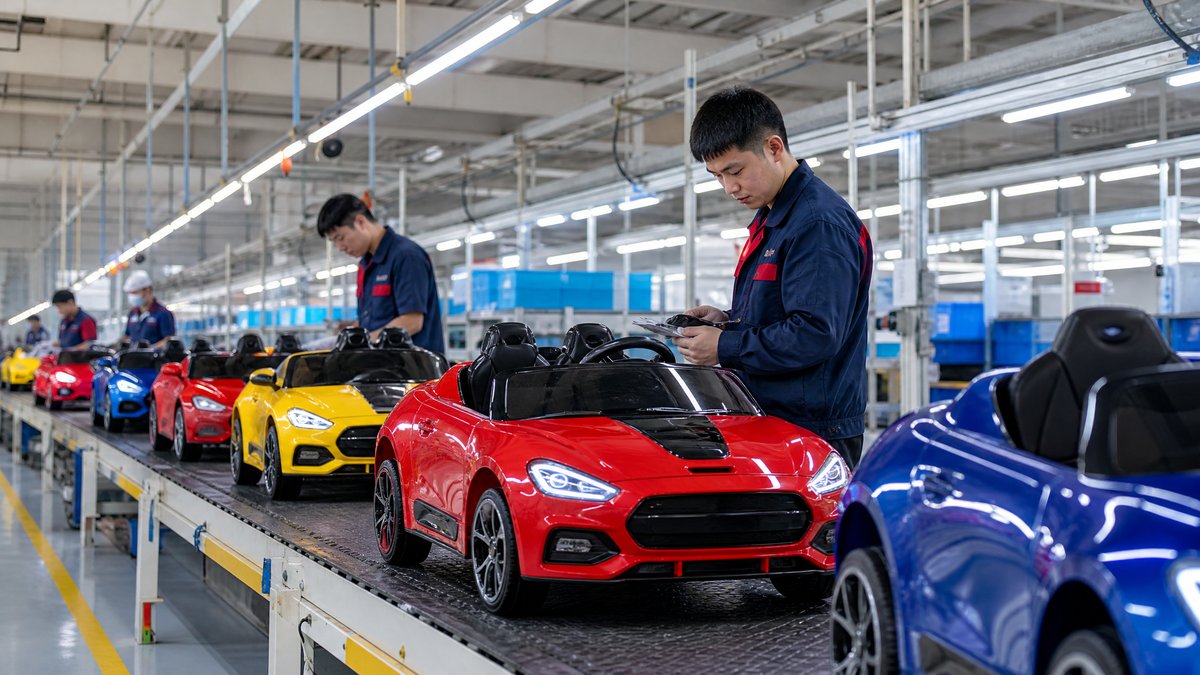
A useful kids ride-on car landed cost worksheet should show every reasonably foreseeable cost from the supplier quote through arrival at the buyer’s usable warehouse, with a clear unit basis, source document, currency, allocation rule, and owner for each figure. It should also separate confirmed charges from estimates and let the buyer test changes in freight, exchange rate, duty, or carton volume before committing to an order. For importers, wholesalers, distributors, retailers, and OEM buyers, this detail turns a headline factory price into a practical basis for product selection and resale planning.
Start With Worksheet Controls and a Clear Cost Boundary
Put an assumptions block at the top of the file before listing costs. Record the worksheet version and date, buyer entity, supplier, model or SKU, destination, Incoterm, intended transport mode, currency, exchange-rate source and date, expected order quantity, and shipment or container reference. Identify the preparer and reviewer as well.
Define what “landed” means for the decision: delivered to the import port or received at a specified warehouse. Include or exclude unloading, warehouse transfer, labeling, kitting, and domestic delivery consistently.
Use statuses such as quoted, booked, invoiced, paid, and estimated. Link every line to a source, such as a supplier quote, freight quote, broker calculation, invoice, or internal rate card.
Identify the Product, Packout, and Cost Basis
Each line or linked product tab should identify the exact configuration being costed. Include the model name, internal SKU, supplier model code, color or variant, battery and accessory configuration, retail pack or bulk pack, and whether any branding or packaging work is included. A small variation can affect unit price, carton size, classification analysis, freight allocation, or the components required for the market launch.
Choose a primary costing unit—normally one sellable vehicle—and show the calculation basis alongside it. Do not divide a shipment total by vehicle count if the shipment contains parts, displays, packaging, or multiple SKU families that need their own allocation. Keep the underlying total and the allocated per-unit figure visible.
Capture Supplier-Side and Pre-Shipment Charges
The commercial invoice price is only one part of the worksheet. Add a supplier-cost section with separate fields for:
- Unit ex-works or agreed Incoterm price, extended by purchase quantity
- Approved options, OEM changes, branding, artwork, or packaging components
- Tooling, sample, or setup charges separate from recurring unit cost
- Separately charged export packaging, spare parts, chargers, accessories, manuals, or inserts
- Origin transport, export documents, terminal delivery, loading, or contracted third-party services when buyer-responsible
One-time amounts need an explicit treatment. A buyer may allocate them across a first order, a forecasted program volume, or a defined amortization period for an internal profitability view. The worksheet should state which approach is used; it should not quietly add a full tooling bill to every unit.
Add International Transport and Cargo-Related Costs
For ride-on cars, cubic volume and carton geometry can materially influence planning, so retain the freight quote’s validity period, routing, equipment type, and charge basis. Compare quotes on the same assumptions rather than only comparing a total. A cheaper rate may not cover the same origin handling, destination charges, delivery point, or free-time terms.
Use an allocation method that reflects the commercial question. Freight across one homogeneous SKU can be divided per unit. A mixed shipment may call for allocation by cubic volume, weight, value, carton count, or a documented hybrid method. Apply the same method to every comparable scenario unless there is a reason to change it, and note that reason.
Calculate Import, Clearance, and Destination Costs Separately
List the proposed tariff classification or HS code as a working input, not a conclusion. Duty, import tax, fees, trade remedies, licensing, and product obligations can vary by product, origin, customs value, and destination. Confirm current destination-market requirements with qualified customs, regulatory, and tax advisers before ordering or importing.
Capture customs value, estimated duty, import-tax treatment, brokerage, declaration charges, port or airport charges, and final delivery. Recoverable import taxes are often tracked separately from cost of goods; label the treatment rather than assuming. Also capture local appointment, unloading, receiving, relabeling, repacking, and transfer costs, distinguishing provider quotes from internal allowances.
Include Financial, Commercial, and Risk Assumptions Without Hiding Them
Show bank charges, payment-provider fees, currency-conversion costs, and inspection or claims reserves as separate optional lines. Do not describe an allowance as an actual supplier or logistics charge. For scenario planning, use base, upside, and downside columns to test exchange rate, freight validity, utilization, order quantity, and domestic delivery changes. State the trigger for a re-cost, such as revised carton data or an expired freight quote.
Reconcile to a Unit Landed Cost and Commercial Decision
Your summary should show: total purchase cost; total pre-shipment cost; total transport cost; total import and destination cost; optional financial or risk allowances; and the resulting landed cost per sellable unit. Then show which costs are included and excluded from that total.
Before approval, reconcile the worksheet to the purchase order, supplier pro forma invoice, packing list assumptions, freight quotation, and broker or adviser inputs. Check that totals use the same currency and exchange-rate date, that formulas do not allocate costs to free samples unintentionally, and that rounding differences are visible. A second reviewer should challenge the largest costs and every blank or provisional field.
For a worksheet field list tailored to your sourcing route and product mix, email the KidsRideCar team. You can also request quotation inputs for a planned order so that supplier-side assumptions can be recorded consistently.
FAQ
Should the worksheet use FOB, CIF, or delivered pricing?
Use the Incoterm actually agreed and state the named place or port. Add only the costs that remain with the buyer. Do not compare different terms until missing components are normalized to the same boundary.
How should a buyer allocate freight across different ride-on car models?
Choose an allocation driver that reflects the freight charge: cubic volume, weight, carton count, or a documented combination. Preserve the shipment total and formula for review.
Are duties and import taxes always part of landed cost?
Duty and non-recoverable charges are commonly included in a cost view, while the treatment of import tax can depend on local law and the buyer’s recovery position. Keep each amount visible and obtain current professional guidance for the destination rather than relying on a generic template.
When should the worksheet be updated?
Update it before purchase-order approval, when carton or quantity details change, after freight booking, when final invoices arrive, and after arrival for variance review. Comparing estimated and actual results helps improve future assumptions without treating past outcomes as guarantees.
Can one worksheet cover OEM and private-label orders?
Yes, if it distinguishes recurring vehicle cost from one-time or program-specific costs. Add lines for approved artwork, tooling, packaging development, compliance-related work, and change-control activities only when they apply. Link every such charge to its approval and allocation rule.
Conclusion
A complete kids ride-on car landed cost worksheet makes each amount traceable and decision-ready. Identify the product and packout, capture supplier, transport, import, and destination expenses, explain allocation and currency assumptions, and distinguish confirmed amounts from estimates. Reconfirm destination-market requirements, commercial terms, and logistics inputs before relying on final unit cost.
Official references
Explore these external resources for current regulatory and trade guidance. Confirm requirements with the relevant authority before placing an order.
Ready to Start?
Factory-Direct · CE & ASTM Certified · MOQ from 50 Units
Our export team works with buyers in 60+ countries. Get a quote within 24 hours.
KR
Written by KidsRideCar
China's leading kids electric ride-on car manufacturer. 500,000+ units shipped annually to 60+ countries. CE, ASTM & EN71 certified.