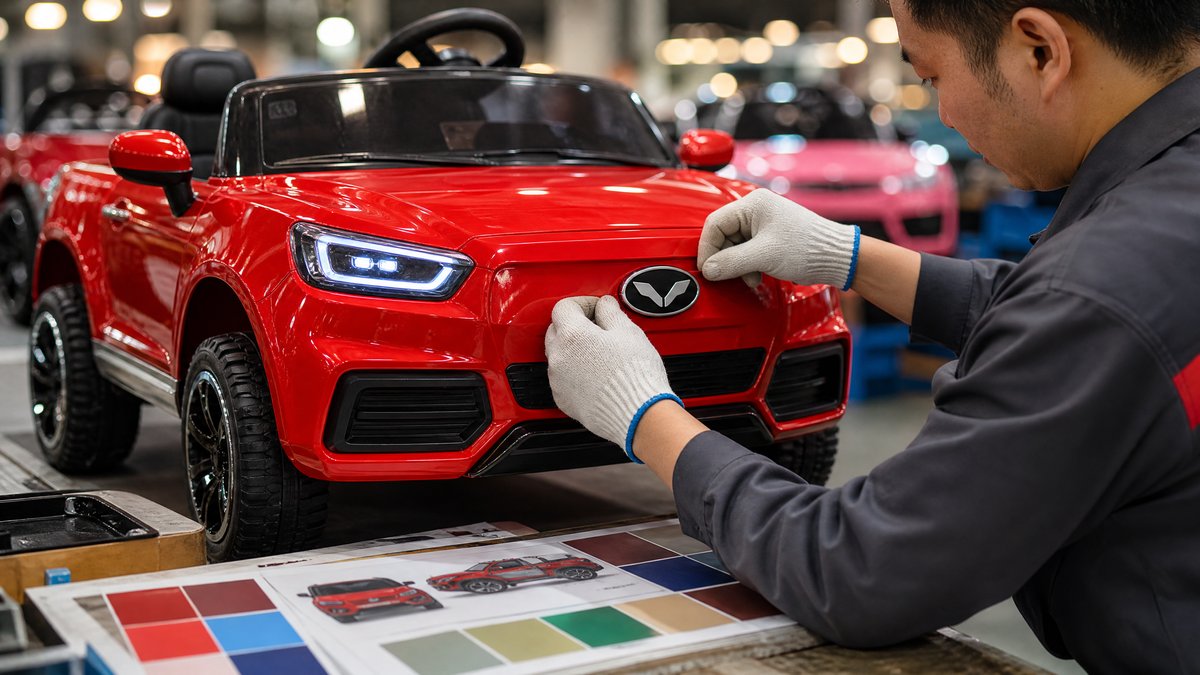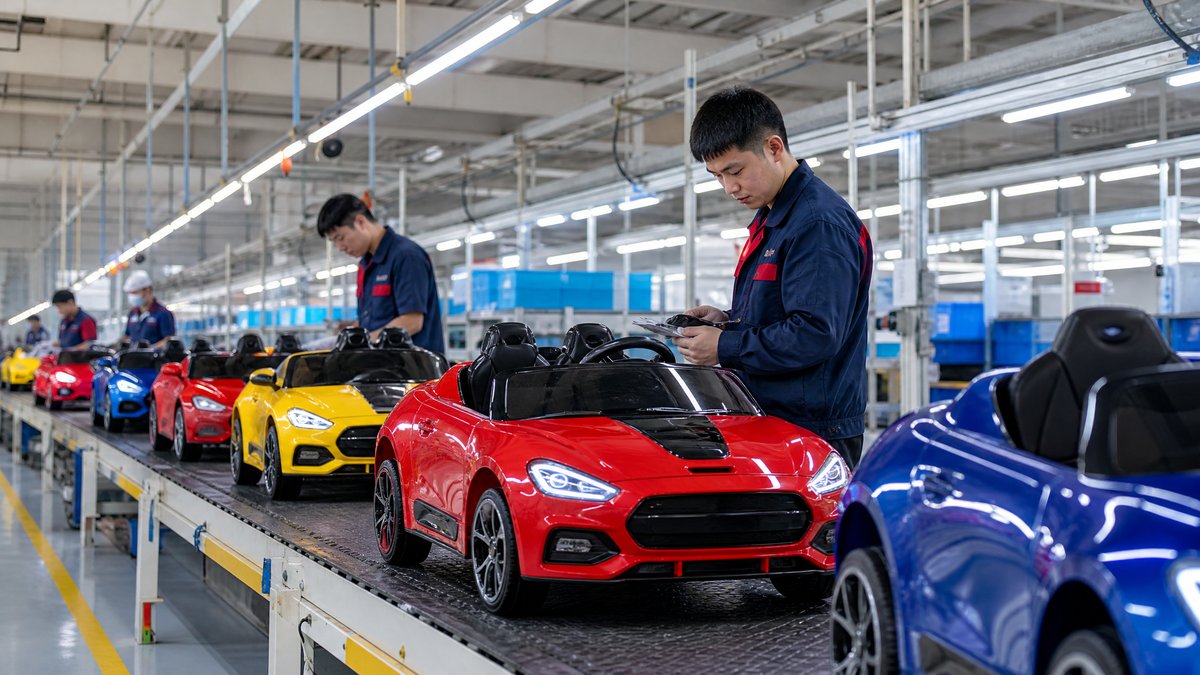
An OEM buyer should hand over one controlled artwork pack that tells the supplier which files apply, where each graphic belongs, what wording is approved, and who can authorize a change. Include brand assets, placement drawings, packaging and label artwork, editable copy, color references, print notes, and a revision-controlled approval record.
Artwork handover is not simply sending a logo by email. Graphics can appear on the vehicle body, decal sheets, dashboard or steering-wheel badge, carton, manual, barcode label, and inserts. Locations may differ by model, colorway, SKU, language, or destination. It does not replace the buyer’s responsibility to confirm brand rights, product information, or current destination-market requirements.
Create One Controlled Handover Index
Start with an index that lists every artwork item. Assign each a unique file ID, revision number, date, owner, model/SKU, placement, language, and status. A name such as `KRC-ORBIT-CARTON-EN-REV02` is much more reliable than `final-artwork-new.pdf`.
The index should state whether the factory may use each master file directly, adapt it to a supplied dieline, or use it as reference only. Name decision-makers and ask the supplier to acknowledge files and flag missing details before layouts begin.
Separate buyer source artwork, supplier production artwork, and the dated approved-for-production version for the identified SKU and market. This prevents a concept PDF or an old carton file being mistaken for the manufacturing version.
Deliver Usable Brand Assets and Rules
Provide the current logo in the supplier’s requested usable format, preferably with a vector master. Supply approved raster versions, relevant icons or patterns, and the exact spelling and capitalization of the brand name. Specify where any trademark symbol applies.
Include approved logo versions, clear-space and size rules, named colors by substrate, approved typefaces, and permitted images or icons. Screen colors may not reproduce identically on carton, decals, labels, and molded surfaces. Give a reference for each use and request a proof when an asset must be adapted.
Map Artwork to Each Model and Surface
A generic brand guide is not enough for multiple models. Supply a placement map for every model, colorway, and SKU. Use annotated product views, factory-provided outlines, and current carton dielines. For side decals, show left and right separately and state whether artwork is mirrored.
| Location | Buyer input | Approval check |
|---|---|---|
| Vehicle body or decal | File ID, size, orientation, left/right placement, finish request | Confirm fit on the actual model and colorway |
| Dashboard or steering-wheel mark | Artwork, dimensions, color, exact position | Confirm that controls and indicators remain clear |
| Retail carton | Latest dieline, panel copy, images, SKU, barcode area | Confirm folds, panel orientation, language, and SKU |
| Product or carton label | Exact text, size, location, language version | Verify current destination-market requirements |
| Manual and inserts | Editable text, illustrations, locale, revision date | Match the agreed product configuration |
Avoid vague instructions such as “put the logo on the front.” State the surface, dimensions, orientation, and target SKU. Ask about limitations near curves, seams, openings, controls, and carton folds before release.
Control Packaging, Labels, and Marketing Copy
Use the supplier’s latest carton dieline, not an assumed box size or an earlier layout. Identify trim, bleed, folds, glue areas, barcode quiet zones, and non-printable areas. Show which dieline belongs to each SKU.
Provide copy in a separate editable document as well as in laid-out artwork. Include the product name, color, SKU, included items, barcode data, contact details, and approved use or warning information. This supports proofreading and controlled translation changes.
Check all claims against the actual agreed model. Do not approve performance, capacity, feature, safety, compatibility, or age-related claims unless supported for that configuration and market. Buyers should verify current destination-market labeling and product requirements with qualified advisers, and confirm manufacturer support. Age grading and safety wording should match manufacturer instructions; adult supervision remains necessary where those instructions require it.
Specify Production Requirements, Not Assumptions
Ask the supplier which file formats, bleed, resolution, color profile, and dieline conventions are required. Provide editable production files alongside a locked visual PDF. Record final dimensions, scale, safe area, linked image source, language, and variable SKU or barcode fields.
State color references by material. Confirm the technical feasibility of matte or gloss finishes. For critical colors, agree on a proof route—returned layout, component sample, or packaging proof—rather than relying on an uncalibrated screen.
Use a Formal Approval and Change Process
The supplier should return production layouts, placement mock-ups, and relevant proofs. Consolidate comments into one dated feedback file; uncoordinated email threads can create conflicting instructions.
Before release, check the model, SKU, colorway, market, language, carton revision, barcode, label location, and file revision. State precisely what is authorized. After approval, require written change requests and record possible effects on timing, cost, stock, samples, and re-approval.
Compare the approved-for-production pack with the pre-production sample or first packaging proof to identify reversed decals, old logos, mismatched color names, missing labels, or incorrect carton panels.
Need a supplier-ready index or a second review of a returned proof? Email KidsRideCar’s OEM team with the model list, target market, and current revision set.
FAQ
Which artwork formats should an OEM buyer send?
Ask the supplier for its technical preference first. A buyer will often supply editable vector logo or print files, suitable-resolution images, and a locked PDF reference proof. More important than any universal format is that the factory can identify the master file, dimensions, linked assets, color specification, and revision without guessing.
Should product, carton, and label artwork be approved together?
They should be reviewed as one controlled release when they apply to the same SKU and market, although each can have its own file ID. A combined review helps catch inconsistent product names, colors, barcodes, languages, included-item lists, and claims. Confirm destination-market requirements before authorizing production.
What if the supplier changes the carton dieline?
Treat that as a new production-artwork review. Request the updated dieline and revised layout showing folds, panel positions, bleed, and barcode space. An approved layout may not fit a new carton construction, so approve the identified revised file before it is used.
Can the same artwork be used across all ride-on car models?
Core brand assets may be shared, but each model needs its own placement and content review. Surface contours, decal areas, feature sets, carton dimensions, labels, and manuals can differ. Release artwork against the specific model/SKU rather than relying only on a generic approval.
Who should give final artwork approval?
Name one authorized buyer approver, informed by brand, product, packaging, and compliance stakeholders as needed. The supplier should recognize only the agreed approval route. That clarity does not transfer the buyer’s responsibility for its intellectual property, wording, or market obligations.
For a practical check of your artwork checklist before sample sign-off, contact KidsRideCar. Include the SKU, destination market, languages, and the exact revision you want reviewed.
Conclusion
A strong private-label ride-on car artwork handover is a controlled production package, not a collection of attachments. Give the supplier a file index, usable brand assets, model-specific placement maps, current dielines, checked copy, technical requirements, and a documented approval route. Review the supplier’s returned proof against the actual SKU before mass production, and make every later change traceable. These steps help buyers maintain brand consistency while reducing artwork ambiguity across the vehicle, packaging, labels, and retail materials.
Official references
Explore these external resources for current regulatory and trade guidance. Confirm requirements with the relevant authority before placing an order.
Ready to Start?
Factory-Direct · CE & ASTM Certified · MOQ from 50 Units
Our export team works with buyers in 60+ countries. Get a quote within 24 hours.
KR
Written by KidsRideCar
China's leading kids electric ride-on car manufacturer. 500,000+ units shipped annually to 60+ countries. CE, ASTM & EN71 certified.