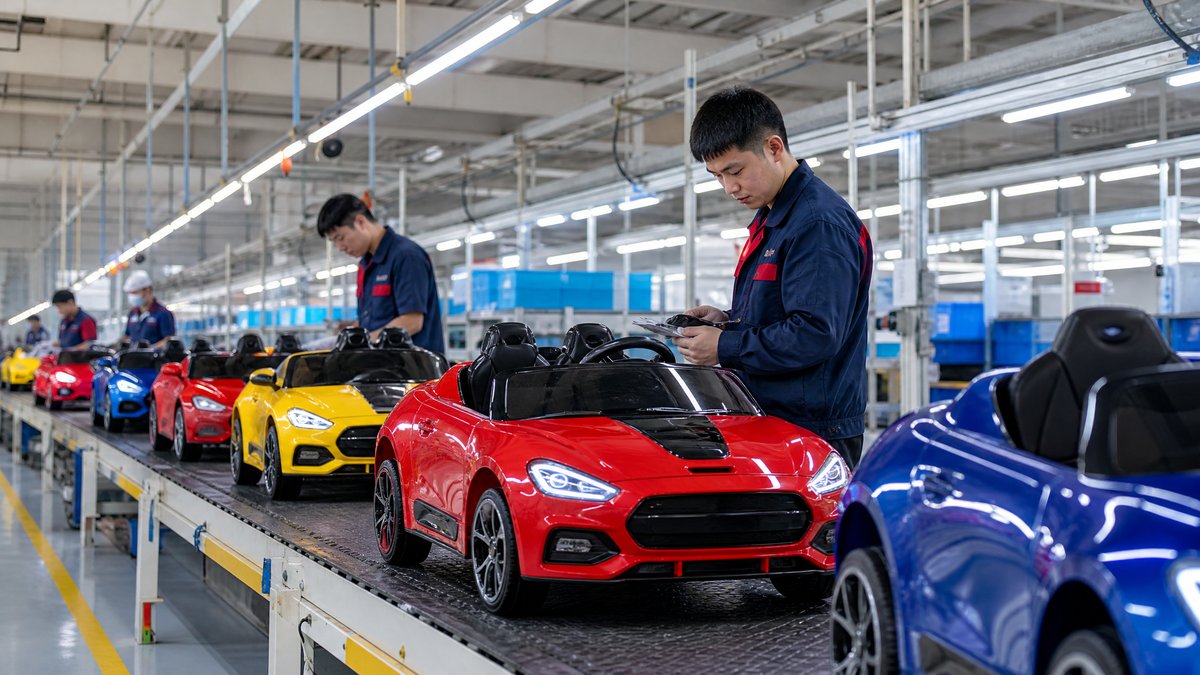
For professional entities operating within the global toy distribution and juvenile products market, the evaluation of electrical propulsion systems is a cornerstone of strategic procurement. When sourcing high-end miniature vehicles, business-to-business importers and retail chain buyers must look beyond surface-level marketing descriptions. The core of a high-quality product lies in the synergy between its energy source and its mechanical output. To answer the primary question regarding the comparison of these systems, one must adopt a holistic view that prioritizes documentation, supplier transparency, and systemic efficiency over isolated metrics.
Professional procurement requires a shift in focus from raw performance claims to the verification of technical foundations. Instead of focusing on individual components, successful distributors evaluate how these parts work together to provide a consistent user experience. This involves a deep dive into the written model documentation provided by the manufacturer and a thorough review of current supplier evidence to ensure that the product meets the rigorous demands of the international marketplace.
The Integrated Powertrain: A Systemic Approach to Comparison
The most effective way to compare different models is to view the motor and the energy storage unit as a single, integrated powertrain. In the world of miniature electric vehicles, the efficiency of this system determines the product's market tier and its suitability for various retail environments. A powerful motor requires a commensurate energy source to function effectively, while a high-energy storage unit needs a robust motor to translate that potential into motion.
When comparing these systems, buyers should look for a balanced architecture. A vehicle designed for younger children may prioritize smooth motion and long-term reliability, whereas a model intended for older users might focus on higher torque and the ability to navigate varied surfaces. By reviewing the manufacturer-approved support materials, importers can gain insight into the intended use case for each configuration. This systemic comparison ensures that the products in a distributor's portfolio are appropriately matched to their target demographic, reducing the likelihood of consumer dissatisfaction and subsequent returns.
Evaluating Energy Sources Through Documentation
The energy storage unit, often referred to as the heart of the vehicle, is the most critical component to assess during the sourcing process. However, because internal inspections are strictly prohibited for safety reasons, business-to-business buyers must rely on external visual checks and written supplier confirmation. Comparing energy sources across different manufacturers requires a disciplined approach to reviewing technical paperwork.
Importers should prioritize products that come with comprehensive written model documentation. This documentation should outline the energy density and the expected lifecycle of the storage units without relying on exaggerated performance claims. By comparing the current supplier evidence across multiple factories, a buyer can identify which partners are committed to high-quality components and which are cutting corners. This process of non-destructive assessment is vital for maintaining the integrity of a brand's offerings.
Furthermore, the energy source's physical dimensions and weight can provide clues about its potential. While numerical figures and specific measurements are not the focus here, a larger physical footprint often correlates with a greater energy reservoir. However, this must always be verified through appropriate product markings that indicate the component's origin and its alignment with applicable destination-market requirements.
Motor Efficiency and Mechanical Output
The motor is the primary driver of the vehicle's motion, and its quality is a major factor in the product's wholesale value. When comparing motors, professional buyers should focus on the construction quality and the reputation of the motor manufacturer. A high-quality motor will offer consistent performance across a wide range of environmental conditions, from smooth pavement to gentle inclines.
Instead of looking for specific motion figures, which can be misleading, distributors should evaluate the motor's torque and its ability to maintain motion under load. This is best achieved by reviewing the manual-led setup instructions and observing the vehicle's behavior during a non-destructive assessment. A motor that operates quietly and smoothly is often a sign of superior engineering and better internal components.
Buyers should also consider the motor's heat dissipation capabilities. While the motor casing must never be accessed internally, the external design can indicate how well the system handles the heat generated during extended use. Models that feature enhanced ventilation or more robust external casings are generally better suited for the high-intensity play patterns common in the premium market segment.
Sourcing Framework: The Wholesale Comparison Matrix
To assist in the decision-making process, importers should utilize a model-neutral sourcing framework. This framework allows for a consistent comparison of products from different suppliers, ensuring that every addition to the catalog meets the company's quality standards.
| Comparison Factor | Sourcing Priority | Verification Method |
|---|---|---|
| System Balance | Harmony between motor and energy source | Written model documentation |
| Component Origin | Reputation of the primary manufacturer | Current supplier evidence |
| Labeling Integrity | Clarity and accuracy of product information | External visual check |
| Support Accessibility | Availability of manufacturer-approved guidance | Qualified support review |
| Market Alignment | Suitability for the target demographic | Applicable destination-market requirements |
This matrix encourages a focus on the qualitative aspects of the product, which are often more indicative of long-term success than quantitative figures. By prioritizing these factors, business-to-business entities can build a reputation for reliability and quality in the competitive toy market.
The Importance of Appropriate Product Markings
In the global trade of juvenile products, the presence of appropriate product markings is a non-negotiable requirement. These markings serve as a signal to customs officials, retailers, and consumers that the product has undergone the necessary evaluations and meets the applicable destination-market requirements. When comparing ride-on cars, the clarity and permanence of these markings are key indicators of the manufacturer's professionalism.
Buyers should look for markings that are clearly legible and securely attached to the vehicle's exterior. These labels should provide information about the manufacturer, the model, and any necessary warnings for the end-user. The absence of such markings, or the presence of vague and poorly translated information, should be a significant red flag for any professional importer.
Furthermore, the documentation supporting these markings must be kept on file and updated regularly. Written supplier confirmation that the product continues to meet the stated standards is essential for mitigating risk and ensuring a smooth supply chain. This focus on documentation and labeling is what distinguishes a professional wholesale operation from a casual importer.
Safety and Supervision: The Human Element
While the technical specifications of a ride-on car are important, the safety of the end-user ultimately depends on adult supervision and adherence to the manufacturer's guidelines. As part of the comparison process, business-to-business buyers should evaluate the quality of the user manuals and the safety instructions provided with each model.
A high-quality manual should be easy to understand, well-illustrated, and focused on safe operation. It should clearly outline the need for adult supervision at all times and provide a manual-led setup process that ensures the vehicle is ready for use. Importers should favor manufacturers who take the time to produce comprehensive safety literature, as this reduces the risk of accidents and the associated legal complications.
In addition to the manual, the physical design of the vehicle should encourage safe play. This includes features like stable wheelbases, comfortable seating, and intuitive controls. By conducting an external visual check of these elements, a buyer can assess the manufacturer's commitment to safety without needing to delve into the vehicle's internal mechanics.
Maintenance Protocols and Professional Support
A robust after-sales strategy is essential for any distributor or retailer. When comparing products, it is important to consider the ease of maintenance and the availability of qualified support. However, it is equally important to define the boundaries of that maintenance to ensure the safety of the consumer.
The official policy for all ride-on vehicles should be to prioritize manufacturer-approved support for any issues that arise. Users and retailers should be instructed to perform only external visual checks and to follow the manual-led setup instructions. If a vehicle exhibits any unusual behavior or if there is a concern about its operation, the instruction must be to stop use if there is a concern and seek qualified support immediately.
By emphasizing professional support over any attempts to alter the vehicle, business-to-business entities can protect their customers and their brand reputation. This approach ensures that any necessary work is performed by individuals with the appropriate training and tools, maintaining the integrity of the vehicle's safety systems.
Conclusion: Building a Portfolio of Excellence
Comparing the motor, energy source, and overall performance of kids' electric ride-on cars is a complex task that requires a professional and disciplined approach. By moving away from numerical figures and focusing on the qualitative aspects of the product, wholesale importers can make more informed decisions and build a portfolio of high-quality, reliable vehicles.
The key to success lies in the verification of written model documentation, the assessment of current supplier evidence, and the insistence on appropriate product markings. By following a model-neutral sourcing framework and prioritizing safety and professional support, distributors can ensure that they are providing their customers with the best possible products.
In the end, the goal of any professional entity in the toy industry is to provide joy to children and peace of mind to parents. By conducting thorough, non-destructive assessments and working with reputable manufacturers, importers can achieve this goal while building a sustainable and profitable business.
Frequently Asked Questions
Q: How should a buyer evaluate the quality of the energy storage unit without opening the vehicle?
A: The most effective method is to perform an external visual check of the component's casing and to review the written model documentation provided by the manufacturer. Buyers should also request current supplier evidence and written supplier confirmation regarding the component's performance and safety history. A non-destructive assessment of the vehicle's behavior during use can also provide valuable insights into the energy source's reliability.
Q: What should be done if a vehicle's performance seems inconsistent during a trial?
A: If there is any concern about the vehicle's operation, the first step is to stop use if there is a concern. The buyer should then consult the manual-led setup instructions to ensure that the vehicle was prepared correctly. If the issue persists, it is essential to seek manufacturer-approved support or qualified support rather than attempting any internal mechanical or electrical work.
Q: Why is the focus on appropriate product markings so important for wholesale importers?
A: Appropriate product markings are essential for demonstrating that a product meets the applicable destination-market requirements. They facilitate the customs clearance process and provide necessary safety information to the end-user. For a professional importer, these markings are a key part of the risk management strategy and a sign of a manufacturer's commitment to quality and transparency.
Request a wholesale quote
Official references
Explore these external resources for current regulatory and trade guidance. Confirm requirements with the relevant authority before placing an order.
Ready to Start?
Factory-Direct · CE & ASTM Certified · MOQ from 50 Units
Our export team works with buyers in 60+ countries. Get a quote within 24 hours.
KR
Written by KidsRideCar
China's leading kids electric ride-on car manufacturer. 500,000+ units shipped annually to 60+ countries. CE, ASTM & EN71 certified.