Introduction
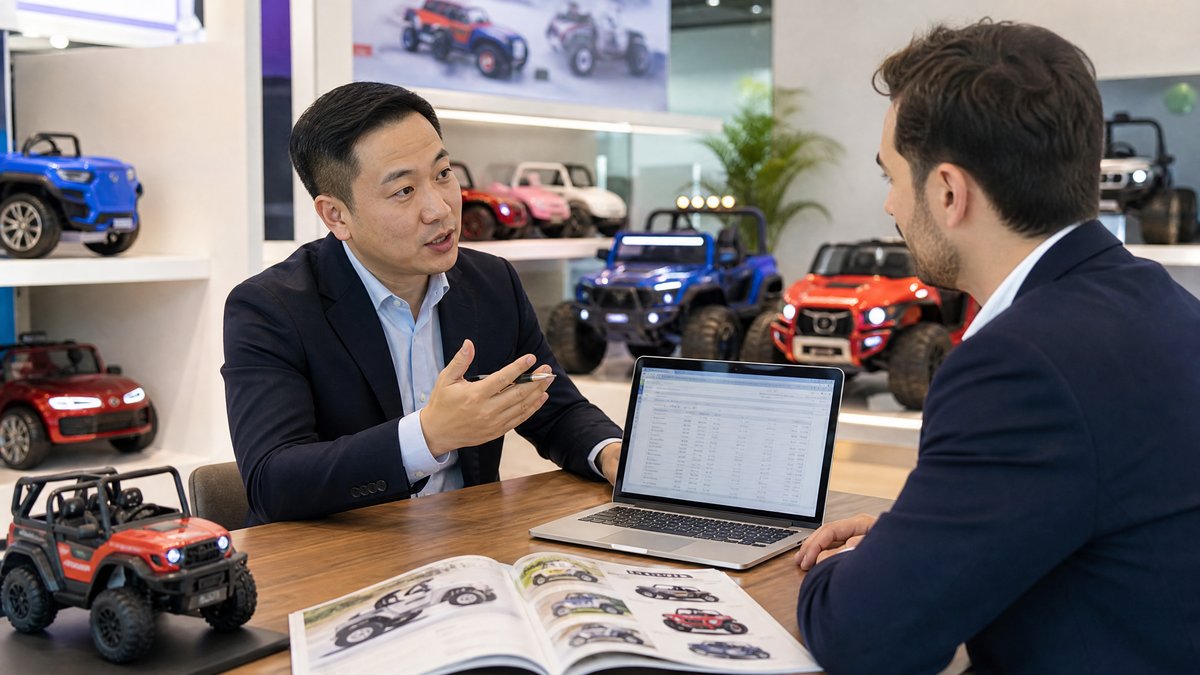
Retail assortment buying is different from rental-fleet buying. Retailers need attractive, easy-to-explain products, manageable cartons, accurate listing information, and a range for different budgets. Rental operators need repeatable inspection, charging, storage, maintenance, spare parts, and support for multiple units.
That difference should shape the quotation request. Whether you are an importer, distributor, ecommerce brand, retailer, event operator, or venue, compare the complete configuration, packaging, commercial terms, documentation, and support plan—not just the unit figure.
This guide explains how to approach kids ride on car wholesale for retailers and how the process changes when you are sourcing kids ride on car wholesale for rental businesses. It also provides a practical RFQ structure that you can send to a kids ride on car bulk order supplier.
How retailer and rental buying needs differ
Retailers buy an assortment and a customer experience
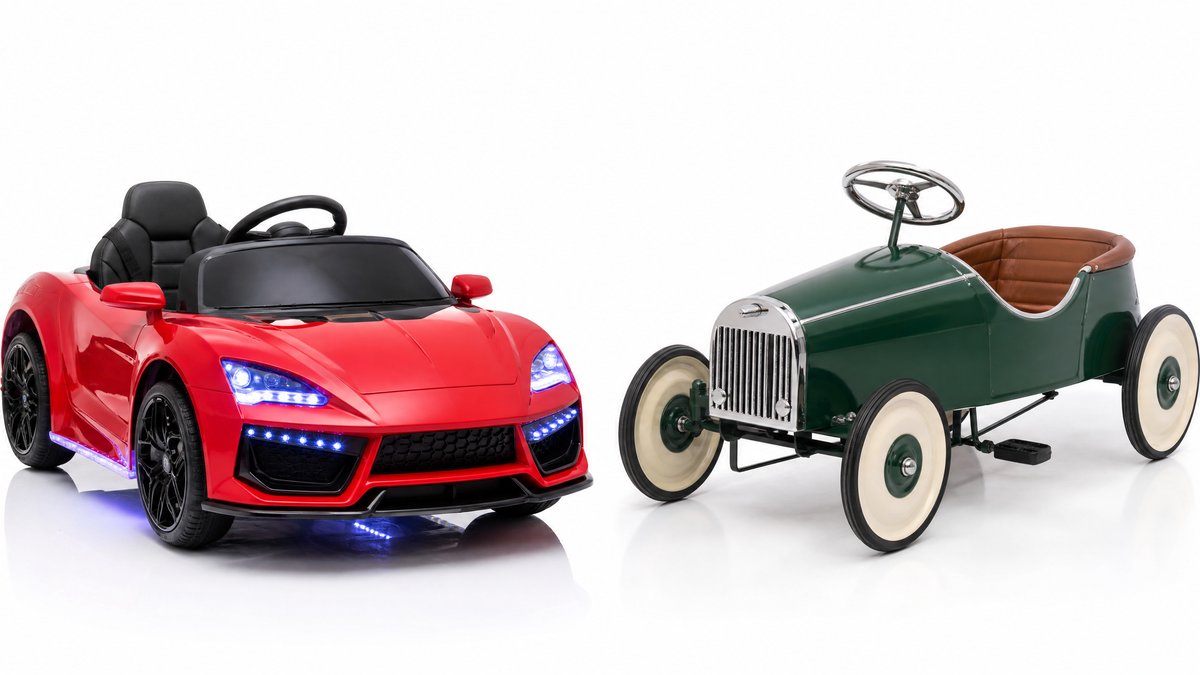
A retailer needs a selection that shoppers can understand quickly. The range might include single-seat and two-seat models, different body styles, several visual designs, and configurations with different control options. The exact mix depends on the retailer’s customer profile, selling space, sales channel, and destination market.
For each model, request consistent information:
- Model name, model number, and configuration
- Recommended user information supplied by the manufacturer
- Number of seats and product dimensions
- Battery and charger details for the quoted configuration
- Control method, including whether a parental remote is included
- Included accessories and optional accessories
- Carton dimensions, gross weight, and packing format
- Available colors, packaging options, and branding scope
- User instructions, warnings, and available market documents
- Spare-parts and warranty or after-sales procedures
This information supports product pages, staff training, stock planning, and accurate customer answers. Photos should match the quoted configuration; label any optional accessory clearly. Also record display footprint and carton implications, especially for two-seat models.
Rental businesses buy an operating system
A rental operator is not simply buying more units. The operator is planning how vehicles will be issued, supervised, inspected, charged, cleaned, stored, and returned to service. A rental project may be located in a shopping mall, indoor playground, family entertainment center, event area, or community venue. Each location has different traffic flow, staffing, surface, weather exposure, and storage conditions.
Do not assume that a product designed for household sales is automatically suitable for every commercial venue. The buyer, venue manager, and local advisers should review the intended operation, applicable rules, insurance requirements, and product documentation for the destination market and exact model.
Building a wholesale assortment
Start with channel and customer segments
Before requesting a catalog or quote, write a one-page assortment brief covering sales channel, customer group, venue or warehouse, and the questions buyers are likely to ask.
Useful assortment questions include:
1. Do you need single-seat, two-seat, or both types?
2. Will the products be displayed in stores, shipped from a warehouse, or used at a venue?
3. Which product dimensions and carton sizes can your warehouse handle?
4. Do you need standard branding, private label, or unbranded units?
5. Which colors and body styles fit your market without creating excessive SKU complexity?
6. Will spare parts be stocked locally or ordered only when needed?
7. Which languages and destination-market labels are required?
8. Which documents must be reviewed before listing or importing?
A clear brief helps the supplier recommend comparable models instead of sending an unfiltered catalog. Review the [KidsRideCar wholesale product range](/products/) and request model-specific information.
Create a balanced model matrix
Build a spreadsheet with one row per model and one column per decision field. Include model reference, seats, dimensions, net weight, battery configuration, charger information, control method, included features, colors, carton data, sample availability, MOQ, and parts support. Use “confirm” or “on request” where a field is not fixed. Never fill missing commercial or technical information with an estimate that could later be mistaken for a quotation.
For retailers, consider a manageable good-better-best structure based on documented differences such as seat count, body style, included controls, or accessory package. Avoid describing one model as universally safer, stronger, faster, or more durable unless the supplier provides evidence that applies to the exact configuration and your market.
Bulk pricing and quote variables
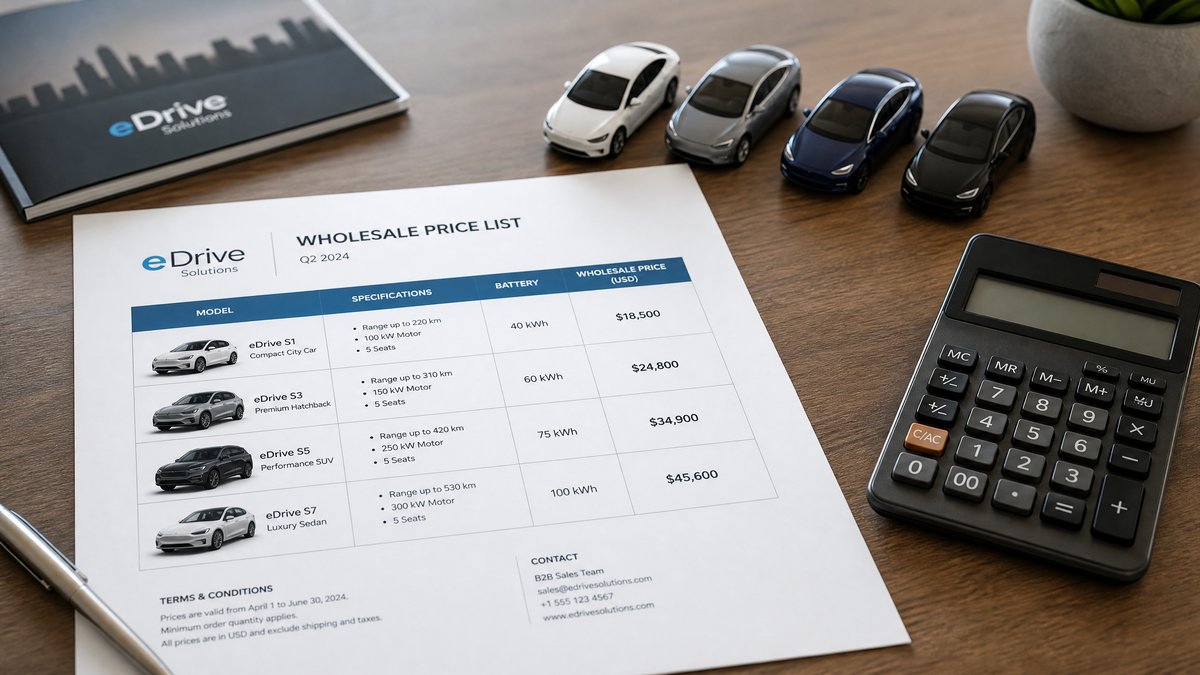
Ask for a comparable kids ride-on car wholesale quote
A useful quote should identify what is included and what is not. Ask the supplier to state:
- Supplier and buyer details
- Quote date, validity period, and currency
- Exact model numbers and configurations
- Quantity by model, color, and packaging version
- Unit price and the commercial basis, such as the agreed Incoterm
- Sample charges and whether sample terms differ from production terms
- Packaging, branding, manuals, labels, and accessory assumptions
- Carton dimensions, gross weight, and shipment data when confirmed
- Production or dispatch timing, with the assumptions clearly stated
- Payment terms and bank-detail verification process
- Available documentation for the exact product configuration
- Warranty and after-sales process
- Spare-parts pricing or a separate parts quotation
- Freight, insurance, duties, taxes, and local charges that are excluded
Separate product price from landed cost
The product quote is only one part of the purchasing decision. Your landed-cost worksheet may need product cost, packaging or branding charges, inland transport, export handling, freight, insurance, customs duties, taxes, broker charges, destination delivery, warehouse receiving, inspection, and estimated after-sales support. The exact categories and amounts depend on the destination, shipment terms, product classification, and local service arrangements.
Do not treat a supplier’s estimate of duties, tax, or classification as a final legal conclusion. Confirm customs classification and import requirements with your customs broker or relevant local authority. Similarly, confirm battery transport information and any required shipping documents for the quoted battery and charger configuration.
MOQ, lead time, and replacement-parts planning
Treat MOQ as a configuration question
MOQ may vary by model, color, packaging, branding, accessory, and degree of customization. Ask whether the stated MOQ applies per model, per color, per order, or to a mixed-model order. If you want a mixed shipment, provide the intended model list and quantities rather than asking only whether “flexible MOQ” is available.
For a new retailer or distributor, compare three scenarios:
- A small pilot order using standard models and standard packaging
- A mixed-model order that tests the intended assortment
- A repeat order with confirmed sales data and replenishment priorities
Do not assume that a supplier will combine all models, colors, or configurations under one MOQ. Obtain written confirmation for the exact request. Also ask whether samples count toward a later order, whether sample packaging differs from production packaging, and whether custom artwork creates a separate minimum.
Make lead-time questions specific
Lead time should be tied to a defined order, not presented as a permanent promise. Ask the supplier to separate sample preparation, artwork approval, production, inspection, packing, and dispatch. Confirm what happens if a component, color, label, or packaging file changes after approval.
For seasonal retail, allow time for confirmation, sample approval, production, inspection, export handling, freight, customs clearance, and receiving. For events, work backward from the venue date and include contingency. Verify the full logistics plan with freight and customs partners.
Plan service parts with the first order
Establish the parts program before the first shipment. Ask for a model-linked parts list, descriptions, compatibility information, packaging, and the request process. Categories may include wheels, pedals, switches, remotes, receivers, chargers, batteries, and drive-system components, depending on the model.
Keep battery and charger requests configuration-specific. Do not substitute parts based only on appearance or a similar connector. Voltage, capacity, connector, output, polarity, model, and approved compatibility all matter. Buyers should never bypass protection, open batteries, rewire a charger, or dismantle an energized system. Route faults or uncertain matches through the supplier’s approved support process and qualified service personnel.
RFQ checklist for retailers and rental operators
Copy the following fields into your inquiry and complete what you already know:
- Destination country, sales market, and importer-of-record details
- Business type: retailer, distributor, ecommerce brand, rental company, venue, or event operator
- Intended channel and customer or user profile
- Requested models, quantities, colors, and seat arrangements
- Required battery, charger, remote, control, wheel, and accessory configuration
- Standard, private-label, or OEM packaging requirements
- Product labels, manuals, warnings, and language requirements
- Target shipment window and delivery location
- Preferred quotation basis or Incoterm for comparison
- Carton dimensions, gross weight, packing photos, and shipment data
- Sample request and approval process
- Available compliance and technical documents for each configuration
- Spare-parts list, service process, and warranty questions
- Retail assets such as images, dimensions, product copy, and videos
- Rental requirements such as inspection, cleaning, charging, storage, and staff guidance
- Questions about MOQ by model, color, packaging, and branding
Ask the supplier to return the response in a table with one line per model. Request that optional features, assumptions, and unavailable fields be marked clearly. This makes a kids ride on car wholesale quote easier to evaluate and reduces the risk of approving an incomplete configuration.
After-sales support as a purchasing criterion
Price and product appearance matter, but support can determine whether a wholesale program remains practical. Before ordering, document how a supplier handles a reported issue. Ask what photos, videos, model references, labels, or purchase records are normally required; who reviews the case; how replacement parts are identified; and how the buyer should distinguish a product question from a transport-damage claim.
Retailers need clear information for customer service and returns inspection. Rental operators need a faster internal escalation path because a unit may affect venue availability. Distributors may need manuals, diagrams, service parts, and training materials for downstream dealers. In all cases, define what the buyer can inspect externally and which issues require supplier or qualified technical support.
Before launch, review labels, warnings, instructions, packaging artwork, and claims for the destination market and configuration. Compliance, safety, tax, customs, and operating requirements vary; confirm them with the supplier and relevant qualified advisers or authorities.
FAQ
What should a wholesale quote include?
It should identify the exact model and configuration, quantities, colors, packaging, included accessories, unit price, quotation basis, payment terms, timing assumptions, documentation, warranty or after-sales process, and spare-parts options. It should also state exclusions such as freight, duties, taxes, or destination charges where applicable.
How should retailers compare bulk pricing?
Retailers should compare the same model configuration, quantity basis, packaging, branding, accessories, quotation currency, delivery terms, and documentation scope. Then add expected logistics, import, warehouse, marketing, and after-sales costs. A lower unit price is not necessarily a lower total cost if important items are excluded.
What should rental buyers ask about support?
Ask about inspection and operating guidance, charging and storage instructions, cleaning, spare batteries and chargers, replacement parts, model identification, warranty handling, and escalation contacts. Confirm that the proposed configuration and documents are appropriate for the intended venue and destination market; do not assume that retail use and commercial rental use have identical requirements.
Can retailers and rental businesses use the same supplier?
They can, but the evaluation criteria may differ. A retailer may prioritize assortment, packaging, product content, and shelf appeal, while a rental buyer may prioritize repeatable operation, maintenance access, charging, storage, parts, and staff procedures. Request a channel-specific quotation and support plan rather than treating the two programs as interchangeable.
Conclusion
A successful wholesale program begins with a precise brief. Retailers need coherent assortment data, manageable packaging, and sales assets; rental operators need supervision, inspection, charging, storage, cleaning, parts, and escalation. Both should compare responses using identical RFQ fields and confirm model-specific assumptions before approval.
Request a wholesale quote by emailing info@kidsridecar.com with your destination market, channel, model requirements, quantities, packaging, documentation, and support questions.
Ask for the KidsRideCar catalog or discuss OEM/ODM options at info@kidsridecar.com. Include whether you are sourcing for retail, distribution, rental, events, or a family entertainment venue so the response can match your operating plan.
References
- KidsRideCar, [Wholesale product range](/products/), accessed for model and inquiry navigation; confirm all specifications with the supplier for the quoted configuration.
- KidsRideCar, [Replacement parts resource](/replacement-parts), accessed for parts-planning navigation; confirm compatibility, availability, and documentation by model.
- KidsRideCar, [Safety documents resource](/safety-documents), accessed for document-review navigation; confirm destination-market requirements with the relevant local authority or qualified adviser.
[KidsRideCar wholesale product range]: /products/
[replacement-parts resource]: /replacement-parts
[safety documents resource]: /safety-documents
Official references
Explore these external resources for current regulatory and trade guidance. Confirm requirements with the relevant authority before placing an order.
Ready to Start?
Factory-Direct · CE & ASTM Certified · MOQ from 50 Units
Our export team works with buyers in 60+ countries. Get a quote within 24 hours.
KR
Written by KidsRideCar
China's leading kids electric ride-on car manufacturer. 500,000+ units shipped annually to 60+ countries. CE, ASTM & EN71 certified.