Introduction
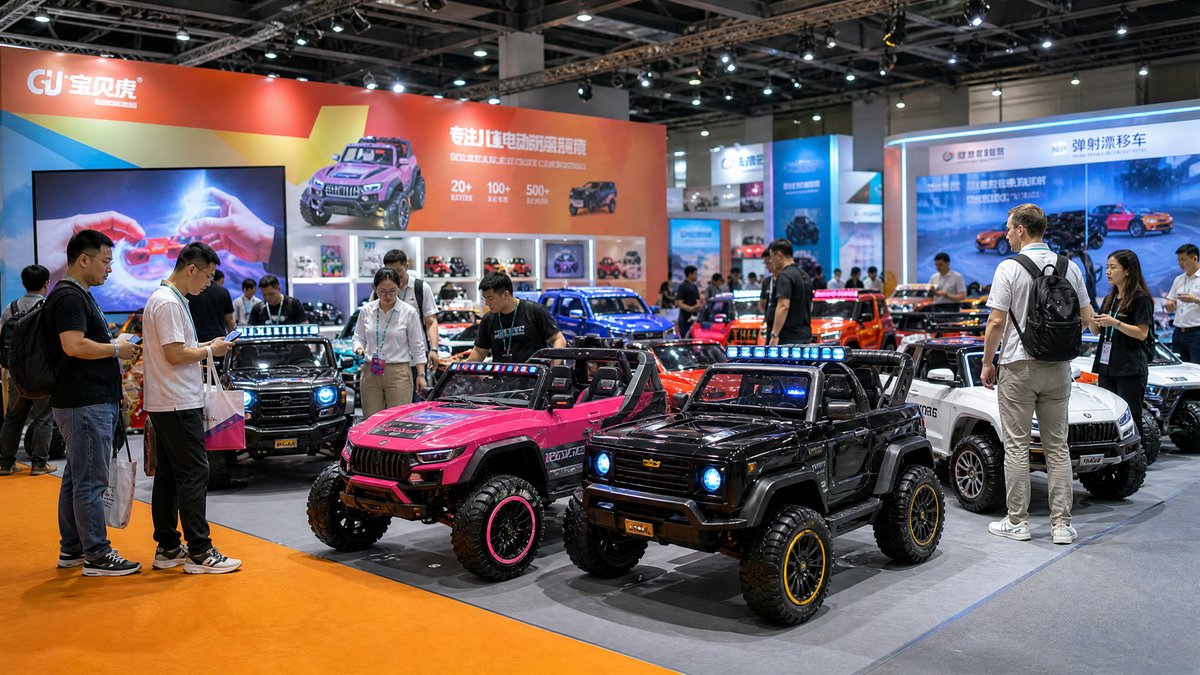
For an indoor playground, daycare, family entertainment center, or children’s activity venue, ride-on cars are not simply toys placed on a sales floor. They are operating equipment used repeatedly by different children, in a defined space, under staff supervision. That changes the purchasing question. The right product mix must fit the venue’s traffic flow, age groups, cleaning routine, charging arrangements, staff capability, and local requirements.
This guide helps importers, distributors, playground operators, and daycare buyers prepare a sourcing brief covering venue requirements, layout, age groups, cleaning, charging, operating procedures, and supplier documentation. It does not replace a product-specific risk assessment or advice from the authority responsible for your market. Confirm requirements for the model, intended use, and location before ordering.
If you are comparing an indoor playground electric ride-on car supplier, evaluate the complete operating system—not only the vehicle’s appearance or a single specification.
Indoor Venue Requirements
Start with the operating model
First define how the vehicles will be used. A daycare may have a small, predictable group and a short supervised play period. An indoor playground may have continuous sessions, mixed ages, public access, and frequent handovers between staff. A shopping-center attraction may also need rapid reset, queue management, and clear customer instructions.
Record these points before requesting a quotation:
- Venue type and city or country
- Indoor floor surface and any transitions, ramps, or thresholds
- Available ride-on area and ceiling or doorway constraints
- Expected session length and operating hours
- Number of children using the area at one time
- Age or height groups the venue intends to serve
- Staff-to-child supervision arrangements
- Storage location and charging location
- Cleaning products and sanitation procedures already used onsite
- Whether the vehicles are included in admission, rented separately, or used for demonstrations
This information lets a supplier comment on suitable models without assuming every ride-on car fits every commercial venue.
Match the vehicle to the floor and route
Indoor use usually requires a controlled, clearly defined route. Ask the supplier for the model’s operating instructions, recommended surface conditions, turning considerations, and limitations. Do not rely on a product name such as “indoor” or “commercial” as proof of suitability.
Indoor Ride-On Car Area Design
Separate movement, waiting, and staff zones
A workable layout normally needs more than a driving loop. Draw the proposed area at scale and identify:
1. Entry and exit: Children should enter and leave without crossing an active route where possible.
2. Driving lane: Keep the route easy to understand, with enough visibility for staff to observe moving vehicles.
3. Waiting area: Provide a defined place for children waiting for a turn rather than allowing a queue to form beside moving cars.
4. Staff position: Place staff where they can see key sections, not behind displays or blind corners.
5. Stop or recovery area: Reserve space to move a vehicle out of service without blocking the route.
6. Charging and storage: Keep parked or charging units away from children and from emergency access paths.
The final dimensions depend on the vehicle, local building rules, venue design, and the operating concept. Ask a qualified local professional to review egress, accessibility, fire safety, and other premises requirements where applicable.
Plan for visibility and conflict points
Before approval, walk the route from a child’s eye level and from the staff viewpoint. Mark corners, pillars, low-visibility areas, narrow entrances, and places where two vehicles could meet. Consider whether the operator can reach a stopped vehicle quickly and whether an adult can enter the area without creating a new obstruction.
For an indoor ride-on car area design, simple visual controls can be valuable: directional floor markings, a stop line, a no-parking zone, a maximum occupancy sign, and a clearly marked staff-only storage area. Use only claims and warnings that match the supplier’s instructions and your local review.
Age-Group and Supervision Planning
Use product information, not assumptions
A product’s suggested age range is only one input. Ask for the model-specific user instructions and confirm how the supplier defines age, user size, maximum load, seating capacity, control method, and supervision. A two-seater is not automatically suitable for two children in every configuration, and a parental remote does not remove the need for active supervision.
Your daycare ride-on car age group selection worksheet should include:
- Intended age or user group
- User height and weight guidance supplied for the exact model
- Seat dimensions and entry height
- Single-seat or two-seat configuration
- Foot-pedal and steering accessibility
- Available speed modes or other operating controls, if specified
- Whether an adult remote-control operator is required or recommended
- Required protective equipment or clothing, if stated in the instructions
- Staff training and supervision ratio planned by the venue
Do not combine children of substantially different abilities or sizes without a clear operating reason and an appropriate supervision plan. For daycare use, also consider whether children can follow instructions, wait for a turn, stop when asked, and keep hands and feet within the vehicle.
Build a supervision rule set
Write a short rule set that staff can apply consistently. It might cover one child per designated seat, no standing, no swapping seats while moving, no use outside the marked route, and immediate stop when a staff member gives the signal. The wording must reflect the actual vehicle and venue.
Trial the rules with staff before opening to the public. Observe whether staff can monitor the route, manage queues, operate the stop control, and respond to a child who is distressed or unable to steer. Revise the layout or staffing plan if the trial exposes blind spots or delays.
Cleaning and Charging Workflow
Treat hygiene as a repeatable process
Commercial vehicles are touched frequently, so cleaning should be built into the operating schedule rather than handled only when a unit looks dirty. Create a checklist for high-contact surfaces such as the steering wheel, switches, seat, handles, remote-control casing, and any shared protective equipment.
Confirm with the supplier which cleaning methods are compatible with the vehicle’s materials, labels, and electrical components. Avoid spraying liquid into switches, charging ports, speakers, or other openings. If a unit becomes wet, damaged, unusually hot, or otherwise abnormal, remove it from service and follow the supplier’s instructions. Do not open or modify an energized electrical system as an informal repair.
A useful cleaning record can include:
- Vehicle identification or fleet number
- Date and time cleaned
- Staff initials
- Product or method used, if your venue records it
- Any damage or contamination observed
- Service or quarantine action required
Keep charging separate from play
Ask the supplier for the exact charger, battery, connector, charging instructions, storage conditions, and warning information for each model. A charger that fits physically is not necessarily an approved replacement. Do not mix chargers, batteries, or connectors between models unless compatibility is confirmed by the supplier for that configuration.
Designate a dry, controlled charging area away from children, public traffic, heat sources, and blocked exits. Organize cables so they cannot become a trip hazard. Maintain a charging log with the vehicle ID, date, responsible staff member, and any abnormal observation. If a battery or charger shows swelling, damage, leakage, overheating, odor, or other warning signs, stop using it and escalate to qualified service support.
For commercial use, ask whether the supplier offers a recommended charging and storage procedure, replacement-part identification, and a process for reporting battery or charger issues. Confirm any market-specific transport or battery documentation separately with your forwarder and local authority.
Venue SOP and Supplier Questions
Create opening, operating, and closing checklists
A venue safety SOP should be practical enough for every shift to use. A basic opening check may include:
- Inspect body panels, seats, wheels, steering, pedals, switches, and visible wiring for damage.
- Confirm that the vehicle identification and operating instructions are present.
- Check that the route is clear and that signs, barriers, and floor markings are in place.
- Confirm the planned fleet count and remove any unit awaiting service.
- Verify that staff know the stop procedure and the day’s age-group rules.
During operation, staff should monitor collisions, unusual noise, loss of control, loose components, charging status, and customer questions. At closing, record incidents, clean the units, park them in the designated area, and isolate any vehicle that needs review. Never ask untrained staff to bypass a safety device, alter speed controls, rewire a component, or dismantle a battery system.
Ask the supplier for an operating document pack
When evaluating a supplier, request documents for the exact model and configuration under consideration. Depending on the market and product, your request may include:
- Product specification sheet with dimensions, weight, seating, and electrical configuration
- User manual and operating warnings
- Assembly or pre-use inspection instructions
- Charging and storage instructions
- Approved charger and battery identification
- Remote-control instructions, if supplied
- Cleaning and maintenance guidance
- Replacement-parts identification or parts diagram
- Warranty terms and commercial-use exclusions
- Available test reports or conformity evidence relevant to the target market
- Packaging, carton, and shipping information
- Product labels, warning artwork, and language options
The supplier’s document pack is evidence for review, not an automatic guarantee of market compliance. Ask whether documents apply to the precise model, voltage, battery type, accessories, and branding you will order.
RFQ fields for indoor venues
A focused RFQ reduces ambiguous quotations. Include:
- Venue type and target market
- Intended indoor application and operating frequency
- Model references or requested vehicle categories
- Number of seats and planned user group
- Quantity by model and any mixed-model requirement
- Floor surface and route constraints
- Packaging and delivery destination
- Required manuals, labels, and languages
- Charger, battery, remote, and spare-parts requirements
- Sample and approval process
- Inspection expectations
- Warranty and commercial-use support questions
- Requested quotation basis and freight assumptions
Ask the supplier to identify assumptions and exclusions rather than presenting an apparently complete package with missing operational items.
Procurement Decision Framework
Score shortlisted products on product fit, user guidance, controllability, documentation, cleaning, charging, spare-parts support, packaging, service response, and delivered cost. Give each factor a priority of critical, important, or desirable.
Do not approve a fleet only from photos or a low unit quote. Request a sample or documented evaluation path, then record changes between the sample, approved configuration, and production order. The purchase order should reference the model, configuration, accessories, artwork, documents, packing requirements, and any agreed inspection points. Have the responsible venue manager and, where necessary, a local safety or compliance professional sign off before launch.
Once the operating framework is ready, Request a wholesale quote with your venue type, target market, model needs, and documentation requirements. KidsRideCar can also help organize a product and replacement-parts request for your project; confirm all specifications and commercial-use suitability before purchase.
FAQ
What should Canadian or international venue buyers check before ordering?
They should define the venue, user group, route, supervision model, cleaning routine, charging location, quantity, and target market. They should then request model-specific manuals, warnings, electrical information, parts support, warranty terms, and relevant compliance evidence. Local building, consumer-product, toy, electrical, and fire-safety requirements may differ, so confirm them with the responsible local authority or qualified adviser.
How should a daycare choose an age group for ride-on cars?
Start with the supplier’s exact model guidance for age, user size, load, seating, and supervision. Then compare it with the children’s abilities, staff capacity, route design, and venue rules. Do not select solely by marketing labels, voltage, or the fact that a model has a parental remote.
What should an indoor playground safety SOP cover?
It should cover pre-opening inspection, user and seating rules, route and occupancy controls, staff supervision, stop and incident procedures, cleaning, charging, storage, quarantine of damaged units, maintenance escalation, and record keeping. Adapt the SOP to the actual vehicle and have it reviewed for local requirements.
Are daycare electric ride-on cars automatically suitable for commercial use?
No. Commercial suitability depends on the exact product, operating frequency, supervision, environment, documentation, and local requirements. Ask the supplier to state any limitations or exclusions and validate the proposed use before ordering.
After reviewing your venue plan, Ask for the KidsRideCar catalog or Discuss OEM/ODM options. Include the target market and intended application so the response can be matched to the right documentation and model configuration.
Conclusion
Successful indoor ride-on car procurement combines product selection with venue design and operating discipline. Define the route, separate play from waiting and charging, match the fleet to the user group, document cleaning and inspection, and train staff before opening. For importers and operators, the strongest RFQ is specific about the venue, model, documents, accessories, support, and approval process.
Use supplier information as a starting point, then confirm product configuration and local obligations before launch. A measured procurement process helps retailers, distributors, indoor playgrounds, and daycares reduce avoidable surprises while creating a more consistent experience for staff and children.
References
- U.S. Consumer Product Safety Commission: Public Playground Safety Handbook
- U.S. Consumer Product Safety Commission: Business Guidance and Small Business Resources
- European Commission: Toy Safety
- U.S. Occupational Safety and Health Administration: Recommended Practices for Safety and Health Programs
Official references
Explore these external resources for current regulatory and trade guidance. Confirm requirements with the relevant authority before placing an order.
Ready to Start?
Factory-Direct · CE & ASTM Certified · MOQ from 50 Units
Our export team works with buyers in 60+ countries. Get a quote within 24 hours.
KR
Written by KidsRideCar
China's leading kids electric ride-on car manufacturer. 500,000+ units shipped annually to 60+ countries. CE, ASTM & EN71 certified.