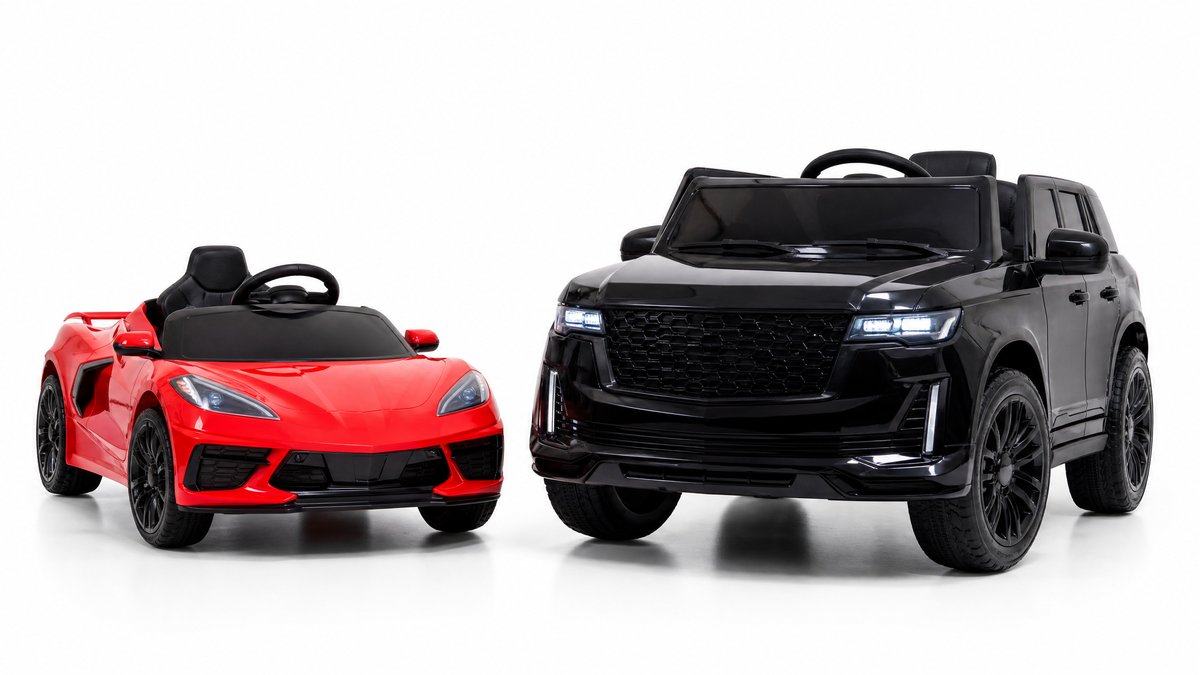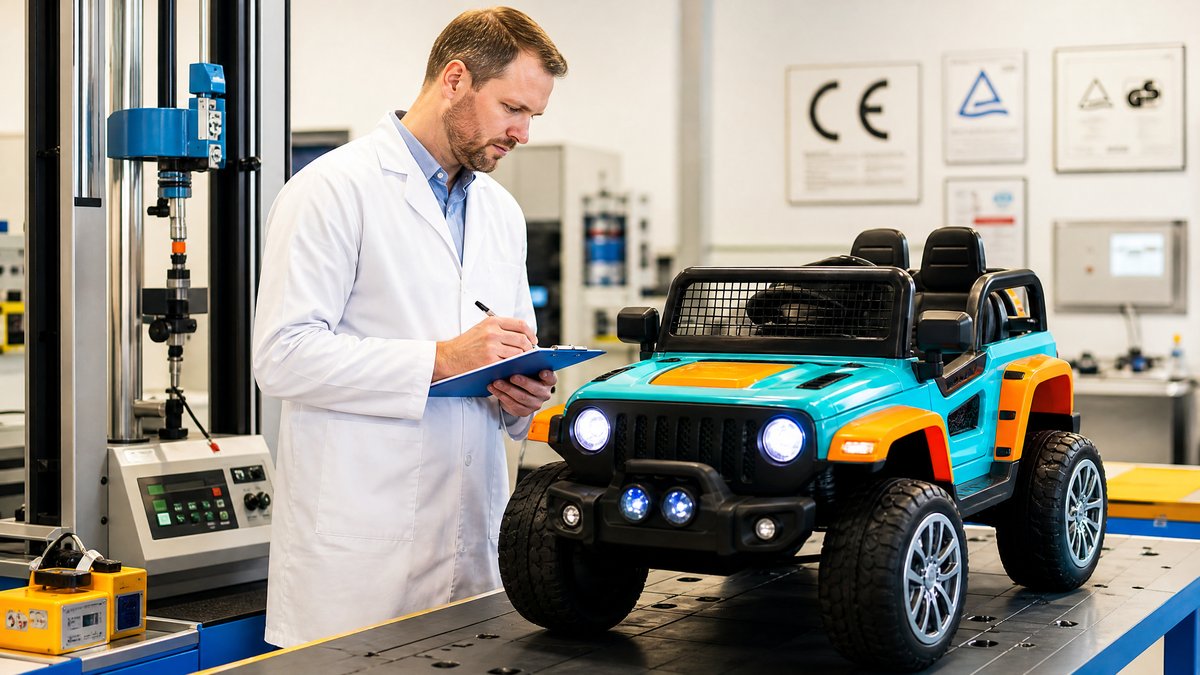
For retail buyers, toy store owners, and commercial fleet operators, understanding the operational readiness of children's ride-on cars is critical to customer satisfaction and after-sales efficiency. End consumers frequently raise inquiries regarding battery life, charging duration, and maintenance protocols. To address these operational pain points, our engineering team conducted a comprehensive charging time test across various voltage tiers and battery chemistries commonly supplied in the B2B wholesale market.
This technical review analyzes real-world charging performance, charger specifications, and battery preservation strategies. By providing precise benchmark data, this report equips B2B importers with accurate product specifications to pass on to retail consumers and commercial rental operators.
Overview of Ride-On Car Battery Technologies
Modern children's electric vehicles rely on two primary battery architectures: Sealed Lead-Acid (SLA) and Lithium-ion (Li-ion). Within the SLA category, configurations are further divided into 6V, 12V, and 24V systems. Each system presents distinct charging dynamics, voltage cut-offs, and thermal behaviors during the charging cycle.
| Battery Type & Voltage | Typical Capacity (Ah) | Standard Charger Output | Average Charging Time | Initial Charge Requirement |
|---|---|---|---|---|
| 6V Entry-Level | 4.5Ah – 7.0Ah | 6V / 500mA – 800mA | 8 – 10 Hours | 8 – 12 Hours |
| 12V Standard | 7.0Ah – 10.0Ah | 12V / 1000mA – 1500mA | 8 – 12 Hours | 12 – 15 Hours |
| 12V Dual-Motor High-Power | 10.0Ah – 14.0Ah | 12V / 1500mA – 2000mA | 10 – 14 Hours | 14 – 18 Hours |
| 24V Heavy-Duty / Drift | 7.0Ah – 10.0Ah (Dual) | 24V / 1000mA – 1500mA | 8 – 12 Hours | 12 – 15 Hours |
| 24V Lithium-ion Upgrade | 10.0Ah – 15.0Ah | 29.4V / 2000mA (Smart) | 4 – 6 Hours | 4 – 6 Hours |
Detailed Test Methodology and Laboratory Findings
Our testing laboratory evaluated fifty production-model ride-on cars sourced directly from manufacturing lines. Each vehicle was subjected to a complete deep-discharge cycle (down to the electronic cutoff threshold of 10.5V for 12V systems and 21.0V for 24V systems) before undergoing a standardized constant-current, constant-voltage (CC-CV) charge test at an ambient temperature of 25°C (77°F).
1. The 12V Standard System Performance
The 12V 7Ah SLA battery remains the industry benchmark, accounting for over 65% of global wholesale volume.
* Initial Phase (0% to 50% capacity): Rapid absorption occurs within the first 3 hours using standard 1000mA wall chargers. Voltage rises steadily from 11.2V to 12.6V.
* Absorption Phase (50% to 90% capacity): Current tapers off automatically to prevent overheating. This phase spans approximately 4 to 5 hours.
* Float/Top-off Phase (90% to 100% capacity): The final 10% requires an additional 2 to 3 hours to balance cell saturation.
* Key Takeaway for Retailers: While parents often unplug units at the 6-hour mark (noting the vehicle runs), incomplete float charging reduces overall battery lifespan over repeated cycles.
2. High-Capacity 24V and Dual-Drive Systems
Designed for larger two-seater utility vehicles and high-performance drift karts, 24V SLA systems draw higher continuous current under load.
* Thermal Monitoring: During our test, chargers operating on 24V SLA packs exhibited mild thermal elevation (reaching 38°C casing temperature), well within safe manufacturing tolerances.
* Total Recharge Duration: Averaged 10.5 hours from complete depletion to 100% saturation. Using underpowered 500mA chargers (sometimes found in low-cost aftermarket replacements) extended this duration to over 22 hours, risking charger burnout.
3. Lithium-ion Advantages in Commercial Fleets
For commercial applications such as amusement park rentals or high-end retail display models, lithium-ion battery packs demonstrated clear superiority.
* Recharge Efficiency: A 24V 10Ah lithium pack charged fully in 4 hours and 45 minutes using a dedicated 2A smart charger.
* Cycle Longevity: Lithium variants maintained 85% capacity after 500 cycles, compared to 300 cycles for standard SLA units.
Critical Factors Affecting Charging Time
Wholesale distributors should brief their retail clients on environmental and operational variables that influence charging duration:
1. Ambient Temperature: Charging below 10°C (50°F) increases internal resistance, extending charging time by up to 30% and potentially causing lead sulfate crystallization if performed repeatedly in freezing conditions.
2. Charger Amperage Matching: Using a charger with an output rating higher than recommended (e.g., using a 2A charger on a fragile 4.5Ah 6V battery) can warp the battery casing and cause thermal runaway.
3. Battery Age and Sulfation: Older batteries that have experienced deep discharge states develop internal resistance, resulting in prolonged charging times coupled with drastically reduced operational runtime.
Frequently Asked Questions (FAQ)
Q1: What happens if a customer leaves a ride-on car plugged in for more than 24 hours?
A: Most modern ride-on car chargers and vehicle wiring harnesses include basic thermal cut-offs, but standard SLA chargers do not feature intelligent trickle shut-off. Leaving an SLA battery plugged in for multiple days can cause electrolyte boiling, casing deformation, and permanent cell damage. Retailers should advise customers to disconnect the charger once the indicator light turns green (typically within 12 hours).
Q2: Can retailers supply lithium-ion upgrade batteries for standard SLA ride-on cars?
A: Yes, but with strict technical caveats. While lithium-ion replacement packs offer faster charging times and lighter weight, they require matching Battery Management Systems (BMS) and dedicated chargers. Supplying incompatible lithium batteries without proper voltage regulation can lead to electrical shorts or thermal incidents.
Q3: Why does a brand-new ride-on car require an initial 14-hour charge before first use?
A: During factory transit and storage, batteries undergo self-discharge. The initial extended charge ensures complete chemical saturation of the lead plates across all internal cells. Skipping this step and operating the vehicle immediately can permanently diminish the maximum capacity of the battery.
Conclusion and Wholesale Recommendations
Accurate charging specifications protect brand reputation and minimize warranty claims in the children's electric vehicle market. B2B importers are advised to source vehicles equipped with overcharge-protected chargers and clear user manual documentation regarding charging best practices.
To discuss bulk procurement orders, custom battery configurations, or OEM/ODM branding opportunities for our certified ride-on car inventory, contact our wholesale division directly at info@kidsridecar.com.
Official references
Explore these external resources for current regulatory and trade guidance. Confirm requirements with the relevant authority before placing an order.
Ready to Start?
Factory-Direct · CE & ASTM Certified · MOQ from 50 Units
Our export team works with buyers in 60+ countries. Get a quote within 24 hours.
KR
Written by KidsRideCar
China's leading kids electric ride-on car manufacturer. 500,000+ units shipped annually to 60+ countries. CE, ASTM & EN71 certified.