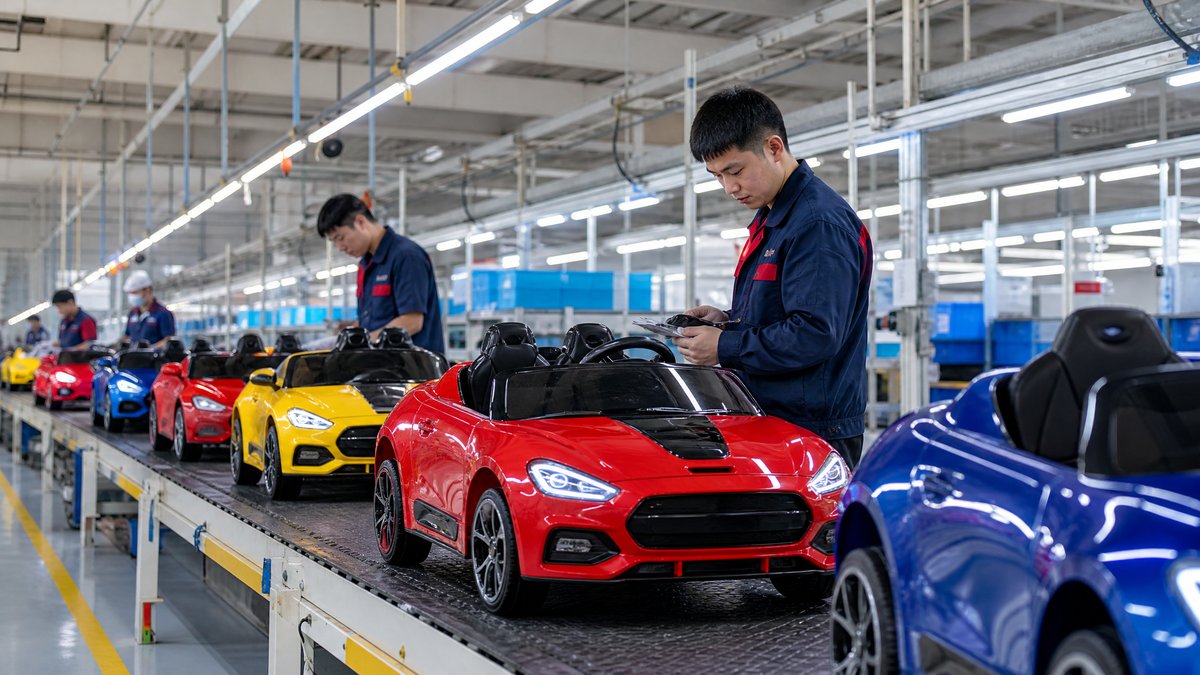
A successful kids ride-on car launch is not simply a matter of choosing a model and placing a purchase order. Importers must coordinate product selection, samples, compliance review, packaging, production, freight, warehouse receiving, retail content, and after-sales preparation. Each activity depends on the previous one, and a missed checkpoint can push stock beyond the selling season.
The right timeline starts with the selling date and works backward. It also leaves room for sample changes, destination-market checks, freight variability, and internal approvals. This guide gives importers, wholesalers, distributors, retailers, and OEM buyers a model-neutral framework for planning a launch without relying on unsupported delivery promises. Adjust each phase to the product, order quantity, supplier, destination, and sales channel.
1. Start with the market date and a backward plan
First define the commercial event the inventory must support. It may be a spring assortment reset, a summer outdoor campaign, a holiday promotion, a trade show, or a retailer’s fixed intake window. Record the date when saleable stock must be available in the destination warehouse—not merely the date when a vessel is expected to depart.
Then create a backward schedule with at least these milestones:
- Product brief and target customer approved
- Supplier shortlist and quotation comparison complete
- Samples received and evaluated
- Compliance and product-document review complete
- Purchase order and artwork approved
- Production and inspection complete
- Freight booked and shipping documents prepared
- Customs clearance and warehouse receiving complete
- Product listings, dealer materials, and staff training ready
For seasonal procurement, avoid treating the peak sales week as the planning anchor. Retailers often need time for allocation, photography, merchandising, and store or marketplace setup. Ask channel partners when they require product data and physical samples, then place those dates ahead of the inventory deadline.
2. Define the product brief before requesting quotes
A clear brief prevents late changes that affect price, tooling, packaging, documentation, or production. Specify the intended age range, seat configuration, dimensions, product weight, target channel, preferred battery system, color range, accessory policy, carton requirements, and expected order mix. These are planning inputs, not claims about a particular model.
Separate “must have” requirements from “preferred” features. For example, a distributor may require a parental control, multilingual instructions, replacement-part availability, and a carton suitable for parcel delivery, while treating lighting or music features as optional. This helps the supplier propose comparable products rather than presenting a confusing list of unrelated specifications.
Create a landed-cost worksheet covering the quoted product price, tooling or artwork charges, packaging, inspection, inland transport, freight, insurance where applicable, duties and taxes, customs-related fees, warehouse handling, and expected after-sales parts. Keep estimates clearly marked until confirmed. For product examples, buyers can review a supplier’s model pages such as [/products/kr-s900](/products/kr-s900), [/products/kr-l700](/products/kr-l700), and [/products/kr-t600](/products/kr-t600), then request current specifications and commercial terms for the chosen configuration.
3. Schedule supplier screening, samples, and approval gates
Supplier screening should happen early enough to compare more than one viable source. Review communication quality, relevant product documentation, quality-control processes, packaging options, change-control practices, parts support, and ability to provide the records needed for the destination market. Do not treat a catalog, factory video, or verbal statement as a substitute for verification.
Request a quotation in a consistent format. Ask suppliers to identify model numbers, configuration differences, minimum order quantities, packing information, payment terms, Incoterms, sample charges, proposed production sequence, and included documents. Comparing like with like makes the timeline more reliable.
Allow time for samples to travel and for an internal review. The sample approval record should include photographs, measurements, selected colors, logo placement, packaging observations, included accessories, manuals, labels, charger information, and open questions. If changes are requested, issue a dated revision and obtain written confirmation of what will change and what will remain unchanged.
Use a formal approval gate before mass production. The approved reference should combine the product specification, artwork, packaging files, instruction materials, accessory list, and any agreed inspection criteria. For an OEM order, also confirm who owns artwork and tooling, which changes require written approval, and how a sample or pilot run becomes the production standard. Never assume a later production unit will match an informal sample discussion.
4. Build compliance and documentation into the critical path
Compliance review must not be left until goods are packed. Requirements vary by destination, product design, battery type, age grading, sales channel, and applicable legislation or standards. Market compliance must be confirmed for the destination market and the specific model. A document that is useful in one country or for one configuration may not satisfy another market or a changed product.
Ask the supplier for the available technical and product file information, including applicable test reports, declarations or statements where relevant, label and warning details, materials information, charger and battery documentation, manuals, packaging marks, and traceability information. Have the importer or its qualified adviser review whether the information is current, model-specific, and suitable for the intended market. Avoid publishing a compliance claim merely because a logo appears on a quotation or product image.
Create a document deadline earlier than the production deadline. Marketing needs accurate dimensions, age guidance, charging information, included items, warnings, and care instructions for listings and dealer materials. Customs and freight partners may need accurate carton, battery, and shipping information. Keep controlled versions in one folder, with the approved language for each market.
5. Plan production, inspection, freight, and receiving as one chain
After approval, confirm the purchase order against the final specification. It should identify the model, quantity by configuration, colors, packaging, accessories, manuals, inspection expectations, delivery terms, payment milestones, and a process for approving product changes. Reconfirm the production window rather than relying on an earlier quotation estimate.
Coordinate freight with the physical characteristics of the goods and the sales deadline. Confirm carton dimensions and weights, loading assumptions, shipping documents, battery information, booking responsibilities, and the planned route. Build contingency for booking changes, port or customs delays, document corrections, and warehouse appointment availability. A departure date is not the same as a sellable-inventory date.
Before arrival, prepare a receiving checklist. Count cartons, record visible damage, photograph exceptions, verify model and carton markings, and quarantine questionable units for review. Share a damage-reporting process with the warehouse and carrier. At the same time, reserve space for replacement parts, samples, display units, and returns rather than filling every available location with saleable stock.
6. Make the launch commercially ready, not merely physically ready
A product is not launch-ready when it reaches the warehouse if the sales channel cannot explain or support it. Prepare product pages, specifications, images, videos, manuals, FAQs, dealer price lists, carton information, and customer-service scripts from the approved source files. Use the [/blog](/blog) resource area for relevant educational links, but do not invent article URLs that have not been confirmed.
Train sales and retail teams on model differences, intended use, age and supervision information, charging guidance, included accessories, assembly expectations, warranty boundaries, and escalation routes. They should know how to answer questions without promising unverified runtime, speed, load, delivery dates, or regulatory status.
Set inventory rules before the campaign begins. Define the launch quantity, safety stock, reorder trigger, channel allocation, and what happens if demand is slower or faster than forecast. For seasonal products, use a conservative first order when demand evidence is limited, then agree how replenishment decisions will be made. Run a final launch-readiness meeting one to two checkpoints before public release. Confirm that stock is received or credibly scheduled, documents are approved, listings are accurate, support materials are live, spare parts and claim contacts are known, and the financial owner has accepted the remaining risks. Buyers who need a model-specific quotation or launch discussion can use [/inquiry](/inquiry).
FAQ: Kids ride-on car launch timeline planning
How far in advance should an importer start a seasonal launch?
Work backward from the date saleable inventory is needed and start early enough to cover supplier comparison, sample approval, compliance review, production, freight, and receiving. The correct lead time depends on the model, customization, order size, destination, transport plan, and review workload. Use a preferred and latest date rather than a single promise.
Which milestone should never be skipped?
Do not skip written sample and specification approval before mass production. This record gives purchasing, marketing, quality, and the supplier a common reference. It should identify the exact configuration and capture approved artwork, packaging, manuals, accessories, and open changes.
Should compliance review happen before or after the purchase order?
The preliminary review should happen before the order is finalized, while the final model-specific documentation review should be completed before sale. Requirements can depend on the destination and configuration, so market compliance must be confirmed for the destination market and model by the importer or a qualified adviser.
How can a small importer reduce launch risk?
Use a focused assortment, request comparable quotations, approve one controlled sample standard, set clear inspection evidence, and avoid committing all inventory to an untested forecast. Keep a contingency for freight and receiving, and ask the supplier about parts, documents, packaging, and change control before paying.
What should happen if the shipment misses the seasonal date?
Escalate using predefined options: prioritize a partial shipment if commercially and legally appropriate, move stock to another channel, adjust the campaign, substitute an already approved SKU, or delay the launch. Recalculate landed cost and customer promises before communicating a revised date.
Conclusion
A practical kids ride-on car product launch timeline connects commercial demand with controlled procurement decisions. Start from the warehouse-ready date, define the brief, approve samples and documents, verify destination-market requirements, coordinate production and freight, and prepare sales and after-sales teams before release. Clear owners, evidence-based gates, and realistic contingencies help importers protect seasonal opportunities without making unsupported promises.
For model selection, OEM planning, wholesale sourcing, or a destination-specific launch discussion, contact KidsRideCar at info@kidsridecar.com.
Official references
Explore these external resources for current regulatory and trade guidance. Confirm requirements with the relevant authority before placing an order.
Ready to Start?
Factory-Direct · CE & ASTM Certified · MOQ from 50 Units
Our export team works with buyers in 60+ countries. Get a quote within 24 hours.
KR
Written by KidsRideCar
China's leading kids electric ride-on car manufacturer. 500,000+ units shipped annually to 60+ countries. CE, ASTM & EN71 certified.