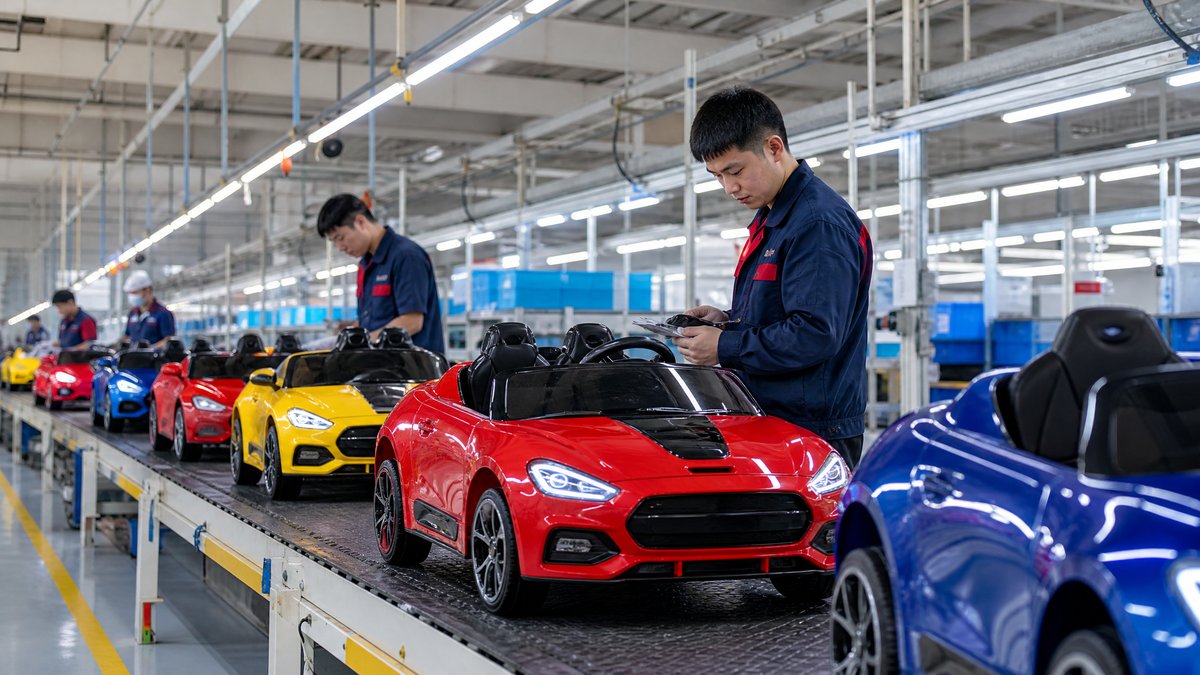
Buyers should approve the complete packaging specification—not just the carton size—before production. For every selected kids electric ride-on car model, confirm packed-carton dimensions and weight, internal protection, accessory control, exterior marks, manual language, battery shipping treatment, pallet pattern, and retail presentation. Then review the pack against the actual shipping route and destination market. A carton can look acceptable in a sample photo yet still create avoidable damage, missing-part, handling, or retail-receiving problems at scale.
For importers, wholesalers, distributors, and retailers, the practical goal is simple: each unit should arrive identifiable, complete, protected, and ready for the intended sales channel. Specifications, battery transport rules, and market requirements must be verified for the selected model and destination market before an order is released.
Request a packaging specification review from KidsRideCar
Start with a packaging approval sheet
Ask for a model-specific packaging approval sheet or packing specification. It should be version-controlled and match the final product configuration, not a similar vehicle or an earlier sample. Treat it as an attachment to the purchase order or approval record where appropriate.
At minimum, the sheet should identify:
- Model code, color, market version, and packaging revision
- Master-carton quantity and whether the unit ships in one carton or more than one carton
- Outer-carton length × width × height, gross weight, net product weight, and carton material/construction description
- Packed orientation and a simple internal-layout drawing or photos
- Every protective component and its position
- Accessory, hardware, remote-control, charger, and manual pack list
- Exterior carton artwork, handling symbols, barcode fields, PO/carton numbering, and country-of-origin fields where required
- Pallet pattern, pallet dimensions, maximum stacking instruction, wrap/banding approach, and container-loading assumptions
- Battery type/configuration and the agreed transport documentation/marking workflow
Do not accept the words “standard packing” as the complete answer. “Standard” may be a workable starting point, but it does not define the carton revision, which accessories are inside, how the battery is configured, or whether the pack suits your channel.
Use the sample carton as a controlled reference
Approve a physical packed sample—or a clearly documented pre-production pack-out—when the order, channel, or vehicle design makes it practical. Photograph the closed carton, all exterior panels, opening sequence, internal layers, and every loose component. Record the revision date. This helps prevent a later switch in carton artwork, foam geometry, bagged hardware, or manual content without buyer review.
Confirm carton dimensions, weight, and loading reality
Carton dimensions affect more than freight quotations. They influence container utilization, warehouse slots, parcel eligibility, manual handling, retail backroom storage, and the amount of void space available for movement. Request external packed dimensions and the relevant weight basis for the final retail carton; do not estimate them from the assembled vehicle dimensions.
Ask the supplier to distinguish between:
- Product dimensions: assembled ride-on car size; useful for merchandising, but not a substitute for shipping data.
- Unit-carton dimensions: the outer dimensions of one packed retail unit.
- Palletized dimensions: footprint and final wrapped height of a loaded pallet.
- Gross weight: packed unit including the carton, protection, accessories, and any included battery.
For mixed-model loads, request a carton-by-carton loading plan. Confirm whether cartons can safely share a pallet or stack pattern, how labels remain visible, and whether different cartons create overhang or pressure points. Freight forwarders and warehouses may also impose their own handling or dimensional rules, so provide the final packing sheet to them early.
Carton and loading questions buyers should ask
| Packaging element | What to confirm before approval | Why it matters | Evidence to request |
|---|---|---|---|
| Unit carton | Final outside dimensions, gross weight, carton revision, packed orientation | Supports freight planning, storage, receiving, and listing data | Dieline/specification plus photos of a packed sample |
| Internal protection | Material, location, quantity, and protection of painted, glazed, electronic, and protruding parts | Reduces movement, abrasion, scuffing, and concentrated impacts | Open-carton photo set and internal-layout diagram |
| Loose parts | Itemized kit for wheels, seats, mirrors, hardware, charger, remote, and tools, as applicable | Prevents missing-part claims and assembly delays | Accessory checklist and labeled-bag photo |
| Battery/charger | Configuration, protective treatment, markings/documents, and carrier review route | Battery transport requirements vary by configuration and mode | Battery data and shipping-document review with the qualified shipper/forwarder |
| Carton labels | SKU, model/color, barcode, PO, quantity, origin/traceability fields, handling marks, destination language | Speeds receiving and supports retail and market requirements | Artwork proof and readable carton-panel photos |
| Palletization | Pattern, maximum height, corner protection, wrap/banding, label location, and no-overhang rule | Helps protect cartons through forklift, warehouse, and container handling | Pallet photo, pallet drawing, and loading plan |
| Retail readiness | Shelf-facing panel, unboxing sequence, damage-free presentation, and channel-specific labels | Avoids repacking work and inconsistent customer experience | Retail-channel pack checklist and approved artwork |
Specify protective materials by risk area
Protection should be selected for the vehicle’s shape and the way it is packed, rather than copied blindly from another model. A practical packaging map marks each vulnerable area and identifies the material used to isolate it from another part, the carton wall, or a loose accessory.
Areas that commonly need explicit protection
For a typical ride-on car, ask the supplier to show protection around or between the following, where fitted on the chosen model:
- Body panels, windshield areas, light lenses, trim, decals, and visible plated or painted pieces
- Steering wheel, dashboard, seat surfaces, doors, mirrors, spoilers, and other protrusions
- Wheels/axles or other heavy components that could rub or shift against the body
- Motors, wiring connectors, switches, remote controls, chargers, and other electronic items
- Battery terminals or leads, following the applicable product design and transport requirements
- Hardware packs and small accessories, so they cannot migrate inside the carton or mark finished surfaces
Potential protective materials can include molded inserts, corrugated partitions, corner guards, sleeves, bags, wraps, or restrained accessory boxes. The right combination depends on the model, materials, pack orientation, route, and sustainability/market considerations. Buyers should ask what each component protects, whether it can be installed consistently on the line, and whether it is readily separable at unboxing where destination-market packaging rules call for it.
Avoid assuming that “more material” always means better protection. Unnecessary void fill, difficult-to-remove wraps, or mixed materials may complicate retail presentation and recycling expectations. For EU-bound packaging, buyers should review the current Packaging and Packaging Waste Regulation (PPWR) requirements and applicable national implementation details with the appropriate authority or compliance adviser. The European Commission states that the PPWR applies to packaging and packaging waste and is intended to make packaging more recyclable and clearly labelled.[^eu-ppwr]
Run a drop-risk and handling review before mass production
A drop-risk review is a structured discussion of where the carton may be stressed: factory movement, palletization, container loading, port handling, unloading, warehouse transfers, parcel handoffs if relevant, and retail stocking. It is not a promise that a carton will prevent all damage in every real-world event.
Ask the supplier and logistics partners to review:
1. Likely orientations: Which carton face, edge, and corner is most exposed during handling? Is that area protected internally?
2. Mass distribution: Does a heavy battery, axle, or accessory box create a concentrated load against the carton or finished body?
3. Void and restraint: Can the vehicle or loose parts move after normal vibration and handling?
4. Stacking pressure: Can the pack hold its intended stack/load arrangement without crushing a vulnerable component? Confirm the agreed stack instruction rather than assuming a universal limit.
5. Moisture and abrasion exposures: Are the carton surface, inner wraps, labels, and pallet wrap appropriate for the planned transport and storage conditions?
6. Channel transfers: Is the same carton going through container freight, a distributor warehouse, retail delivery, and possibly individual parcel delivery? If not, define separate packaging or overpack requirements.
Where test evidence is requested, agree the test plan, sample selection, acceptance criteria, and reporting format before it is performed. Ask for the actual report and photographs tied to the final carton revision. If the route, battery configuration, protective materials, or carton changes after review, reassess the packaging rather than relying on a previous result from a different configuration.
For related inbound-receiving guidance, consider linking to [How Should Wholesale Buyers Handle Damaged Ride-On Car Cartons on Arrival?](/blog/how-should-wholesale-buyers-handle-damaged-ride-on-car-cartons-on-arrival).
Control accessories, hardware, and assembly contents
A ride-on car may arrive partly disassembled, so an apparently small omission can stop retail assembly or create a customer-service case. The packaging specification should state precisely what is inside—not only “accessories included.”
Create an accessory-control list
For the selected model, list each included item with its pack location and checking method. Typical categories may include wheels, wheel caps, seat, steering wheel, mirrors, windscreen, charger, remote control, antenna, tool, screws/nuts/washers, and printed instructions. Do not assume all models include the same items.
Good control points include:
- A numbered, sealed hardware bag or compartment where suitable
- A distinct label for charger and remote-control packs
- A pack-out count check at the production line and a final carton check before sealing
- Protection or separation for items that could scratch the body
- A clear notation when an item is intentionally not included for a market or sales channel
- A service-parts list that uses the same item names and part identifiers as the manual and after-sales process
Ask how the supplier handles a missing-item claim: what evidence is required, whether replacement parts are available, and how the lot/carton can be traced. These details are best agreed before shipment, not after a retail launch. An internal link to [What Should a Ride-On Car Spare Parts After-Sales Program Include?](/blog/what-should-a-ride-on-car-spare-parts-after-sales-program-include) is relevant for buyers building that process.
Review labels, manuals, and traceability as a market-specific pack
Packaging artwork is operational content, not decoration. Approve it as a controlled proof in the required destination language(s) and make sure the physical carton matches the proof. Ask to see every panel, including top and bottom flaps.
Exterior carton information to review
Depending on the destination market and channel, buyers may need to confirm fields such as:
- Brand, model/SKU, color, and product description
- Retail barcode or channel-specific identifier
- Carton number, quantity, purchase-order reference, and destination mark
- Country-of-origin marking where applicable
- Handling, orientation, and storage marks that match the approved logistics instructions
- Importer, responsible-party, traceability, or recycling information where applicable
- Battery-related markings and documentation process appropriate to the actual battery, configuration, transport mode, and carrier
For the United States, the U.S. Consumer Product Safety Commission (CPSC) says children’s-product tracking labels must be visible and legible and, to the extent practicable, permanently affixed to both product and packaging; the required identifying information includes the manufacturer/importer or private labeler, production location/date, and batch or other production detail.[^cpsc-tracking] That is a U.S.-specific reference, not a substitute for reviewing all requirements that apply to the selected product and market.
Manual and assembly-document checks
Request the final manual file rather than a draft cover. Confirm the model identifier, product configuration, language version, parts list, assembly sequence, charging/battery wording, warnings, care instructions, troubleshooting, support contact, and any destination-market content. The manual, carton, product label, and online listing should not contradict one another.
Have the buyer’s product, compliance, and customer-service teams review the manual before release. This is particularly useful where a retailer has its own style, warning, barcode, or returns-information requirements. Requirements differ by destination, product classification, and sales channel; obtain qualified local guidance where needed.
Verify battery and charger packaging separately
Battery-powered ride-on cars require an additional transport review. Do not rely on generic lithium-battery wording or assume that a rule for one battery arrangement applies to another. The International Air Transport Association (IATA) notes that whether lithium batteries can be carried by air depends on their configuration and Watt-hour rating, and it provides guidance covering classification, packing, marking, labelling, and documentation.[^iata-batteries]
Before booking, provide the forwarder/carrier or other qualified dangerous-goods professional with the actual battery chemistry, Watt-hour rating, pack configuration, whether it is installed in/packed with equipment, charger details, and route/mode. Confirm the current rules for the selected model and destination market, including any carrier-specific requirements. The buyer should also verify that the physical product, carton marks, paperwork, and booked transport method match the approved configuration.
Define palletization and container-loading requirements
Palletization should protect the retail carton while remaining workable for the receiving warehouse. Ask for a pallet drawing or photo showing the unit count per layer, layer count, carton orientation, footprint, wrap method, edge/corner protection if used, labels, and final height.
A buyer-facing pallet checklist should answer:
- Is every carton fully supported, with no overhang?
- Are heavier cartons placed in a logical, stable position?
- Can pallet labels and carton identifiers be scanned without unwrapping?
- Is the unit count per pallet and per container reconciled with the packing list?
- Are wrapping, strapping, and any corner protection compatible with the carton and retailer handling process?
- Does the planned pallet type and treatment meet destination/import requirements where applicable?
- Is a mixed-SKU pallet clearly segregated and labelled, or should the order use single-SKU pallets?
If the products will be floor-loaded, request a container-loading plan instead. Confirm the loading orientation, row pattern, use of separators or restraints where agreed, and the method for retaining labels/PO visibility. Plans should reflect the final carton size, not an earlier estimated measurement.
For broader shipment readiness, link internally to [What Documents Should a Ride-On Car Supplier Provide Before Shipment?](/blog/what-documents-should-a-ride-on-car-supplier-provide-before-shipment).
Build a retail-ready packaging brief
“Retail-ready” changes by channel. A carton intended for a warehouse club, toy shop, marketplace fulfillment program, specialty retailer, or direct-to-consumer shipment may need different artwork, labeling, overpack, damage tolerance, or unboxing expectations. Specify the channel rather than treating retail readiness as a generic factory standard.
Discuss the following in the retail brief:
- Whether the shipper carton is also the retail display carton
- Required brand assets, product imagery, copy approvals, barcode format/location, and language versions
- Retailer carton markings, vendor-routing labels, case-pack rules, or appointment-receiving needs
- Whether an overpack is needed for parcel shipments or returns processing
- Unboxing sequence: where the manual, hardware, charger, and assembly items are found
- Presentation requirements: clean visible panels, scuff protection, tamper evidence where requested, and an easy-open method that does not expose the product to damage
- Returns and repair process: how the carton supports repacking, identification, and missing-part checks
Do not print retailer-specific information until the retailer has approved it. Keep brand, licensed artwork, language, and claims under a documented approval process. A packaging change that improves freight efficiency but obscures a required barcode or degrades the shelf-facing panel is not retail-ready.
Email KidsRideCar to align a model’s carton, pallet, and retail-pack requirements
Final pre-shipment packaging sign-off checklist
Before authorizing shipment, have the buyer or appointed inspector confirm the following against the approved packaging revision:
- [ ] Model, color, configuration, carton dimensions, and gross weight match the latest specification.
- [ ] The packed orientation and all protective materials match the approved layout.
- [ ] Accessories, hardware, charger, remote control, and manual are present or intentionally excluded as specified.
- [ ] Exterior artwork, barcodes, PO/carton marks, destination language, and traceability fields are correct and readable.
- [ ] Manual and product/carton information are consistent for the selected model and market.
- [ ] Battery configuration and transport paperwork/marking have been verified with the qualified logistics and compliance parties for the actual shipment.
- [ ] Pallet or container-loading pattern matches the plan; cartons have no unmanaged overhang and labels remain accessible.
- [ ] Photos show representative packed cartons, internal protection, labels, palletization, and loading before dispatch.
- [ ] Any packaging test or handling-review evidence requested is tied to the final carton revision and agreed scope.
- [ ] Exceptions, approved changes, and corrective actions are documented before goods leave the factory.
For an inspection workflow that sits alongside this list, use the internal resource [What Should a B2B Buyer Include in a Pre-Shipment Inspection Checklist for Ride-On Cars?](/blog/what-should-a-b2b-buyer-include-in-a-pre-shipment-inspection-checklist-for-ride-on-cars).
FAQ: Kids electric ride-on car packaging for B2B buyers
1. Should I approve packaging before or after product sample approval?
Approve the product configuration first, then approve packaging that is specific to that configuration. Ideally, review a packed sample or documented pre-production pack-out before mass production, because a change in seat, wheels, battery, accessory set, or body trim can change the protection and carton requirements.
2. What carton measurements should an importer request?
Request final external unit-carton length, width, height, gross weight, and the palletized dimensions/weight. Also request the carton quantity per pallet and a container or pallet loading plan. Do not substitute assembled product dimensions for packed-carton data.
3. Are foam inserts always required for ride-on cars?
No. The appropriate protection depends on the model, internal layout, material finishes, route, and agreed handling risk. Ask the supplier to map each protective material to the component or risk it controls and to show the final pack-out. Any sustainability or destination-market packaging constraints should also be considered.
4. Can a battery-powered ride-on car use the same shipping marks for every market?
Do not assume so. Battery transport rules depend on the actual battery configuration, transport mode, carrier, and route, while product and packaging labels can also vary by destination market. Verify the selected model’s specifications, battery transport rules, and market requirements with qualified parties before shipment.[^iata-batteries]
5. What makes a carton retail-ready?
A retail-ready carton meets the agreed channel requirements for artwork, SKU/barcode placement, language, legibility, presentation, receiving, and unboxing. It may also need retailer-specific routing or labeling. Confirm these requirements in writing; a factory’s default export carton may not satisfy them.
Conclusion
The best packaging decision for kids electric ride-on cars is a documented, model-specific approval that connects product protection with freight handling, battery logistics, destination requirements, and retail execution. Confirm the packed dimensions, internal restraint, accessory count, labels/manuals, palletization, and channel needs before production and recheck them before dispatch. Always verify the selected model’s specifications, current battery transport rules, and destination-market requirements rather than carrying assumptions over from a prior order.
Image planning
| Suggested dimensions | Placement | English caption | Alt text | English AI prompt |
|---|---|---|---|---|
| 1600 × 900 px | Below the introduction | “A model-specific packaging approval sheet aligns the carton, protection, labels, and pallet plan.” | “Buyer reviewing a packaging specification sheet beside a boxed kids electric ride-on car.” | “Photorealistic B2B product-packaging scene in a clean export warehouse: an unbranded kids electric ride-on car carton beside an open sample carton, purchasing manager reviewing a packaging specification sheet on a clipboard, protective inserts visible, neutral industrial lighting, no logos, no readable proprietary labels, wide 16:9 composition.” |
| 1400 × 1000 px | In “Specify protective materials by risk area” | “Protect vulnerable surfaces and restrain loose components before sealing the carton.” | “Open ride-on car carton showing protective inserts and organized accessory packs.” | “Detailed photorealistic top-down view of an open unbranded carton containing a partially packed kids electric ride-on car, molded protective inserts, corrugated dividers, bagged hardware, charger compartment, and manual pouch; clean organized factory quality-control setting; no logos or legible labels; 7:5 composition.” |
| 1600 × 900 px | In “Define palletization and container-loading requirements” | “A documented pallet pattern helps protect cartons and simplify receiving.” | “Wrapped pallets of uniform ride-on car cartons with visible pallet labels in a warehouse.” | “Photorealistic logistics warehouse scene with neatly palletized uniform unbranded kids ride-on car cartons, safe no-overhang stacking, corner protection and stretch wrap, a worker scanning a generic pallet label, clear aisles, no visible brand names or readable commercial labels, professional B2B editorial style, wide 16:9 composition.” |
| 1400 × 1000 px | In “Build a retail-ready packaging brief” | “Retail-ready packaging brings together approved artwork, barcode placement, labels, and an orderly unboxing experience.” | “Retail carton mockup and assembly manual for a kids electric ride-on car on a quality-control table.” | “Photorealistic retail-packaging quality review: unbranded kids electric ride-on car retail carton mockup on a table, generic barcode placeholder, multilingual-style manual pages with non-legible text, accessory checklist and handheld barcode scanner, neutral modern retail operations office, no logos, 7:5 composition.” |
References
[^iata-batteries]: International Air Transport Association (IATA), “Batteries” — official overview of battery air-transport guidance, including configuration and Watt-hour considerations and links to current guidance.
[^cpsc-tracking]: U.S. Consumer Product Safety Commission (CPSC), “Tracking Label Business Guidance” — official U.S. guidance on distinguishing marks for children’s products and packaging.
[^eu-ppwr]: European Commission, “Packaging & Packaging Waste Regulation” — official overview of the EU PPWR and its packaging objectives.
Official references
Explore these external resources for current regulatory and trade guidance. Confirm requirements with the relevant authority before placing an order.
Ready to Start?
Factory-Direct · CE & ASTM Certified · MOQ from 50 Units
Our export team works with buyers in 60+ countries. Get a quote within 24 hours.
KR
Written by KidsRideCar
China's leading kids electric ride-on car manufacturer. 500,000+ units shipped annually to 60+ countries. CE, ASTM & EN71 certified.