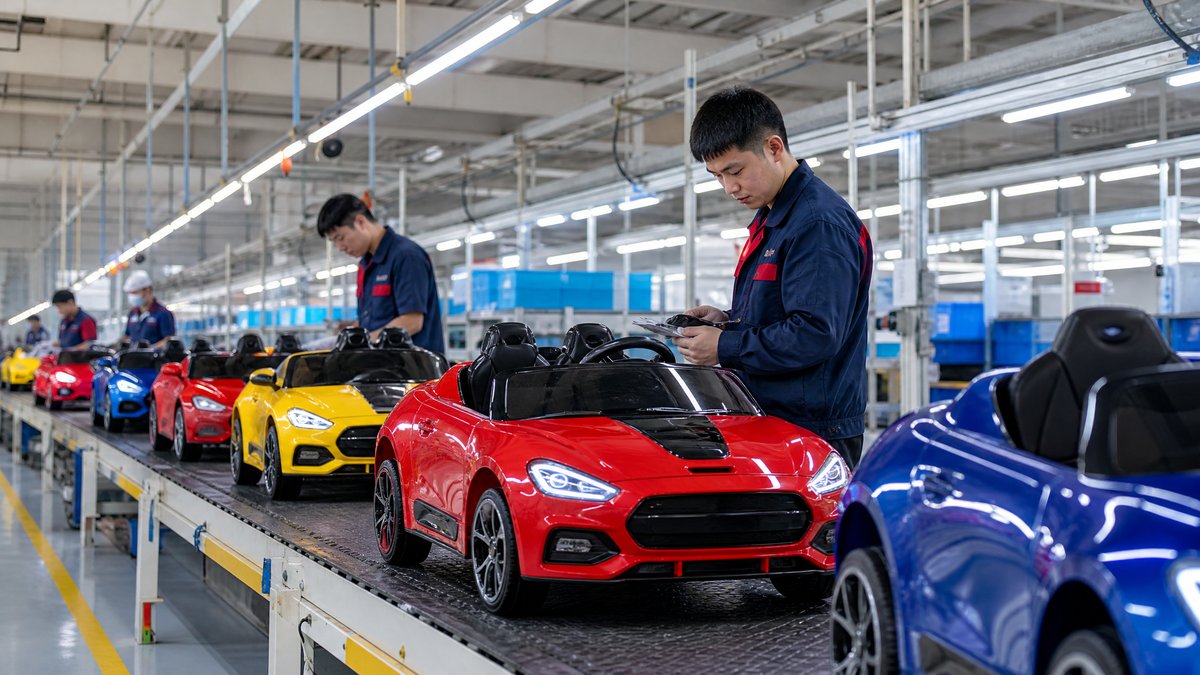
Importers should build one verified product-data source, then adapt language, measurements, safety wording, images, assembly guidance, and support details for each market. This is not word-for-word translation: the localized version must match the approved configuration and help local retailers and parents understand the product and its responsible use.
For overseas wholesalers and OEM buyers, localization reduces product questions, listing inconsistencies, and channel friction. It gives dealers assets they can publish with less editing. Every claim, label, carton panel, listing, instruction insert, and service reply should describe the approved item in language a local customer can act on.
This guide gives importers, distributors, retailers, and private-label buyers a repeatable process; it is not market-specific legal or compliance advice.
Why localizing product content is a procurement task, not only a marketing task
A sourcing team sees a specification sheet; a retail buyer sees a catalog; a parent sees a listing and carton; customer service sees questions after delivery. If these layers are produced independently, details drift. One channel may call a remote control included while another calls it optional, or use an age statement that differs from the approved instructions. This creates commercial and safety-communication risk even when the product is unchanged.
Localization connects the commercial and operational sides of an order. Before publishing, the importer should know:
- Which configuration is approved for that market, including color, seating layout, accessories, charger, remote-control option, and packaging version.
- Which claims have source evidence and which are merely promotional language that should be removed or qualified.
- Which product facts need local units, terminology, or a clearer explanation.
- Which instructions must be translated or rewritten for the local end user.
- Which dealer assets will be supplied, in what formats, and who approves final copy.
This goes beyond a product-photography brief: create a market-ready information system aligned from purchase order to after-sales support.
Start with a verified master product record
Before asking a translator or designer to work, create a master product record for each SKU and each approved variation. Use this record as the source for localized materials, especially when optional features vary by order.
What the master record should contain
Keep the record clear enough for purchasing, marketing, quality, and customer service. Include:
| Content area | What to verify before localization |
|---|---|
| Product identity | Model name, internal SKU, approved retail name, color and configuration |
| Included items | Vehicle, charger, remote control where applicable, instructions, hardware, and any stated accessories |
| User-facing facts | Suitable-use guidance, seating description, controls, charging instructions, assembly requirements, and storage guidance |
| Measurable specifications | Dimensions, packaged dimensions, net/gross weight where applicable, power configuration, and materials as provided in approved documentation |
| Safety communication | Warnings, supervision guidance, protective-use guidance, surface guidance, and restrictions from the approved instructions |
| Commercial assets | Product images, lifestyle-image use rights, carton artwork version, logos, and approved selling points |
| Service information | Parts terminology, troubleshooting boundaries, contact route, warranty wording approved for the channel |
Do not let a product page become the source of truth by accident. A page may be updated by a marketplace team, while the latest approved configuration sits with procurement. Instead, assign a content owner to maintain version control. Each revised asset should show the SKU, market, language, date, and approver.
Separate facts from flexible copy
Some information is fixed: what is included, the controls supplied, the assembly steps, and approved safety information. Other content can change by market: headline order, consumer-friendly feature explanations, seasonal imagery, and retailer-specific selling points.
Mark this distinction in your master record. A useful method is to label fields as fixed, adaptable, or requires review. For example, a fixed statement may describe a supplied component. An adaptable statement may explain why a two-seat layout suits family play. A statement about suitability, safety, or regulated claims should require review before release.
Translate for meaning, not for word matching
Literal translation often produces awkward or misleading ride-on car content. Terms such as “remote,” “seat belt,” “suspension,” “charger,” “parental control,” and “assembly” can have different familiar expressions in different markets. The right local term is the one that a buyer recognizes and that accurately describes the approved product.
Give translators a product glossary, photographs of the exact configuration, and the relevant approved instructions—not only a spreadsheet of text strings. Ask them to flag unclear source text rather than guess. A phrase that is vague in English will not become reliable in another language.
Build a bilingual terminology sheet
For each target language, create a glossary with the approved local term, prohibited alternatives, definition, and picture reference where useful. Cover components, packaged items, controls, assembly hardware, and service parts so manuals, dealer catalogs, and support use the same language.
The glossary should govern units and formatting too. Use local conventions but retain traceability to approved data. Do not round, estimate, or add performance claims. If a value is unclear, pause the claim and ask the supplier for written clarification.
Rewrite benefit language for the local audience
Feature copy should answer a local buyer’s practical question. Rather than translating a dense line of factory terminology, explain the customer outcome without overpromising. For instance, an approved description of a parental remote-control feature can focus on the control function and the need for adult supervision. It should not imply that a feature removes the need to follow instructions, supervise children, or use the product appropriately.
Avoid cultural assumptions in examples, family imagery, and holiday references. A retailer’s main sales season, gift occasions, housing space, and preferred search terms can vary. Localize the scenario only when it remains true to the product. A regional campaign should never change an item’s included components or safety directions.
Localize the complete customer journey
A localized product title alone is not enough. Importers should map every touchpoint a dealer or end customer sees, then prioritize the items that guide a purchase or safe use.
Online product pages and marketplace listings
Begin with the fields that shape buying decisions:
1. Product title and approved model identifier.
2. A short, plain-language description of the configuration.
3. What is and is not included in the carton.
4. Images of the actual market version, including key controls and seating where relevant.
5. Clear assembly, charging, supervision, and use guidance consistent with the approved instructions.
6. A local route for questions, replacement-part requests, and after-sales support.
Use structured bullets rather than burying essential details in promotional paragraphs. Retailers can then reuse the content in product feeds, store cards, marketplaces, and sales training. If you supply a dealer portal, package a localized copy deck with image filenames, feature bullets, FAQs, and revision notes.
Use the [KidsRideCar product range](/products/ride-on-cars/) and organize content by the actual configuration; never copy features from a related model.
Cartons, inserts, and manuals
Physical materials are often seen after the online sale, yet they matter most when the customer is assembling, charging, or using the item. Treat carton text, warning labels, quick-start cards, assembly instructions, and manuals as one content set.
Confirm that the local-language materials match the production version and that they remain readable at the intended print size. A translated warning that does not fit the panel is not a design-only issue; it requires content review. Keep local-market files separate from generic artwork so a packing team does not use the wrong revision.
Keep safety communication direct and model-neutral: state adult-supervision, age/use, assembly, charging, and suitable-surface guidance clearly. Tell customers to stop use and contact support if there is damage or an operating concern. Never advise bypassing protections, altering wiring, opening batteries, or internal repairs.
Customer service and dealer enablement
Support teams need localized answers before product launch. Prepare an answer library based on questions you expect about included items, assembly, charging, remote-control pairing where applicable, cleaning, storage, and parts identification. Each answer should link back to the approved instructions and clearly state when the customer should contact support.
A distributor can also give retailers a short product-training sheet: key identifiers, included-item checklist, approved selling points, prohibited claims, image guidance, and escalation contacts. This reduces the chance that individual resellers invent product descriptions. For related practical guidance, direct partners to the [KidsRideCar blog](/blog/) while keeping model-specific instructions tied to the supplied product documentation.
Adapt without creating unsupported claims
Localization should improve clarity, not enlarge the promise. Common content errors include calling an option standard, describing a component as compatible without confirmation, presenting illustrative imagery as an included accessory, or implying a level of safety, durability, or performance that has not been approved.
Use a claim-review gate. Compare each buyer-facing claim with the approved SKU record, documentation, and commercial terms. Have responsible local experts review product-safety, age, environmental, licensing, or compliance language before release. Requirements vary by jurisdiction and channel; this article does not determine legal sufficiency.
Procurement example: one platform, two market packs
Suppose an importer is sourcing the same body style for two regional retail programs. The order may still involve different colors, carton languages, accessory selections, retailer names, and customer-service contacts. Instead of telling the factory to “make the content local,” the buyer issues a market-pack brief for each program.
Each brief names the SKU, languages, image requirements, carton/insert files, glossary, retailer-copy format, and sign-off roles. The team returns SKU-linked proofs, which the importer compares with the master record before approving artwork and assets. Similar-looking vehicle bodies do not make market packs interchangeable.
Procurement example: an OEM private-label launch
For a private-label order, lock brand and naming rules before creating titles, packaging, or manuals. Give the supplier approved brand assets and a matrix showing each market’s language and contact details. Then hold a cross-functional proof review with sourcing, quality, marketing, and local support.
The approval checklist should ask: Does the pictured item match the approved configuration? Are stated components included? Does every warning match the approved source? Are measurements and units consistent? Is the local contact channel correct? Are optional features identified accurately? The aim is not to delay release; it is to prevent rework after artwork, goods, and product listings have already been distributed.
Create a repeatable localization workflow
A lightweight workflow can scale from a single importer brand to a network of dealers:
1. Define market and channel. Set language, retail format, support owner, and local reviewer.
2. Freeze the source record. Confirm SKU, configuration, included items, documentation, and artwork.
3. Prepare the kit. Share glossary, images, terminology rules, template, and claim boundaries.
4. Translate and adapt. Preserve source meaning and localize units and familiar user language.
5. Review facts. Have procurement or product management verify configuration and included items.
6. Review locally. Check clarity, tone, search language, formatting, and channel fit.
7. Approve by version. Record approved files, market, approver, and date.
8. Maintain after launch. Update the record when configuration, instructions, or support routes change.
Keep an issue log. Repeated questions can reveal a missing image, unclear term, or buried instruction. Update the source and localized kit together, then notify channels rather than letting resellers invent fixes.
Frequently Asked Questions
Is product translation enough for a kids ride-on car listing?
No. Translation is one step. Localization also checks that the exact market version, included items, units, imagery, safety wording, assembly guidance, support contacts, and customer terminology are correct. A fluent translation of inaccurate source material is still inaccurate content.
Who should approve localized product content before it goes live?
Use shared approval. A product or procurement owner should confirm the SKU and configuration; a local-language reviewer should confirm readability and natural terminology; and the responsible team should review claims that need specialist assessment. Retailers should receive only the current approved asset pack.
Can we reuse one set of images in every country?
Only if the images show the same approved product configuration and are suitable for the local channel. Check color, included accessories, branding, labels, and cultural context. When an image is illustrative, label it appropriately or replace it with a market-specific asset rather than implying unconfirmed inclusions.
How should localized content handle safety instructions?
Keep the guidance aligned with the approved product instructions, readable, and easy to find. Emphasize responsible adult supervision, correct assembly and charging according to supplied instructions, and appropriate use. Do not weaken warnings for marketing purposes or offer instructions for modifying, rewiring, opening, or internally repairing the product.
What should an importer request from an OEM supplier?
Request the current specification and configuration record, product documentation, approved images, artwork references, component terminology, and clear confirmation of what is included with the ordered SKU. Then supply your own market brief, brand rules, translations, local contacts, and approval process. Use the [inquiry page](/inquiry) to discuss a product-content package alongside your sourcing requirements.
Conclusion: local content protects the product promise
Effective localization makes a kids ride-on car easier to buy, assemble, use, and support. Start with one verified product record; translate meaning, not just words; align online, printed, and service materials; and retain an approval trail. This keeps the product promise tied to the approved configuration.
Planning a localized private-label, wholesale, or distributor program? Contact KidsRideCar to discuss product information, market-pack requirements, and sourcing coordination for your next ride-on car range.
Official references
Explore these external resources for current regulatory and trade guidance. Confirm requirements with the relevant authority before placing an order.
Ready to Start?
Factory-Direct · CE & ASTM Certified · MOQ from 50 Units
Our export team works with buyers in 60+ countries. Get a quote within 24 hours.
KR
Written by KidsRideCar
China's leading kids electric ride-on car manufacturer. 500,000+ units shipped annually to 60+ countries. CE, ASTM & EN71 certified.