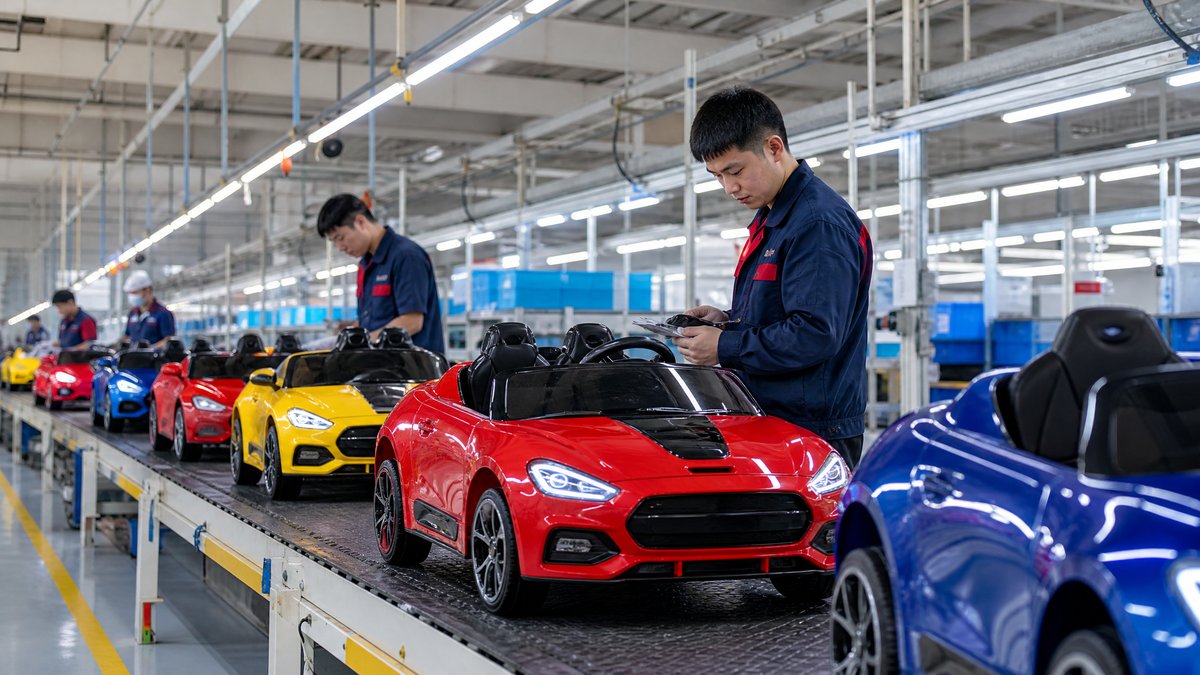
For an importer, wholesaler, distributor, retailer, or OEM buyer, a warranty claim file should be a clear, traceable case record, not simply an email saying that a ride-on car does not work. At minimum, include the purchase and shipment reference, the exact model and product identifier, a concise fault description, safe-use details, dated photos or video, inspection observations, and the remedy requested. Add the relevant warranty terms and a communication log so the supplier can review the same facts without guessing.
A complete file helps separate a possible product issue from transit damage, missing parts, or normal wear. Its purpose is factual evidence for the next step under the applicable agreement—not remote diagnosis or proof of fault.
This guide focuses on the contents of an individual B2B warranty claim file. It complements, rather than repeats, a broader [after-sales process for ride-on cars](/blog/), a [spare-parts planning approach](/blog/), and the product details that should be confirmed before ordering from a [KidsRideCar product range](/products/).
The practical answer: build one file that answers six questions
A useful warranty claim file lets the supplier, buyer, and service team answer six questions:
1. What unit is involved? Identify the model, SKU, color or variant where relevant, batch or serial reference if available, and the retail or dealer order link.
2. What was purchased and when? Show the purchase order, invoice or shipment reference, receipt date, and the applicable warranty wording or agreement reference.
3. What happened? Describe the observed symptom in plain language, including when it occurred and whether it is repeatable.
4. What evidence is available? Attach dated, legible photos, videos, carton images when applicable, and a factual inspection record.
5. What safe checks have already occurred? State only permitted external checks or steps in the supplied instructions. Do not disassemble, alter, or repair a product to create evidence.
6. What resolution is requested? Request review, replacement parts, unit replacement, credit consideration, or technical guidance as appropriate to the commercial agreement.
Use a unique buyer-created claim ID from the start so files, images, and emails stay linked to the correct unit.
Start with claim identification and commercial traceability
The first section should allow someone unfamiliar with the case to identify the transaction and physical unit without searching through a mailbox. Include a one-page claim cover sheet or structured intake form with the following fields.
| Field | What to record | Why it matters |
|---|---|---|
| Buyer claim ID | A unique internal case number | Links all evidence and correspondence to one case |
| Buyer and service contact | Company, contact name, email, and region | Identifies the person able to answer follow-up questions |
| Supplier and factory contact | Supplier name and normal after-sales contact | Keeps the file routed to the correct commercial relationship |
| Product identity | Model name, SKU, variant, color, and any visible unit or carton identifier | Prevents confusion between similar ride-on car configurations |
| Order trail | PO, invoice, sales order, shipment, or container reference as available | Connects the unit to the purchase and agreed terms |
| Dates | Purchase, dispatch, receipt, customer report, and claim-submission dates | Establishes the case timeline without making conclusions |
| Claim category | For example: apparent functional issue, cosmetic issue, missing component, or shipping-related damage | Helps triage the file while preserving a neutral description |
Attach the relevant PO, invoice or sales record, packing information where useful, and the warranty terms for that sale. Do not assume that another order’s warranty period, remedy, or exclusion applies. For dealer cases, record both dealer and distributor references.
Make the unit easy to match
A model name alone can be too broad when configurations differ. Record visible identifiers on the unit, carton, manual, label, or order record, and photograph labels clearly. If no serial or batch reference is available, say so; never create or guess one.
Describe the issue as an observation, not a diagnosis
Keep the case summary short and observable. Avoid “the controller is defective” unless an authorized, documented assessment says so. Better: “The customer reports that the unit did not move when operated according to the supplied instructions.”
A strong symptom narrative normally records:
- the date the issue was reported and who reported it;
- whether the unit was newly received, displayed, sold, or returned;
- the reported condition before the symptom appeared, such as post-delivery or during first use;
- the user-visible symptom, including lights, sounds, motion, fit, finish, or missing-item observations when relevant;
- whether the symptom happens every time, intermittently, or could not be repeated during intake;
- the steps the reporter says were followed from the supplied user information; and
- whether the product was stopped from use pending review.
Use neutral language for safety-relevant reports. If a buyer reports unusual heat, odor, smoke, swelling, fluid leakage, damaged wiring, a damaged charger, or a damaged battery enclosure, stop use and isolate the product from routine handling in a safe area according to the supplied instructions and applicable local procedures. Record the observation, preserve the evidence, and seek supplier guidance promptly. Do not charge the product, bypass protections, open the battery, rewire, solder, or attempt internal repairs. These precautions are model-neutral and do not replace the product instructions or local requirements.
Keep warranty cases distinct from transit and handling cases
A claim file may note a suspected category but should not force a conclusion. A crushed carton at receipt may need a carrier record; a missing accessory may be a packing discrepancy. Cross-reference related records instead of mixing them into one narrative. A documented [warehouse receiving checklist](/blog/) makes that evidence easier to find.
Attach visual evidence that is useful, proportionate, and safe
Photos and short videos often reduce clarification cycles, but only when they are organized. Name files with the buyer claim ID and a simple sequence, such as `KRC-CLM-024_photo-01_carton.jpg` or `KRC-CLM-024_video-02_observed-symptom.mp4`. Add a brief evidence index stating what each file shows, who supplied it, and the date received.
Photo checklist for a ride-on car claim
Take images in good light and keep the view wide enough to establish context before adding close-ups. Depending on the claim, include:
- the unopened or received carton condition, including labels and visible external damage, if the issue was found on arrival;
- the complete product and its visible identifier;
- the visible model, SKU, or unit identification label;
- the relevant accessory, remote control, charger exterior, manual page, or packaging insert, where applicable;
- close-ups of the reported cosmetic, fit, or component concern; and
Avoid photographing children or personal customer information. When sharing externally, minimize personal data and use the claim ID rather than a consumer’s name.
Video checklist: show the reported symptom safely
A short, steady video can show sequence better than a long clip. Introduce the claim ID and visible product identifier, then show only normal external operating steps permitted in the supplied instructions. Use a clear area and stop if a safety concern appears. The video documents the symptom; it is not a repair tutorial. Never remove covers, alter connections, bypass safety features, or open batteries for footage.
Record permitted checks and preserve the original condition
A delayed review often begins with “we checked everything.” Instead, list what was checked, by whom, when, and against which supplied instruction. A visual exterior review, included-items comparison, and manual-based review are observations—not technical findings.
Include a simple inspection log:
| Date and person | Permitted external check | Observation | Evidence link |
|---|---|---|---|
| [date] / [role] | Visual carton and exterior review | Record only what was visible | Photo filenames |
| [date] / [role] | Manual and included-items comparison | Note reported or visible discrepancy | Photo/manual reference |
| [date] / [role] | Instruction-permitted operation review | Record symptom or inability to reproduce | Video filename or note |
Preserve the product, packaging, visible items, and documents in their reported state where practical. Do not discard relevant cartons or accessories. Do not undertake internal diagnosis, rewiring, soldering, battery opening, or other unauthorized repair activity; changing the condition can make the evidence harder to assess.
Add a concise impact and remedy request
A B2B claim must be operationally useful. State the status of the affected unit and the request being made, without assuming the outcome. Examples include:
- “Unit held from sale pending supplier review; buyer requests assessment of the attached evidence and next-step guidance.”
- “Dealer-returned unit is retained with original carton; distributor requests confirmation of the appropriate warranty-review route.”
- “Buyer requests review of whether the documented missing visible accessory can be addressed through the agreed spare-parts or claims process.”
For repeat reports, add a trend note, not an unsupported failure-rate claim. List model, known order or batch references, claim IDs, dates, shared symptom, and the number of attached cases—without extrapolating to all units.
Do not promise a replacement, refund, or diagnosis before review. Warranty, consumer-rights, and carrier obligations can differ by contract and market.
Package the file for fast supplier review
Send one organized folder or PDF index, not a series of unlabeled attachments. A practical folder structure is:
```text
KRC-CLM-024/
├── 00_claim-cover-sheet.pdf
├── 01_order-and-warranty-documents/
├── 02_issue-summary-and-inspection-log.pdf
├── 03_photos/
├── 04_videos/
├── 05_correspondence-log.pdf
└── 06_related-receiving-or-service-records/
```
In the cover email, list the claim ID, model, one-sentence symptom, evidence, and requested action. Ask the supplier to acknowledge receipt and identify missing information. Keep later messages in the same case thread or log them by date, sender, recipient, and action.
A standard intake template creates comparable files across retailers and products. Periodically review completed files with purchasing, quality, sales, and service teams for record-supported patterns such as unclear manuals or parts-planning needs.
Procurement examples: turning field reports into review-ready files
Example 1: Retailer reports a non-operating unit
A retailer receives a consumer return and opens claim `KRC-CLM-041`. The cover sheet links model, retailer order, distributor invoice, dates, and warranty document. The retailer records the report neutrally, photographs carton and labels, and attaches a short, instruction-permitted operating video. The unit is held from sale pending review; staff do not open it or attempt an internal repair.
Example 2: Importer sees a repeated visible cosmetic concern
An importer finds a visible finish concern on several received units. Instead of a vague bulk complaint, it creates a master record linking shipment reference, product identity, photo index, receiving notes, and affected-unit list. The buyer requests review under the purchase and warranty terms without calling the cause a production defect before confirmation.
Frequently Asked Questions
Should a B2B buyer submit a warranty claim without a serial number?
Yes. State that no serial reference was present or recorded, then supply model, SKU, variant, carton markings, order/shipment references, label photos, and dates. Never guess a serial number.
Are photos enough for a kids ride-on car warranty claim?
They may be enough for a visible cosmetic or packaging observation, depending on the supplier process. A short video can help document an instruction-permitted external symptom. Pair media with a written summary, transaction records, and an inspection log.
What should buyers do if a reported issue may involve the battery or charger?
Treat it as a potential safety concern: stop use, avoid charging or continued demonstration, document visible observations, follow the supplied instructions and local procedures, and seek supplier guidance promptly. Do not open batteries, bypass protections, rewire, solder, or conduct internal repairs.
Can a distributor combine several customer cases into one claim file?
Use a master file only for a documented common product-and-issue pattern. Each unit still needs identifiable evidence, order link, and report date. Keep unrelated models, symptoms, and shipment events separate.
Who should communicate with the supplier: the retailer or the importer?
Follow the agreed after-sales route, often retailer to distributor to importer or supplier. One owner should maintain the claim ID, evidence index, and correspondence log.
Conclusion: organized evidence protects the commercial relationship
A strong kids ride-on car warranty claim file is factual, complete, and easy to review. It connects the exact unit to the transaction, records the reported symptom without premature diagnosis, preserves safe external evidence, documents permitted checks, and makes a clear request under the applicable agreement. For B2B buyers, that discipline can reduce back-and-forth, improve supplier collaboration, and turn individual reports into usable after-sales learning.
Need help aligning your warranty claim intake template with your product, channel, or OEM workflow? Review the [KidsRideCar products](/products/) and [send an inquiry](/inquiry), or email info@kidsridecar.com with your models, market, and after-sales requirements.
Official references
Explore these external resources for current regulatory and trade guidance. Confirm requirements with the relevant authority before placing an order.
Ready to Start?
Factory-Direct · CE & ASTM Certified · MOQ from 50 Units
Our export team works with buyers in 60+ countries. Get a quote within 24 hours.
KR
Written by KidsRideCar
China's leading kids electric ride-on car manufacturer. 500,000+ units shipped annually to 60+ countries. CE, ASTM & EN71 certified.