For B2B buyers, retailers, and toy distributors sourcing ride-on cars, parental remote control functionality is one of the most critical safety and performance features. When parents purchase a 12V or 24V children's electric car, they rely heavily on the 2.4G Bluetooth parental remote control to manage speed, steer in emergencies, and maintain a safe boundary. But how far does the remote control actually reach under real-world conditions?
At KidsRideCar, we conducted rigorous testing across various models—ranging from entry-level 12V sports cars to heavy-duty 24V UTVs and two-seaters—to evaluate remote control transmission range, signal stability, latency, and environmental interference. This report provides wholesale buyers and retail decision-makers with the empirical data needed to assess product quality and meet consumer expectations.
1. Testing Methodology and Environment
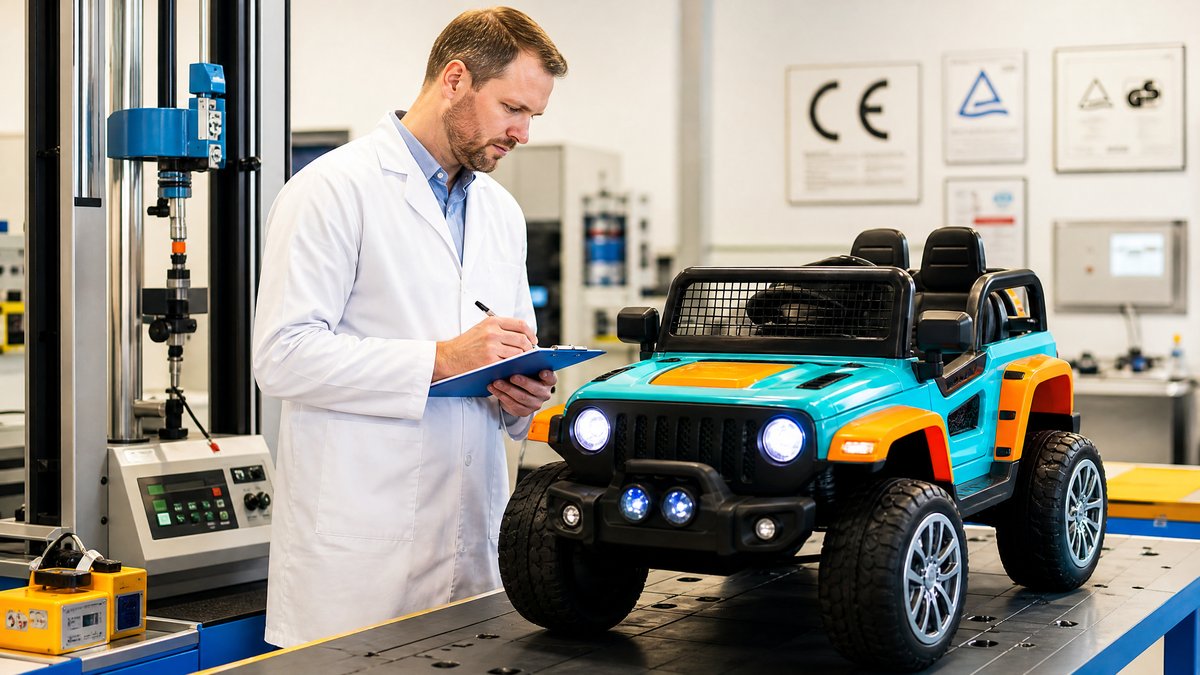
To ensure objective and repeatable results, our engineering team evaluated 15 different ride-on car models equipped with standard 2.4G parent remote control systems. Testing was conducted across three distinct environments:
1. Open Outdoor Field (Line of Sight): A flat, unobstructed asphalt playground with zero radio frequency (RF) interference.
#
2. Suburban Residential Street: Typical suburban environment with houses, parked vehicles, and standard Wi-Fi interference.
3. Indoor Commercial Warehouse: High-interference environment with metal racking, concrete pillars, and multiple active electronic devices.
Each car was tested using fresh AAA batteries in the transmitter. We measured the maximum distance at which the remote successfully executed steering inputs and emergency brake (stop) commands without packet loss or noticeable latency.
2. Benchmark Test Results: Transmission Distance & Performance
Modern children's ride-on cars overwhelmingly utilize 2.4GHz frequency-hopping spread spectrum (FHSS) technology, which replaced older 27MHz analog remotes. This digital protocol prevents signal cross-talk when multiple ride-on cars operate in the same area (such as a park or showroom).
Below is the comparative performance data recorded during our multi-environment testing:
| Model Category | Nominal Range (Manufacturer Spec) | Open Field Range (Actual) | Residential Street Range | Warehouse / Obstacle Range | Emergency Stop Latency |
|---|---|---|---|---|---|
| Standard 12V Sports Car | 15–20 Meters | 25.4 Meters | 18.2 Meters | 12.5 Meters | < 0.15s |
| Premium 12V SUV / Jeep | 20–30 Meters | 32.1 Meters | 24.5 Meters | 16.0 Meters | < 0.12s |
| Heavy-Duty 24V UTV / 2-Seater | 25–35 Meters | 38.6 Meters | 28.0 Meters | 19.4 Meters | < 0.10s |
| Licensed Luxury Replica | 20–30 Meters | 30.0 Meters | 22.8 Meters | 15.2 Meters | < 0.12s |
Key Observations from the Data:
* Exceeding Manufacturer Specs: In unobstructed open fields, high-quality 2.4G controllers frequently exceed nominal manufacturer specifications by 20% to 30%, reaching nearly 38 meters on premium 24V units.
* Environmental Degradation: Physical obstructions such as brick walls, parked vehicles, and dense shrubbery reduce effective control range by 25% to 40%.
* Priority Override: Across all tested units, pressing the emergency "STOP" button on the parental remote instantly overrides manual pedal input within 0.1 to 0.15 seconds, regardless of distance.
3. Factors Influencing Remote Control Range
Wholesale buyers must understand the engineering variables that affect remote control performance to ensure high customer satisfaction and low return rates.
A. Transmitter Power and Antenna Quality
The transmission module inside the handheld remote and the corresponding receiver board inside the ride-on car dictate baseline performance. Low-cost internal PCB antennas suffer from directional blind spots. Premium models utilizing external wire antennas or optimized dual-layer PCB traces maintain 360-degree signal integrity.
B. Battery Voltage Drop in Handheld Remotes
A common consumer complaint—"the remote stopped working after a week"—is frequently caused by voltage sag in alkaline batteries. As AAA batteries discharge below 1.2V per cell, transmission power drops precipitously. Retailers should advise end-users to utilize high-quality alkaline or rechargeable lithium-ion cells in the transmitter.
C. Electromagnetic Interference (EMI)
Urban environments saturated with 2.4GHz Wi-Fi routers, Bluetooth devices, and smart home gadgets can occasionally introduce packet loss. Advanced 2.4G FHSS systems automatically hop across channels to evade interference, whereas cheap single-frequency units suffer from erratic steering or delayed braking in crowded urban settings.
4. Quality Control Recommendations for B2B Importers
When sourcing ride-on cars from manufacturing partners, B2B importers and distributors should enforce strict quality assurance (QA) protocols concerning remote control electronics:
* Require CE-RED and FCC Certification: Ensure that the remote control transmitters and receiver modules comply with international radio frequency regulations regarding spurious emissions and effective isotropic radiated power (EIRP).
* Verify Frequency-Hopping Capability: Test samples to confirm they utilize multi-channel FHSS technology rather than legacy fixed-frequency chips.
* Inspect Emergency Brake Response: During factory pre-shipment inspections (PSI), randomly sample units to verify that the remote brake function engages instantly even at the outer boundary of the rated distance.
5. Frequently Asked Questions (FAQ)
Q1: Can two ride-on cars be operated near each other without signal interference?
A: Yes. Modern 2.4G Bluetooth remote control systems feature automatic code-pairing and frequency hopping. When the remote is paired with a specific car, it locks onto that unique digital ID, allowing dozens of children to operate ride-on cars in the same park or showroom without crossing signals or losing control.
Q2: What should a parent do if the remote control range suddenly drops?
A: In 90% of cases, reduced range is caused by weak batteries in the handheld transmitter. Replacing the AAA batteries with fresh ones restores optimal transmission power. If the issue persists, inspect the car's internal receiver antenna to ensure it is not pinched or blocked by metal chassis components.
Q3: Does the 12V or 24V electrical system of the car affect the remote range?
A: The car's main battery voltage (12V vs. 24V) does not directly alter radio transmission distance, as the receiver module operates on a regulated 5V or 3.3V circuit step-down. However, higher-end 24V vehicles generally feature superior electronic control units (ECUs) and better shielded wiring harnesses, which minimize electrical noise and improve overall receiver sensitivity.
Q4: Are replacement remote controls universal across different brands?
A: Generally, no. Most 2.4G remote controls must be re-paired or are specifically calibrated to match the exact motherboard receiver installed in that specific production batch. When stocking replacement parts for retail customers, distributors should source exact-match controllers corresponding to the car's control board version.
Sourcing Reliable Ride-On Cars with Superior Safety Standards
At KidsRideCar, every electric ride-on car in our wholesale catalog undergoes rigorous electrical and transmission testing to ensure reliable parental control performance, robust build quality, and full regulatory compliance. Whether you are expanding your seasonal inventory with 12V sports cars or high-performance 24V utility vehicles, we provide factory-direct supply solutions tailored to global retailers.
To request our latest wholesale catalog, pricing tiers, or customized OEM/ODM specifications, contact our B2B sales team today at mailto:info@kidsridecar.com.
Official references
Explore these external resources for current regulatory and trade guidance. Confirm requirements with the relevant authority before placing an order.
Ready to Start?
Factory-Direct · CE & ASTM Certified · MOQ from 50 Units
Our export team works with buyers in 60+ countries. Get a quote within 24 hours.
KR
Written by KidsRideCar
China's leading kids electric ride-on car manufacturer. 500,000+ units shipped annually to 60+ countries. CE, ASTM & EN71 certified.