In the competitive landscape of the global toy industry, safety is the fundamental bedrock of brand longevity and consumer trust. For toy stores, importers, and distributors, sourcing electric ride-on vehicles involves significant responsibility. A single safety oversight can lead to recalls, legal liabilities, and damage to a retailer's reputation. Beyond the ethical imperative of protecting children, the economic consequences of safety failures often involve fines and the loss of inventory value. As a professional B2B buyer, navigating safety standards and technical specifications requires a systematic approach. This guide provides a framework for evaluating ride-on car safety information, ensuring products meet international benchmarks. By adopting a rigorous vetting process, retailers can transform safety from a regulatory burden into a competitive advantage.
1. The Strategic Importance of Safety in B2B Sourcing
For manufacturers and wholesalers, safety is the primary metric of quality. In the context of children's electric vehicles, safety encompasses mechanical integrity, electrical stability, and chemical non-toxicity. When a toy store evaluates a supplier, the transparency of safety documentation serves as a proxy for operational excellence. A supplier providing verifiable, model-specific safety data understands the complexities of international trade and risk mitigation.
The relationship between an importer and a manufacturer must be built on shared responsibility. Importers are often legally responsible for the products they introduce to the market. Therefore, the evaluation process must be proactive, involving clear safety expectations in procurement contracts and due diligence on quality management systems. By prioritizing safety at the sourcing stage, B2B buyers avoid the pitfalls of low-quality production and ensure a stable product line.
2. The Regulatory Landscape for International Trade
The global regulatory environment for toys is complex and dynamic. While many safety principles are universal—such as preventing choking hazards—specific technical requirements and certification processes vary by region. For a professional importer, understanding these variations is critical to ensuring market access and avoiding delays.
2.1 Understanding Regional Requirements
Different markets have established standards to protect consumers. In North America, standards like the ASTM F963 series are recognized, focusing on mechanical, flammability, and electrical safety. In the European Union, the EN71 series and EN 62115 are primary benchmarks, often requiring specific markings for regional health and safety legislation. Other markets, including Australia, China, and the Gulf region, have national safety codes that may align with or diverge from these standards.
However, no single certification is universally applicable to all products or markets. The applicable standards must be verified based on the specific product category, intended age group, target market, and the latest official requirements from government agencies. Relying on generic claims of "international compliance" can be a mistake. Professional importers should consult with compliance experts to identify the exact standards for their specific shipment.
2.2 The Necessity of Written Verification
In the B2B world, every safety claim must be backed by written documentation. This includes test reports, technical data, and declarations of conformity. Importers should request a complete compliance package, serving as the legal and technical foundation for the trade relationship, providing evidence for customs officials and retail partners.
Table 1: Framework for Regulatory Verification in B2B Sourcing
| Verification Step | Description | B2B Requirement |
|---|---|---|
| Market Identification | Define the jurisdiction where the product will be sold. | Written confirmation of target market regulations. |
| Standard Selection | Identify applicable versions of standards. | Verification against latest official government guidance. |
| Product Classification | Determine age grade and vehicle type for testing scope. | Documentation matching the specific SKU and model number. |
| Lab Accreditation | Ensure the testing laboratory is recognized. | Proof of ISO 17025 accreditation and recognition. |
| Document Audit | Review the full test report for completeness. | All sections must indicate a passing result for the model. |
3. B2B Documentation Verification Protocol
Documentation is the primary tool for safety evaluation in the wholesale industry. A professional buyer must distinguish between a superficial certificate and a comprehensive test report.
3.1 Evaluating Laboratory Reports and Accreditation
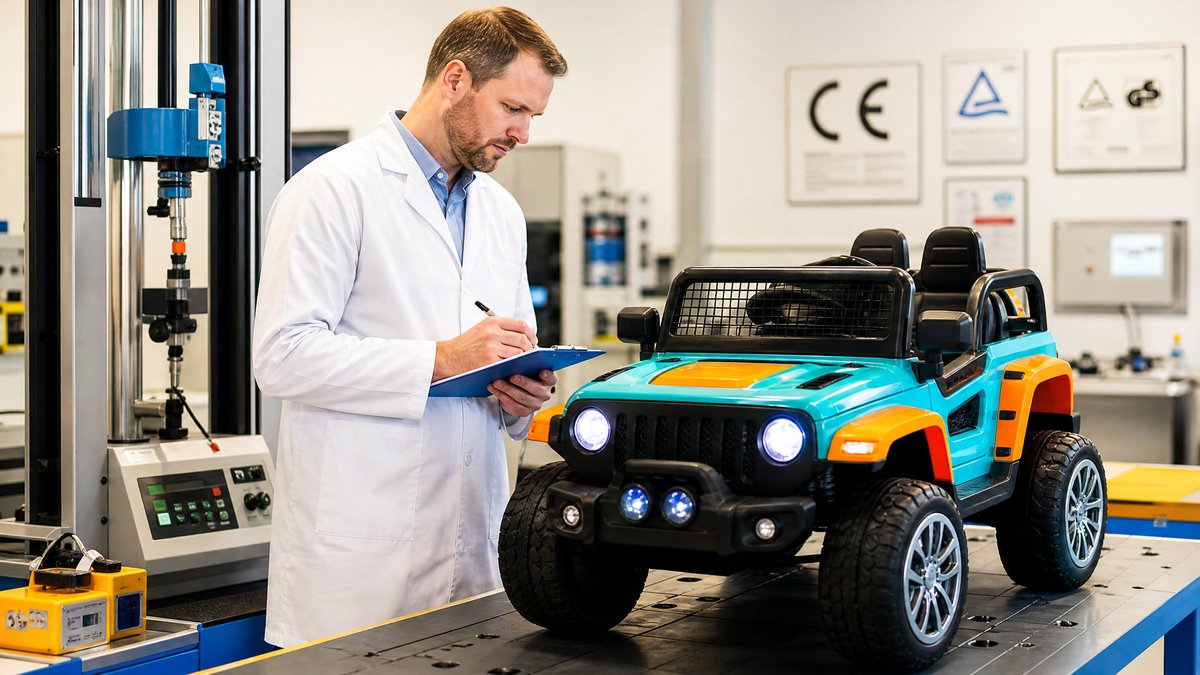
The validity of a safety evaluation depends on the credibility of the laboratory. Importers should prioritize reports from independent, third-party laboratories holding ISO 17025 accreditation. These labs are subject to oversight and recognized by regulatory bodies. When reviewing a report, the buyer should verify the lab's accreditation status and ensure they are authorized to test against the required standards.
The report itself must be scrutinized for authenticity. Most major laboratories provide online verification tools to confirm validity. Importers should never accept a certificate without the ability to verify it through the lab's official portal. A manufacturer's refusal to provide a verifiable report number is a red flag prompting further investigation.
3.2 Ensuring Model and Scope Consistency
A common pitfall is the use of generic test reports that do not match the product. A valid report must identify the model number, provide photographs of the tested unit, and list components and materials used. If the report was for a different model or version, it may not reflect the safety profile of the current shipment.
The scope of testing must also be complete. A report covering mechanical hazards but ignoring electrical safety or chemical composition is insufficient. Importers must ensure testing covers all relevant aspects of applicable standards, including flammability, lead content, and battery performance. Gaps should be addressed through additional testing before finalizing the order.
4. Technical Specification Verification: Engineering for Safety
Beyond documentation, evaluation involves a dive into technical specifications. These provide insight into engineering choices and their impact on safety and performance.
4.1 Mechanical Integrity and Structural Design
Mechanical design is the first line of defense against injury. Importers should evaluate structural integrity, focusing on the wheelbase, center of gravity, and material quality. An anti-tip design, as specified in model documents, is essential for stability. High-impact plastics, as detailed in material specifications, ensure the vehicle withstands play without shattering.
All moving parts, gearboxes, and wiring should be enclosed, as specified in technical files, to prevent contact. Seating and restraint systems, including seat belts, must be integrated according to manufacturer standards. These features should be cross-referenced with technical drawings and the bill of materials provided by the supplier.
4.2 Electrical Systems and Battery Management
The electrical system is critical for safety. B2B buyers should request information on battery chemistry, the charging system, and safety features. As specified in model-specific technical documentation, the vehicle should include overload protection, such as a resettable circuit breaker, to prevent overheating. The battery housing should be designed to be impact-resistant and flame-retardant.
The charging process must be evaluated. The charger should include automatic shut-off features, as specified in technical documents, to prevent overcharging. Importers should verify the electrical system has been tested for short-circuit resilience and thermal stability. These specifications are essential safety indicators documented for every model.
4.3 Performance and Functionality as Specified
When evaluating features like remote control overrides or soft-start technology, importers must rely on specific model documents. The parental remote's ability to override manual inputs should be defined in the technical manual, including the range and priority level. Acceleration and braking performance should be described in product specifications, ensuring they are appropriate for the age group. By framing these as "as specified in model documents," importers focus on verifiable technical data.
For safety-document review
Request model-specific safety information
Use each model’s current manual, product specification and applicable documentation when preparing retail safety information for your target market.
Ask for model documentation →

5. Chemical and Material Safety: Managing Hidden Risks
Chemical safety is a focus of modern toy regulations. Importers must ensure products are free from harmful substances.
5.1 Material Purity and Non-Toxicity
Importers must require test results for phthalates, lead, and other heavy metals in accessible parts. These are regulated due to health impacts on children. The manufacturer should provide a Bill of Materials and corresponding test reports for each material used, from plastics to paints.
High-quality ride-on cars should be constructed from stable polymers that do not emit strong chemical odors. The use of BPA-free materials for components children touch is an indicator of commitment to safety. These choices should be documented in technical specifications and verified through laboratory analysis.
5.2 Flammability and Fire Safety
Material flammability is a critical factor. Standards include requirements for the burn rate of toy materials. Importers should verify that plastics, fabrics, and foam meet these requirements, as specified in model safety reports. The goal is to ensure materials are self-extinguishing or have a slow burn rate to allow a child to exit safely in the event of a fire.
6. Supply Chain Quality Control
Evaluation must extend into the production process. Quality control (QC) ensures safety standards are maintained in every unit.
6.1 Factory Audits and Process Verification
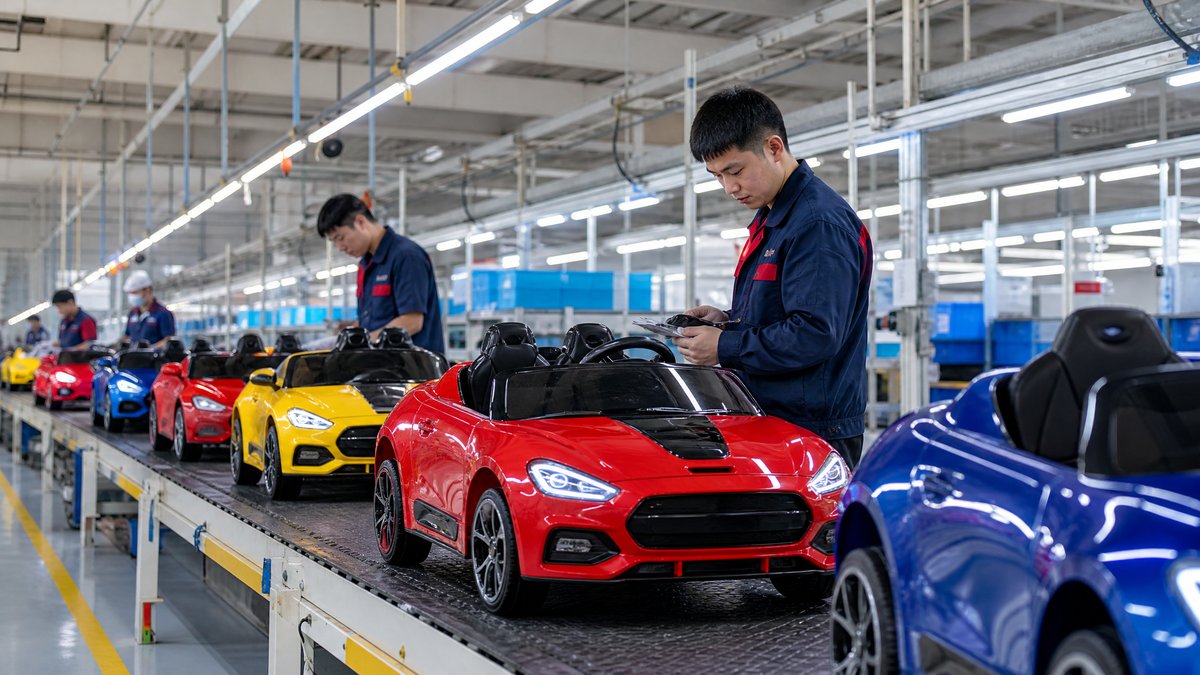
Professional B2B buyers should conduct or commission audits of production facilities. Audits evaluate quality management systems, internal testing, and adherence to safety protocols. A manufacturer with a strong QC culture has procedures for material inspection and final product testing. Verification provides assurance that safety specifications are consistently met.
6.2 Pre-Shipment Inspections and Sampling
Every shipment should be subject to a pre-shipment inspection (PSI) by a qualified third party. During PSI, a random sample is checked against approved specifications, including mechanical functions, electrical systems, labeling, and packaging. The inspection verifies model numbers and markings match the documentation. A successful PSI report is a prerequisite for shipment.
7. Retailer Responsibility and Risk Mitigation
Once products arrive at the store, responsibility shifts to the retailer. The retailer ensures the product is sold and used safely.
7.1 Staff Training and Technical Knowledge
Retail staff should be trained on technical specifications and safety features based strictly on manufacturer documentation and manuals. Sales teams should explain age-appropriateness, the function of the parental remote (as specified in the manual), and correct battery charging procedures. Documentation-based information prevents misuse and reduces accident risk.
7.2 Customer Education and Guidance
Retailers have a duty to provide guidance to customers on safe operation. This includes emphasizing adult supervision, safe environments (away from roads and pools), and appropriate protective gear. Guidance should be aligned with warnings in the manufacturer's user manual. Providing this information reinforces commitment to safety and protects the end user.
8. Safety Maintenance and After-Sales Protocol
Safety must be maintained throughout the vehicle's life. Retailers should establish protocols for after-sales support, emphasizing professional service.
8.1 Encouraging Professional Support
Customers should be encouraged to perform external inspections, such as checking for loose hardware, as outlined in the manual. However, maintenance and repairs, particularly involving the electrical system, battery, or motor, must be handled by authorized service centers. Retailers should provide contact information for official support channels and advise following the provided manual.
8.2 The Risks of DIY and Unauthorized Modifications
DIY electrical repairs or performance modifications are significant risks. Importers and retailers must communicate that attempting to open battery compartments or tamper with internal circuitry is dangerous. Such actions can lead to electrical failure or fire. Customers should be advised the vehicle must remain in its original, factory-specified condition. For technical issues, the only safe course is to contact manufacturer-authorized support.
Frequently Asked Questions
Q: How can a toy store verify the authenticity of safety certifications?
A: Request the full test report and identify the laboratory that issued it. Use the lab's official website to verify the report number and date. Ensure the laboratory holds ISO 17025 accreditation for the specific tests. If discrepancies are found, seek clarification from the manufacturer and the laboratory.
Q: What is the most effective way to ensure a ride-on car is appropriate for a market?
A: Perform a regulatory gap analysis before sourcing. Identify safety standards and labeling requirements of the target market and provide these to the manufacturer. The manufacturer should provide evidence, through model-specific reports, that the product meets these requirements, verified against the latest official guidance.
Q: What should a B2B buyer look for in a "Compliance Package"?
A: A B2B compliance package should include: (1) Verifiable test reports from an accredited laboratory; (2) A Bill of Materials (BOM) listing components; (3) Material Safety Data Sheets (MSDS) for the battery; (4) A Declaration of Conformity; and (5) Photographs of the product as tested. This provides the technical and legal foundation for sourcing.
Q: How should a retailer handle a safety concern reported by a customer?
A: Advise the customer to stop using the product immediately. Collect information, including the model number and description of the issue. Contact the manufacturer's authorized support team for evaluation. Consult legal advisors to determine if reporting to government agencies is required. Neither the retailer nor the customer should attempt internal repairs.
Conclusion: Safety as a Strategic Partnership
In the B2B world, safety is the ultimate indicator of professional excellence. By implementing a framework prioritizing documentation, technical specification review, and quality control, toy stores minimize risk and build reliability. The landscape of toy safety is evolving, and importers must remain vigilant, aligning sourcing with official requirements. Safety is a continuous process of diligence and collaboration between the retailer and manufacturer.
For manufacturers like KidsRideCar, providing transparent safety data is the cornerstone of every partnership. By working with partners who prioritize safety at every stage, toy stores ensure the joy of a ride-on car is never overshadowed by safety concerns.
Request a wholesale quote
Official references
Explore these external resources for current regulatory and trade guidance. Confirm requirements with the relevant authority before placing an order.
Ready to Start?
Factory-Direct · CE & ASTM Certified · MOQ from 50 Units
Our export team works with buyers in 60+ countries. Get a quote within 24 hours.
KR
Written by KidsRideCar
China's leading kids electric ride-on car manufacturer. 500,000+ units shipped annually to 60+ countries. CE, ASTM & EN71 certified.