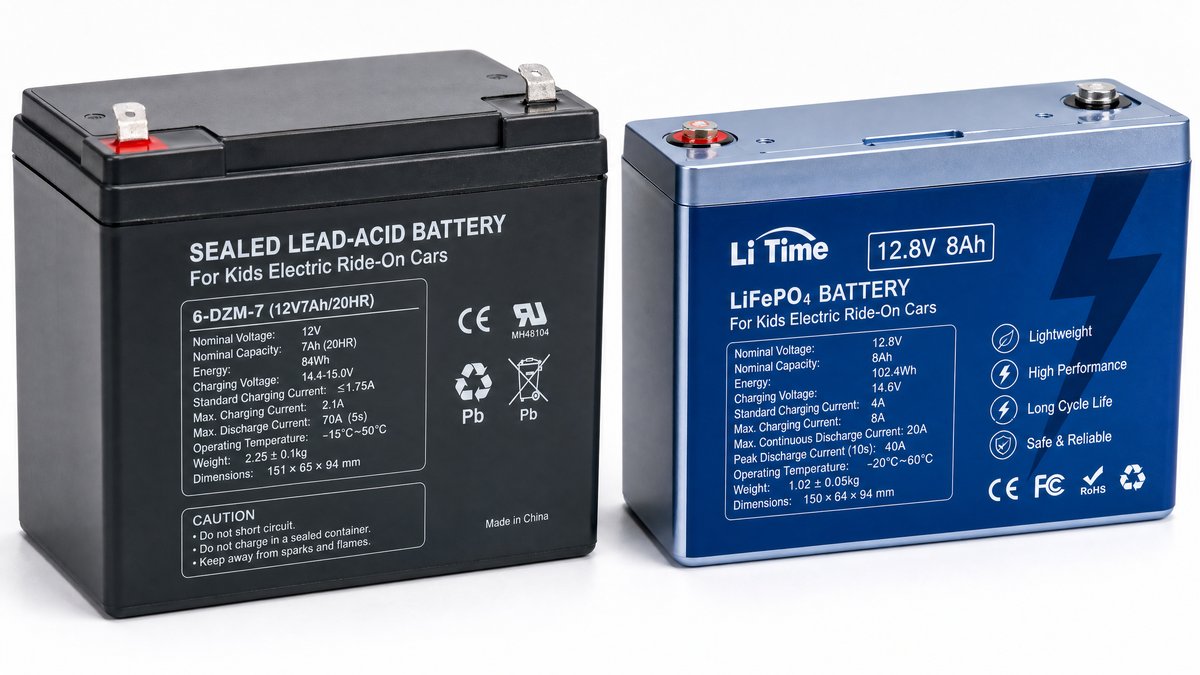
Battery technology is one of the most consequential — and most frequently misunderstood — aspects of kids electric ride-on car sourcing. The choice between lead-acid and lithium batteries affects runtime, product weight, charging time, lifespan, warranty claims, and ultimately the total cost of ownership for your retail customers. Getting this decision right can significantly reduce your after-sales service burden and improve customer satisfaction.
This guide covers everything wholesale buyers need to know about battery technology in kids electric ride-on cars: how the two main battery types compare, which markets prefer which technology, how to evaluate battery specifications in supplier quotations, and what questions to ask before placing an order.
The Two Battery Technologies: An Overview
The vast majority of kids electric ride-on cars use one of two battery chemistries: sealed lead-acid (SLA) or lithium iron phosphate (LiFePO4). A small number of premium models use lithium-ion (Li-ion), but LiFePO4 has largely replaced Li-ion in this product category due to its superior safety profile — it does not overheat or catch fire under normal use conditions, which is a critical consideration for a children's product.
Lead-Acid vs Lithium: Head-to-Head Comparison
| Specification | Lead-Acid (SLA) | Lithium (LiFePO4) |
|---|---|---|
| Typical capacity | 6V 4.5Ah / 12V 7Ah / 12V 10Ah | 12V 10Ah / 24V 10Ah / 24V 15Ah |
| Runtime per charge | 45–90 minutes | 90–180 minutes |
| Charge time | 8–12 hours | 3–5 hours |
| Cycle life | 200–300 cycles | 800–1,200 cycles |
| Weight (12V 10Ah) | ~3.2 kg | ~1.4 kg |
| Self-discharge rate | 3–5% per month | 1–2% per month |
| Operating temperature | -10°C to 45°C | -20°C to 60°C |
| Typical wholesale cost premium | Baseline | +$15–$40 per unit |
| Warranty claim rate | Higher (battery failure common) | Lower (more durable) |
When Lead-Acid Makes Sense
Lead-acid batteries remain the dominant technology in the kids electric ride-on car market for a straightforward reason: they are significantly cheaper. For entry-level and mid-range products targeting price-sensitive markets — Southeast Asia, Latin America, Eastern Europe, and the value tier in developed markets — lead-acid batteries allow manufacturers to hit price points that lithium cannot match.
Lead-acid batteries also have a well-established supply chain and are easier to replace. In markets where after-sales service infrastructure is limited, the ability to replace a dead battery with a standard SLA unit available at any automotive store is a genuine practical advantage. For wholesale buyers supplying markets where end-consumers have lower disposable incomes and higher price sensitivity, lead-acid products often represent the better commercial choice.
When Lithium Makes Sense
Lithium batteries command a premium that is increasingly justified in developed markets. The combination of longer runtime (90–180 minutes versus 45–90 for lead-acid), faster charging (3–5 hours versus 8–12), significantly longer cycle life (800–1,200 versus 200–300 cycles), and substantially lower weight makes lithium-equipped models meaningfully better products from a consumer experience perspective.
In markets where consumers are accustomed to premium electronics and have high expectations for product quality — the US, UK, Germany, Australia, the Gulf states — lithium battery models command retail price premiums of $50–$100 and generate fewer warranty claims. For wholesale buyers targeting premium retail accounts or building a private label brand, lithium is the correct choice despite the higher unit cost.
KidsRideCar offers both lead-acid and LiFePO4 battery configurations across our product range. Request a comparison quote.
Request Battery Comparison Quote →How to Evaluate Battery Specifications in Supplier Quotations
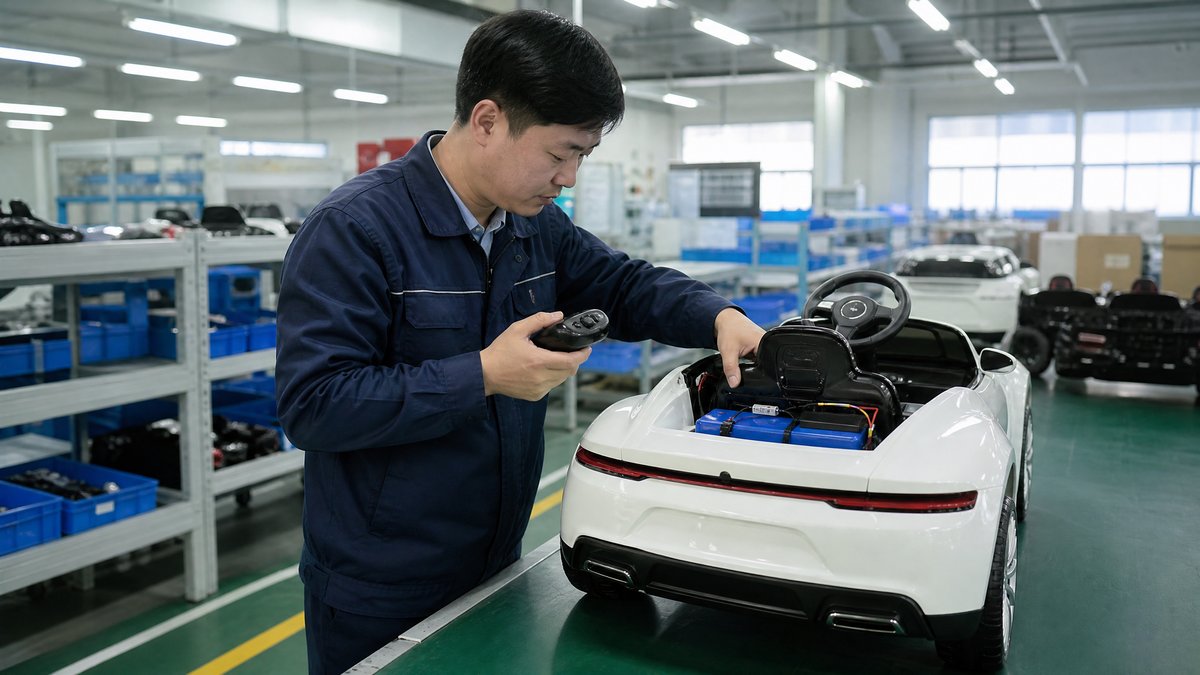
Battery specifications in supplier quotations are frequently misleading. The most common issue is capacity inflation — a supplier quotes a '12V 10Ah' battery that is actually a 7Ah unit with a 10Ah label. This is not always deliberate fraud; it can result from using the battery's theoretical capacity rather than its actual usable capacity, or from testing at a discharge rate that does not reflect real-world use.
To verify battery specifications, request the battery manufacturer's datasheet (not just the ride-on car manufacturer's spec sheet), ask for the battery's actual brand and model number, and confirm the discharge rate at which the capacity is measured. A reliable supplier will provide this information without hesitation. If a supplier cannot or will not provide the battery datasheet, treat the quoted capacity as unverified.
Market-Specific Battery Recommendations
| Market | Recommended Battery | Rationale |
|---|---|---|
| United States / Canada | LiFePO4 for 12V+ | Premium consumer expectations, CPSC safety focus |
| European Union | LiFePO4 preferred | Environmental regulations, premium positioning |
| United Kingdom | LiFePO4 preferred | Premium retail market, safety consciousness |
| Gulf States (UAE, Saudi) | LiFePO4 for 24V models | Premium market, heat performance advantage |
| Southeast Asia | Lead-acid acceptable | Price sensitivity, established SLA service network |
| Latin America | Lead-acid for entry-level | Price sensitivity, budget retail dominates |
| Eastern Europe | Mixed — lead-acid entry, lithium premium | Bifurcated market by income segment |
Frequently Asked Questions
Can I replace a lead-acid battery with a lithium battery in the same car?
In most cases, yes — the voltage must match (12V for 12V, 24V for 24V), but the physical dimensions and weight will differ. The charger must also be compatible with the new battery chemistry. Lead-acid chargers cannot safely charge lithium batteries. If you are considering a battery upgrade for an existing product line, confirm charger compatibility with your supplier before proceeding.
How should batteries be stored during long-term warehouse inventory?
Both battery types should be stored at approximately 50% charge in a cool, dry environment (15–25°C). Lead-acid batteries should be recharged every 3–6 months to prevent sulfation. Lithium batteries have a lower self-discharge rate and can be stored for 6–12 months without recharging, but should be checked periodically. Never store either battery type fully discharged.
What is the typical warranty period for batteries in kids ride-on cars?
The industry standard warranty for batteries in kids electric ride-on cars is 3–6 months. This is shorter than the overall product warranty (typically 12 months) because batteries are considered consumable components. When negotiating with suppliers, confirm the battery warranty period separately from the overall product warranty, and clarify what constitutes a warranty-eligible failure versus normal battery degradation.
Battery technology is not a detail to leave to the supplier's default choice. The battery determines a significant portion of your customers' experience with the product, and battery-related warranty claims are the most common after-sales issue in this product category. Specifying the right battery technology for your target market — and verifying that the delivered product matches the specification — is one of the highest-leverage decisions a wholesale buyer can make.
Official references
Explore these external resources for current regulatory and trade guidance. Confirm requirements with the relevant authority before placing an order.
Ready to Start?
Factory-Direct · CE & ASTM Certified · MOQ from 50 Units
Our export team works with buyers in 60+ countries. Get a quote within 24 hours.
China's leading kids electric ride-on car manufacturer. 500,000+ units shipped annually to 60+ countries. CE, ASTM & EN71 certified.