A wholesale 2-seater ride-on car range should be built around clearly different buyer needs—not simply around adding more colors or nearly identical body styles. Start with a small, balanced selection that gives retailers, distributors, rental operators, and OEM buyers meaningful choices in seating layout, intended use, control features, battery configuration, body design, and customization potential. Then validate each model against your destination market, packaging constraints, sales channels, after-sales plan, and compliance requirements.
The practical goal is a range that is easy to explain and replenish. One model might suit parents shopping for sibling play, another may be positioned for gift and specialty retail, while a more robust configuration may fit supervised rental use. The final range should be based on documented product specifications and confirmed samples, not assumptions about a model’s capacity or performance.
What makes a wholesale 2-seater range commercially useful?
A useful range gives a buyer visible reasons to choose one model over another. Those reasons may include:
- A different body style or licensed-versus-generic design strategy
- A distinct age guidance, seat layout, or physical fit, as confirmed by the supplier
- Different control options, such as child-operated controls and a parental remote where offered
- Different styling for toy stores, e-commerce, outdoor recreation, or rental environments
- A different customization route for private label or OEM programs
- Different carton dimensions, accessory packages, or assembly requirements
Every SKU does not need a completely different technical platform. Shared components can simplify forecasting and spare-parts support, provided the supplier documents which parts are compatible. Avoid presenting two models as separate value levels when the customer experience and specifications are effectively the same.
For background on comparing models before building an assortment, see the [kids electric ride-on car product guide](/products/kids-electric-ride-on-cars) and the [wholesale sourcing guide](/blog/how-to-source-kids-electric-ride-on-cars-from-china).
Step 1: Define the customers each model will serve
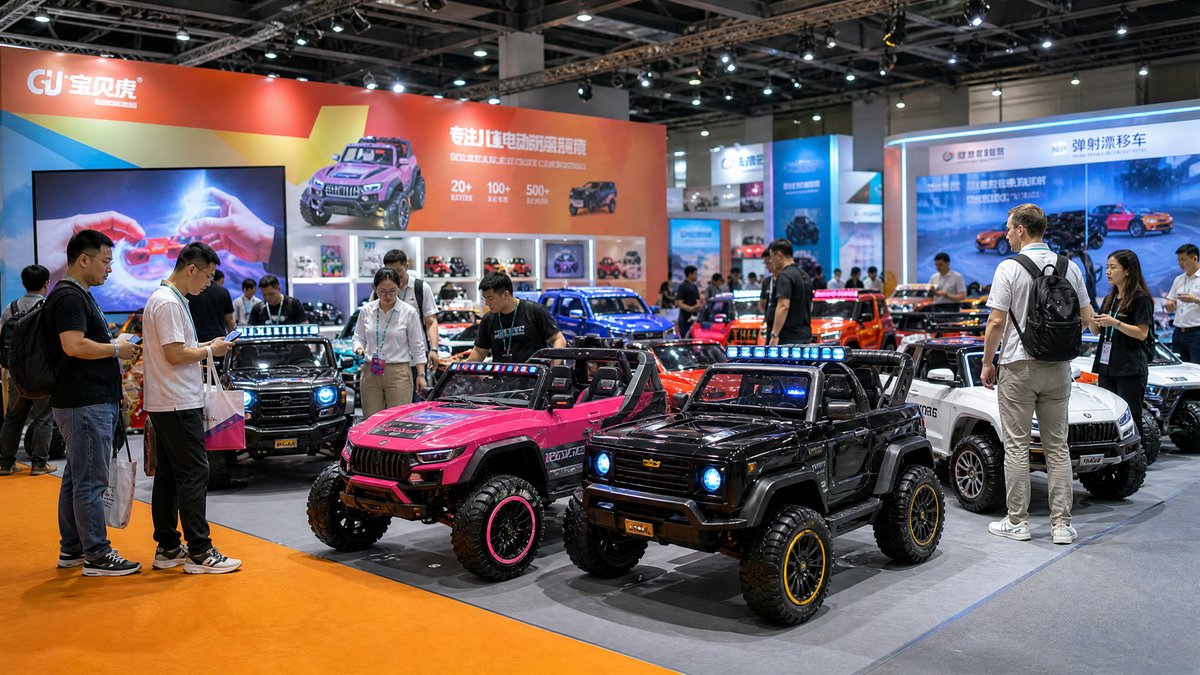
Before requesting a quotation, map your channels and end users. A wholesaler supplying independent toy stores may need an easy-to-explain family range. A national distributor may need several price and design positions for different retail accounts. A rental operator needs to assess supervised operation, site layout, maintenance access, cleaning, charging procedures, and staff training rather than selecting solely on appearance. An OEM buyer may prioritize a stable platform that can carry a brand identity across multiple variants.
Create a short brief for every proposed model:
1. Primary channel: specialty retail, online retail, distributor, rental, amusement venue, or another channel.
2. End-user scenario: sibling play, family gifting, supervised venue use, or a specific seasonal campaign.
3. Required differentiation: body design, features, controls, seat arrangement, branding, or packaging.
4. Sales geography: destination countries and any market-specific documentation to confirm.
5. Service expectation: replacement parts, troubleshooting materials, warranty workflow, and staff training.
For example, an importer may begin with three roles rather than three arbitrary SKUs: a recognizable family-oriented model, a feature-focused online model, and a serviceable fleet-oriented model. The supplier must confirm whether each proposed role is appropriate for its intended use. Do not call a model “commercial grade,” “all-terrain,” or suitable for a certain age or weight unless those claims are supported by the manufacturer’s written information and your own review process.
Step 2: Build a range architecture, not a long list
A simple range architecture helps sales teams and customers understand the choices. Consider organizing the range by the following dimensions.
By seating and physical fit
All products in this article are 2-seater concepts, but two seats alone do not establish that two children of any size can ride together. Compare seat width, footwell layout, entry and exit, steering position, harness or belt arrangement where provided, overall dimensions, and maximum load information. Ask the factory to state how these measurements are defined and to provide current drawings or specification sheets.
Age guidance should be treated as product information that must be verified for each model and destination market. It is not interchangeable between visually similar products. A two-seater designed for younger children may have a different fit and control arrangement from one intended for older or larger children.
By control experience
Some buyers need a model that children operate directly; others value a parental remote for supervised control. Confirm what control modes are included, how the remote is paired, what documentation is supplied, and whether the configuration changes the user instructions or packaging. Do not treat a remote as a substitute for adult supervision or site-specific operating rules.
By design language
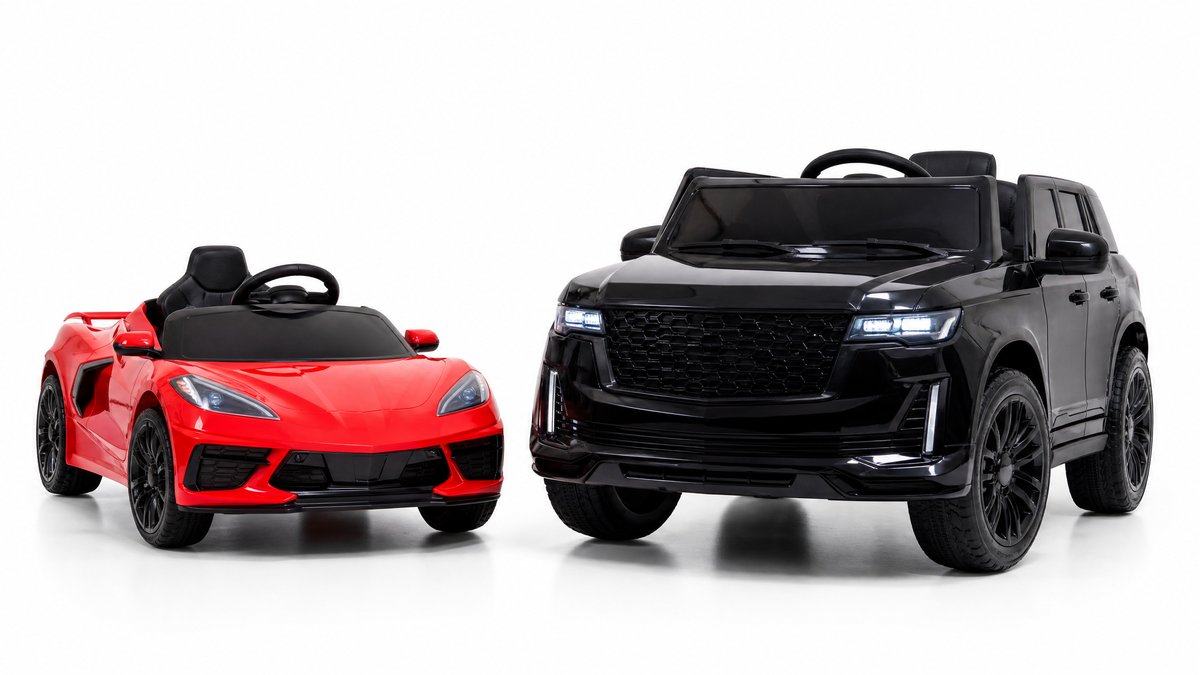
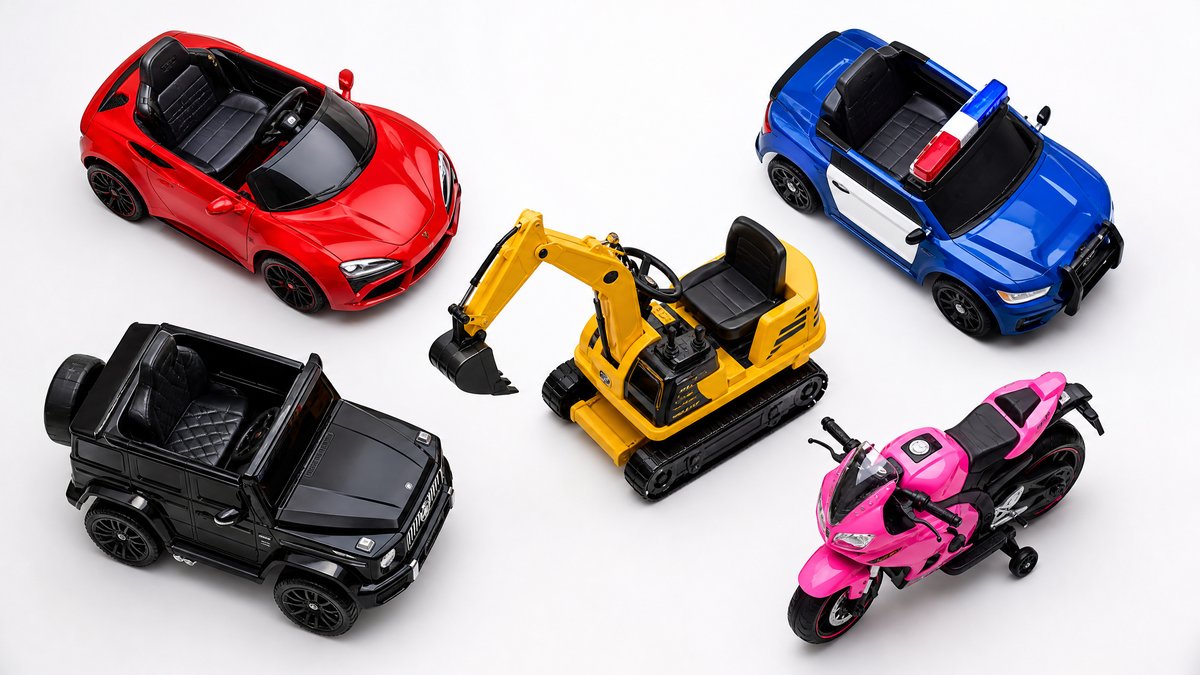
A coherent range can include different design languages—such as SUV-inspired, sports-car-inspired, utility, or playful forms—without making unverified brand or licensing claims. If a model uses a protected third-party brand, clarify licensing responsibility and approved artwork before placing an order. For generic models, define colors, decals, logo placement, and packaging as separate approval items.
By operating environment
Retail buyers typically need products that are easy to present, explain, ship, and support. Rental operators should additionally review repeated-use routines, charging access, cleaning surfaces, storage, inspection checklists, and replacement-part availability. The same model may not be suitable for both channels simply because it has two seats.
Step 3: Compare specifications using one buyer checklist
Request the same information for every candidate model so that the assortment can be compared fairly. A useful wholesale 2-seater ride-on car checklist includes:
- Product dimensions, net weight, carton dimensions, and gross weight
- Seat, footwell, wheel, and ground-clearance measurements where relevant
- Recommended age guidance and maximum load information
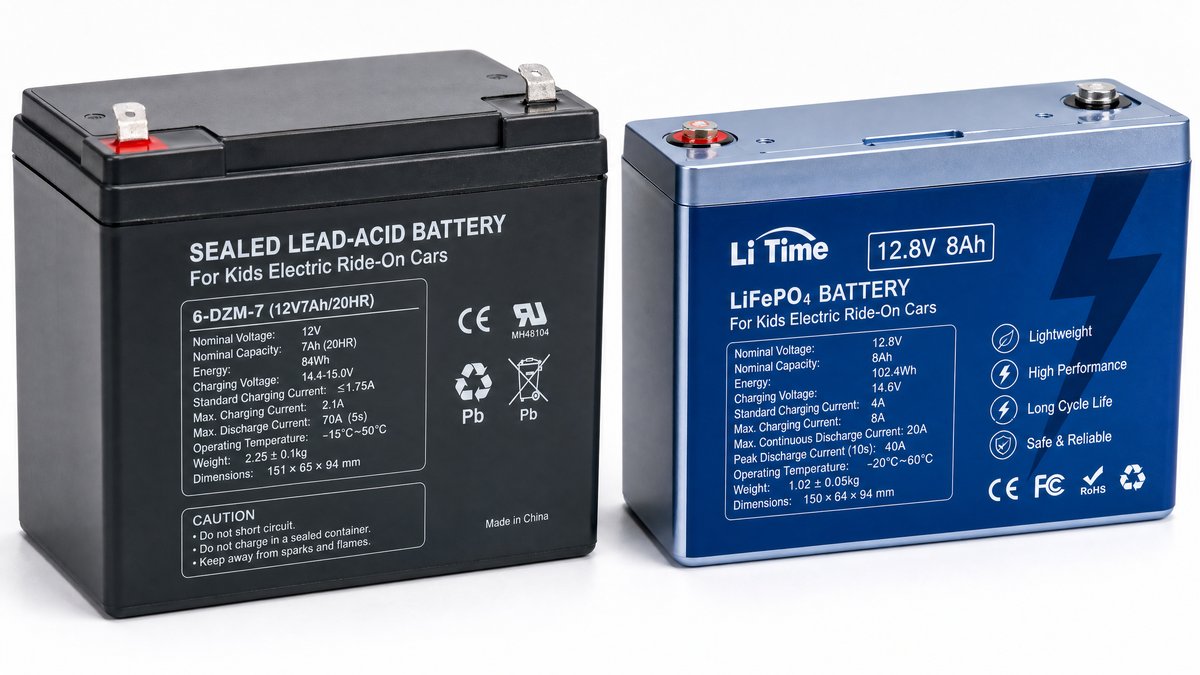
- Battery type, rated voltage, charger details, charging instructions, and transport documentation
- Motor configuration and control modes as stated by the manufacturer
- Drive wheels, tires, suspension or damping components, and stopping behavior described in the manual
- Included safety equipment, such as belts or guards where applicable
- Assembly steps, tools, user manual, warnings, and language options
- Spare parts list, packaging contents, and replacement procedures that are suitable for customers
- Available colors, decals, logos, accessories, and packaging customization
Do not turn a supplier’s marketing phrase into a measurable promise. Terms such as “long range,” “fast,” “strong,” or “heavy duty” require clarification. Ask what is actually being measured, under which conditions, and whether the statement belongs in your own product listing. Keep customer-facing claims aligned with the approved specification and instructions.
Step 4: Plan the commercial range around channel economics
A range needs a role in the buyer’s business. Compare more than the unit quotation. Review carton utilization, minimum order quantities, payment terms, sample costs, tooling or artwork charges, inspection arrangements, freight assumptions, import duties, local handling, storage, and expected after-sales workload. These factors vary by supplier, order, and destination, so request a written quotation for your exact configuration instead of relying on a generic price list.
A practical assortment worksheet can include:
| Field | Question for the buyer |
|---|---|
| Range role | Which channel and customer problem does this model address? |
| Landed-cost inputs | Which costs are confirmed, estimated, or still unknown? |
| Order flexibility | Can the buyer reorder this model and its replacement parts? |
| Content readiness | Are images, dimensions, manuals, warnings, and carton data available? |
| Service burden | What common consumables and replacement parts must be stocked? |
| Exit decision | What evidence would cause the buyer to pause or remove the SKU? |
For retailers, avoid stocking several models that compete for the same shelf position without a clear distinction. Distributors should align the assortment with account types and territory requirements. Rental operators should evaluate operating procedures and downtime risks, while OEM buyers should separate one-time development decisions from recurring production specifications.
Step 5: Verify samples and documentation before committing
A sample review should test whether the actual product matches the approved specification and intended customer experience. Use a written checklist covering assembly, finish, controls, steering, seating, belt or restraint components where included, charger labeling, battery enclosure, wheel attachment, fasteners, doors or moving parts, and the contents of the carton. Follow the supplied instructions and do not modify the product during evaluation.
Ask the supplier for the current user manual, parts diagram, packing list, product photographs, and any destination-market documents relevant to the exact configuration. Keep records of model numbers, revision dates, approved artwork, and sample comments. If a change is proposed after approval, request a new review rather than assuming that a visually minor change has no effect.
Safety requirements and documentation vary by destination market, product classification, age guidance, battery type, electrical configuration, and sales channel. Ask qualified local advisers or the relevant authorities what applies to your shipment. A supplier’s general statement about compliance should not be treated as a universal legal conclusion for every country or configuration.
Step 6: Design the after-sales plan at range level
Two-seater products can create more customer questions because buyers may ask about fit, charging, controls, assembly, storage, and use by siblings. Prepare answers before launch. Your support package may include translated manuals, assembly diagrams, charging guidance, inspection checklists, fault-report forms, replacement-part identification, and a clear escalation path to the supplier.
Never instruct customers to bypass protective devices, rewire the product, solder connections, open batteries, or perform internal repairs. Electrical, battery, control, and structural work should follow the manufacturer’s authorized service process and applicable local requirements. If a product is damaged, behaves unexpectedly, or has a charging concern, the user should stop using it and follow the supplied safety and service instructions.
At range level, standardize naming for common parts where possible. A distributor should know whether a charger, remote, wheel, belt, switch, or cosmetic panel is model-specific. Keep an approved spare-parts matrix and identify which parts are not interchangeable. This reduces incorrect shipments and helps customer-service staff give model-specific guidance.
When should buyers use OEM customization?
OEM customization is most useful when the buyer has a defined sales proposition and enough volume or channel access to support the additional approvals. Suitable projects may involve logo placement, colors, decals, packaging, manuals, accessory bundles, or a controlled body-style adaptation. Start by separating “must have” requirements from cosmetic preferences. Confirm artwork ownership, tooling responsibility, approval samples, change control, and minimum order expectations in writing.
Do not customize safety-related components or operating instructions casually. Any change affecting seats, restraints, controls, batteries, charging, structure, or age guidance should trigger a documented technical review and a fresh compliance assessment for the destination market. See the [OEM ride-on car inquiry page](/inquiry) to provide a structured brief to the supplier.
Common range-building mistakes to avoid
Choosing by appearance alone. Attractive images do not show fit, packaging, documentation, or service requirements.
Treating two seats as a universal capacity claim. Seat count does not answer questions about user size, combined load, supervision, or intended environment.
Adding near-duplicate SKUs. More models can increase inventory and support complexity without improving customer choice.
Mixing approved and unapproved specifications. A catalog, quotation, sample, and online listing should refer to the same model revision.
Ignoring the channel. A home-use retail product and a supervised rental fleet may require different operating procedures and support planning.
Making broad compliance claims. Requirements vary by destination market and configuration; verify them for the actual shipment.
FAQ: Frequently Asked Questions
How many models should a wholesale 2-seater ride-on car range include?
There is no universal number. Begin with the smallest set that covers distinct channels or customer needs, then expand only when a new model has a documented role. A focused range is usually easier to forecast, explain, inspect, and support than a long list of overlapping products.
What should buyers compare between two similar 2-seater ride-on cars?
Compare physical fit, maximum load information, age guidance, controls, battery and charger details, dimensions, carton data, included safety features, documentation, customization, spare parts, and the intended operating environment. Ask the supplier to explain every meaningful difference in writing.
Can one 2-seater model serve both retail and rental operators?
Possibly, but channel suitability must be verified rather than assumed. Retail and rental buyers may have different needs for supervision, inspection, cleaning, storage, charging, maintenance access, usage frequency, and replacement parts. Review the manufacturer’s instructions and create channel-specific operating procedures.
How can an importer reduce risk when launching a new range?
Use a staged process: define model roles, request comparable specifications, review samples, confirm documentation and destination-market requirements, approve packaging and content, place a controlled order, and collect structured customer or service feedback. Keep changes documented and do not expand the range until the original models are supportable.
Conclusion: build a range customers can understand and support
The strongest wholesale 2-seater ride-on car range is not necessarily the largest. It is the range in which each model has a clear job, verified specifications, appropriate documentation, manageable after-sales requirements, and a credible route to the intended channel. Map the customer use case first, compare models consistently, validate samples, and treat safety and market requirements as configuration-specific responsibilities.
Ready to discuss a focused product mix, private-label brief, or distributor inquiry? Contact KidsRideCar at info@kidsridecar.com or submit your requirements through the [wholesale inquiry page](/inquiry).
Official references
Explore these external resources for current regulatory and trade guidance. Confirm requirements with the relevant authority before placing an order.
Ready to Start?
Factory-Direct · CE & ASTM Certified · MOQ from 50 Units
Our export team works with buyers in 60+ countries. Get a quote within 24 hours.
KR
Written by KidsRideCar
China's leading kids electric ride-on car manufacturer. 500,000+ units shipped annually to 60+ countries. CE, ASTM & EN71 certified.