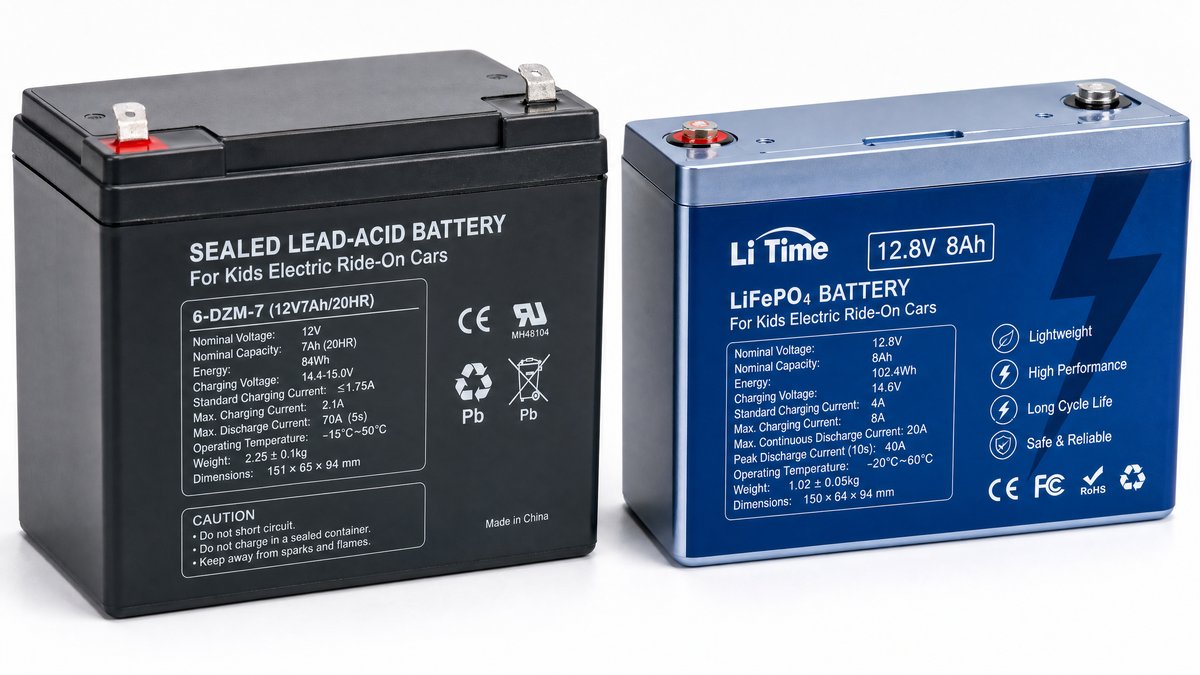
Buyers should confirm charger compatibility by the exact ride-on car model and battery system, not by plug appearance or a generic voltage label. Before ordering, obtain the charger and battery-pack labels, connector specification, charging instructions, and model-to-charger mapping. Verify that the charger, battery, vehicle, packaging, and instructions are the approved system. This reduces avoidable after-sales cases and creates a repeatable spare-parts plan.
For a kids’ electric ride-on car, a charger is part of the electrical system, not a universal accessory. The U.S. Consumer Product Safety Commission associates batteries and chargers with overheating, fire, shock, and burn hazards, and recommends testing cells, batteries, chargers, and end products together for intended conditions.[1] Purchase the charger approved for the specific configuration; a similar-looking unit does not prove interchangeability.
Start with the model, not a generic charger category
A purchase order should identify the vehicle model, relevant revision, destination-market version, and corresponding charger part number. Do not rely on a broad description such as “12V ride-on charger.” Request a model-to-charger list that identifies the exact supported product versions.
Model-specific control matters because a vehicle line can change without an obvious visual difference. A revised battery pack, port, harness, protection circuit, connector, or indicator can change the suitable charger. The charger in each production batch must match its approved configuration.
Ask the supplier to provide the following in the quotation, specification pack, or purchase-order annex:
- The ride-on car model code, revision or production version, and battery-pack part number.
- The charger part number, charger label image, and the declared charger-to-model relationship.
- Clear images or a drawing of both sides of the mating connection, including connector type, keying, pin arrangement, and cable length.
- The battery chemistry and rated electrical information shown on the battery pack.
- The charger input and output information, including the symbols and units printed on the label.
- The approved charge-port location and the user-facing charging procedure.
- Any defined restriction on using the charger with other models, battery packs, or market versions.
Treat these as controlled specifications, not casual sales messages. A label photo is useful but does not replace an approved drawing or documented part number. Include the charger part number and revision in the bill of materials and packaging approval record.
Read electrical information as a set of matching fields
Electrical labels have several distinct fields. The charger’s AC input states the mains supply range, frequency, and sometimes input current it accepts. It helps establish suitability for the destination supply arrangement, but does not confirm compatibility with a particular ride-on car.
The charger’s DC output should be compared with the supplier’s approved vehicle and battery documentation: output voltage, current rating, polarity, and connector. Equal nominal voltage alone does not create a match. Battery type, pack design, protection features, and charger controls can matter; do not substitute a different current rating without approval.
Capture the battery-pack label: rated voltage, capacity where marked, chemistry, part number, warnings, and manufacturer charging information. Review the vehicle port and harness too. An adapter that creates physical fit is not electrical-compatibility approval.
Keep one compatibility file linking vehicle SKU, battery-pack and charger part numbers, label artwork, connector image, instructions version, and available supplier records. This lets a buyer answer retailers, service teams, and logistics partners consistently.
Verify connector details beyond “it plugs in”
Confirm more than outer shape: connector family, gender, keying, pin count and arrangement, locking feature, strain relief, cable routing, and mating location. For barrel-style connections, verify full defined dimensions and polarity. For multi-pin connectors, confirm every pin assignment through manufacturer documentation.
Use a physical pre-production sample where possible. Check that the approved charger mates normally, the cable is neither stretched nor pinched, and the intended sequence is usable. Do not open chargers, alter wiring, bypass protection, reverse polarity, modify plugs, or force a fit. The responsible manufacturer must evaluate and approve any change before it is offered or shipped.
Make charger compatibility a sourcing gate
Make compatibility a pre-production release criterion, not a customer-service question. Ask who owns the electrical design, controls charger revisions, and prevents charger mixing on the packing line. These controls support consistent replacements after the first shipment.
For each model, request documented verification using the final vehicle, battery, charger, and charge-port assembly. Review labels, connector, instructions, approved charging observation, and carton content. Require the supplier’s accountable confirmation that the parts are the intended matched system; do not prescribe a repair or electrical test method.
Sample approval must reflect the electrical configuration, not merely color or body shell. If the charger changes, pause release until its part number, labels, instructions, compatibility, packaging, and destination-market implications are reviewed. Require buyer approval before any electrical-component substitution.
For high-volume distributors, inspect a defined carton sample for the correct charger part number, legible label, plug, cable condition, and instruction insert. Record the lot or shipment reference. This can reveal mixed accessories before units enter the warehouse network.
Plan replacements before the first container ships
Replacement chargers are a customer-service product as well as a spare part. Build the replacement plan with the original order to avoid confusion, returns, and unsafe substitution attempts.
Assign the approved charger a service SKU. List supported ride-on car models and revisions with a clear “use only with listed models” statement. Keep label and connector photos beside the SKU, but make the part number the primary rule. For a lost or damaged charger, obtain the vehicle model, battery-pack information, and market version first.
Agree with the supplier on spare availability, minimum-order terms, packaging, part-number continuity, and revision notices. Do not promise an availability period unless contractually supported. Plan initial spare stock for channel needs and replenishment risk, and separate charger spares from similar accessories in inventory.
A replacement policy should state when to stop and escalate. If a label is unreadable, cable or casing is damaged, connector differs, vehicle is modified, or battery is unidentified, do not assume compatibility. Refer the case to the responsible manufacturer or qualified service process. Use approved components and manufacturer instructions for charging-system changes.[1]
> Buyer control point: A replacement charger is correct only when the documented vehicle model, battery-pack configuration, connector, electrical label information, and manufacturer approval all align. “Similar” is not a compatibility category.
Require instructions that work for end users and channel teams
Charger instructions should be short enough to be used and detailed enough to prevent mistakes. Review the final language version before production. It should identify the compatible ride-on car model or charger part number, show the charger and connection point clearly, and direct adults to follow the specified charging procedure. Young children should not be responsible for charging, connecting, or handling the charger.
The instruction set should tell users to inspect the charger, cable, plug, battery area, and charge port for visible damage before use; to use the supplied or manufacturer-approved replacement charger only; and to stop using a damaged item. It should include the approved environment and supervision language supplied for the model. Avoid adding unsupported claims such as universal compatibility, rapid charging, or automatic safety outcomes.
For channel partners, prepare a separate one-page service card. It can show the model-code location, battery-label location, charger part number, label fields to compare, and the escalation contact. This is especially useful for marketplaces and store staff, who may receive incomplete customer inquiries. A controlled digital copy reduces the chance that an old instruction leaflet remains attached to a revised charger.
When localizing instructions, preserve technical labels, units, warning meanings, and model references accurately. Translation should not turn a conditional instruction into a broad permission. Ask the responsible manufacturer to approve localized technical content and have the importer assess applicable destination-market instructions and labeling obligations. Requirements can vary by product configuration and market, so confirm current expectations with the relevant authorities or qualified advisers rather than relying on a prior shipment.
Verify packaging, logistics, and destination-market readiness
The charger and battery affect more than the user experience. They can change how a shipment is described, packed, and accepted. Battery-transport rules depend on the battery type, configuration, size, and transport mode. PHMSA’s shipper guide uses scenario-based instructions for different lithium cell and battery configurations, while IATA highlights the roles of classification, packaging, marking, labeling, documentation, and acceptance in battery shipments.[2] [3]
For each shipment, confirm with the responsible supplier, freight forwarder, carrier, and relevant authorities what current requirements apply to the actual product configuration and route. This is particularly important if batteries are shipped installed in the ride-on car, packed with it, or sent separately as service stock. Do not assume a previous approval, carton mark, or transport document remains correct after a battery, packaging, destination, or transport-mode change.
Ask the supplier to distinguish the charger carton content from the battery configuration. The warehouse should be able to identify whether a ride-on car carton includes the exact approved charger and whether spare chargers are packed as separate inventory. Use controlled carton artwork and packing lists to reduce picking errors. Before dispatch, compare the charger part number in the carton to the approved bill of materials, not only the exterior product photo.
Destination-market review is broader than shipping. Buyers should confirm current electrical, product-safety, labeling, documentation, language, and recycling or waste obligations as applicable to their market and sales channel. This article is a procurement checklist, not a legal determination. Verify current destination-market requirements with responsible authorities, your carrier, and competent local compliance resources before import or launch.
A practical compatibility sign-off checklist
Before authorizing production or a replacement order, the buyer should be able to answer “yes” to each of these questions:
1. Is the ride-on car identified by an exact model code and relevant revision?
2. Is there one approved charger part number for that configuration, with controlled label artwork?
3. Have the charger input, output, polarity, connector, and battery-pack information been compared using manufacturer documentation?
4. Has the intended charger been confirmed with the actual vehicle and battery configuration, rather than an unrelated sample?
5. Are end-user instructions and channel service instructions specific, understandable, and approved for the destination version?
6. Is there a service SKU and a process for identifying the right replacement without relying on appearance?
7. Are any component substitutions subject to documented manufacturer approval and buyer change control?
8. Have current transport and destination-market requirements been verified with the responsible authorities or carriers for the real shipment configuration?
If any answer is unclear, hold the decision open and request clarification. A short delay for documentation is usually easier to manage than a charger mismatch across a retail launch.
For a model-by-model charger specification review or a replacement-parts discussion, contact KidsRideCar with the vehicle model, target market, and planned quantity. For OEM or distributor programs that need controlled charger and instruction documentation, email info@kidsridecar.com.
Frequently asked questions
Can we use one charger across several ride-on car models?
Only if the responsible manufacturer documents that exact compatibility for every listed model and revision. Matching nominal voltage or a familiar connector is not enough. Keep a formal model-to-charger list, and remove a model from the list if any relevant battery, port, wiring, or charger change has not been approved.
Is a charger with the same plug automatically a suitable replacement?
No. A connector can look identical while the electrical and control requirements differ. Confirm the replacement charger’s manufacturer-approved part number, battery-pack application, output label, polarity, and complete connector specification. Do not use an adapter or alter a connector to make it fit.
What charger information should a retailer collect from a customer?
Ask for the ride-on car model code, purchase or batch information if available, battery-pack label details, a clear photo of the original charger label and connector, and the destination-market version. If the original charger is missing or damaged, do not identify a replacement from vehicle color or a general “6V/12V” description alone.
Should we ship replacement chargers with spare batteries?
Treat the charger and battery as controlled parts of a matched system. Whether they are shipped together, separately, or with the vehicle depends on the approved product configuration and the applicable current transport requirements. Verify the route-specific requirements with responsible carriers and authorities before release; do not assume a spare-parts shipment follows the same rules as a complete unit.
What should buyers do when a supplier proposes a charger change?
Request the new part number, label artwork, electrical and connector specification, affected model list, revised instructions, and the supplier’s compatibility confirmation. Assess packaging, service-SKU, inventory, and destination-market impacts before approval. Do not allow a production-line substitution based only on physical fit or a sales assurance.
Conclusion
Ride-on car charger compatibility is best managed as a controlled, model-specific system decision. Confirm the exact vehicle and battery configuration, charger part number, complete electrical information, connector details, instructions, replacement plan, and shipment requirements before goods move. Require manufacturer approval for changes, keep adults responsible for charging use, and never rely on visual similarity or improvised modifications.
When buyers build these checks into sourcing, sample approval, receiving, and after-sales service, charger selection becomes traceable rather than reactive. The outcome is a clearer product offer for wholesalers and retailers, a stronger service process for distributors, and a more dependable specification base for OEM programs.
References
[1]: https://www.cpsc.gov/Regulations-Laws--Standards/Voluntary-Standards/Topics/Batteries "CPSC Batteries"
[2]: https://www.phmsa.dot.gov/training/hazmat/lithium-battery-guide-shippers "PHMSA Lithium Battery Guide for Shippers"
[3]: https://www.iata.org/en/publications/manuals/battery-shipping-regulations/ "IATA Battery Shipping Regulations"
Official references
Explore these external resources for current regulatory and trade guidance. Confirm requirements with the relevant authority before placing an order.
Ready to Start?
Factory-Direct · CE & ASTM Certified · MOQ from 50 Units
Our export team works with buyers in 60+ countries. Get a quote within 24 hours.
KR
Written by KidsRideCar
China's leading kids electric ride-on car manufacturer. 500,000+ units shipped annually to 60+ countries. CE, ASTM & EN71 certified.