Every year, thousands of toy retailers, Amazon sellers, and regional distributors place their first wholesale order for kids electric ride-on cars — and a significant number of them make the same preventable mistakes. They choose suppliers based on price alone, skip factory audits, overlook certification requirements, and end up with a container of products that cannot legally be sold in their target market.
This guide covers the complete sourcing process: how to evaluate suppliers, what certifications you actually need, how to structure your first order, and what to inspect before the goods leave the factory. Whether you are placing a 50-unit trial order or negotiating a 1,000-unit OEM contract, the principles here apply.
Why China Remains the Dominant Source
China accounts for an estimated 85–90% of global production of kids electric ride-on vehicles. The concentration of manufacturers in the Pearl River Delta and Yangtze River Delta regions has created a mature supply chain ecosystem: battery manufacturers, motor suppliers, plastic molding facilities, and electronic component producers all operate within close proximity. This proximity reduces lead times, enables rapid prototyping for OEM orders, and keeps per-unit costs competitive even as raw material prices fluctuate.
Step 1 — Define Your Market Requirements
The most common mistake buyers make is contacting suppliers before they have defined their own requirements. Before reaching out to any factory, document your target market certifications, age range, voltage specification, and order volume.
Required Certifications by Market
| Market | Required Standard | Key Scope |
|---|---|---|
| European Union / EEA | CE + EN71 Parts 1–3 | Mechanical safety, flammability, chemical migration |
| United States | ASTM F963 + CPSIA | Lead content, phthalates, mechanical safety |
| Canada | SOR/2011-17 (CCPSA) | Similar scope to ASTM F963 |
| Australia / New Zealand | AS/NZS 8124 | Harmonized with EN71 |
| Gulf Cooperation Council | GSO 1694 | Based on EN71 |
| United Kingdom | UKCA + EN71 | Equivalent to EU CE requirements |
Step 2 — Evaluating and Shortlisting Suppliers
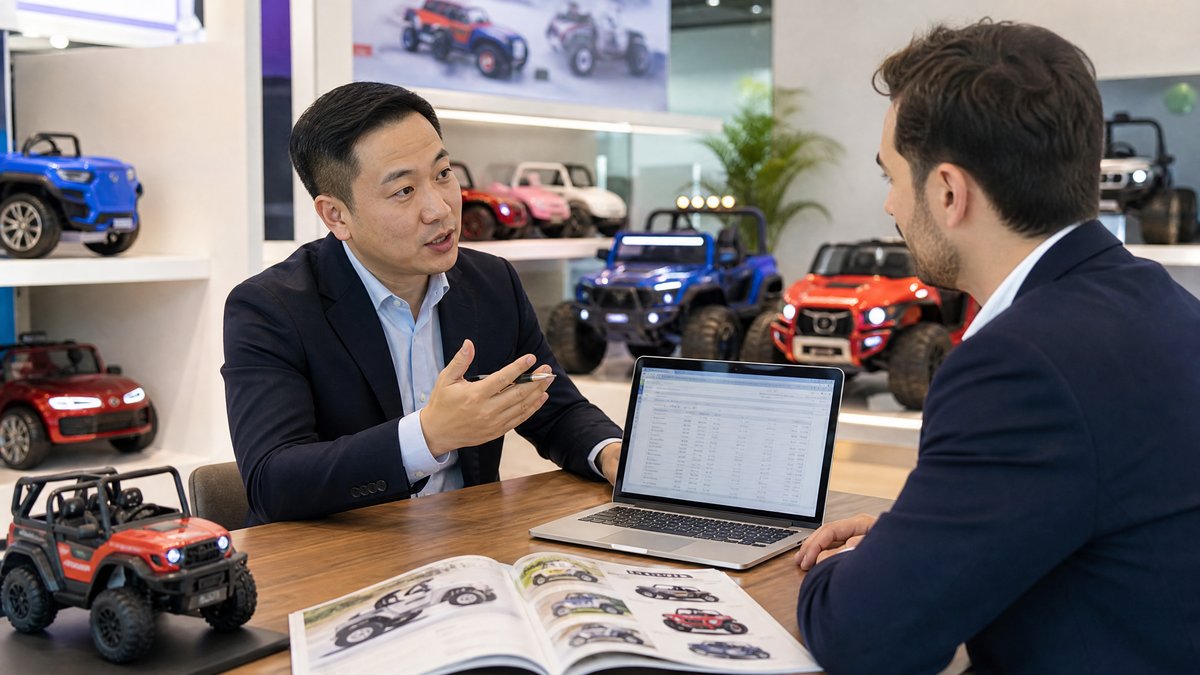
A credible manufacturer in this category will demonstrate factory verification through third-party audit reports (SGS, Bureau Veritas, Intertek), active certifications with visible lab names and report numbers, production capacity of 10,000+ units per month, and verifiable export history to your target market.
Step 3 — Understanding Pricing and Total Landed Cost
The factory price (FOB price) is only one component of your total landed cost. The table below provides a representative cost structure for a 12V kids ride-on car ordered at 200 units FOB Shenzhen, shipped to a European distribution center:
| Cost Component | Estimated Range (per unit) | Notes |
|---|---|---|
| FOB Factory Price | $45–$65 | Varies by model, battery type, features |
| Ocean Freight (FCL 20ft) | $8–$14 | Depends on destination port, season |
| Import Duty (EU, HS 9503) | $4–$7 | ~6.5% of CIF value for most EU markets |
| Customs Clearance & Handling | $2–$4 | Agent fees, port handling |
| Local Delivery to Warehouse | $1–$3 | Depends on distance from port |
| Total Landed Cost | $60–$93 | Before VAT and local distribution |
"We regularly help buyers calculate their total landed cost before they finalize their order. A buyer in Germany recently discovered that switching from CIF to FOB terms saved them approximately $3.50 per unit on a 300-unit order." — KidsRideCar Export Team
Tell us your target market and quantity — we'll send you a tailored price list within 24 hours.
Send Your Requirements →Step 4 — Quality Inspection Before Shipment
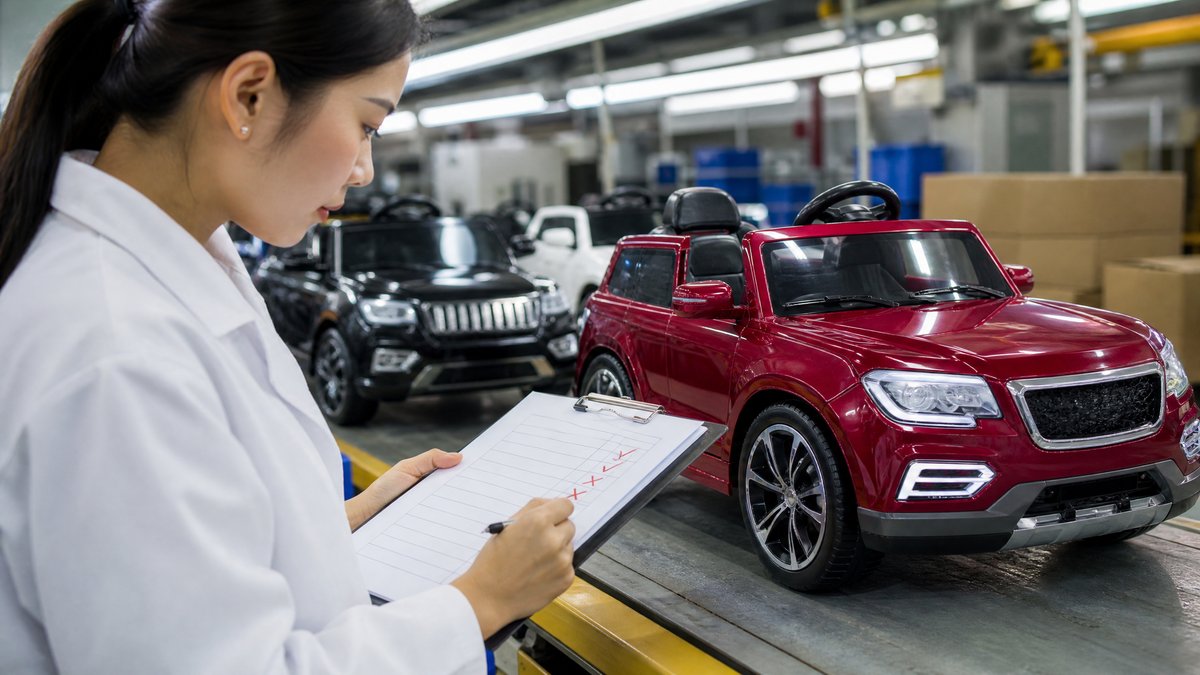
Pre-shipment inspection is non-negotiable for first-time orders. The cost of a third-party inspection (typically $250–$400 for a one-day factory visit) is trivial compared to the cost of receiving a container of defective or non-compliant products. A standard inspection covers quantity verification, appearance and finish, functional testing (every unit powered on for 2+ minutes), safety feature verification, packaging integrity, and certification document check.
Step 5 — Logistics and Documentation
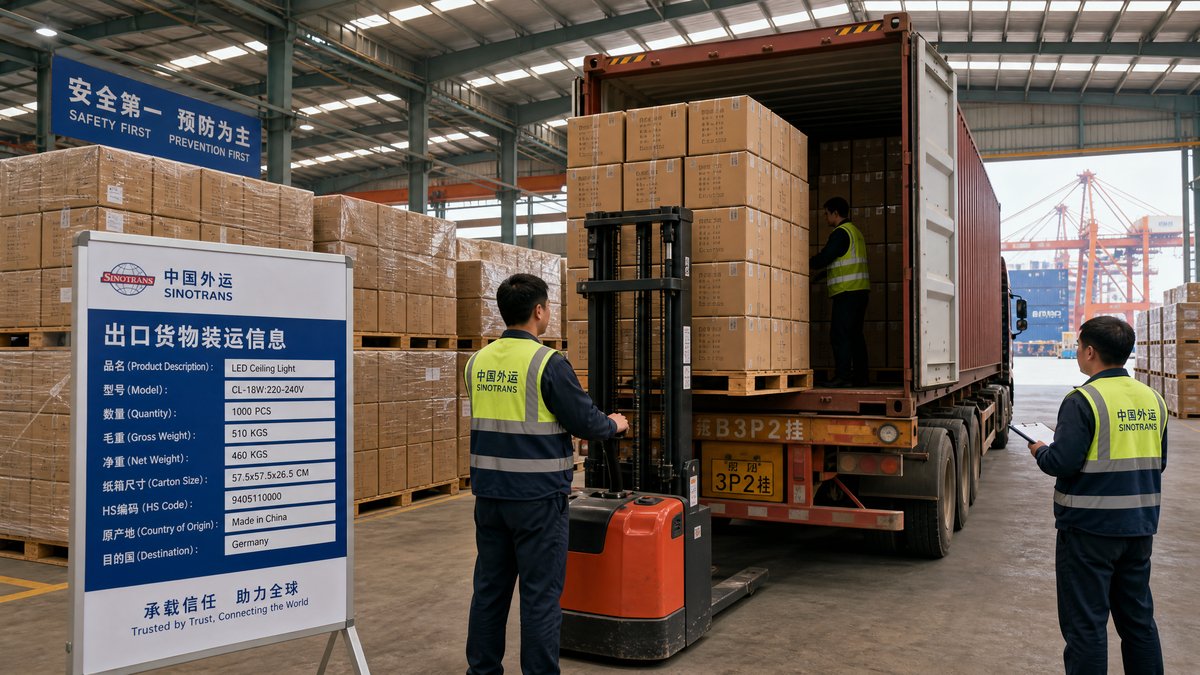
For first-time buyers, FOB (Free On Board) terms are generally recommended. A standard export shipment requires: Commercial Invoice, Packing List, Bill of Lading, Certificate of Origin, CE Declaration of Conformity, and Test Reports. Ensure all documents are in the format required by your customs broker before the vessel departs.
Frequently Asked Questions
What is the typical lead time for a first wholesale order?
For stock models with existing certifications, production lead time is typically 15–25 days after order confirmation and deposit payment. Add 25–35 days for ocean freight to Europe or North America. Plan for 50–65 days from order placement to warehouse receipt.
What is the minimum order quantity for OEM (custom logo) orders?
For logo application and branded packaging, the typical MOQ is 50–100 units depending on the model. For custom colors, MOQ is usually 100–200 units. Full mold customization (ODM) requires 500+ units.
How do I verify that a supplier's CE certificate is genuine?
Request the full test report, not just the certificate. A genuine EN71 test report will include the laboratory name, accreditation number, test dates, sample description, and detailed test results. You can verify the laboratory's accreditation status through the ILAC MRA database (ilac.org).
What payment terms are standard for first-time orders?
The most common terms are 30% deposit (T/T) before production and 70% balance before shipment. Letters of Credit (LC) are accepted by most factories for larger orders.
Sourcing kids electric ride-on cars from China is a well-established, low-risk process when approached systematically. The buyers who succeed are those who invest time in defining their requirements before contacting suppliers, who verify certifications rather than assuming them, and who treat pre-shipment inspection as a standard cost of doing business.
Official references
Explore these external resources for current regulatory and trade guidance. Confirm requirements with the relevant authority before placing an order.
Ready to Start?
Factory-Direct · CE & ASTM Certified · MOQ from 50 Units
Our export team works with buyers in 60+ countries. Get a quote within 24 hours.
China's leading kids electric ride-on car manufacturer. 500,000+ units shipped annually to 60+ countries. CE, ASTM & EN71 certified.