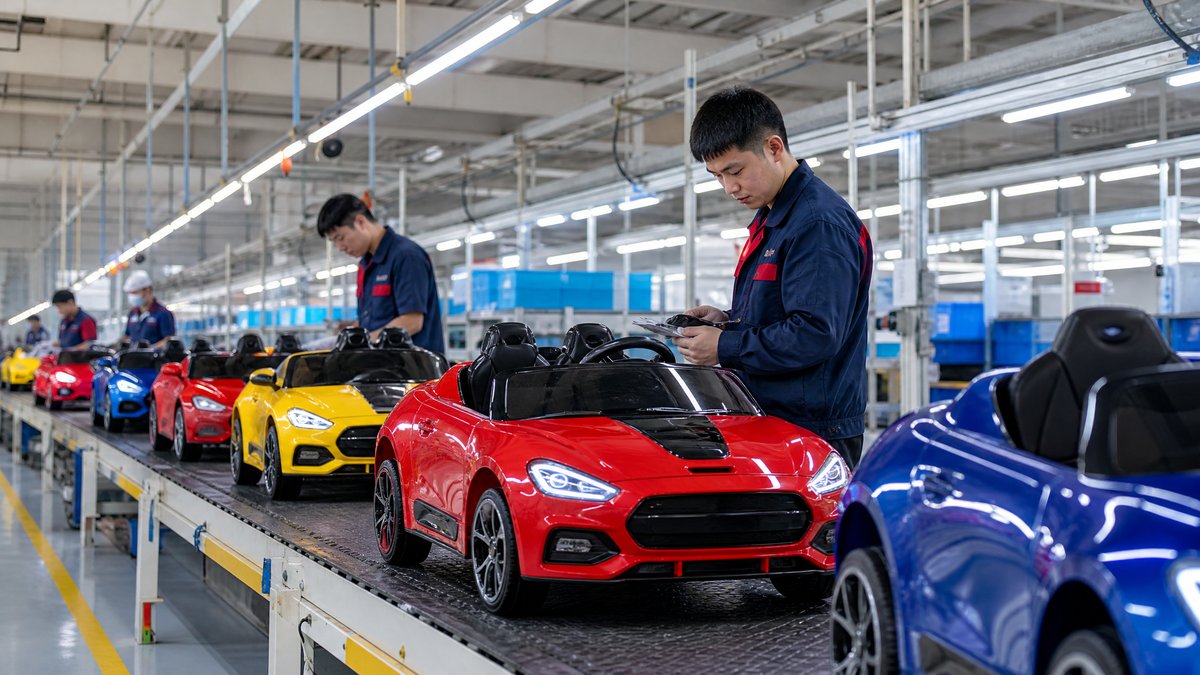
For professional entities involved in the global distribution and retail of children’s recreational vehicles, the precision of product specifications represents a fundamental pillar of operational excellence. When sourcing four-wheel vehicles designed for young riders, the verification of age suitability, physical proportions, and weight-bearing thresholds is not merely a logistical necessity but a core component of brand integrity and consumer satisfaction. This comprehensive guide outlines the professional methodologies for auditing these critical metrics through a lens of safety and structural assessment, tailored specifically for the needs of international importers and wholesale partners.
The process of verifying these specifications requires a transition from relying on simple catalog entries to a more rigorous, evidence-based approach. Importers must prioritize written supplier confirmation and current supplier evidence over verbal assurances. By establishing a robust framework for non-destructive assessment and external visual checks, businesses can ensure that the products they bring to market align perfectly with the expectations of their clientele and the requirements of their specific destination markets.
Understanding Age Range Verification
The determination of an appropriate age range for a four-wheel vehicle is a multifaceted process that combines developmental logic with safety-led assessments. For a professional buyer, understanding how a manufacturer arrives at these suggestions is vital for accurate marketing and inventory selection.
Developmental Suitability and Rider Fit
Age grading is often the first metric a consumer considers, yet for the importer, it must be viewed as a range of physical and cognitive milestones. A vehicle intended for a toddler requires vastly different control interfaces than one designed for an older child. When performing an external visual check of a new model, importers should look for intuitive layouts that match the target age group’s motor skills.
For the youngest riders, the presence of supportive seating and simplified steering mechanisms is essential. These features should be cross-referenced with written model documentation to ensure the vehicle provides a stable environment for those still developing their coordination. Conversely, models aimed at older children should offer more complex interaction points that challenge their growing capabilities while remaining within the bounds of safe operation.
Safety-Led Age Grading
Beyond developmental fit, age ranges are heavily influenced by safety considerations. Vehicles designed for children under a certain age threshold are often subject to more stringent requirements regarding small parts and accessible points. Importers should request current supplier evidence that specifically addresses the age grading through the lens of safety standards applicable to their region.
Instead of looking for specific official markings, which are often subject to change, the focus should be on appropriate product markings and documented verification from the manufacturer. This documentation should provide a clear rationale for the suggested age range, citing the physical properties of the vehicle that make it suitable for that specific demographic. If the documentation appears inconsistent with the physical product, it is prudent to stop use if there is a concern and seek qualified support.
Verifying Physical Dimensions for Logistics and Fit
Physical dimensions are the primary drivers of both the user experience and the landed cost of the product. For the importer, these figures must be verified with absolute precision to avoid logistical discrepancies and ensure the vehicle fits its intended environment.
External Measurement Protocols
When assessing the physical size of a four-wheeled vehicle, it is important to distinguish between the overall footprint and the internal usable space. The overall length, width, and height determine how many units can be stored in a warehouse or transported in a shipping container. Importers should utilize a manual-led setup to conduct their own non-destructive assessment of these dimensions upon receiving a sample.
These measurements should be compared against the written supplier confirmation. Even a small variance in the external dimensions can have a significant impact on the stacking efficiency within a shipping vessel. By conducting a thorough external visual check of the packaging and the assembled unit, importers can identify any potential for dimensional growth where the actual product exceeds the quoted sizes.
Cabin and Seating Verification
For the end-user, the most important dimensions are those that dictate comfort and fit. The internal cabin width and the distance from the seat to the control pedals are critical for ensuring a positive rider experience. A vehicle that is marketed as a two-person model must have sufficient lateral space to accommodate two children side-by-side without compromising their ability to operate the vehicle.
Importers should request detailed technical drawings as part of the written model documentation. These drawings should highlight the internal clearance and seating proportions. During a physical audit, a non-destructive assessment should be performed to confirm that these internal spaces match the documentation. This ensures that the marketing materials provided to retailers are accurate and that the product will meet the physical needs of the target audience.
Assessing Weight-Bearing Capability
The ability of a vehicle to support a specific weight is a direct reflection of its structural integrity and material quality. In the commercial sector, this is often referred to as the weight-bearing threshold, and it is one of the most important safety metrics to verify.
Structural Integrity and Material Quality
A vehicle’s weight-bearing ability is determined by the strength of its chassis and the quality of the polymers used in its construction. Importers should look for signs of reinforced structures during an external visual check. High-density materials and internal ribbing within the plastic components are indicators of a robust design capable of handling the stresses of regular use.
It is important to note that the weight-bearing threshold is not just about the vehicle’s ability to remain upright; it also impacts the longevity of the internal components. While importers should never attempt to access the internal power storage area or mechanical parts, they can observe the vehicle’s performance under the guidance of adult supervision. If a vehicle appears to struggle or show signs of physical stress when carrying a weight near its suggested limit, this is a clear signal to stop use if there is a concern.
Documentation-Led Verification of Strength
Because the internal mechanics of a ride-on car are complex, importers must rely heavily on written supplier confirmation regarding the vehicle's strength. This documentation should include the results of various stress tests performed by the manufacturer. These reports provide the necessary evidence that the vehicle can safely support the intended rider weight without risk of structural failure.
When reviewing these reports, importers should ensure that the evidence is current and pertains specifically to the model being sourced. The documentation should outline the methods used for the assessment, providing a clear picture of how the weight-bearing threshold was determined. This evidence serves as the foundation for the importer's own safety claims and helps to build trust with retail partners and consumers alike.
Sourcing and Verification Framework
To assist professional buyers in their due diligence, the following framework outlines the key areas of focus when verifying product specifications. This approach prioritizes documentation and external observation to ensure safety and accuracy.
| Verification Area | Primary Method | Documentation Needed | Business Impact |
|---|---|---|---|
| Age Suitability | Developmental fit check | Written model documentation | Marketing accuracy |
| External Size | Non-destructive assessment | Written supplier confirmation | Logistical efficiency |
| Internal Space | Manual-led measurement | Technical drawings | Consumer satisfaction |
| Weight Threshold | Structural visual check | Current supplier evidence | Safety and durability |
| Packaging Size | External visual check | Final packing list | Shipping cost control |
| Material Quality | Surface inspection | Material safety data | Brand reputation |
| Operational Logic | Adult-supervised trial | User manual | Support requirements |
Safety and Maintenance Boundaries
Maintaining a clear boundary between user-level checks and professional-level maintenance is essential for the safe operation of children’s vehicles. Importers and retailers must communicate these boundaries clearly to their customers.
The Role of External Visual Checks
All routine assessments performed by the importer or the end-user should be limited to external visual checks. This includes inspecting the exterior of the vehicle for any signs of wear, ensuring the wheels are securely attached, and verifying that all appropriate product markings are visible and legible. These checks are non-invasive and do not require any tools or access to internal components.
A manual-led setup is the only approved method for preparing a vehicle for use. The instructions provided by the manufacturer should be followed precisely, and no attempts should be made to alter the vehicle’s original design. If any part of the setup process is unclear, the user should seek manufacturer-approved support rather than attempting a manual adjustment.
Professional Support and Qualified Technicians
There are clear limits to what can be achieved through external observation. Any issues related to the internal power storage area, the electrical potential of the system, or the mechanical halting mechanisms must be handled by qualified support. Importers should never encourage retailers or consumers to perform structural adjustments or attempt to access the internal mechanics of the vehicle.
If a vehicle exhibits unusual behavior, such as a loss of power or inconsistent movement, the correct course of action is to stop use immediately. The vehicle should be set aside, and the manufacturer should be contacted for further guidance. By adhering to these strict safety boundaries, importers can protect their customers and ensure that all technical issues are resolved by those with the necessary expertise and equipment.
Frequently Asked Questions
Q: How can I be sure the age range provided by the manufacturer is accurate for my market?
A: The best way to verify age suitability is to combine a review of the written model documentation with a physical fit assessment using a sample unit. Compare the internal dimensions and the complexity of the controls against the developmental milestones typical for your target demographic. Additionally, ensure the product carries the appropriate product markings required by your specific destination-market requirements.
Q: What should I do if the physical dimensions of the delivered product differ from the initial quote?
A: If a discrepancy is discovered during a non-destructive assessment of the shipment, you should document the findings with clear photos and contact your supplier immediately. Refer to the written supplier confirmation and the final packing list to identify where the error occurred. Do not attempt to adjust the packaging or the product to fit your logistical needs; instead, seek a resolution through manufacturer-approved support.
Q: Is it safe to exceed the suggested weight-bearing threshold if the vehicle seems sturdy?
A: No, it is never advisable to exceed the weight-bearing threshold established by the manufacturer. Doing so can place undue stress on the structural integrity of the vehicle and its internal components, potentially leading to a failure of the halting mechanisms or other safety features. For the safety of the rider, always adhere to the limits outlined in the written model documentation and stop use if there is a concern regarding the vehicle's performance.
Q: How often should the external visual checks be performed on showroom models?
A: For vehicles on display, an external visual check should be conducted at the start of each business day. This ensures that all components remain secure and that no damage has occurred during handling. Any vehicle that shows signs of wear or structural stress should be removed from the floor and inspected by a qualified professional to ensure it still meets the necessary safety standards.
For wholesale partners, the journey of sourcing high-quality children’s vehicles is one of continuous verification and commitment to safety. By focusing on documented evidence and rigorous external assessments, importers can build a portfolio of products that not only meet the physical needs of their market but also uphold the highest standards of quality and reliability. Working with a dedicated manufacturer ensures that you have access to the written supplier confirmation and technical support needed to succeed in this competitive industry.
Request a wholesale quote
Official references
Explore these external resources for current regulatory and trade guidance. Confirm requirements with the relevant authority before placing an order.
Ready to Start?
Factory-Direct · CE & ASTM Certified · MOQ from 50 Units
Our export team works with buyers in 60+ countries. Get a quote within 24 hours.
KR
Written by KidsRideCar
China's leading kids electric ride-on car manufacturer. 500,000+ units shipped annually to 60+ countries. CE, ASTM & EN71 certified.