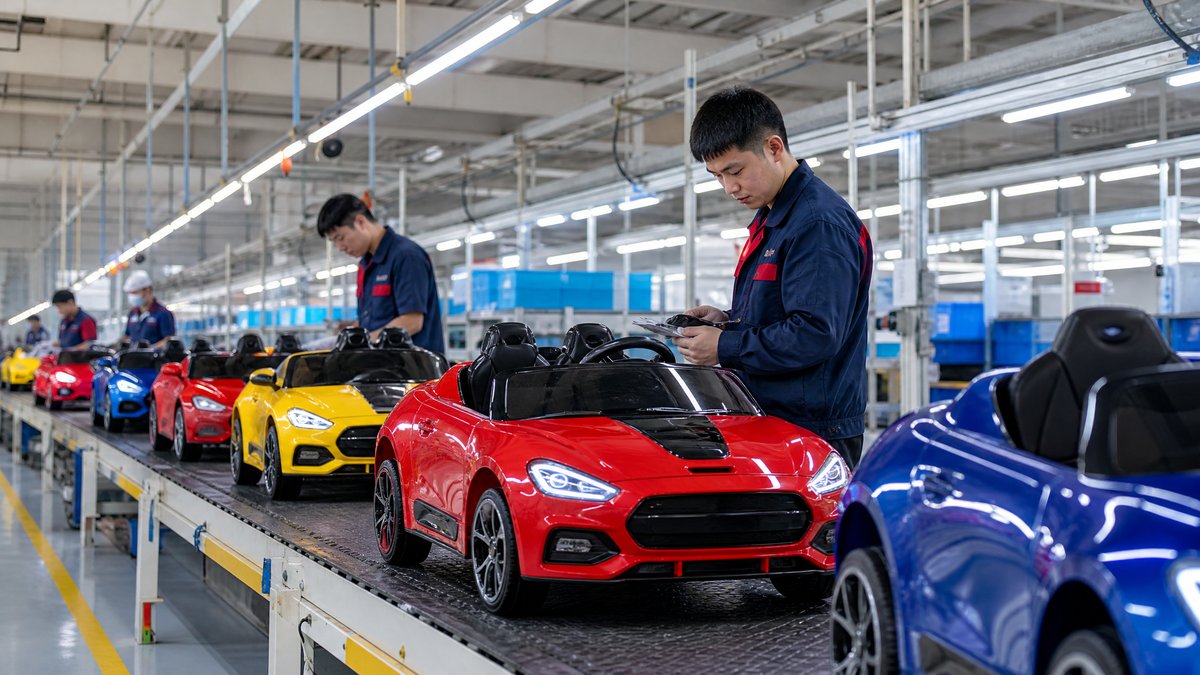
A kids electric ride-on car product recall readiness plan should enable your business to identify affected units, control distribution, reach contacts, document decisions, communicate clearly, and coordinate with authorities. It should be usable before a safety concern becomes a public event. For importers, wholesalers, distributors, retailers, and OEM buyers, the point is a tested path for credible product-safety information.
The plan does not decide in advance that a product is defective or that a recall is required. It establishes how the business will collect facts, protect consumers, and make informed decisions with relevant partners and authorities. A party’s responsibilities can vary by destination market and supply-chain role, so buyers should verify current requirements with the responsible authority. U.S. Consumer Product Safety Commission guidance also emphasizes the value of planning in advance and working promptly when a recall is needed. [1]
Define scope, ownership, and decision authority
Define what opens an incident record: a credible complaint, repeated quality signal, inspection finding, supplier alert, marketplace inquiry, or logistics report. Opening a record does not decide cause; it moves facts into controlled review.
Name an incident owner and at least one alternate. A small importer may use a product-safety lead supported by quality, customer service, operations, and commercial colleagues. A larger distributor may assign a cross-functional response group. The plan should show who can authorize a temporary inventory hold, pause an online listing, request OEM records, approve a holding response, and contact a regulator or marketplace.
Document authority limits. Sales staff should not decide alone on stock availability, and customer service should not diagnose technical problems. The escalation route must work outside normal hours and record each decision.
For children’s products, use cautious, model-neutral language. Do not tell consumers to open battery compartments, alter wiring, bypass a feature, or attempt a repair unless there is a safe, product-specific instruction approved by the manufacturer and reviewed for the relevant market. While an issue is assessed, approved messaging should reinforce adult supervision and the product’s existing instructions.
Build traceability from complaint to consignee
Traceability is the core operational requirement. If a buyer cannot determine which units may be involved, it may need to hold broader stock or delay targeted outreach while records are rebuilt. The OECD recommends product identifiers and tracking and traceability information that can be made available to relevant government bodies, as appropriate. [2]
Maintain a product identity file
Keep a controlled identity file for every ride-on car model and material configuration. It should link the commercial SKU to the model name or number, color or trim variation, production or shipment lot when used, date range, and packaging identifier. Keep the instruction manual and label version associated with that configuration. If a component revision may be relevant, the file should distinguish it without making staff rely on a customer photo or memory.
For an electric ride-on car, connect the vehicle in records to separately supplied components, such as a charger, battery pack, remote control, or replacement part, where relevant. Preserve enough information to identify likely scope and route to market.
Before placing purchase orders, ask the OEM which identifiers appear on the unit, carton, labels, and shipment documents. Agree how the OEM will provide production, inspection, and configuration records if an issue is escalated. Do not assume a product name alone differentiates every version. A buyer should be able to compare a complaint with records and state what is confirmed, what is being checked, and which units are potentially in scope.
Map inventory and distribution movement
Traceability must continue after the factory handoff. Preserve a reconciliation trail from inbound shipment to warehouse receipt, transfer, sale, return, or other recorded disposition. The plan should identify the system or owner for purchase orders, invoices, packing lists, bills of lading, warehouse receiving records, lot locations, sales orders, dealer allocations, marketplace fulfillment, and returns data.
A wholesaler selling to independent retailers needs a consignee list linking accounts to supplied quantities and identifiers. A retailer needs to know which store, fulfillment center, or online channel received stock. E-commerce systems should identify affected purchasers through relevant order data, subject to privacy obligations and platform arrangements.
Test the process with a tabletop exercise. Select an earlier shipment and identify potentially affected units, locations, customers, and consumer contact pathways. Log data gaps, correct the process, and repeat. A spreadsheet that cannot be found during an incident is not a traceability system.
Keep contact lists and channels ready
Maintain a controlled contact directory outside individual inboxes. Include each person’s role, organization, phone number, email, time zone, backup contact, and verification date. Cover internal decision-makers, the OEM or manufacturer, relevant component suppliers, warehouse and freight providers, retailers and dealers, marketplace contacts, insurers or advisers where designated, and destination-market authority contacts or official reporting portals.
Assign an owner to verify the list after personnel changes and routinely. Keep an emergency version accessible to the response team while protecting personal information. A single general supplier email address is rarely enough for urgent fact-finding.
Also prepare communication routes. Based on the sales model, these may include direct email, order messages, dealer outreach, marketplace tools, point-of-sale notices, a website notice, call-center scripts, and social-media posts. The final mix should fit the confirmed scope, severity, available customer data, and authority guidance. OECD guidance calls for timely, clear, accurate, accessible safety information and mechanisms to identify and contact affected consumers without delay. [2]
If you source for several countries, identify translation and local contact owners before an incident. A notice should be understandable to a parent, caregiver, or gift recipient who may not know technical terminology.
Set up incident intake, escalation, and containment
Use one intake route for potential safety concerns. Tell employees and business partners where to send a report and what to capture: reporter details, product identifiers, purchase or shipment information, event date and location, a factual description, and photographs or video if voluntarily provided. Record facts as reported. Do not assign a root cause before it is evaluated.
Use a documented escalation ladder
Set triggers for immediate product-safety review. Examples can include a reported injury, smoke, overheating, unexpected movement, a concern involving a restraint component, repeated similar complaints, a supplier alert, or a regulator or marketplace inquiry. These signals do not by themselves establish that a recall is required. They prevent important information from remaining in a routine service queue.
The incident owner should preserve original reports and relevant system records, notify the designated team, and decide whether interim control is appropriate. A temporary stock hold, paused listing, or instruction to segregate specified inventory may be considered based on known facts. Document the action’s scope, start time, approver, and reason. Do not broaden or lift a hold through an undocumented verbal decision.
Maintain an escalation log with timestamps for receipt, internal notices, decisions, supplier requests, customer contact, and authority communications. Include open questions and one owner for each. This avoids the false impression that a case is complete when the team is awaiting a lot list, test result, or OEM response.
Do not offer an unapproved remedy during the first customer interaction. Depending on the facts and authority coordination, corrective action can include a warning, return, replacement, repair, or public notice. CPSC describes corrective action plans as potentially involving these measures. [1] The eventual remedy should be safe, practical, and consistent with current instructions from the manufacturer and responsible authorities.
Preserve records and measure response
Good records show what the team knew, did, and learned. Preserve the original complaint, product and shipment records, supplier correspondence, notices and scripts, approvals, hold instructions, outreach metrics, and closure rationale. A secure incident folder with version history connects evidence and decisions to one case.
If physical evidence is retained, log its location and chain of custody. Do not alter, dispose of, or return a potentially relevant sample without a documented decision and applicable guidance. Your plan should also identify the retention schedule relevant to your markets, contracts, product category, and business role, and state when ordinary deletion must stop. OECD guidance encourages adequate production and quality-control records that can be made available to government bodies where appropriate. [2]
Measure whether outreach is working. Track units in scope, stock confirmed on hold, accounts contacted, notices delivered where measurable, consumer responses, products returned or otherwise accounted for, and unresolved units. These are management measures, not a promise that every unit will be recovered. Review results with the relevant authority or partners where appropriate and adjust the approach if response is weak.
Prepare clear recall communications
A readiness plan should contain templates, an approval route, and a fact-check list, not a prewritten conclusion. A consumer notice should plainly state the affected product, how to identify it, the confirmed hazard or concern, immediate safe-use direction, the approved next step or remedy, contact information, and any required authority language. Avoid vague headlines that conceal the reason for the notice.
Use identifiers consumers can see: product name, model or SKU, date or lot range when relevant, visible distinguishing details, and retailer or sales-channel information. Make the requested action prominent. If an approved interim message says consumers should stop using a product pending further instruction, state that clearly. Do not speculate about cause, minimize a report, or blame another party in public copy.
Prepare separate operational instructions for dealers, retailers, marketplaces, warehouse teams, and customer service. They may need to stop sales, isolate stock, prevent resale or redistribution, manage queries, and return information to the incident owner. These instructions must be reviewed for the actual event. They should never direct staff or consumers to modify a vehicle, battery, charger, or electrical system without manufacturer approval.
For help aligning sourcing documentation with an OEM-facing response workflow, contact KidsRideCar. Recall readiness is easier to establish before stock is distributed across multiple channels.
Coordinate with authorities, carriers, and partners
Authority coordination begins as soon as there is a credible issue, not after every internal question is answered. First identify each destination market. Then verify its current reporting, notification, product-safety, and record-sharing expectations with the responsible authority. In the EU, Safety Gate is the rapid-alert system through which the Commission and national authorities share information on dangerous non-food products. [3] This does not replace checking the rules that apply to your own role and country.
Prepare a factual briefing pack for authorities and supply-chain partners. It can include product identity, distribution scope, known incident information, photos and labels, supplier and consignee contacts, stock status, and proposed customer communications. Designate one official point of contact and a deputy. Share version-controlled facts securely, and correct a material error promptly if one is found.
The OEM may hold production data, the importer may hold entry and distribution records, and a retailer or marketplace may provide a route to purchaser communication. Cooperate on evidence and scope without allowing a commercial dispute to delay safety action. Where a ride-on car or accessory contains batteries, confirm current destination-market and battery-transport requirements with responsible authorities and relevant carriers. Do not assume a routine returns method is appropriate for every battery-related situation.
A buyer-ready checklist
Before launch, ask the OEM to demonstrate traceability. Confirm product and carton identifiers, the link to shipment records, the safety escalation contact, and the method for receiving updated safety information. Set cooperation, record-access, and communication expectations in supply and channel agreements.
Appoint the incident owner, validate the contact tree, save templates, and rehearse a mock complaint. Confirm that product, warehouse, e-commerce, operations, and customer-service teams can apply a temporary hold in their actual systems. Review the plan after a product, market, channel, staff, or exercise change.
To discuss documentation expectations for a ride-on car supply program, email info@kidsridecar.com. The right plan should reflect your product configuration, sales model, and destination markets.
FAQ
Is a recall readiness plan only for manufacturers?
No. Importers, wholesalers, distributors, retailers, marketplace sellers, and OEM buyers may each hold information or control a step that matters during an incident. Define your own role, records, contacts, and escalation path, then link them to your trading partners’ responsibilities.
What makes a ride-on car traceable?
Useful information usually includes a visible product identifier, model or configuration details, a relevant lot or shipment reference where used, carton and receiving records, and sales or consignee records. Test whether a complaint can be matched to inventory and customer contact pathways without relying on memory.
Should we wait for a confirmed root cause before escalating a complaint?
No. Escalate credible safety information under the internal plan while facts are investigated. Record what is confirmed and what remains uncertain. Early escalation supports evidence preservation and an informed decision about interim control; it does not determine the cause or legal outcome.
Can customer service tell a parent how to fix the car?
Only if there is a manufacturer-approved, product-specific instruction that has been reviewed for the situation and market. Otherwise, customer service should use approved scripts, collect facts, and direct the consumer to the authorized next step. Never improvise instructions to alter safety-related or electrical parts.
How often should the plan be tested?
Test it before launch and revisit it after material changes to products, markets, systems, partners, or personnel. A short tabletop exercise often exposes missing contacts, unavailable records, unclear decision rights, or gaps between warehouse and e-commerce procedures.
Conclusion
A recall readiness plan for kids electric ride-on cars should make six things dependable: traceability, contacts, escalation, records, communication, and authority coordination. Build it around verifiable data and tested ownership. For every destination market, verify current product-safety, notification, and battery-transport requirements with the responsible authority or carrier, and use only manufacturer-approved instructions for product changes or repairs.
References
[1]: https://www.cpsc.gov/Business--Manufacturing/Recall-Guidance/How-to-Conduct-a-Recall "U.S. Consumer Product Safety Commission: How to Conduct a Recall"
[2]: https://legalinstruments.oecd.org/en/instruments/OECD-LEGAL-0459 "OECD Recommendation of the Council on Consumer Product Safety"
[3]: https://commission.europa.eu/topics/business-and-industry/product-safety_en "European Commission: Product Safety"
Official references
Explore these external resources for current regulatory and trade guidance. Confirm requirements with the relevant authority before placing an order.
Ready to Start?
Factory-Direct · CE & ASTM Certified · MOQ from 50 Units
Our export team works with buyers in 60+ countries. Get a quote within 24 hours.
KR
Written by KidsRideCar
China's leading kids electric ride-on car manufacturer. 500,000+ units shipped annually to 60+ countries. CE, ASTM & EN71 certified.