Introduction
The global market for children’s ride-on cars is undergoing a significant transformation, driven by technological innovation and shifting consumer expectations. As the demand for high-tech, safe, and realistic electric vehicles for children grows, the pressure on retailers and wholesalers to source from reliable manufacturers has never been higher. For a ride-on car dealer, the supplier you choose is more than just a source of inventory; they are a critical partner in your business's reputation, legal compliance, and long-term profitability.
Accepting a new supplier is a high-stakes decision that requires a sophisticated balance of professional intuition and rigorous, data-driven vetting. A poor choice can lead to devastating consequences, including large-scale safety recalls, customs seizures at the port of entry, damaged brand equity, and significant financial loss. Conversely, a strong partnership with a professional manufacturer can provide a definitive competitive edge through continuous innovation, consistent quality assurance, and reliable after-sales support. This guide outlines the essential questions and evaluation criteria every B2B buyer—whether a wholesaler, importer, or retail chain—should use when vetting a new ride-on car supplier to ensure a sustainable and profitable business model.
The Strategic Importance of Supplier Vetting
Unlike static toys, electric ride-on cars are complex electromechanical products involving battery systems, electric motors, and remote control electronics. This complexity introduces unique risks that must be managed at the source. When evaluating a supplier, you are looking for operational excellence, regulatory transparency, and specification integrity.
A professional vetting process allows a dealer to move beyond marketing claims and understand the true capabilities of a manufacturing partner. In an industry where "look-alike" products are common, the difference between success and liability often lies in the "invisible" engineering and the supplier's commitment to global safety standards.
Pillar 1: Technical and Manufacturing Capability
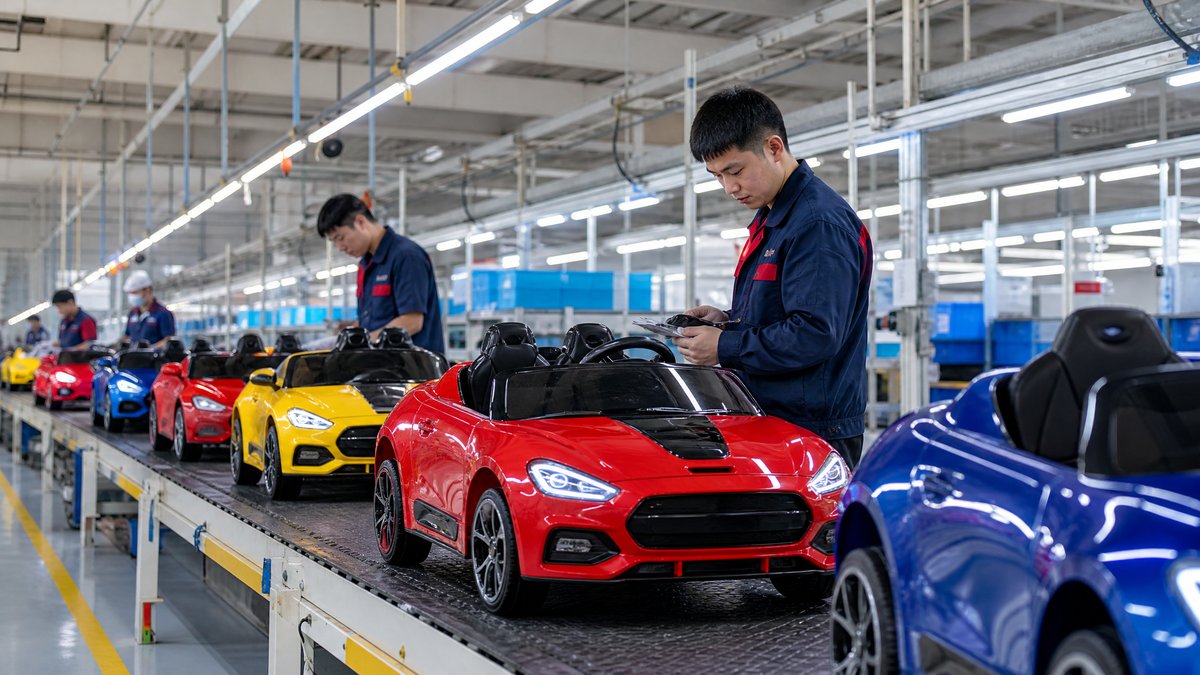
A dealer must understand if a supplier has the actual capacity and expertise to produce goods to the required standard. The manufacturing landscape ranges from small assembly workshops to highly automated, vertically integrated factories.
1.1 Specialization and R&D Focus
Priority should be given to specialist manufacturers who dedicate the vast majority of their resources specifically to electric ride-on vehicles. Specialists maintain deep relationships with component suppliers for PCBs, remote systems, and wiring harnesses, ensuring higher reliability. Furthermore, a specialist manufacturer is better positioned to lead the market with innovative features like advanced suspension systems or improved motor efficiency. Ask about their history of product development and how they integrate new technologies into their lines. A partner with a consistent track record of innovation will help you stay ahead of consumer trends.
1.2 Factory Audits and Operational Transparency
A professional manufacturer should be willing to share documentation validating their operational standards. Look for manufacturers who maintain recognized quality management systems, such as ISO 9001. For dealers targeting major retail chains, audits like the ICTI Ethical Toy Program or BSCI are crucial, ensuring products are manufactured in safe, ethical environments. Always verify the authenticity of these reports by checking certificate numbers with the issuing bodies or third-party auditors like SGS or TÜV Rheinland.
1.3 Production Capacity and Scalability
Understanding a supplier's production capacity is essential for managing inventory and scaling your business. Inquire about the number of dedicated assembly lines and the factory's approach to quality control during high-volume periods. A reliable partner will have clear protocols for maintaining quality standards even when production is at full capacity. Discuss lead times in a realistic context; they should align with industry norms for complex electromechanical goods. Be cautious of exceptionally short lead times, which may indicate a lack of rigorous quality control.
| Capability Metric | Why It Matters for Dealers | Key Verification Method |
|---|---|---|
| Specialization | Ensures technical expertise in electric drive systems. | Review product catalog and R&D history. |
| Audit Reports | Validates internal quality and ethical standards. | Request and verify ISO/ICTI/BSCI certificates. |
| Production Capacity | Confirms ability to fulfill large wholesale orders. | Inquire about assembly lines and monthly output. |
| Tooling Ownership | Ensures design consistency and protects IP. | Confirm ownership of molds for core models. |
Pillar 2: Safety Compliance and Documentation
In the global B2B toy trade, compliance is a fundamental requirement for market entry. Importing non-compliant goods can result in catastrophic financial losses and legal liabilities.
2.1 Market-Specific Requirements
Every major market has its own safety standards. A professional supplier should be familiar with the requirements of your target market and provide necessary supporting documentation. For North America, this includes compliance with standards like ASTM F963 and reports for the Children’s Product Certificate (CPC). In the European Union, compliance with EN71 and EN62115 is mandatory, along with CE marking and chemical safety regulations like REACH and RoHS. Request full third-party test reports issued by accredited laboratories rather than just summaries.
2.2 Battery and Charger Safety
The battery and charger are safety-critical components. Faulty systems can lead to overheating or fire hazards, while non-compliant chargers pose electric shock risks. Ensure all batteries have undergone necessary safety testing for transport and use, and that chargers carry appropriate safety marks (such as UL, GS, or SAA). These components must be treated as a matched system; using unauthorized chargers can compromise safety. Always advise customers to follow provided instructions and request official documentation for technical queries.
2.3 Licensing and Intellectual Property
Clarify the licensing status of products that resemble well-known automotive brands. Licensed products are officially authorized by car manufacturers (like Mercedes-Benz or BMW) and are held to higher quality standards. Selling unlicensed "look-alike" products carries risks of trademark infringement and inventory seizure. Prioritize suppliers who can provide proof of licensing agreements for any branded designs to protect your business and ensure product legitimacy.
Pillar 3: Product Engineering and Specification Integrity
Dealers must move beyond aesthetic appeal and verify the technical specifications and engineering quality of the vehicles they are sourcing.
3.1 Drive Systems and Energy Storage
The performance of a ride-on car is determined by its motor and battery configuration, which should be evaluated as a complete system. A professional manufacturer will match motor power and battery capacity to the vehicle's weight and intended use. Look for high-quality components and integrated safety features like overload protection. For high-end models, advanced battery management systems (BMS) are a sign of prioritizing safety and long-term reliability. Request detailed technical data sheets describing the electrical architecture.
3.2 Material Selection and Structural Integrity
Durability depends heavily on material quality. Professional manufacturers typically use virgin polypropylene (PP) for the bodywork, offering a superior balance of flexibility and strength. The chassis should be designed to handle operational stresses across various surfaces. Also, consider the quality of finishes, whether injection-molded or painted. High-quality interior features like ergonomic seating reflect the manufacturer's attention to detail and commitment to a premium user experience.
3.3 Safety-First Engineering
Professional manufacturers incorporate "invisible" safety features like "soft-start" technology for smooth acceleration and parental remote control overrides. Other important features include automatic braking systems and secure seatbelt configurations. Ask how these features are integrated and what testing protocols are used to ensure their reliability. A manufacturer that can articulate their safety-first engineering philosophy is a valuable partner.
Pillar 4: Logistics and Supply Chain Management
The cost-effectiveness of your strategy depends on the efficiency and reliability of the supply chain.
4.1 Packaging Standards
Ride-on cars are bulky and susceptible to damage during transit. High-quality packaging is essential for minimizing return rates. A professional supplier will use multi-layered, reinforced corrugated cardboard and internal protective materials like molded foam. For e-commerce, inquire about "mail-order packaging" tested to withstand individual parcel delivery rigors. Ask if packaging meets international standards for drop testing and vibration resistance.
4.2 International Logistics and Incoterms
Successful partnerships require a clear understanding of logistics and responsibilities. Dealers should be familiar with standard Incoterms like FOB or CIF and choose the option that suits their capabilities. An experienced manufacturer will be familiar with documentation required for international shipping and customs clearance, providing accurate packing lists, commercial invoices, and certificates of origin.
4.3 Inventory and Order Management
Managing inventory risk is a top priority. While manufacturers have minimum order quantities (MOQ), a flexible partner may offer options for mixed-container loads. This allows stocking a variety of models without over-committing to a single SKU. Look for a supplier willing to build a sustainable inventory strategy and support your growth through flexible ordering options.
Pillar 5: Long-term Partnership and After-Sales
A professional manufacturer views the sale as the beginning of a partnership.
5.1 Spare Parts and Technical Support
Reliable suppliers maintain a consistent and accessible stock of essential spare parts—such as drive motors, electronic controllers, and safety-certified chargers—and ensure they can be provided to their dealers in a timely manner to minimize downtime. When evaluating a supplier, ask about their specific policy for spare parts availability and how long they commit to supporting a model after it has been discontinued from active production. Professional manufacturers should provide clear, detailed technical documentation and assembly instructions to their partners. For any complex technical issues or maintenance requirements, dealers should always access authorized service support and follow official manufacturer guidance rather than attempting unauthorized repairs or modifications, which can compromise the safety and integrity of the vehicle.
5.2 Warranty and Risk Mitigation
A clear warranty policy is a hallmark of a professional manufacturer. Understand how manufacturing defects are addressed, whether through replacement parts or credits. Discuss the manufacturer's approach to risk mitigation, including protocols for product recalls and batch traceability. A partner with a clear plan for resolving safety issues is essential for protecting your customers and reputation.
5.3 Inspection and Financial Security
For initial large orders, many dealers use third-party inspection services to verify quality before final payment. A professional manufacturer will welcome these inspections. Payment terms should be discussed transparently, typically involving a deposit to initiate production with the balance paid against shipping documents. Openness to clear, documented processes indicates a commitment to a professional partnership.
Conclusion
Accepting a new supplier is a strategic investment that defines the long-term trajectory of your business. By asking the right questions regarding manufacturing infrastructure, safety compliance protocols, product engineering integrity, and after-sales support frameworks, ride-on car dealers can significantly reduce their operational risk and build a more resilient and profitable operation. In the modern global marketplace, it is essential to prioritize long-term value, safety, and transparency over the lowest possible initial cost. The hidden costs of a poor supplier relationship—ranging from regulatory fines to lost customer trust—far outweigh any short-term savings. Professional manufacturers like KidsRideCar understand these concerns and are prepared to provide the comprehensive documentation and technical support that modern B2B buyers require to thrive. Conducting thorough due diligence today is the most effective way to lay the foundation for a successful and sustainable partnership tomorrow.
Frequently Asked Questions
Q: How can I verify if a supplier's safety certificates are valid for my market?
A: Always request full, original test reports from recognized third-party laboratories rather than just summary certificates. Verify the report's authenticity by contacting the laboratory directly or using their online portals. Cross-reference the standards in the report with current requirements from your local regulatory authorities.
Q: What is the best way to assess build quality without visiting the factory?
A: Request a physical pre-production sample. Perform a comprehensive evaluation of the assembly, material finish, and operational performance. Check for structural rigidity and electrical connection quality. A professional supplier will provide samples as part of the vetting process.
Q: How should a dealer handle technical issues or repair requests?
A: Always refer to the official manufacturer's documentation and user manuals. For issues requiring technical intervention, contact the manufacturer's authorized service support. Avoid unauthorized modifications or internal inspections, such as opening battery compartments or altering wiring, as these void warranties and compromise safety.
Q: Why is it important for a manufacturer to own their own production molds?
A: Molds are a significant investment and indicate a manufacturer's commitment to a product line. Ownership ensures greater control over consistency and quality, reduces the risk of IP disputes, and ensures you receive a unique, well-engineered product rather than a generic assembly.
Q: What documentation should I request regarding batteries?
A: Request the UN38.3 test report for safe transport and the Material Safety Data Sheet (MSDS). These provide critical information on chemistry, handling, and safety protocols. Ensure battery specifications align with the vehicle's intended use and your target market's safety standards.
Request a wholesale quote
Official references
Explore these external resources for current regulatory and trade guidance. Confirm requirements with the relevant authority before placing an order.
Ready to Start?
Factory-Direct · CE & ASTM Certified · MOQ from 50 Units
Our export team works with buyers in 60+ countries. Get a quote within 24 hours.
KR
Written by KidsRideCar
China's leading kids electric ride-on car manufacturer. 500,000+ units shipped annually to 60+ countries. CE, ASTM & EN71 certified.