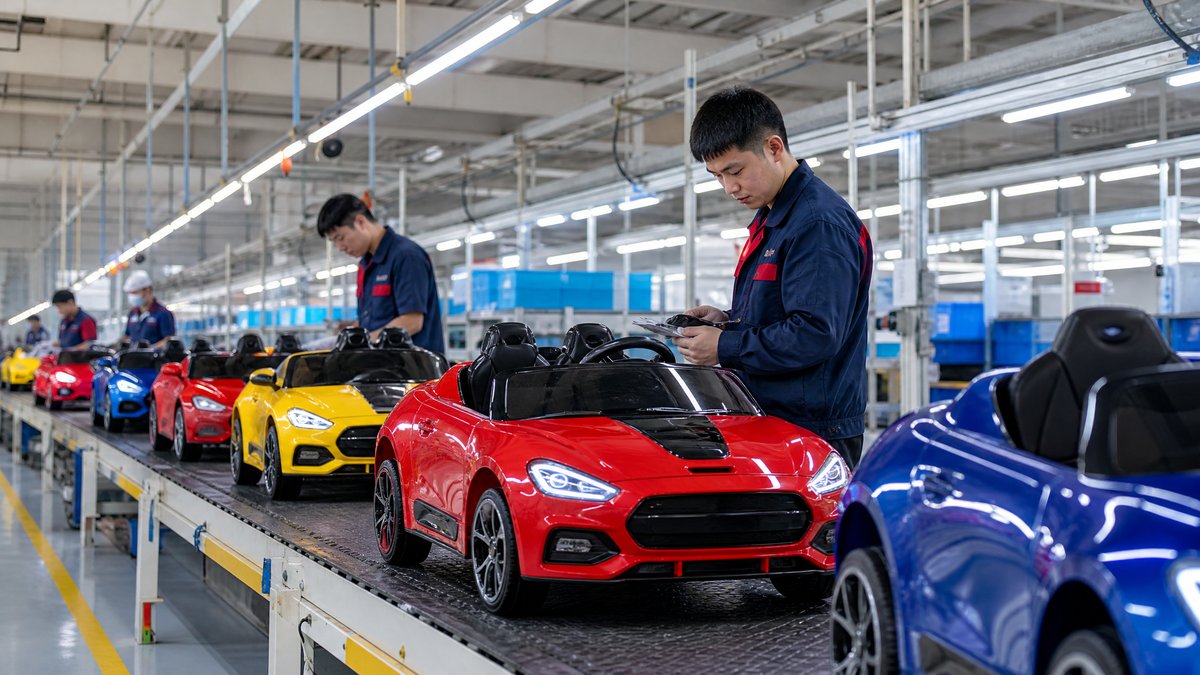
A mixed-model container can give an importer a broader market offer without requiring a separate shipment for every model. A wholesaler, distributor, retailer, or OEM buyer can combine body styles, voltage options, seat configurations, colors, and price points. The benefit is flexibility; the risk is losing control of cube, weight, documentation, packing, and sell-through.
The best plan starts before a supplier quotes a mixed load. Treat every SKU as a defined shipping unit, build the assortment around expected demand, and approve the loading plan in writing. A useful starting point is to review product information for candidate models such as the [KR-S900](/products/kr-s900), [KR-L700](/products/kr-l700), and [KR-T600), then request current carton dimensions, packing photos, and shipment data for the exact configurations being ordered. Specifications can vary by version, so do not rely on a model name alone.
1. Define the commercial purpose of the assortment
A mixed load should solve a sales problem, not simply fill unused container space. First decide which customer segments the shipment must serve. A distributor may need an entry-price single-seater, a mid-range family model, and a higher-value two-seater. A retailer may need a compact SKU for smaller homes, an outdoor-oriented option, and a visually distinctive model for showroom display. An OEM buyer may be testing several designs before a larger seasonal order.
Convert that purpose into a short assortment brief. For each proposed SKU, record:
- Target channel and buyer segment
- Expected retail or wholesale price tier
- Age grading and maximum user information supplied by the manufacturer
- Seat configuration and approximate footprint
- Battery and motor configuration as specified for that model
- Planned colors and whether color changes affect carton contents
- Forecast units for the first selling period
- Whether the model is a sample, launch SKU, replenishment SKU, or replacement for an older product
Avoid selecting too many nearly identical models. Five variants that differ only in trim can consume attention, packaging space, and working capital without giving the sales team a meaningful range.
2. Build a carton-volume and loading worksheet
Container planning is based on packed cargo, not the vehicle’s product dimensions. Ask the supplier for the outer carton length, width, and height for each exact SKU and packing method. Calculate carton volume with:
Carton volume (CBM) = length × width × height ÷ 1,000,000
when dimensions are supplied in centimeters. Multiply the result by the planned carton quantity, then add a realistic allowance for loading constraints and measurement differences. Do not assume that a nominal container capacity can be filled to 100 percent. Door access, carton orientation, pallets, dunnage, irregular shapes, and handling all reduce usable space.
Your worksheet should include SKU, carton dimensions, CBM per carton, gross weight, cartons per unit, planned units, total CBM, total gross weight, and stacking notes. Separate cartons that cannot be safely stacked or must remain upright. Ask whether the factory loads floor-loaded cartons or uses pallets; the answer can materially change the available cube.
A simple allocation method is to calculate the percentage of available working cube assigned to each SKU, then compare it with the unit forecast. If one large carton absorbs most of the space, consider reducing its quantity rather than allowing it to crowd out the models that make the assortment commercially useful. Also check container payload limits and the carrier’s requirements with your freight forwarder. Cube is not the only constraint.
For a practical planning reference, see the [KidsRideCar product catalog and blog](/blog) for model information, but confirm all shipping dimensions and weights in the supplier’s current quotation or packing list.
3. Set quantities using demand, risk, and replenishment logic
Do not divide the container equally among models unless demand and carton efficiency justify it. Use a quantity rule that reflects expected sell-through and inventory risk. Core models can receive larger allocations; experimental or premium models can receive smaller allocations until sales data supports expansion. A useful worksheet has three quantities for each SKU: forecast demand, minimum viable order quantity, and maximum acceptable exposure.
Consider these questions:
1. Which model has the broadest customer appeal across your channels?
2. Which SKU has the highest selling price or slowest expected turnover?
3. Which models share parts, chargers, manuals, or packaging inserts, and which do not?
4. Can the supplier replenish one model without requiring a full mixed container?
5. What happens if one color or specification is delayed while the others are ready?
Keep launch quantities small enough to learn, but large enough to support product photography, dealer samples, and meaningful channel testing. If a supplier’s MOQ applies per color or configuration, include that constraint at the beginning rather than after the loading plan is built. A mixed order can fail if it creates too many low-volume color and trim combinations.
4. Confirm SKU separation, packing, and load sequence
Mixed-model errors often occur when cartons look similar. Give each SKU a purchase-order code and require matching marks on the carton, packing list, commercial invoice, and inspection records. Confirm how the supplier will identify model, color, voltage, seat count, and production batch. Use a carton-marking diagram if your warehouse needs barcodes or retailer-specific labels.
Ask for the proposed load sequence before production is complete. The plan should explain where heavy cartons, fragile parts, display cartons, spare parts, and cartons requiring upright handling will be placed. It should also show whether cartons are floor-loaded or palletized and how remaining voids will be restrained. A loading photo set can help receiving compare the delivered load with the approved plan.
Do not let “mixed load” become permission to combine loose accessories without control. Chargers, remote controls, manuals, small hardware, and spare parts should be packed and labeled in a way that makes them traceable to the correct model. Confirm whether accessories are inside each retail carton, in a master carton, or packed separately. Missing accessories can create avoidable customer complaints even when the vehicle itself is present.
Before booking, approve a final packing list showing carton count by SKU. After loading, request the actual loaded quantity and container seal information. Any substitution, short shipment, or carton reallocation should be documented rather than handled informally through messages.
5. Align compliance and shipping documents by model
A mixed container does not create one universal compliance file. Market compliance must be confirmed for the destination market and the exact model, configuration, battery, charger, labeling, and intended age grading. Ask the supplier to identify which documents and declarations apply to each SKU, and have your own responsible compliance team or adviser review them for the destination.
The commercial and logistics file should normally reconcile the following by model:
- Product description and SKU code
- Quantity and carton count
- Net and gross weight
- Carton dimensions or packing details
- Country of origin information where required
- Battery and charger description
- Applicable test reports, declarations, labels, manuals, and warnings
- Harmonized tariff classification and import data to be verified with your customs professional
Battery shipping information should match the actual configuration. If batteries are included, request the supplier’s current transport documentation and packaging details, then confirm requirements with the carrier and forwarder. Do not copy a previous shipment’s paperwork when the model or battery specification has changed.
For market launches, also review translated labels, instructions, warranty terms, and online product claims. A document that is acceptable for one country or model may not be sufficient for another. Compliance should be approved before the goods are committed to production, not discovered during customs clearance.
6. Approve the shipment with cost, inspection, and receiving controls
Calculate landed cost per model rather than spreading freight evenly without explanation. Allocate ocean freight, origin charges, destination charges, insurance, duties, inspection, and local handling using a method your finance team accepts—often carton volume, gross weight, or a blended rule. The allocation method should be consistent so that you can compare margins across the assortment.
Before production, approve samples or a documented production standard for each SKU. During inspection, count cartons by model, verify visible carton marks, check the approved configuration, and reconcile the accessory list. An inspection plan should distinguish critical safety and compliance items from cosmetic or packaging checks. It should not rely only on a single “pass” label for the entire mixed load.
Prepare your warehouse before arrival. Send the receiving team the final packing list, carton-marking guide, expected carton counts, and instructions for recording damage or shortages. Photograph damaged cartons before opening them and keep model-level records. Quarantine discrepancies until the supplier and buyer agree on the corrective action; do not mix unidentified cartons into saleable stock.
A written inquiry can turn the worksheet into a formal quotation and load review. Use the [KidsRideCar inquiry page](/inquiry) to provide your destination, target models, estimated quantities, packaging requirements, and requested shipment window.
FAQ: Mixed-Model Ride-On Car Container Loads
Can different ride-on car models share one container?
Yes, subject to supplier packing capability, carton dimensions, minimum order quantities, safe stacking, carrier limits, and destination documentation. The buyer should approve a SKU-level packing list and loading plan before shipment.
How many models should an importer include in one container?
There is no universal number. Select enough models to cover your planned price and customer segments, but keep the assortment manageable for forecasting, compliance, after-sales support, and warehouse receiving. Carton cube and MOQ often matter more than the model count alone.
Should a mixed load be divided equally among SKUs?
Usually not. Allocate quantities according to demand confidence, price tier, replenishment options, and inventory risk. Core models may receive more units, while test or premium models may receive fewer.
What information should a supplier provide for mixed-container planning?
Request exact carton dimensions, gross and net weights, units per carton, stacking or orientation limits, accessory packing method, carton marks, SKU-level quantities, battery details, and the proposed loading sequence. Confirm any changes in writing.
Does market compliance apply separately to each model?
Compliance must be confirmed for the destination market and model. Configuration, battery, charger, labels, manuals, and intended use can affect the documentation needed. Obtain a model-level file and have the appropriate responsible party review it before shipment.
Conclusion
A successful mixed-model ride-on car container is a controlled assortment, not a random combination of available cartons. Define the commercial roles of the SKUs, calculate packed cube and weight, set quantities from demand and risk, separate cartons clearly, reconcile model-level compliance documents, and give the warehouse a reliable receiving plan. This approach helps importers protect cash flow while offering customers a useful range of ride-on cars.
For help comparing models, packaging details, and a destination-specific mixed-load quotation, contact KidsRideCar at info@kidsridecar.com with your target market, preferred SKUs, estimated quantities, and shipping requirements.
Official references
Explore these external resources for current regulatory and trade guidance. Confirm requirements with the relevant authority before placing an order.
Ready to Start?
Factory-Direct · CE & ASTM Certified · MOQ from 50 Units
Our export team works with buyers in 60+ countries. Get a quote within 24 hours.
KR
Written by KidsRideCar
China's leading kids electric ride-on car manufacturer. 500,000+ units shipped annually to 60+ countries. CE, ASTM & EN71 certified.