In the international procurement of children’s electric mobility products, the structure of financial agreements serves as the primary mechanism for risk mitigation and operational alignment. For professional importers, wholesalers, and distributors, negotiating payment terms is not merely a matter of cash flow management; it is a sophisticated exercise in establishing accountability throughout the production lifecycle. A well-structured payment framework ensures that the interests of the buyer and the manufacturer are synchronized, fostering a relationship built on transparency and verified performance rather than blind trust.
The complexity of ride-on cars—incorporating electronic propulsion systems, wireless communication modules, and specialized energy storage units—demands a more rigorous financial approach than standard consumer goods. Every stage of the manufacturing process, from the procurement of raw materials to the final assembly and safety testing, represents a shift in the risk profile of the transaction. By adopting a process-oriented negotiation strategy, business-to-business buyers can protect their capital while providing the supplier with the necessary liquidity to maintain high production standards. This guide explores the multifaceted nature of these negotiations, providing a comprehensive framework for professional sourcing operations.
Foundational Principles of Financial Risk Management
Before entering into specific discussions regarding milestones, it is essential to establish the underlying principles that govern a secure sourcing relationship. The goal of any payment agreement should be the equitable distribution of risk, ensuring that neither party is disproportionately exposed to financial loss.
The Concept of Earned Equity
In a professional sourcing context, payments should be viewed as the release of funds in exchange for earned equity in the production process. As the manufacturer invests labor and materials into an order, the value of the work-in-progress increases. A strategic importer seeks to match the flow of capital to these tangible milestones. This approach prevents the common pitfall of providing excessive upfront capital without corresponding evidence of progress, which can lead to a loss of leverage if production delays or quality issues arise.
Transparency in Capital Allocation
Importers should encourage manufacturers to be transparent about their capital requirements. Understanding the cost drivers—such as the timing of component procurement for specialized parts—allows the buyer to structure payments that support the factory’s operational needs without assuming unnecessary risk. A manufacturer that is willing to discuss their internal procurement cycle is often one that operates with a higher degree of professional integrity.
Verification as a Prerequisite for Fund Release
The most critical principle in any international trade agreement is that payment should be contingent upon verification. Whether it is a third-party inspection report, a verified bill of lading, or a set of compliance documents, every transfer of funds must be preceded by an objective confirmation that the agreed-upon conditions have been met. This shift from trust-based to verification-based payments is the hallmark of a mature business-to-business operation.
The Milestone-Based Negotiation Framework
A milestone-based approach breaks the total contract value into several distinct stages, each tied to a specific operational achievement. This structure provides the importer with multiple gates through which they can monitor the health of the order.
The Initial Commitment Phase
The first milestone is typically the deposit required to secure a production slot and initiate the procurement of long-lead components. In the ride-on car industry, this stage is vital as it allows the factory to order essential items like specialized motors and battery units. Instead of viewing this as a fixed requirement, importers should discuss the deposit as a commitment to the production schedule. The discussion should focus on how this initial portion will be utilized to prioritize the buyer's specific requirements within the factory's broader manufacturing queue.
The Production Progress Gate
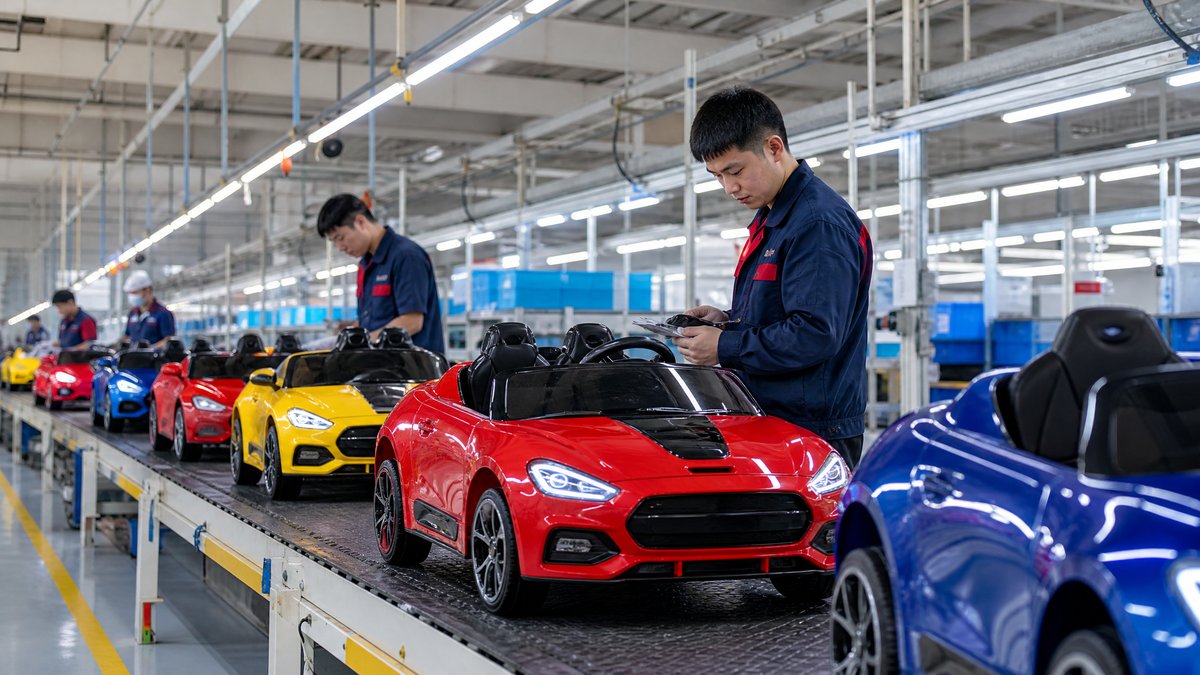
For substantial orders or the development of new models, a mid-production milestone can be an effective tool for maintaining momentum. This payment is often triggered by the completion of a major phase, such as the molding of the main vehicle bodies or the successful assembly of the internal electronic systems. By requiring a documented status update or a visual verification of the work-in-progress, the importer gains valuable insight into the manufacturer’s adherence to the timeline. This stage is particularly useful for identifying potential delays early in the process.
The Pre-Shipment Quality Gate
The final balance payment represents the buyer's ultimate leverage. It should only be initiated once the goods are fully manufactured, packaged, and confirmed to be in a ship-ready state. This milestone is the most critical for quality assurance. The discussion should center on the criteria for completion, ensuring that the definition includes not only the physical vehicle but also the full suite of required documentation and packaging standards.
Verification Protocols and Trigger Events
To avoid ambiguity, every milestone must be linked to a clearly defined trigger event. These events should be objective, documented, and, where possible, verified by independent parties.
Documentary Triggers for Milestone Completion
A sophisticated sourcing agreement uses the presentation of specific documents as the trigger for fund release. These documents serve as proof that the manufacturer has fulfilled its obligations for a given stage. For example, the release of the final balance might be tied to the provision of a comprehensive documentation package. Importers must consult with their local customs brokers and legal advisors to determine the current written requirements for their specific jurisdiction, ensuring that all necessary paperwork is included in the payment trigger list.
The Role of Independent Inspections
Linking payments to the results of a third-party inspection is one of the most effective ways to manage quality risk. The negotiation should establish that the final payment is contingent upon the issuance of a passed inspection report from a mutually agreed-upon agency. This protocol ensures that the goods meet the agreed-upon specifications before the buyer relinquishes their financial leverage. The discussion should also cover the process for handling discrepancies, ensuring that any necessary corrective actions are completed before the final funds are released.
Navigating International Payment Methods
The choice of payment method significantly impacts the risk profile for both the importer and the manufacturer. A professional discussion should evaluate the merits of different instruments based on the size of the order and the maturity of the relationship.
Telegraphic Transfers and Risk Mitigation
Telegraphic Transfer is a common method due to its speed and simplicity, but it requires careful structuring to protect the buyer. Importers should negotiate for a split arrangement where a significant portion of the total value is held until after the goods have been shipped. The trigger for this final transfer is typically the presentation of a scanned copy of the bill of lading, which proves that the goods are in the possession of the carrier.
Letters of Credit for Large-Scale Transactions
For high-value contracts or new supplier relationships, a Letter of Credit provides a bank-guaranteed framework that balances the interests of both parties. Under this arrangement, the buyer’s bank guarantees payment to the seller, provided that the seller presents documents that strictly conform to the terms of the credit. This method shifts the risk from the individual parties to the banking institutions, providing a high level of security. Importers should discuss the specific documentary requirements of the letter of credit with their financial institution to ensure they are robust and enforceable.
Documentary Requirements and Expert Consultation
In the business-to-business trade of ride-on cars, the physical product is only one part of the transaction. The accompanying documentation is equally essential for legal importation and market access.
The Importance of Professional Guidance
The regulatory landscape for children’s products is complex and subject to frequent change. Importers should never rely solely on a manufacturer’s assertions regarding compliance or documentation. It is imperative that buyers consult with local experts—including customs brokers, freight forwarders, and legal counsel—to obtain the most current and accurate list of required documents for their specific market. These experts can provide guidance on the necessary safety certifications, battery transport documents, and origin declarations required by local authorities.
Standard Trade Documents
While the specific requirements vary by region, certain documents are fundamental to almost every international transaction. These include the commercial invoice, the detailed packing list, and the bill of lading. The negotiation should specify that these documents must be accurate, consistent, and provided in a timely manner to facilitate a smooth customs clearance process.
Strategic Partnership Evolution
As a sourcing relationship matures, the payment terms should evolve to reflect the increasing level of trust and operational integration between the two parties.
Moving Toward Extended Terms
For established partners with a proven track record of quality and reliability, importers may initiate discussions regarding extended payment terms. This might include moving from a deposit-heavy structure to an open account arrangement where payment is made a certain number of days after the goods have been shipped or even after they have arrived. Such terms significantly improve the importer's liquidity and are a common feature of mature business-to-business partnerships.
The Concept of Quality Retention
A sophisticated strategy for long-term partners involves the use of a retention fund. Under this arrangement, a small portion of the total contract value is held back for a specified period after the goods have been received. This fund acts as a buffer to cover any potential warranty claims or minor quality issues that may arise during the initial sales period. The details of such an arrangement, including the duration of the retention and the conditions for its release, should be clearly defined and confirmed in writing.
Frequently Asked Questions
Q: Why is it common for manufacturers to require an initial payment before beginning the production of ride-on cars?
A: The manufacturing process for these vehicles involves significant upfront costs for the factory. They must procure specialized components such as electric motors, battery units, and plastic resins to meet the specific requirements of an order. The initial payment serves as a commitment from the buyer, allowing the factory to allocate these resources and secure a place in the production schedule. The specific details of this commitment should be discussed and confirmed in writing with the supplier.
Q: What is the most effective way to ensure that the final product meets the agreed-upon quality standards before the balance is paid?
A: The most reliable method is to make the final payment contingent upon a successful pre-shipment inspection conducted by an independent third-party agency. This ensures that the goods are evaluated against the agreed-upon specifications by an objective observer. The criteria for a successful inspection and the process for addressing any issues should be clearly defined in the payment terms.
Q: How should an importer handle a situation where a manufacturer asks for payment to be sent to an account that does not match the company name?
A: This situation represents a significant risk and should be approached with extreme caution. A professional business-to-business transaction should always involve payments to a corporate bank account that matches the name of the entity listed on the business license and the proforma invoice. If a manufacturer requests a change in payment details, the importer should demand a formal, signed, and stamped letter of authorization and verify the new details through independent channels. Consulting with a financial advisor or legal counsel is highly recommended in such cases.
Conclusion
Negotiating payment terms for ride-on car sourcing is a strategic process that requires a balance of financial prudence and operational partnership. By moving away from simple, one-size-fits-all terms and toward a milestone-based framework tied to objective verification, importers can significantly reduce their risk while fostering more transparent relationships with their manufacturers. The key to success lies in professional communication, the use of independent verification, and a commitment to obtaining expert guidance on the complex regulatory and logistics requirements of international trade.
Request a wholesale quote
Product Support and Technical Inquiries
For any technical question about a specific ride-on car model, prioritize safety and professional guidance. Consult the manufacturer’s current instruction manual. If the guidance is unclear or a technical concern arises, stop using the product and request written guidance from the manufacturer or qualified service support. Avoid any unapproved repair or modification, and use the formal support route for further assessment.
Official references
Explore these external resources for current regulatory and trade guidance. Confirm requirements with the relevant authority before placing an order.
Ready to Start?
Factory-Direct · CE & ASTM Certified · MOQ from 50 Units
Our export team works with buyers in 60+ countries. Get a quote within 24 hours.
KR
Written by KidsRideCar
China's leading kids electric ride-on car manufacturer. 500,000+ units shipped annually to 60+ countries. CE, ASTM & EN71 certified.