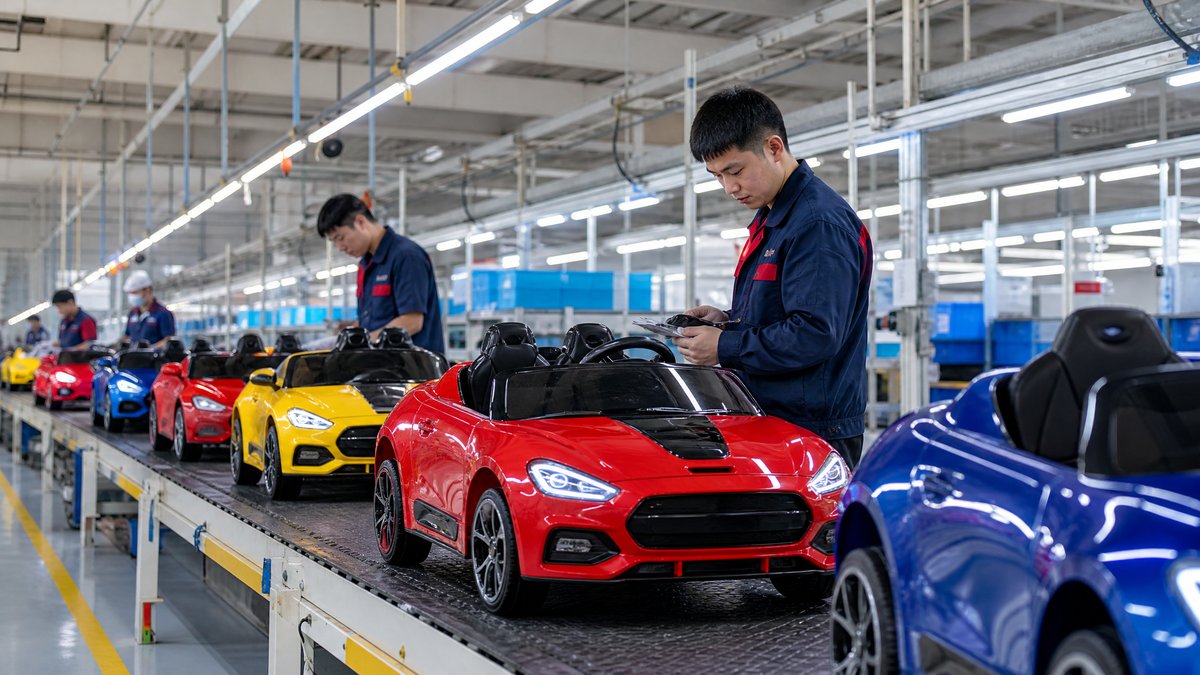
For business-to-business importers, distributors, and retailers entering the global children's vehicle market, the initial procurement strategy is the most significant factor in determining commercial longevity. The process of selecting inventory is not merely a matter of aesthetic preference; it requires a strategic alignment between market demand, technical reliability, and rigorous oversight. Beginners should choose four-wheel electric ride-on cars by following a structured decision framework that prioritizes appropriate product markings, technical suitability for the target age group, and supplier operational transparency. However, it is mandatory that readers verify the exact model’s current manual, written specifications, current supplier evidence, and applicable destination-market requirements before finalizing any purchase agreement.
The global toy industry is characterized by rapid innovation and increasingly stringent oversight. For a new business, navigating the landscape of power systems, motor configurations, and international protocols can be daunting. By adopting a professional evaluation process, importers can minimize the risks of product issues, shipping delays, and inventory stagnation, while establishing their brand as a reliable source of high-quality kids' vehicles.
Strategic Market Positioning and Audience Segmentation
The foundation of a successful sourcing operation is a clear understanding of the target consumer. The four-wheel electric ride-on car category encompasses a wide range of products, each designed for specific developmental stages and use-cases.
Developmental Age Groups and Physical Requirements
Ride-on cars are typically segmented by the child's age and motor skill development. Beginners must decide which segments align with their retail or distribution goals.
Toddler Segment: These vehicles prioritize stability and simplicity. They usually feature low centers of gravity and enclosed seating areas that limit movement to a safe walking pace. The controls are often limited to a single foot pedal for both acceleration and stopping.
Early Childhood Segment: This is the most popular market segment. Vehicles in this category typically utilize standard power systems and offer more realistic features, such as functional doors, lights, and sound systems. They require a balance of power and features like parental control units.
Enthusiast Segment: These are higher-performance vehicles, often featuring enhanced power systems, multiple motors, and advanced suspension. They are designed for older children who have developed the coordination to handle higher movement rates and more complex steering.
Licensed vs. Unlicensed Product Strategies
A critical strategic choice for new importers is the balance between licensed and unlicensed models.
Licensed models offer immediate market recognition and are ideal for high-end retail where brand prestige justifies a premium price. However, importers must account for higher wholesale costs and stricter marketing guidelines. Conversely, generic designs allow for greater customization and higher profit margins, making them well-suited for value-oriented retailers building their own brand identity through unique feature sets.
Technical Evaluation Framework for business-to-business Procurement
A technical audit is essential for ensuring that the sourced vehicles meet the performance expectations of the target market. Importers must understand the relationship between electrical components and real-world performance.
Power Systems and Terrain Compatibility
The power source is the primary determinant of a ride-on car's output and its ability to handle various surfaces.
Standard Power Systems: Best suited for indoor use on carpets or hardwood floors, or for smooth, level outdoor pavement. They are a safe option for beginners but lack the torque required for steep inclines or thick grass.
Enhanced Power Systems: The industry standard for outdoor play. These vehicles can handle short grass and slight slopes. Most models use dual motors to provide better traction and a more consistent driving experience.
High-Performance Power Systems: Designed for rugged outdoor use. These systems provide the torque necessary for thick grass, gravel paths, and steeper inclines. Importers should ensure that these models are equipped with reinforced chassis and advanced stopping systems to manage the increased momentum.
Power Source Chemistry and Operational Realities
The energy storage of the power source determines the operational time. Most kids' ride-on cars use lead-acid units, though some high-end models are transitioning to lithium-based units for faster charging and longer life cycles. business-to-business buyers should look for models that provide a substantial duration of continuous use under normal conditions. It is important to communicate to customers that actual usage time is affected by the child's weight, the use of auxiliary electronics, and the ambient temperature. Importers should always refer to the manufacturer’s technical data for specific power source life projections and charging requirements.
Motor Configuration and Efficiency
The strength of the motors is as important as the power of the source. A vehicle with dual high-strength motors will significantly outperform a vehicle with dual lower-strength motors, particularly when climbing hills or carrying substantial loads. Beginners should also evaluate the drive configuration—whether the vehicle uses two-wheel or four-wheel movement. Four-wheel models offer superior traction on uneven surfaces but consume energy more quickly. Importers should request detailed specifications on motor torque to ensure the product meets the demands of their local geography.
Safety and Operational Oversight Verification
In the children’s toy sector, safety is the most critical pillar of business operations. Failure to meet regional requirements can lead to severe consequences and brand damage.
Mandatory International Protocols
Importers must verify that their products meet the specific requirements of their destination market. These include physical and mechanical properties, flammability, and chemical migration.
Importers should request full, current supplier evidence from accredited third-party laboratories. A simple mark on a box is not sufficient evidence of meeting requirements; the underlying documentation must be verified.
Essential Safety Design Features for business-to-business Buyers
Beyond regulatory requirements, the physical design of the vehicle must prioritize child safety.
Parental Control Unit: A wireless frequency unit is essential for vehicles aimed at younger children. It allows the supervisor to take control of steering and stopping, providing an extra layer of safety in spacious environments.
Gradual Start Technology: This electronic feature ensures that the vehicle accelerates gradually rather than jumping forward. This prevents sudden movements and ensures the child remains securely seated.
Electronic Stopping Systems: When the child releases the accelerator pedal, the vehicle should come to a controlled stop. Some high-performance models also include a dedicated stopping pedal for a more realistic and safer experience.
Material Composition: The bodywork should be made of high-density, non-toxic materials. This material is durable enough to withstand impacts without shattering into sharp fragments.
business-to-business Sourcing Checklist for Safety and Quality
| Checkpoint | Requirement | Verification Source |
|---|---|---|
| Mechanical Integrity | No sharp edges or small parts hazards | Written Model Documentation |
| Electrical Safety | Power source housing stability and insulation | Current Supplier Evidence |
| Chemical Safety | Lead-free paint and phthalate-free plastics | Written Supplier Confirmation |
| Control Reliability | Interference-free operation | Appropriate Product Markings |
| Stability | Tip-over resistance at substantial weight | Non-destructive Assessment |
| Packaging Quality | Protection against transit damage | Manufacturer-Approved Support |
Operational Logistics and Supplier Management
For a beginner, the relationship with the manufacturer is just as important as the product itself. A reliable supplier acts as a partner in the growth of the business.
Logistics Optimization and Container Loading
Shipping costs can significantly impact the landed cost of a ride-on car. Importers should work with suppliers who optimize their packaging to maximize container utilization. Partial assembly packaging, where the wheels and steering column are detached, can reduce the box size and allow for more units per container. However, importers must balance this with the ease of assembly for the end consumer.
After-Sales Support and Spare Parts Inventory
A sustainable business-to-business business requires a plan for after-sales service. Beginners should ensure that their supplier provides a consistent supply of replacement power sources, chargers, motors, and control units. Furthermore, clear assembly manuals and troubleshooting guides in the local language are essential, along with a transparent policy that defines the responsibilities of both the manufacturer and the importer.
Quality Control Protocols
Importers should verify that the manufacturer has a robust quality management system. This involves monitoring the assembly line to identify and correct errors in real-time, performing a functional test of every vehicle before it is packed, and conducting a final inspection of the packaging and container loading to ensure safe transit.
Risk Mitigation and Technical Safety
For any technical concerns regarding the vehicle's electrical or mechanical systems, it is vital to stop use if there is a concern and seek manufacturer-approved or qualified support. Importers and retailers should never instruct users to perform internal inspection, access internal power storage areas, alter internal connections, or attempt any modifications. All maintenance and checks should remain an external visual check and be guided by the official manual-led setup to ensure the safety of the end-user and the integrity of the product. By maintaining this boundary, businesses protect themselves from issues and ensure that safety-critical components are only handled by trained professionals.
Model-Neutral Sourcing Framework
Importers should utilize a standardized framework when evaluating any new addition to their product catalog. This framework ensures consistency across different models and suppliers.
First, perform a preliminary assessment based on written model documentation. This involves reviewing the stated features and intended use-cases to ensure they align with your market segment.
Second, request current supplier evidence for all safety-related claims. This includes documentation of material safety and mechanical stability.
Third, conduct a non-destructive assessment of sample units. This should be limited to an external visual check of the build quality, paint finish, and the presence of appropriate product markings.
Fourth, verify that the manual-led setup process is clear and manageable for the end consumer. A well-documented setup reduces the likelihood of assembly errors and subsequent support requests.
Fifth, establish a protocol for ongoing quality monitoring. This involves regular communication with the manufacturer to receive written supplier confirmation of consistent production standards.
By following these steps, businesses can maintain a high standard of quality and safety across their entire range of children's vehicles.
Frequently Asked Questions
Q: What is the most common sourcing mistake for beginners in the ride-on car market?
A: The most frequent error is prioritizing the lowest wholesale price over safety and quality evidence. While low-cost models may appear attractive for margins, they often lack the necessary documentation for customs and expose the business to significant issues in the event of a product failure. Always verify current supplier evidence before committing to a supplier.
Q: How can I distinguish between a high-quality power source and a low-quality one?
A: High-quality power sources will have appropriate product markings and will be sourced from reputable manufacturers. They typically offer more consistent discharge rates and longer life cycles. Beginners should ask their supplier for the manufacturer's specifications and check for recent batch testing reports to ensure the units are fresh and stable.
Q: Is it necessary to have a dedicated warehouse for ride-on cars?
A: Because ride-on cars are bulky and contain power sources, they require specific storage conditions. A clean, dry, and temperature-controlled environment is essential to prevent degradation and packaging damage. If you are an e-commerce seller, you may also need a facility that can handle larger shipping and returns processing.
Q: How do I handle product returns for technical issues?
A: Establish a clear return policy with your supplier that includes a credit or replacement system for manufacturing defects. For the end consumer, provide a troubleshooting guide that covers an external visual check. For any internal or electrical issues, the consumer should be instructed to return the unit or contact qualified support rather than attempting a task themselves.
Q: What are the benefits of sourcing from a specialized manufacturer?
A: Specialized manufacturers offer deeper technical expertise, more robust safety documentation, and a wider range of replacement parts. They are also more likely to be aware of the latest regulatory changes in major markets, helping you stay competitive and meet applicable destination-market requirements.
Conclusion
Choosing four-wheel electric ride-on cars as a beginner business-to-business importer requires a blend of market intelligence, technical due diligence, and a commitment to safety. By following a structured decision framework—prioritizing market positioning, technical evaluation, safety verification, and supplier reliability—new market entrants can build a sustainable and profitable business. Success in this category is not just about selling a toy; it is about providing a safe, reliable, and high-quality experience for children and peace of mind for their parents. Always work with manufacturers who value transparency and documentation, and never compromise on the standards that define the industry.
Request a wholesale quote
Official references
Explore these external resources for current regulatory and trade guidance. Confirm requirements with the relevant authority before placing an order.
Ready to Start?
Factory-Direct · CE & ASTM Certified · MOQ from 50 Units
Our export team works with buyers in 60+ countries. Get a quote within 24 hours.
KR
Written by KidsRideCar
China's leading kids electric ride-on car manufacturer. 500,000+ units shipped annually to 60+ countries. CE, ASTM & EN71 certified.