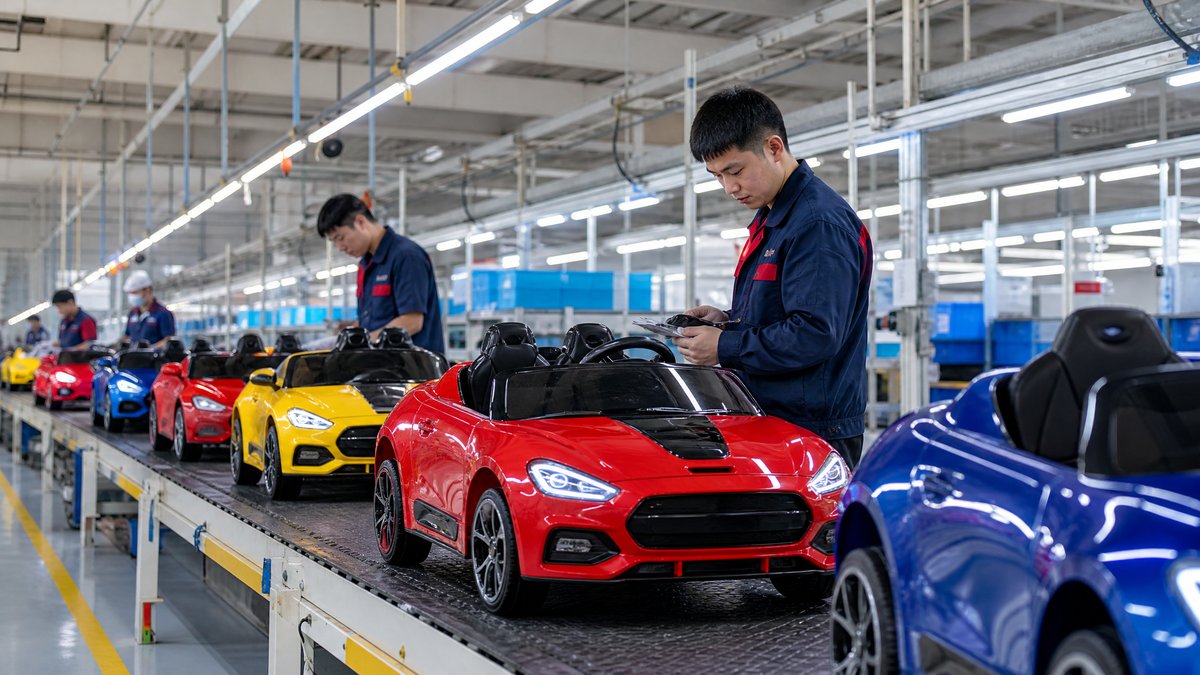
A kids ride-on car distributor’s recall contact tree should identify who is contacted, in what order, through which verified channel, and with what approved information when a potential safety issue is reported. Cover internal leadership, quality, warehouse, customer service, supplier, retailer, marketplace, and logistics contacts. Link each branch to model, SKU, production reference where available, order, shipment, and sales-channel records.
The tree is a communication and escalation tool, not a conclusion that a recall is required. Buyers should confirm current destination-market obligations with qualified advisers and appropriate authorities for a live event.
Define the Purpose and Activation Point
Give the document an owner, version number, and review date. Define triggers, such as a credible incident report, supplier notice, or marketplace inquiry. Activation means fact-finding and controlled communication, not a recall announcement.
Use a short first-action instruction:
1. Record the report and preserve relevant product, packaging, images, and records.
2. Notify the incident leader and quality/compliance owner through primary and backup contacts.
3. Hold release or promotion of the potentially affected SKU only when authorized.
4. Preserve inventory, shipment, complaint, sales, and supplier records.
5. Issue only approved messages; do not speculate about cause, risk, scope, or remedy.
This avoids conflicting statements before the product, market version, or production period is understood.
Build Role-Based Internal Branches
Design the tree around roles while listing primary and alternate contacts. Keep business email, mobile number, time zone, approval authority, and a backup escalation route for every role.
Incident leader and decision group
The incident leader coordinates the timeline and decision log. State who can approve a stop-sale request, retailer notice, customer remedy, public statement, and return to sale. Do not assume a factory alone can decide actions for the distributor’s market.
Quality, compliance, and supplier liaison
This branch should locate the approved product file, manual and label version, change approvals, inspection records, and relevant item documentation. One supplier liaison should consolidate technical questions.
Warehouse, inventory, and logistics
Warehouse contacts need directions to identify, hold or segregate, count, and report stock. Include third-party logistics providers, dropship locations, and return sites. Require confirmation of every hold instruction.
Do not ask warehouse staff or customers to open battery compartments, rewire products, bypass safety features, or make unapproved repairs. Any inspection, modification, or remedy should follow written manufacturer instructions and the direction of qualified parties.
Customer service, sales, and communications
Customer service needs an approved holding response and escalation route. Sales staff should not promise a remedy or cause statement before approval. One communications owner should control all message versions.
Map External Audiences and Their Actions
Segment contacts by what each audience can do during an event rather than keeping one unstructured mailing list.
| Audience | Information to maintain | Immediate purpose |
|---|---|---|
| Supplier or manufacturer | Primary and backup escalation contacts; after-hours route; production-record contacts | Obtain verified records and coordinate investigation |
| Importer of record or brand owner | Responsible role; approval route; market scope | Align responsibilities and messages |
| Retailers and dealers | Safety inbox; buyer; operations and sell-through-data contacts | Hold stock if directed and report data |
| Marketplaces | Seller account owner; listing IDs; safety-report channel | Request appropriate listing actions |
| 3PLs and service partners | Operations, site, returns, and inventory contacts | Locate, hold, and count units |
| End customers | Approved, consent-aware contact method | Deliver approved information where required |
For retailers, keep a safety mailbox where available, an inventory-hold contact, a sell-through data contact, and an executive escalation route. For online channels, retain listing IDs, account details, and the reporting process.
Connect Contacts to Product Traceability
A contact tree cannot overcome missing records. During sourcing, ask which identifiers appear on product, carton, labels, and production records, and how they connect to orders and shipments.
Maintain a protected recall worksheet or system record containing:
- product name, model, SKU, color or variant, and approved market version;
- supplier, purchase order, factory, and production or batch reference where available;
- delivery, warehouse, retailer-allocation, and listing information;
- quantities received, held, transferred, returned, and sold; and
- message versions, recipient status, evidence links, decisions, and closure confirmations.
Ask prospective suppliers for a traceability report based on a hypothetical component or production period. Confirm that its records and change controls support your process.
Set Escalation and Message Controls
For each branch, define an acknowledgment expectation and backup path. A retailer notice can escalate from safety contact to buyer and executive route. Use timings your organization can monitor.
Prepare templates, but leave factual fields blank until verified. A B2B notice may need the product identifier, affected reference, requested action, approved return instruction, and contact point. Customer messages should be plain and consistent with the approved action. Log recipients, version, date, delivery result, and response.
Use contact data through lawful, consent-aware processes and limit access to people who need it. Retention, notification, and reporting rules vary by market, so verify them when an issue arises.
For support reviewing supplier-facing recall-readiness documentation, contact KidsRideCar.
Test the Tree With a Tabletop Exercise
Before a major launch or material supply-chain change, run a tabletop exercise using a fictional scenario. Check whether the team can find contacts, locate SKU records, prepare a holding message, and receive acknowledgments. This is communications readiness, not product testing or evidence of compliance.
Record outdated details, unclear authority, inaccessible records, disconnected retailer data, or supplier-response gaps. Assign an owner and date for each correction.
FAQ
Who should own the recall contact tree?
Assign one accountable quality, compliance, or product-safety owner with a named backup. Management retains authority for major external communications.
Should one tree cover every ride-on car SKU?
Use one master role structure with product-specific records. Supplier contacts, production references, retailer allocations, and requirements can vary by SKU.
What supplier details are most important?
Keep primary and backup escalation contacts, after-hours method, decision roles, responsibilities, and available production and change records. Confirm them before ordering.
How often should contact information be updated?
Review it on a defined schedule and after changes to staff, suppliers, retailers, logistics, or traceability. Update it after every exercise or incident.
Can customer service tell consumers how to fix an affected car?
Only if written, manufacturer-approved instructions and the response plan authorize that communication. Otherwise, customer service should follow the approved script and avoid unapproved troubleshooting, battery work, disassembly, or safety-feature bypasses.
Conclusion
A practical recall contact tree gives a distributor a controlled route from first concern to verified outreach and closure. Build it around role ownership, traceability, segmented contacts, backup escalation, approved messages, and regular exercises. Treat supplier records and response contacts as procurement requirements, and verify current destination-market requirements for a live event.
To discuss B2B sourcing and product-documentation coordination, email the KidsRideCar team.
Official references
Explore these external resources for current regulatory and trade guidance. Confirm requirements with the relevant authority before placing an order.
Ready to Start?
Factory-Direct · CE & ASTM Certified · MOQ from 50 Units
Our export team works with buyers in 60+ countries. Get a quote within 24 hours.
KR
Written by KidsRideCar
China's leading kids electric ride-on car manufacturer. 500,000+ units shipped annually to 60+ countries. CE, ASTM & EN71 certified.