Introduction
After-sales service is one of the most underinvested areas in the kids electric ride-on car business. Most importers and distributors focus heavily on sourcing, pricing, and marketing — and then discover that their return rate, customer complaints, and spare parts requests are consuming a disproportionate amount of time and margin.
A well-designed after-sales program does three things: it reduces the cost of handling returns, it builds customer loyalty that drives repeat orders, and it differentiates your business from competitors who offer no post-purchase support. This guide covers the practical elements of building that program.
Understanding the Most Common Failure Modes
Before designing a service program, it helps to understand what actually goes wrong with kids electric ride-on cars. Based on warranty claim data across multiple markets, the most frequent issues are:
| Failure Type | Frequency | Typical Cause |
|---|---|---|
| Battery not holding charge | 35–45% | Age/cycling, deep discharge, storage in heat |
| Remote control not pairing | 15–20% | Frequency interference, dead batteries in remote |
| Motor not running | 10–15% | Wiring connector loose, fuse blown, motor failure |
| Charger not working | 8–12% | Charger failure, incorrect voltage, damaged port |
| Plastic body cracking | 5–8% | Impact damage, UV degradation over time |
| Wheel/axle issues | 5–8% | Wear, overtightening during assembly |
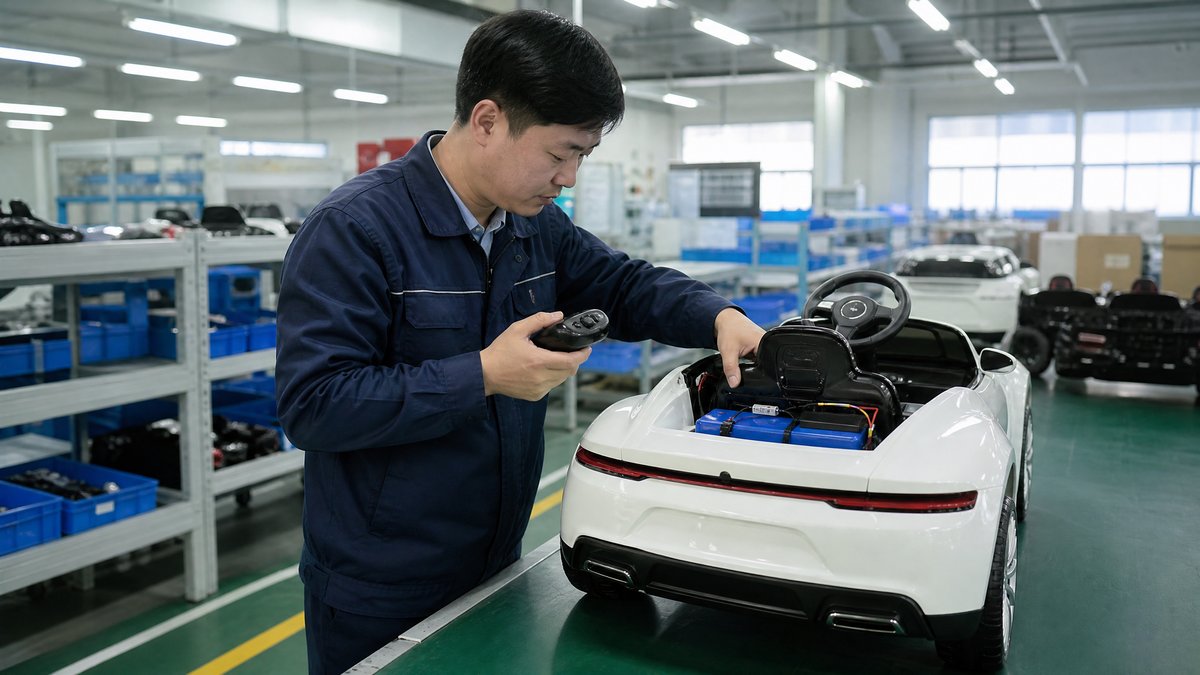
Battery issues account for the largest share of complaints by a significant margin. This has two implications: first, stocking replacement batteries is the single most important spare parts decision you will make. Second, educating customers on proper battery care (avoiding deep discharge, storing indoors during winter) can prevent a significant portion of these complaints from arising at all.
Designing Your Warranty Policy
A clear, written warranty policy protects both you and your customers. The standard warranty structure for kids electric ride-on cars in most markets is:
12 months on the motor and electrical system (excluding battery)
6 months on the battery (lead-acid) or 12 months (lithium)
3 months on the charger
Excluded: cosmetic damage, damage from misuse, water damage
Your warranty policy should specify: what is covered, what is excluded, the process for making a claim, whether you offer repair, replacement, or refund, and the timeframe for resolution.
For B2B buyers (distributors and retailers), a separate trade warranty policy is appropriate. This typically covers defects in materials and workmanship for 12 months from the date of shipment, with a defined defect rate threshold (e.g., claims exceeding 3% of the order quantity trigger a replacement shipment).
Spare Parts Strategy
The ability to supply spare parts quickly is a significant competitive advantage. Customers who can get a replacement battery or charger within a few days are far less likely to request a full refund than customers who are told "we don't stock spare parts."
Essential spare parts to stock:
- Replacement batteries (12V 7Ah and 12V 10Ah are the most common)
- Replacement chargers (12V and 24V)
- Remote control units (with frequency matching your product range)
- Fuses (5A and 10A blade fuses)
- Replacement wheels (for your top-selling models)
Order spare parts as a percentage of your main product order — typically 5–8% of unit quantity for batteries and chargers, 2–3% for other components. This ensures you have parts available without tying up excessive capital.
Customer Communication: Turning Complaints into Loyalty
How you handle a complaint matters as much as the outcome. Customers who have a complaint resolved quickly and professionally are more likely to repurchase than customers who never had a problem. The key principles:
Respond within 24 hours. A fast initial response — even if it is just an acknowledgment — significantly reduces customer frustration. Set up an auto-reply for after-hours inquiries.
Ask for a photo or video before offering a solution. This allows you to diagnose the issue accurately and avoids sending replacement parts for problems that can be solved with a simple adjustment.
Offer a solution, not a process. Customers do not want to be told to "fill out a form and wait 5–7 business days." They want to know what you are going to do to fix their problem.
Document every complaint. A complaint log allows you to identify patterns (e.g., a specific model has a higher-than-normal battery failure rate) and address them with your supplier before they become a larger problem.
Working with Your Factory on After-Sales Support
Your factory is a key resource for after-sales support. When evaluating a new supplier, ask specifically about their after-sales support capabilities:
- Do they stock spare parts for current models?
- What is the minimum order for spare parts?
- Do they provide technical documentation (wiring diagrams, assembly instructions) for service technicians?
- How do they handle warranty claims for defective units in a production batch?
Factories that have exported to mature markets (US, UK, EU) for several years typically have more developed after-sales support processes than factories that primarily serve domestic or developing markets.
FAQ
What is a reasonable return rate for kids electric ride-on cars?
For well-sourced products with proper quality control, a return rate of 1–3% is achievable. Rates above 5% typically indicate a quality issue with the product or a mismatch between product specifications and customer expectations.
Should I offer a full refund or replacement for warranty claims?
For most claims, replacement (of the defective component or the whole unit) is preferable to refund. It retains the customer relationship and is often less costly than a full refund. Reserve full refunds for cases where replacement is not possible or the customer has had multiple issues.
How do I handle warranty claims for products sold through retailers?
Establish a clear policy with your retail partners before they start selling. Typically, the retailer handles the customer-facing warranty process, and you handle the B2B side (replacing defective units or components for the retailer). Avoid situations where customers are told to contact the manufacturer directly — this creates confusion and damages the retailer relationship.
Conclusion
After-sales service is not a cost center — it is a revenue protection and customer retention tool. Distributors and retailers who invest in a clear warranty policy, a spare parts inventory, and responsive customer communication consistently achieve lower return rates and higher repeat purchase rates than those who treat after-sales as an afterthought.
If you want to discuss after-sales support arrangements for your order, our export team can provide spare parts pricing and technical documentation for all models.
*Questions about warranty and spare parts? Contact us for details.*
Official references
Explore these external resources for current regulatory and trade guidance. Confirm requirements with the relevant authority before placing an order.
Ready to Start?
Factory-Direct · CE & ASTM Certified · MOQ from 50 Units
Our export team works with buyers in 60+ countries. Get a quote within 24 hours.
KR
Written by KidsRideCar
China's leading kids electric ride-on car manufacturer. 500,000+ units shipped annually to 60+ countries. CE, ASTM & EN71 certified.