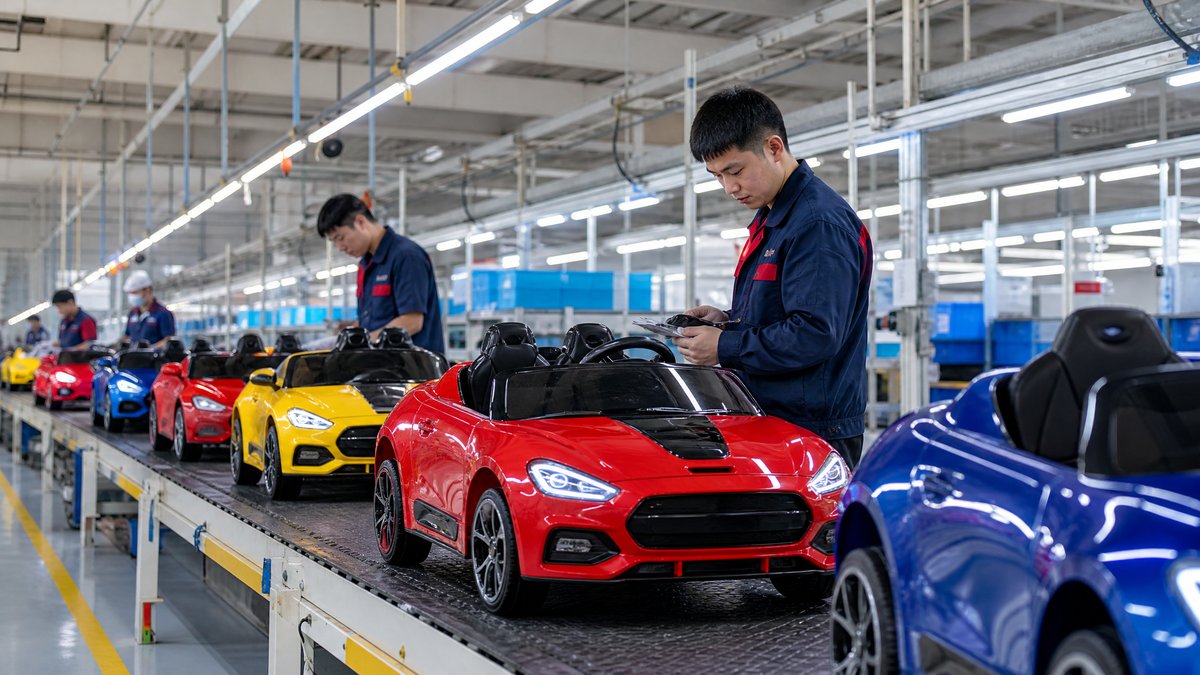
Buyers should use a factory video audit to check the supplier’s identity, product-relevant work areas, visible workflow, quality-control approach, packaging readiness, and ability to provide evidence. A live call can reduce uncertainty before samples or an order, but it does not prove compliance, capacity, ownership, or future product quality. Use it alongside document review, sample approval, and inspection steps suitable for the order and destination market.
Set the scope before the call
Send a short agenda identifying the model or product category, proposed configuration, packaging needs, and key commercial questions. Request a live connection where practical, with a representative who can move through relevant areas and explain what is shown. A recorded tour may provide background, but it should not replace live questions or requested views.
Respect security and privacy. If an area cannot be filmed, request a clear explanation and a reasonable alternative, such as a controlled document review or redacted record.
Confirm the site and the people on camera
Ask the presenter to state the legal entity name, site address, job role, and relationship to the facility. Where reasonable, start at a recognizable entrance or sign, then move through the relevant areas without unexplained changes. Compare what is shown with the quotation, contract draft, and supplier details already received.
Check whether the facility identity matches commercial documents, whether the presenter is a factory employee or intermediary, and whether the team can identify the quoted model, configuration, and packaging without changing material facts. Product questions should be answered by informed personnel, not repeatedly deferred to an unseen party.
A video call does not legally verify ownership, licensing, bank accounts, or contractual authority. Apply separate business-registration, payment-control, and contract-review procedures. A mismatch is not automatically disqualifying, but it needs a documented explanation before you proceed.
Follow the product flow, not only the showroom
A showroom can show product presentation, but it says little by itself about order control. Ask to see a logical process path that reflects the supplier’s real role: incoming components, subassembly, final assembly, routine functional checks, packing, finished-goods storage, and dispatch preparation. Ask clearly which steps occur on site and which are outsourced.
Check components and specification control
Ask how key components are identified on arrival and how accepted, pending, and nonconforming materials are separated. Look for orderly storage, meaningful part identification, protection from avoidable mix-ups, and a way to link components to a production order.
For the quoted configuration, discuss relevant batteries, chargers, wiring, drive components, body parts, wheels, remote-control components, manuals, and labels. Ask how components are checked against the approved specification and what happens when they do not match.
Review assembly, change control, and demonstrations
Ask to see a current or representative assembly area and to hear which product stage is being shown. Confirm whether the quoted model is made at that location, sourced as a finished item, or assembled there from externally made parts. If only a similar model is available, record that limitation rather than assuming equivalence.
Ask how approved samples, bills of materials, artwork, labels, manuals, and carton instructions are controlled. The supplier should be able to explain who approves changes, how current instructions reach production, and how a buyer is notified before a change affecting the agreed product. Put change-notification requirements into the purchase order or quality agreement; do not rely on a verbal assurance.
A normal-use demonstration can help link the discussion to the item shown, but it is not a formal safety or performance test. Keep it within manufacturer-intended use, with adult control and clear space. Do not request battery rewiring, protective-device bypasses, disassembly, overload operation, or other unsafe improvisation.
Examine quality checkpoints and evidence
Ask where checks happen during production and final packing. Look for a clear explanation of what is reviewed, who records results, how defects are identified, and how a failed unit is isolated or handled. Relevant follow-up evidence may include redacted checklists, defect photos, rework procedures, inspection reports, and lot or order references.
Do not overinterpret a clean line or checklist on camera. It does not prove an effective quality system or guarantee future output, but it provides points for inspection criteria and corrective-action discussions.
Review packaging, traceability, and release readiness
Request views of a finished carton, internal protection, label location, manuals, accessory packs, and the finished-goods area. Compare them with the product data sheet and quote. Ask how model codes, carton marks, language versions, and customer-specific artwork are checked before packing. State any retail or e-commerce packaging requirements in writing.
Discuss traceability in practical terms: how can the supplier link a finished product, carton, or production lot to an order, relevant components, and inspection records? The appropriate level depends on the product, risk profile, and market. Buyers should verify current requirements in every destination market where the product will be placed on sale.
Ask how finished goods awaiting inspection, approved goods, and goods awaiting rework are distinguished. This supports planning for an independent pre-shipment inspection or shipment-release step.
Turn observations into a sourcing decision
End with a recap of what was shown, what could not be shown, documents promised, and open questions. Retain dated notes and screenshots only where permitted, and label them as video-audit observations rather than independent certification.
Use a simple scorecard covering identity consistency, product relevance, workflow visibility, quality-record clarity, communication, response to evidence requests, change-control readiness, packaging readiness, and unresolved risks. The next step may be sample evaluation, document review, third-party inspection, or an on-site audit, depending on supplier history, order value, product complexity, and destination-market requirements.
> Need a video-audit agenda matched to your sourcing stage? Email KidsRideCar’s B2B team to discuss the information needed before supplier selection.
FAQ
Should a factory video audit replace an on-site audit?
Usually, no. A live video audit can strengthen early supplier screening and focus later due diligence, but it gives a limited view at one point in time. Use it alongside sample review, written controls, and inspection planning. Whether an on-site audit is needed depends on the order, product, supplier history, and your risk assessment.
What should buyers ask the factory to show live?
Prioritize site identity, product-relevant work areas, incoming-component handling, assembly, quality-check points, final packing, finished-goods storage, and the team responsible for the order. The objective is a coherent process view, not a long tour of unrelated areas.
How can buyers tell whether video evidence is current?
Use a live call and request reasonable views or explanations. Cross-check model codes, packaging details, production status, dates on relevant records where appropriate, and quotation information. The evidence remains limited, so record open points and request supporting records or later inspection when necessary.
What documents should follow the video audit?
Request decision-relevant records: product specifications, current artwork approvals, packaging details, sample information, quality-check forms, change-control procedures, applicable compliance documents, and battery shipping information when relevant. Verify current destination-market requirements through your own compliance process and qualified sources.
Can a factory demonstrate a ride-on car during the audit?
Yes, a normal-use demonstration may help confirm that the item shown relates to the discussion. It is not proof of safety, regulatory compliance, durability, capacity, or runtime. Maintain adult supervision and manufacturer-approved operating boundaries; do not request modifications, bypasses, disassembly, or unsafe operation.
Conclusion
A useful kids ride-on car factory video audit is structured evidence gathering, not a virtual showroom visit. Confirm identity, follow the relevant product flow, examine change and quality controls, compare packaging and records with your requirements, and document unanswered questions. Use the result to define the sample work, inspection, and market-specific verification that must follow.
> Ready to structure your supplier review? Contact KidsRideCar for a B2B discussion about product specifications, packaging expectations, and sourcing documentation.
Official references
Explore these external resources for current regulatory and trade guidance. Confirm requirements with the relevant authority before placing an order.
Ready to Start?
Factory-Direct · CE & ASTM Certified · MOQ from 50 Units
Our export team works with buyers in 60+ countries. Get a quote within 24 hours.
KR
Written by KidsRideCar
China's leading kids electric ride-on car manufacturer. 500,000+ units shipped annually to 60+ countries. CE, ASTM & EN71 certified.