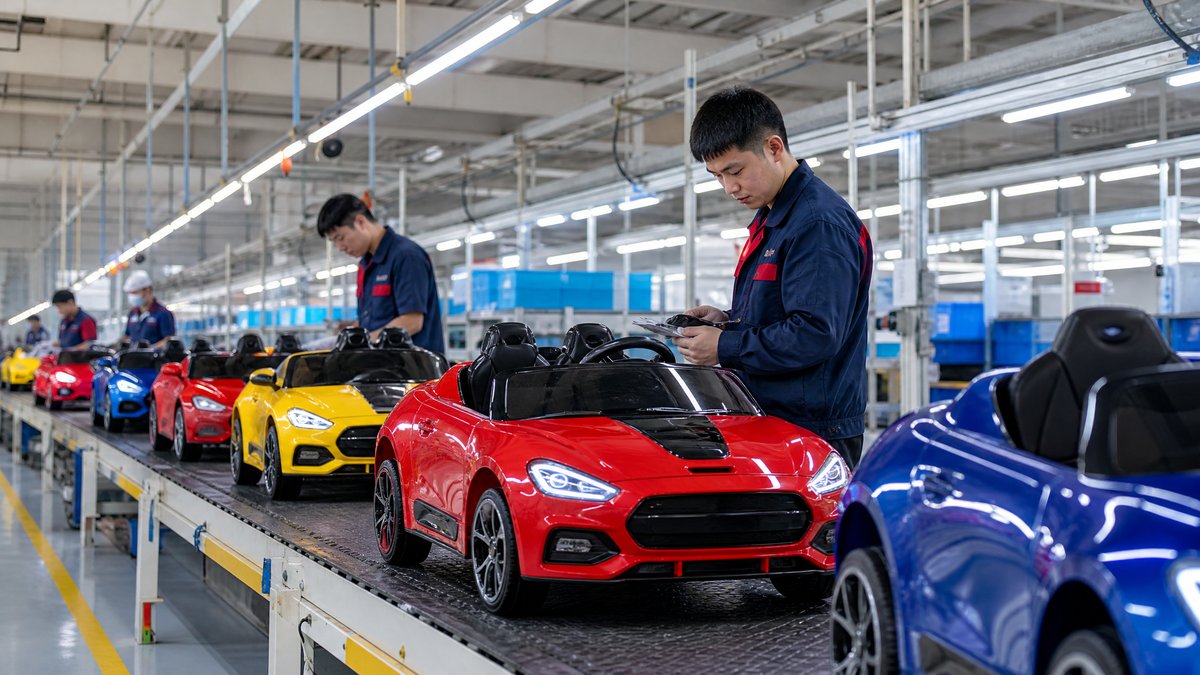
For professional business-to-business importers and high-volume retailers, the maintenance of kids electric ride-on cars represents a critical intersection of operational efficiency and long-term profitability. In the competitive children toy sector, the difference between a successful product line and a logistical nightmare often hinges on the robustness of the after-sales maintenance ecosystem. Maintenance, in a professional context, is not merely about fixing individual units; it is about establishing a systematic framework for quality control and technical support that protects the importer margins while ensuring consumer safety.
To directly address the primary concern: the maintenance of tires, drive components, remote controls, and replacement parts should be approached as a tiered management strategy. This involves rigorous pre-shipment inspections, climate-controlled warehousing, and a modular replacement protocol that avoids complex mechanical work in favor of efficient component swapping. Readers and technical teams must verify the specific model current user manual, written manufacturer specifications, current supplier evidence, and the applicable destination-market requirements before implementing any maintenance program.
The Strategic Importance of Professional Maintenance Protocols
In the international trade of ride-on vehicles, maintenance serves as a form of insurance. When an importer brings in large quantities of units, even a small percentage of component failures can lead to significant financial loss. A professional maintenance strategy allows distributors to proactively identify potential issues before products reach the end consumer. By focusing on the longevity of high-wear components like tires and gear assemblies, wholesale buyers can reduce the frequency of support claims and improve the overall lifecycle value of their inventory.
A structured maintenance approach facilitates better communication with manufacturers. When an importer can provide detailed data on component wear in specific climates, they gain leverage in negotiating quality improvements. This data-driven approach transforms maintenance from a cost center into a strategic asset for procurement and product development teams.
Tire and Chassis Maintenance: Sourcing and Storage Logistics
Tires are the most visible and frequently stressed components of a ride-on car. For importers, tire maintenance begins at the sourcing stage and continues through the storage and distribution phases. The choice of material dictates the maintenance requirements and the expected lifespan of the product.
Material Selection and Environmental Impact
Premium material tires are highly sought after in the professional market due to their noise reduction properties and superior traction. However, they require careful handling. Certain materials are porous and can be sensitive to extreme heat and prolonged pressure. If stored in a warehouse where temperatures are excessive, these tires can lose their structural integrity or become permanently deformed if stacked improperly. Importers should specify high-density materials during the sourcing phase to minimize these risks. Standard plastic tires are the common choice for many models. While they are durable and resistant to environmental factors, they can be prone to stress if used on abrasive surfaces. Maintenance for these tires involves regular external visual checks for stress marks and ensuring that the traction surfaces remain securely bonded to the main hub.
Warehouse Management and Load Distribution
Professional maintenance of tire inventory requires a focus on load distribution. When ride-on cars are stored in large-scale warehouses, the weight of the vehicle itself can lead to deformation. This occurs when the tire remains under constant pressure in one position for months. To maintain tire integrity, distributors should implement a rotation policy for long-term stock or ensure that the packaging design includes internal supports that lift the axles off the ground during transit and storage.
Motion System Integrity: Power Delivery and Mechanical Components
The motion system is the mechanical heart of the vehicle. For wholesale entities, maintaining these components is a matter of verifying technical data and ensuring that the power delivery system remains within safe operating parameters.
Sourcing Quality Components
Maintenance begins with the verification of the written model documentation. Importers should ensure that the components provided by the manufacturer are rated for the intended use of the vehicle. A common cause of motion system failure is the use of components that struggle during extended play. Wholesale buyers should request evidence from the factory to confirm that the mechanical assemblies can withstand the requirements of the vehicle.
Preventative Verification and External Checks
Technical teams at the distribution level should perform external checks on the motion system without looking into the internal housings. These checks include listening for unusual sounds during a brief, no-load test and checking the external temperature of the motor area after a short test run to ensure it is not exceeding the manufacturer specified limits. Furthermore, verifying that the output shaft is securely mounted and does not exhibit excessive lateral movement is essential.
For any technical concerns that cannot be resolved through external visual checks, the product should be taken out of service immediately. Importers should seek manufacturer-approved support rather than attempting to take apart or handle the motion system internally.
The Modular Replacement Philosophy
In the wholesale sector, the most efficient maintenance path for a faulty motion system is modular replacement. Attempting to handle individual parts or changing internal connections is not only time-consuming but also potentially compromises the integrity of the product. Professional importers should maintain a stock of complete assemblies. If a component fails, the entire module is swapped out, ensuring that the vehicle returns to its original factory-tested state.
Remote Control Systems and Connectivity Management
Modern kids ride-on cars almost universally feature a wireless remote control system, which is a primary safety feature for adult supervision. Maintaining the reliability of this connectivity is paramount for ensuring the product meets applicable destination-market requirements.
In a retail or warehouse environment, signal interference can be a significant issue. Importers should verify that the remote control systems used in their products have robust capabilities to avoid interference from other wireless devices. Maintenance involves ensuring that the pairing process is seamless and that the signal remains stable at the range specified by the manufacturer. One of the most frequent maintenance issues reported by retailers is remote control failure caused by battery issues. To maintain the quality of the remote systems, importers should store remotes separately in a climate-controlled area, ensure no batteries are installed during shipping, and periodically inspect the battery area for signs of moisture.
The electronic control unit manages the communication between the remote and the motion system. While this is a sealed electronic component, its maintenance involves ensuring it remains securely mounted within the vehicle. Excessive vibration during transit can loosen the external connection points. A professional receiving inspection should include a check of these external connection points to ensure they are fully seated and secured, as defined in the written model documentation.
Managing Replacement Parts and After-Sales Support Boundaries
A successful wholesale maintenance strategy is defined by the availability of spare parts and the clarity of support boundaries. Importers who fail to manage their parts inventory effectively will find their customer service teams overwhelmed by simple requests.
The Spare Parts Inventory Philosophy
Professional importers should negotiate a spare parts allocation with every bulk order. This spares kit should focus on high-wear and high-impact components, including complete mechanical assemblies, wireless remote control units, main control units, external power switches, and charging ports. By having these parts available in local warehouses, distributors can provide immediate solutions to retailers, reducing the time and cost associated with international shipping for minor components.
Defining Professional Support Boundaries
It is crucial for importers to establish clear boundaries regarding who can perform specific maintenance tasks. This protects the importer and ensures that the vehicles remain in a safe, factory-approved condition.
| Support Level | Responsibility | Typical Tasks |
|---|---|---|
| Retail and Consumer | Basic Care | Cleaning, charging, external visual check, and external nut or bolt tightening. |
| Distributor Service Center | Modular Replacement | Swapping complete remotes, mechanical units, or control units using factory-provided parts. |
| Manufacturer | Technical Resolution | Addressing systemic issues, structural concerns, or major electronic updates. |
Importers must emphasize to their retail partners and end consumers that they should never look into internal areas, access internal power areas, or attempt to change factory connections. Any signs of electrical concern—such as unusual smells or excessive heat—require the vehicle to be taken out of service immediately and referred to qualified support.
Quality Assurance and Receiving Protocols
To minimize maintenance concerns, importers should implement a rigorous protocol for all incoming shipments. This setup for the distributor ensures that the stock is in peak condition before it is dispatched to the market.
Professional Component Maintenance and Sourcing Verification Matrix
| Component | Professional Inspection Action | Sourcing Verification Requirement |
|---|---|---|
| Tires and Wheels | Check for axle alignment and traction surface adhesion. | Request material density and environmental resistance reports. |
| Motion Units | Brief no-load test; monitor for noise and heat. | Verify unit specifications against the written model documentation. |
| Remote Control | Sync test and range verification in an unobstructed area. | Ensure appropriate product markings are current. |
| External Connections | Verify all external plugs are seated and locked. | Check for connection quality with written supplier confirmation. |
| Charging Port | Visual check for debris or physical integrity. | Confirm port durability rating through supplier evidence. |
Sourcing and Use Framework for Professional Importers
When establishing a maintenance program, importers should follow this model-neutral framework to ensure consistency across their entire product range. First, before placing an order, request all written model documentation and current supplier evidence. Ensure that the manufacturer provides a clear manual-led setup guide that does not require taking apart the unit. Second, upon arrival, conduct a non-destructive assessment of a sample of the shipment. This should include external visual checks of all high-wear areas and a functional test of the remote control system under adult supervision. Third, store products in a climate-controlled environment. Implement a stock rotation system to prevent tire deformation and ensure that no internal power sources are left active during storage. Fourth, provide retailers with a clear guide on basic care. Establish a modular replacement system where qualified support can swap out components without needing to handle internal connections. Finally, document all maintenance requests and component failures. Use this information to seek written supplier confirmation for future quality improvements.
Frequently Asked Questions
Q: How can distributors minimize tire issues during long-term warehouse storage?
A: To prevent deformation on tires, distributors should avoid stacking boxes too high and implement a stock rotation policy regularly. For premium models, ensure the internal packaging includes axle supports that elevate the wheels, and maintain a warehouse temperature that is moderate to preserve material elasticity.
Q: What is the most cost-effective way to manage component issues under warranty?
A: From a professional perspective, the most efficient approach is the modular replacement of the entire assembly. Attempting to handle internal parts is labor-intensive and risks secondary issues. We recommend maintaining a local buffer stock of complete assemblies to facilitate immediate swaps for retail partners.
Q: Are remote control systems standardized across different models?
A: Most modern wireless systems are standardized but require specific pairing protocols. Maintenance involves verifying that the control unit and the transmitter are compatible versions. When sourcing, importers should request standardized remotes across their product line to simplify inventory management and ensure that replacement units are always available for after-sales support.
Conclusion: Maintenance as a Competitive Advantage
In the high-stakes world of wholesale ride-on car sourcing, maintenance is far more than a technical necessity—it is a cornerstone of business strategy. By establishing robust protocols for tire care, motion system verification, and remote control management, importers can safeguard their investments and build lasting trust with their retail partners.
Professional maintenance is defined by a commitment to quality and a respect for safety boundaries. By focusing on modular replacement, preventative documentation, and rigorous sourcing standards, wholesale buyers ensure that every vehicle they bring to market is not only a source of joy for children but also a reliable, safe, and profitable product for their business. The key to success lies in moving away from reactive measures and toward a proactive, managed ecosystem of component longevity and technical excellence. If there is ever a doubt regarding the integrity of a component, the best course of action is to stop use if there is a concern and seek manufacturer-approved support.
Request a wholesale quote
Official references
Explore these external resources for current regulatory and trade guidance. Confirm requirements with the relevant authority before placing an order.
Ready to Start?
Factory-Direct · CE & ASTM Certified · MOQ from 50 Units
Our export team works with buyers in 60+ countries. Get a quote within 24 hours.
KR
Written by KidsRideCar
China's leading kids electric ride-on car manufacturer. 500,000+ units shipped annually to 60+ countries. CE, ASTM & EN71 certified.