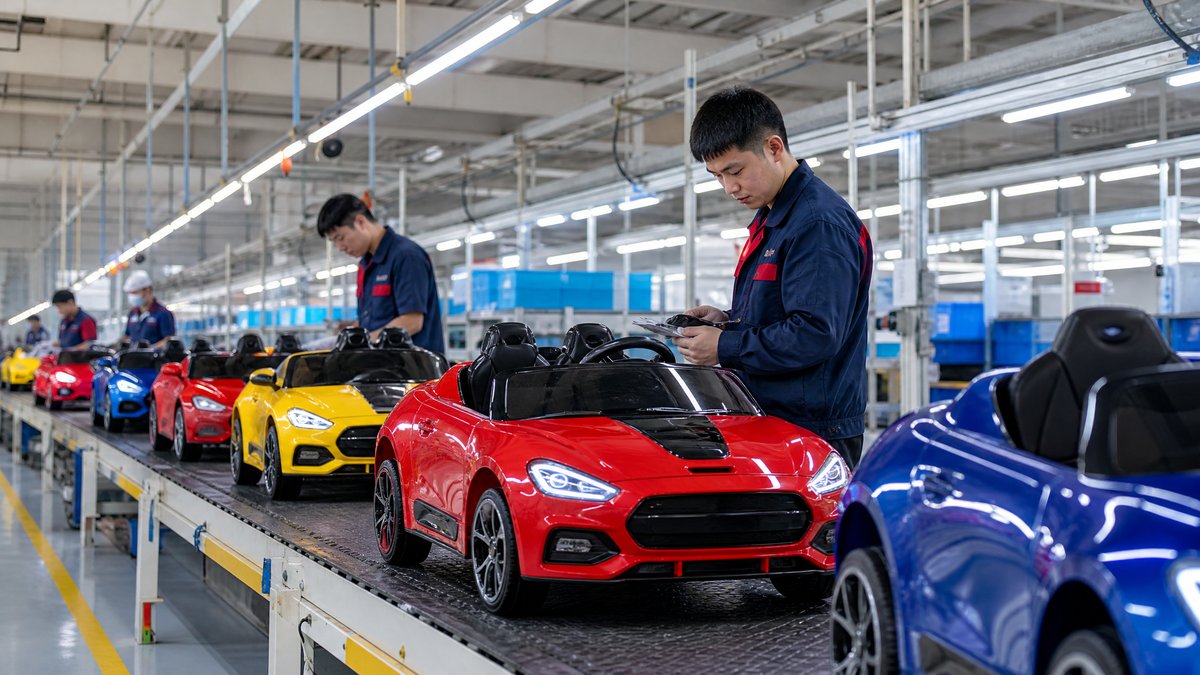
In the modern landscape of international trade, the role of the professional importer has evolved. The focus has shifted toward the curation of a product portfolio that prioritizes structural integrity, electrical reliability, and comprehensive user protection. For distributors and retailers, the safety of quad-wheel ride-on vehicles is the most critical metric for long-term commercial success. A single oversight in the selection process can lead to significant brand erosion and operational disruptions. Therefore, a deep understanding of the fundamental safety considerations—ranging from mechanical stability to the intricacies of labeling—is essential for any professional sourcing entity.
The complexity of these vehicles, which combine mechanical propulsion with electrical systems, necessitates a rigorous approach to quality assurance. Importers must move beyond aesthetics and investigate the underlying engineering principles that govern how these cars perform. This involves a systematic review of written model documentation and a thorough analysis of current supplier evidence to ensure that every unit meets the highest benchmarks for user well-being. By focusing on stability, overload protection, wheel mechanics, power source security, and appropriate product markings, professional buyers can build a resilient business model grounded in trust and reliability.
The Foundation of Mechanical Stability
Stability is the cornerstone of mechanical safety for any vehicle intended for use by children. For quad-wheel ride-on cars, the primary concern is the prevention of tip-overs, which can occur during sharp turns or when navigating uneven terrain. Quad-wheel designs offer a robust base, but they also present unique engineering challenges due to their larger dimensions and higher weight profiles.
Optimizing the Center of Mass
The most effective way to enhance stability is by lowering the vehicle's center of mass. Professional manufacturers achieve this by strategically placing the heaviest components, such as the energy storage units and the propulsion assemblies, at the lowest possible point within the chassis. When conducting a non-destructive assessment of a potential new model, professional buyers should look for designs where these heavy elements are situated below the axle line. A lower center of mass ensures that the gravitational forces acting on the vehicle remain within the stability footprint, even when the car is tilted or subjected to lateral forces during a turn.
The Role of Wheelbase and Track Width
Beyond the center of mass, the physical dimensions of the vehicle play a vital role in its overall balance. The track width and the wheelbase must be carefully proportioned relative to the vehicle's height. A wider track provides a broader lateral base, which significantly reduces the risk of side-tipping. Similarly, a longer wheelbase prevents the vehicle from pitching forward or backward during sudden changes in velocity. Importers should seek written supplier confirmation that the vehicle's geometry has been optimized for balance, ensuring that the stability footprint is sufficient for the intended user demographic.
Steering Limitations and Dynamic Balance
Another critical aspect of stability is the management of steering angles. If a vehicle allows for excessively sharp turns, the resulting centrifugal force can overcome its lateral stability. High-quality manufacturers incorporate steering limiters that prevent the wheels from turning beyond a safe threshold. This manual-led setup ensures that even an inexperienced user cannot inadvertently cause a tip-over through aggressive steering. During an external visual check, buyers can verify the presence of these limiters and ensure they are integrated into the steering column in a robust and permanent manner.
Overload Protection and Electrical Integrity
The electrical system of a ride-on car is its most sensitive component, requiring sophisticated safeguards to prevent overheating and ensure consistent performance. For professional entities, the goal is to source products that feature multi-layered protection mechanisms capable of handling the stresses of daily use.
Mitigating Thermal Risks
The primary electrical risk in juvenile vehicles is the accumulation of heat, particularly when the propulsion system is subjected to excessive strain. This often occurs when a vehicle is driven over thick grass or up steep inclines. In such scenarios, the electrical current can spike, leading to potential damage to the internal components. To counter this, manufacturers utilize current-limiting components that act as a safeguard. These devices are designed to interrupt the flow of energy if a certain threshold is reached, allowing the system to cool down before resuming operation. This non-destructive protection method is superior to older alternatives, as it reduces the likelihood of product returns and enhances the overall lifespan of the vehicle.
Structural Overload Considerations
While electrical protection is vital, the physical structure of the vehicle must also be capable of withstanding weights that exceed the standard recommendations. Although professional buyers should always emphasize following the manufacturer-approved weight guidelines, it is a reality that these vehicles are sometimes subjected to heavy use. Therefore, sourcing cars with reinforced chassis and high-strength axle materials is a prudent strategy. A robust frame provides the necessary rigidity to prevent deformation under stress. Importers should request current supplier evidence regarding the material properties of the chassis to ensure it can handle the rigors of the retail environment.
Wheel Design and Mechanical Safety
Wheels are complex mechanical assemblies that must be designed to prevent injury and provide consistent traction. The safety of a wheel design is determined by its geometry, the materials used in its construction, and how it interacts with the vehicle's propulsion system.
Preventing Entrapment and Pinch Points
One of the most significant mechanical risks associated with wheels is the potential for a child's fingers, hair, or clothing to become caught in the rotating parts. To mitigate this risk, professional manufacturers adhere to strict design principles regarding gaps and clearances. Any space between a moving wheel and the stationary body of the car must be carefully managed to ensure it is either too small for a finger to enter or large enough that it cannot trap a limb. Furthermore, the use of closed-spoke or solid wheel designs is preferred, as these minimize the number of areas where entrapment could occur. During a non-destructive assessment, importers should pay close attention to the proximity of the wheels to the wheel arches.
Material Selection for Traction and Durability
The choice of wheel material has a direct impact on the vehicle's performance and safety. Traditional hard plastic wheels are durable but often lack the necessary grip on smooth or slippery surfaces, which can lead to skidding. In contrast, wheels made from advanced synthetic foams or those featuring integrated rubber-like treads provide superior traction. This is particularly important for vehicles intended for outdoor use, where the terrain may be uneven or wet. Improved grip ensures that the vehicle responds predictably to steering and braking inputs, thereby enhancing the overall safety of the user experience.
Power Source Security and Management
The power source is the heart of the ride-on car, and its security is paramount. For professional importers, ensuring that the energy storage system is properly managed and inaccessible to the user is a non-negotiable requirement.
Secure Enclosures and Access Prevention
A fundamental safety requirement for any juvenile electric vehicle is that the power source must be secured in a way that prevents unauthorized access. This is typically achieved through the use of a reinforced enclosure that requires a specific tool to enter. By ensuring that the internal power connections and the energy storage units are not easily accessible, manufacturers protect children from potential electrical hazards. During an external visual check, professional buyers should verify that the enclosure is robust and that the fastening mechanisms are durable.
Integrated Management Systems
Modern ride-on cars often feature integrated management firmware that monitors the flow of energy throughout the system. These systems are designed to detect irregularities, such as sudden surges in current or excessive heat buildup, and take corrective action to protect the vehicle. This level of sophistication is a hallmark of high-quality manufacturing and provides an additional layer of security for both the distributor and the end-user. Importers should prioritize suppliers who can provide written confirmation of these management features.
Model-Neutral Sourcing Framework
For professional buyers, a systematic approach to sourcing is essential for maintaining a high-quality product line. The following framework provides a method for evaluating the safety of any quad-wheel ride-on car.
* Supplier Evaluation: Review the manufacturer's production history and internal quality control. A transparent supplier who shares detailed evidence of safety protocols is a strong candidate for partnership.
* Non-Destructive Assessment: Conduct an external visual check of the chassis, wheels, and power source enclosure. Look for robust construction, reinforced joints, and high-quality materials.
* Technical Documentation Review: Deep dive into the documentation provided by the supplier. Review reports on stability, electrical protection, and material safety. Ensure these reports are current and reference the specific model being sourced.
* Verification of Markings: Ensure the vehicle features permanent, indelible markings regarding age, weight thresholds, and the necessity of adult supervision. These are key indicators of regulatory adherence.
Safety Feature Comparison and Assessment
| Feature Category | Basic Model Attributes | Premium Model Attributes | Assessment Method |
|---|---|---|---|
| Mechanical Balance | Standard track width. | Enhanced track width. | Non-destructive assessment. |
| Propulsion Protection | Single-layer current limitation. | Multi-stage thermal management. | Review of written documentation. |
| Wheel Construction | Durable synthetic polymers. | Advanced traction materials. | External visual check. |
| Power Source Access | Standard tool-required enclosure. | Reinforced enclosure. | Manual-led setup verification. |
| User Guidance | Primary warning markings. | Comprehensive markings. | Inspection of markings. |
Sourcing Checklist for Professional Importers
* Verify that the vehicle's center of mass is situated as low as possible.
* Confirm the presence of steering limiters to prevent sharp turns.
* Request written supplier confirmation of current-limiting components.
* Inspect the wheel design for potential pinch points.
* Ensure the power source area is secured with a tool-required mechanism.
* Check for permanent markings regarding age and weight.
* Obtain current supplier evidence for material safety.
* Review the manual-led setup instructions for clarity.
* Confirm that adult supervision is highlighted in all documentation.
Frequently Asked Questions
Q: How can a professional importer verify stability without technical tests?
A: A professional importer can conduct a non-destructive assessment by evaluating the vehicle's geometry, such as the track width relative to height. Requesting written supplier confirmation regarding the placement of heavy internal components also provides insights into balance.
Q: What are the primary indicators of a high-quality electrical protection system?
A: High-quality systems feature multi-layered current-limiting components and integrated management firmware. Professional buyers should look for written model documentation that describes how the system protects against stalled propulsion units and excessive heat buildup.
Q: Why is the choice of wheel material considered a safety factor for professional sourcing?
A: The material affects traction and predictability. Wheels that provide superior grip, such as those made from advanced synthetic foams, reduce the risk of skidding and ensure the vehicle remains under control during turns and stops.
Conclusion
For professional importers and distributors, the safety of quad-wheel ride-on cars is an multifaceted challenge that requires a proactive and systematic approach. By focusing on the fundamental principles of stability, overload protection, wheel mechanics, power source security, and appropriate product markings, sourcing entities can significantly mitigate their operational risks. Partnering with manufacturers who prioritize transparent documentation and robust engineering not only protects the end-user but also ensures the long-term viability of the business in a competitive global market.
Request a wholesale quote
Official references
Explore these external resources for current regulatory and trade guidance. Confirm requirements with the relevant authority before placing an order.
Ready to Start?
Factory-Direct · CE & ASTM Certified · MOQ from 50 Units
Our export team works with buyers in 60+ countries. Get a quote within 24 hours.
KR
Written by KidsRideCar
China's leading kids electric ride-on car manufacturer. 500,000+ units shipped annually to 60+ countries. CE, ASTM & EN71 certified.