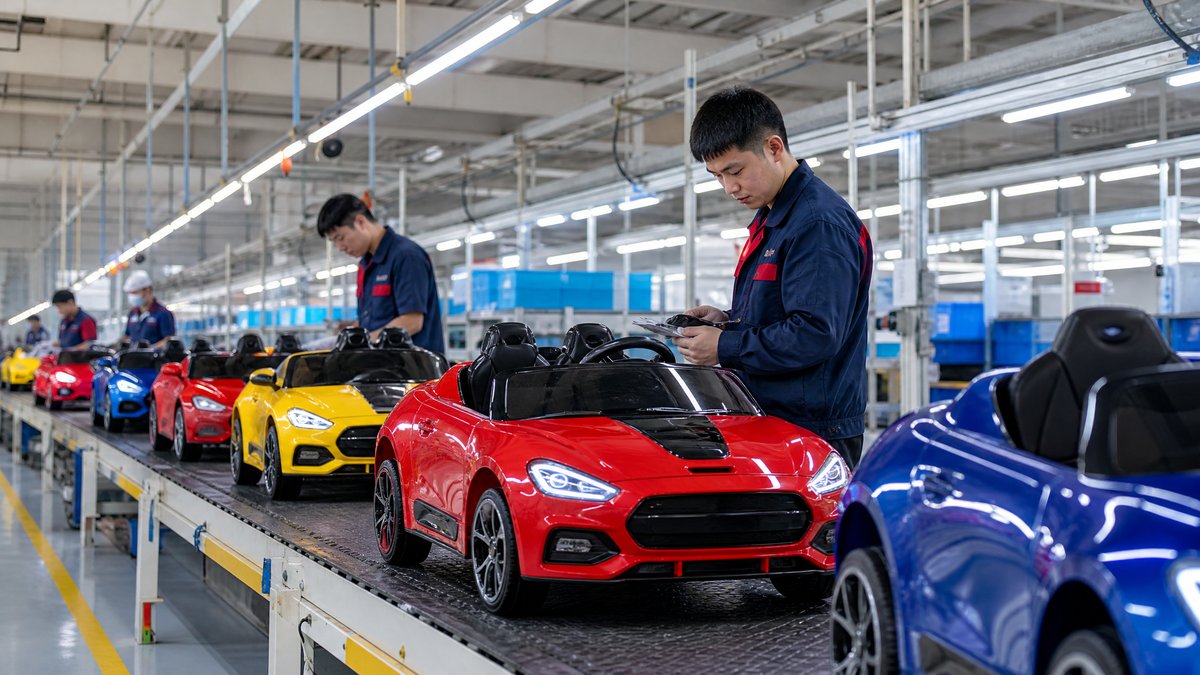
In the professional landscape of international trade, the procurement of children’s motorized vehicles demands a rigorous commitment to quality and risk management. For distributors, retailers, and bulk importers, the primary objective is to secure products that align with the highest expectations of durability and user protection. When sourcing four-wheel electric ride-on cars, the focus shifts toward a comprehensive evaluation of structural engineering, power management, and the transparency of manufacturer documentation. This professional guide examines the critical pillars of vehicle integrity, providing a model-neutral framework for business-to-business buyers to navigate the complexities of product selection while adhering to the most conservative safety principles.
The cornerstone of a successful business-to-business relationship in this sector is the verification of current supplier evidence and written model documentation. Rather than relying on verbal assurances, professional buyers must prioritize products that carry appropriate product markings and meet applicable destination-market requirements. By shifting the focus from technical performance claims to a framework of non-destructive assessment and qualified support, importers can build a portfolio of products that represent both commercial value and a dedication to the well-being of the end-user.
Structural Stability and Balance Frameworks
Stability is the most fundamental physical characteristic of a four-wheel motorized vehicle intended for younger users. While a four-wheel configuration inherently provides a broader base than other designs, the engineering must account for various dynamic forces. A well-designed vehicle maintains its balance through a combination of a low center of mass and a wide distance between the wheels. This ensures that the vehicle remains grounded even when traversing uneven surfaces or navigating gentle inclines.
Professional importers should look for designs where the heaviest internal components are positioned as low as possible within the main frame. This lowers the center of gravity, which is essential for preventing the vehicle from tipping during use. When evaluating a new model, a non-destructive assessment of the vehicle’s balance on a ten-degree incline is a standard benchmark. The goal is to ensure that the vehicle remains stable in its most unfavorable orientation while supporting the intended weight of a user.
Dynamic stability is equally important, particularly during turns. High-quality manufacturers implement mechanical limitations on the steering mechanism to prevent the wheels from turning at angles that could compromise the vehicle’s balance. Instead of focusing on the maximum pace of the vehicle, business-to-business buyers should evaluate how the vehicle behaves during directional changes. A stable vehicle will maintain contact with the ground on all four points, even when the steering is fully engaged.
Weight Allowance and Structural Integrity
The structural integrity of a ride-on car is tested not just by its intended use, but by the foreseeable misuse that occurs in real-world scenarios. A robust vehicle must be able to withstand weights that exceed its primary rating. This is often referred to as a safety margin, ensuring that the chassis and axles do not suffer catastrophic failure if multiple children attempt to use the vehicle simultaneously.
A common industry practice is to ensure that the vehicle can support a triple weight allowance. For example, if a vehicle is intended for a certain weight, the structural frame should be capable of supporting three times that amount without showing signs of bending, cracking, or the development of sharp edges. This level of durability is achieved through the use of high-impact materials and, in many cases, internal metal reinforcements that provide a rigid skeleton for the plastic body.
When sourcing, importers should request written supplier confirmation regarding the materials used in the construction of the chassis. High-impact polymers are preferred for their ability to absorb energy without shattering. Furthermore, the presence of internal reinforcement is a key indicator of a premium product, especially for larger models designed for two occupants. This structural depth ensures that the vehicle remains a long-term asset for the retailer and a safe choice for the consumer.
Wheel Attachment and Entrapment Prevention
The wheels are the primary points of contact between the vehicle and the environment, and they are subject to significant mechanical stress. Safety considerations in this area focus on two main aspects: the security of the attachment and the prevention of physical injury through entrapment.
Professional-grade vehicles use specialized locking mechanisms or retaining hardware that requires specific tools for removal. This ensures that the wheels remain a permanent part of the assembly and cannot be removed by a child. During an external visual check, importers should verify that all wheel covers and hub components are securely fastened. Any small parts that could be detached represent a potential hazard, so a permanent attachment method is essential.
Entrapment prevention is another critical design element. The gaps between the rotating wheels and the stationary body of the vehicle must be engineered to prevent fingers or limbs from becoming caught. A safe design either keeps these gaps small enough that a finger cannot enter or large enough that it cannot be pinched. Manufacturers who prioritize these details demonstrate a sophisticated understanding of user protection, which should be a key factor in any business-to-business sourcing decision.
Power Management and Internal Protection Systems
As motorized products, these vehicles rely on internal power systems that must be managed with extreme care. The focus for business-to-business buyers should be on the presence of protection circuits and the quality of the internal electrical pathways. A well-engineered power system includes features that prevent overcharging and protect against internal faults.
For vehicles using modern power storage solutions, a dedicated management system is essential. This system monitors the health of the internal cells and ensures that the power flow remains within safe parameters. Importers should prioritize products that come with comprehensive written model documentation detailing these protection features. It is also vital to ensure that the power storage area is secure and requires adult supervision or specific tools to access, preventing unauthorized contact with internal components.
Charging safety is another area where design plays a vital role. A high-quality vehicle will include a feature that prevents the motors from engaging while the vehicle is connected to an external power source. This manual-led setup ensures that the vehicle cannot be moved while tethered, reducing the risk of accidents. business-to-business professionals should verify these features through current supplier evidence before committing to a large-scale order.
Labeling, Documentation, and Market Alignment
The transparency of a product’s documentation is often the best indicator of its overall quality. For importers, ensuring that all vehicles carry appropriate product markings is essential for navigating international trade and maintaining consumer trust. These markings should provide clear information regarding the intended age of the user, the maximum weight allowance, and any necessary warnings.
In addition to physical labels, a complete safety dossier is a requirement for any professional procurement process. This dossier should include written supplier confirmation of all testing performed, as well as evidence that the product aligns with applicable destination-market requirements. Tracking information, such as the date and location of manufacture, is also essential for maintaining accountability throughout the supply chain.
Importers should also ensure that the user manuals provided are comprehensive and easy to understand. These manuals should lead the user through a manual-led setup and provide clear instructions for external visual checks. By emphasizing the importance of adult supervision and manufacturer-approved support, the documentation helps to establish a safe operating environment for the end-user.
Model-Neutral Sourcing Framework for business-to-business Importers
To assist in the evaluation of new products, the following framework provides a structured approach to sourcing four-wheel electric ride-on cars. This framework focuses on qualitative assessments and the verification of documentation.
| Evaluation Pillar | business-to-business Verification Step | Desired Outcome |
|---|---|---|
| Structural Integrity | Request written supplier confirmation of weight allowance testing. | Evidence of a three-fold safety margin. |
| Balance and Stability | Conduct a non-destructive assessment on a ten-degree incline. | The vehicle remains grounded in all orientations. |
| Mechanical Security | Perform an external visual check of wheel attachments. | All components require tools for removal. |
| Power Management | Review written model documentation for protection circuits. | Presence of automated shut-off and charging locks. |
| Documentation | Verify appropriate product markings and tracking labels. | Full alignment with destination-market requirements. |
Professional Sourcing Checklist
When evaluating a potential supplier, use the following checklist to ensure that all safety and quality considerations have been addressed:
* Written Model Documentation: Has the supplier provided a complete technical dossier for the specific model?
* Current Supplier Evidence: Are the provided test reports recent and from a reputable third-party source?
* Appropriate Product Markings: Does the vehicle carry all necessary labels for the target market?
* External Visual Check: Does a physical inspection reveal any sharp edges, loose parts, or entrapment hazards?
* Manual-Led Setup: Is the user manual clear, accurate, and written in the appropriate language?
* Qualified Support: Does the manufacturer provide a clear path for technical assistance and manufacturer-approved support?
* Non-Destructive Assessment: Has the vehicle been tested for stability and structural integrity under realistic conditions?
Maintenance and User Safety Boundaries
While the design of the vehicle provides the foundation for safety, the long-term integrity of the product depends on proper care and the recognition of technical boundaries. business-to-business professionals should communicate these boundaries clearly to their retail partners and customers.
The Role of External Visual Checks
Users should be encouraged to perform regular external visual checks of the vehicle. These checks include verifying that the wheels are secure, the body is free of cracks, and all safety restraints are in good condition. These are non-technical tasks that can be performed by any adult and are essential for identifying potential issues before they become hazards. If any concern is identified during these checks, the instruction should be to stop use if there is a concern and seek qualified support.
Respecting Technical Boundaries
It is imperative that users do not attempt to perform internal inspections or mechanical servicing. The internal power section and the internal motor assembly are not intended for consumer access. Any attempt to alter the internal electrical pathways or perform technical maintenance can compromise the safety of the vehicle and void the manufacturer-approved support. For any technical issues, users must be directed to manufacturer-approved support or a qualified technician. By maintaining these clear boundaries, business-to-business importers help to ensure that the products they bring to market are used in a safe and responsible manner.
Frequently Asked Questions
Q: Why is a three-fold weight allowance important for business-to-business buyers?
A: A three-fold weight allowance ensures that the vehicle has a significant safety margin. This means the structure can handle much more than its intended weight, protecting the user in cases where the vehicle might be used by multiple children or subjected to unusual stress. It is a key indicator of a high-quality, durable product.
Q: How should an importer verify the stability of a new ride-on car model?
A: An importer should perform a non-destructive assessment by placing the vehicle on a ten-degree incline. The vehicle must remain stable and not tip over in any direction. This test should be documented as part of the current supplier evidence to ensure the model meets the necessary balance requirements for safe use.
Q: What is the recommended course of action if a technical issue is identified?
A: If any technical issue or concern is identified during an external visual check, the user should stop use if there is a concern immediately. They should then contact manufacturer-approved support or seek assistance from a qualified professional. Users should never attempt to perform internal technical maintenance or alter the internal electrical pathways themselves.
Request a wholesale quote
Official references
Explore these external resources for current regulatory and trade guidance. Confirm requirements with the relevant authority before placing an order.
Ready to Start?
Factory-Direct · CE & ASTM Certified · MOQ from 50 Units
Our export team works with buyers in 60+ countries. Get a quote within 24 hours.
KR
Written by KidsRideCar
China's leading kids electric ride-on car manufacturer. 500,000+ units shipped annually to 60+ countries. CE, ASTM & EN71 certified.