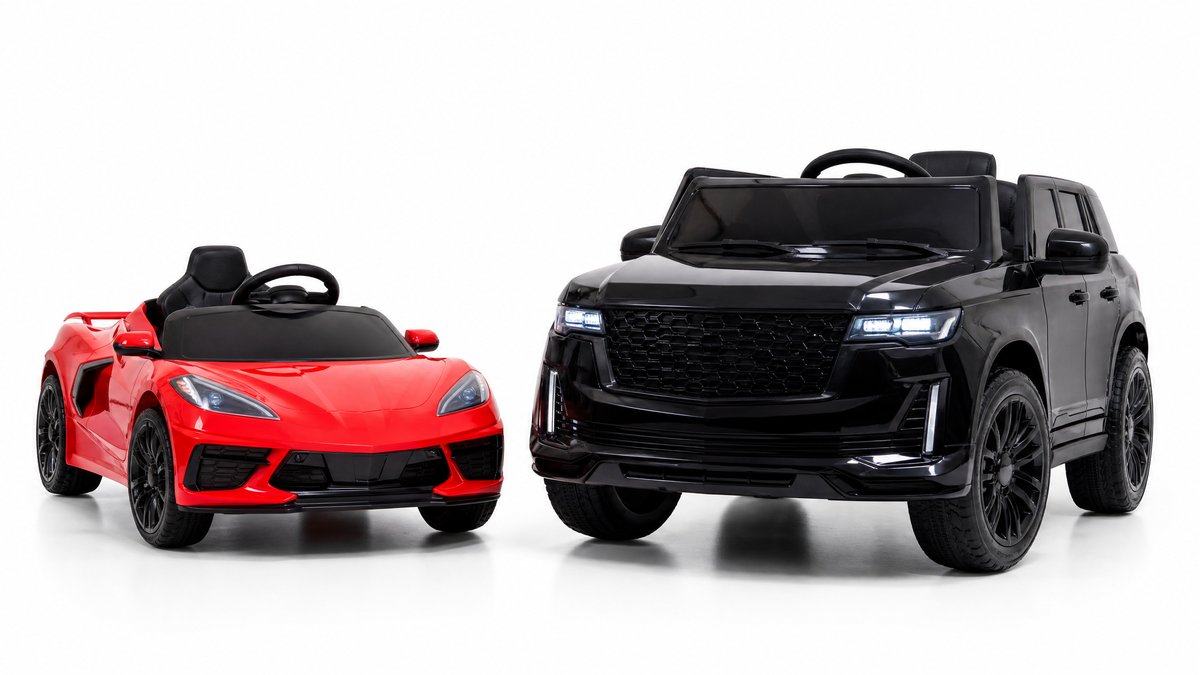
For a retailer, the weight of a kids ride-on car is more than a specification on a supplier sheet. It can affect which customers can receive the product, how store staff move it, what kind of shelf or floor display is practical, how an e-commerce listing is written, and how a freight quotation should be compared. It can also influence packaging choices, warehouse procedures, return handling, and the perceived value of a model.
The concise answer: retailers should evaluate at least four separate weight figures—net product weight, gross packed weight, shipping weight used by the carrier, and the product’s maximum supported user load. These figures answer different questions and should not be combined. Before ordering, request a model-specific specification sheet, packing details, and a clear explanation of how each figure is measured. Then use the confirmed data in your assortment, logistics, product-page, and after-sales plans.
This guide focuses on procurement decisions for importers, wholesalers, distributors, retailers, and OEM buyers.
Why product weight matters in retail buying
Weight affects the product journey from factory to customer. A heavier ride-on car may require more careful carton handling, a different warehouse location, additional support during in-store movement, or a delivery option that is not suitable for every address. A lighter model may be easier to demonstrate and reposition, but weight alone does not establish quality, stability, safety, or suitability for a particular child.
Weight also interacts with dimensions. A compact but dense carton can be difficult to lift, while a larger, lighter carton may be awkward because of its shape. Review weight together with carton dimensions, handles, internal protection, and the planned warehouse route.
For assortment planning, weight can describe a model’s operational profile. Do not use it as a shortcut for claims such as “heavier means safer” or “lighter means weaker”; base claims on documented specifications and quality checks.
The four weight figures buyers should separate
1. Net product weight
Net weight is generally the weight of the ride-on car itself, but the exact inclusions can vary. A supplier may include installed components while excluding the retail carton, protective foam, tools, or certain loose accessories. Ask the factory to define the measurement clearly and to identify whether the battery is included.
This figure is useful for store planning, product comparison, and customer-service conversations. It is not usually the same figure a carrier uses to invoice a shipment.
2. Gross packed weight
Gross weight normally includes the product, retail packaging, protective materials, manuals, and accessories packed in the carton. It is more useful than net weight for receiving, warehouse handling, and estimating the effort required to process a unit.
For an OEM project, confirm whether branded packaging, upgraded inserts, additional accessories, or display materials change the packed weight. A packaging revision can alter the final figure even when the ride-on car itself has not changed.
3. Shipping weight
A freight provider may calculate charges from actual gross weight, dimensional weight, or another transport rule. The applicable method depends on the route, mode, carrier, and shipment details. Do not assume that the number on a product catalog is the chargeable weight.
When comparing freight quotations, provide the same confirmed carton dimensions, carton count, gross weight, and shipment terms to each provider. Ask each provider to state how the quote was calculated. For more logistics planning, see the practical guide to [shipping kids electric ride-on cars from China](/blog/shipping-kids-electric-ride-on-cars-from-china).
4. Maximum supported user load
Maximum load is a performance and safety-related specification, not a product weight. It describes the load the model is designed to support under the manufacturer’s stated conditions. It may not represent one child’s body weight alone; clothing, accessories, movement, terrain, and other conditions may matter according to the instructions.
Never infer maximum load from net weight. Request the manufacturer’s written specification and communicate it accurately. Avoid presenting the figure as a promise that a model is appropriate for every child or every surface.
How product weight should influence your assortment
Weight is most useful when it helps you organize operational tiers rather than when it is treated as a standalone quality ranking. For example, a retailer could group products by handling profile:
- models suitable for a compact showroom demonstration area;
- models that require a floor display and planned staff assistance;
- models that are better sold through delivery or collection arrangements;
- models whose packed weight and dimensions require additional warehouse planning.
This is an internal planning framework, not a universal classification. Set your own thresholds after reviewing actual supplier data, staff capability, storage equipment, and local delivery practices.
A broad assortment may include different voltage options, seat configurations, body styles, and feature packages. When comparing two otherwise similar models, product weight can be a practical tie-breaker if it affects your customer’s delivery experience or your handling cost. It should still be considered alongside dimensions, packaging protection, spare-parts support, target age guidance, and documented safety information.
For product-line planning, review [how retailers can build a ride-on car assortment by price tier](/blog/how-can-retailers-build-a-ride-on-car-product-assortment-by-price-tier), while keeping weight as an operational rather than purely marketing criterion.
Questions to ask the supplier before approving a model
A professional inquiry should make the supplier provide comparable information. Ask for:
1. What is the net weight of the finished model, and what is included in that measurement?
2. What is the gross weight per export carton?
3. What are the packed carton dimensions and carton quantity per master case or shipment unit?
4. Is the battery included in both the net and gross figures?
5. Are the figures measured from a production sample, a pre-production sample, or a standard specification?
6. Could accessories, packaging changes, or OEM branding change the final weight?
7. What maximum user load is stated in the model’s instructions and technical documents?
8. Which components are removable for packing, and does that affect the declared product information?
9. How should the model be handled during warehouse receiving and customer delivery?
10. What weighing or inspection records can be provided for the approved production version?
The goal is a specification that all teams can use consistently.
How to verify weight without inventing test data
Weight verification should be controlled and traceable. First, agree with the supplier on the definitions and measurement method. Then compare the specification with an approved sample or production inspection record. If your team weighs a sample, record the scale, unit condition, included accessories, battery status, packaging state, date, and sample identification.
Do not publish a self-measured figure as a universal product fact if the sample is incomplete or if the production configuration may change. Instead, ask the supplier to reconcile any difference and confirm the final approved value in writing.
A pre-shipment inspection can include an item-weight check when relevant to the purchase order. State what is being weighed and the agreed acceptance rule. Do not claim a test result in marketing copy unless it was recorded for that model and batch.
Weight checks should complement checks of controls, assembly, packaging, labels, instructions, and other applicable requirements. See [the practical quality inspection checklist before ride-on car shipment](/blog/what-is-a-practical-quality-inspection-checklist-before-ride-on-car-shipment).
Weight, packaging, and warehouse handling
Retailers should examine how a carton is lifted, stored, moved, and opened. A product may be within a team’s nominal lifting capability but still present handling difficulty because of its length, center of gravity, smooth surfaces, or lack of suitable handholds. Discuss these practical points with the supplier and freight partner rather than relying on weight alone.
In the warehouse, map the product’s path from receiving to storage, picking, staging, and dispatch. Consider whether two-person handling, a trolley, or a defined staging area is appropriate under your workplace procedures. Keep cartons dry and follow the supplier’s storage instructions, particularly for battery-containing products.
For stores, decide whether the display unit should be assembled, partially assembled, or shown through packaging and product imagery. Staff should not be expected to improvise lifting methods. A written internal handling procedure can reduce damage to cartons and products while helping employees give more consistent customer assistance.
Packaging also affects returns. If a customer cannot safely move or repack a large, heavy item, your return instructions should explain the approved process and the information the customer needs to provide. Do not instruct customers to open batteries, rewire products, solder connections, bypass protections, or perform internal repairs.
Product listings and customer communication
Online shoppers need practical information, but a single weight number rarely answers the real question. A product page should distinguish product weight from packed shipping weight and maximum user load. If the exact value varies by configuration, state that clearly and identify the relevant version.
Useful listing language can cover:
- the model’s net weight, with inclusions defined;
- packed carton weight and dimensions where available;
- whether the item arrives assembled or requires assembly;
- delivery or collection considerations;
- maximum user load as stated by the manufacturer;
- a reminder to follow the supplied instructions and use the product only as directed.
Avoid vague claims such as “easy to carry,” “safe for any child,” or “strong enough for all outdoor conditions” unless you have evidence and the statement is appropriate for your market. Weight should support an accurate buying decision, not create an unsupported performance promise.
If you sell across markets, keep a controlled master specification. Convert units carefully, preserve the original measurement, and have the responsible team approve rounding. A small transcription error can create confusion for customers, warehouse staff, and carriers.
OEM and private-label considerations
OEM buyers should lock weight-related information later in the product-development process than the appearance of a prototype. Changes to battery type, seat design, wheels, decorative parts, remote-control packaging, charger packaging, or protective inserts may change both product and carton weight.
Include a specification table in the OEM approval pack with definitions for net weight, gross weight, carton dimensions, and maximum user load. Identify the approved configuration and revision date. If packaging artwork includes weight information, update it only after the final packaging and production configuration are confirmed.
Ask the factory how it controls changes. A new accessory or packaging insert should trigger a review of the product page, carton markings, freight documents, and internal warehouse data. This simple change-control step helps prevent different teams from using different numbers.
Buyers starting a private-label program may also want to review [the OEM customization guide for kids electric ride-on cars](/blog/oem-kids-electric-ride-on-cars-a-complete-customization-guide) and contact [KidsRideCar’s inquiry team](/inquiry) with the intended market, model configuration, packaging plan, and target sales channel.
Frequently Asked Questions
Is a heavier kids ride-on car automatically better?
No. Weight alone does not prove better materials, stability, durability, safety, or customer value. Compare documented construction, quality controls, instructions, packaging, service support, and applicable requirements. Use weight mainly to understand handling and logistics unless you have additional evidence for a product claim.
Should retailers use net weight or gross weight on a product page?
Use the figure that answers the customer’s question, and label it clearly. Net product weight describes the item; gross packed weight helps customers understand delivery handling. If you publish both, explain the difference and confirm the values for the exact configuration.
Does product weight determine shipping cost?
Not by itself. A carrier may use actual weight, dimensional weight, or another calculation. Carton dimensions, shipment mode, route, and carrier terms can all matter. Ask for a shipment-specific quote and confirm the basis of calculation.
Is maximum user load the same as product weight?
No. Product weight is the mass of the ride-on car or its packed shipment, depending on the definition. Maximum user load is a manufacturer-stated limit for the supported occupant or load under stated conditions. Keep the two specifications separate in procurement and marketing.
What should an importer do if the supplier’s weight figures conflict?
Pause approval of the affected document and ask the supplier to define each figure, confirm the configuration, and reconcile the discrepancy. Record the agreed values in the purchase-order or specification file. If needed, arrange a documented sample or pre-shipment check before release.
Conclusion: make weight a documented buying factor
Kids ride-on car product weight matters because it affects more than freight. It can shape your assortment, warehouse flow, store demonstrations, delivery communication, product listings, returns process, and OEM change control. The safest procurement approach is to separate net weight, gross packed weight, shipping weight, and maximum user load; define how each is measured; and keep the approved values tied to a specific model and configuration.
If you are comparing models for a wholesale, distribution, retail, or private-label program, share your target market, sales channel, packaging needs, and preferred assortment with KidsRideCar at info@kidsridecar.com. The team can help you organize the questions needed to evaluate a model before you commit to an order.
Official references
Explore these external resources for current regulatory and trade guidance. Confirm requirements with the relevant authority before placing an order.
Ready to Start?
Factory-Direct · CE & ASTM Certified · MOQ from 50 Units
Our export team works with buyers in 60+ countries. Get a quote within 24 hours.
KR
Written by KidsRideCar
China's leading kids electric ride-on car manufacturer. 500,000+ units shipped annually to 60+ countries. CE, ASTM & EN71 certified.