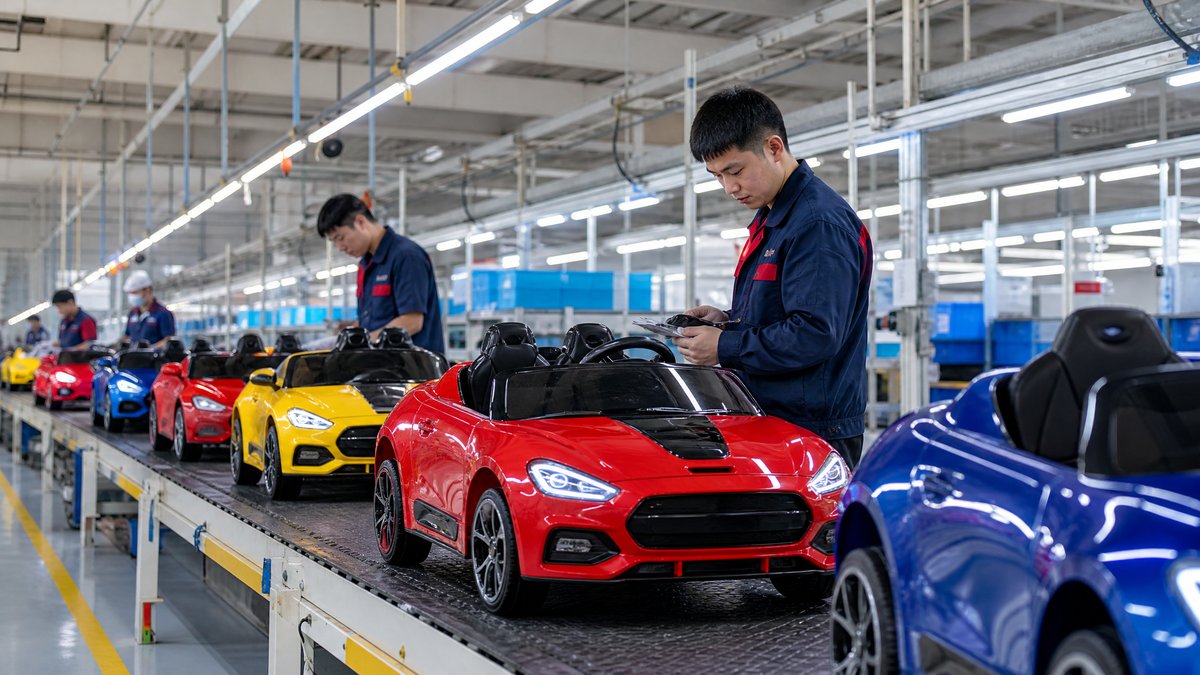
For professional importers and retailers entering the children's electric vehicle sector, selecting inventory is a sophisticated task requiring a deep understanding of market dynamics and quality standards. The global demand for these miniature vehicles has grown significantly in recent years, driven by a desire for interactive and engaging play experiences that mimic the adult world. However, for the professional business-to-business buyer, the challenge lies in identifying products that not only capture the imagination of young users but also meet the stringent expectations of modern safety and documentation frameworks. Success in this category is built upon a foundation of careful research, thorough supplier verification, and a steadfast focus on long-term reliability rather than short-term market trends. Establishing a reputation for quality is essential for any importer looking to build a sustainable brand in this competitive space.
When a professional begins sourcing four-wheel ride-on cars, the primary focus must be on establishing a robust procurement strategy. This strategy should prioritize models backed by comprehensive written model documentation and current supplier evidence. In a market with numerous options, the ability to distinguish between a high-quality vehicle and an inferior alternative is what separates successful ventures. This guide provides a framework for beginners to navigate the industry, ensuring every procurement decision is informed and strategically sound.
The Strategic Landscape of Professional Sourcing
In international trade, especially within toy categories, the importance of sourcing cannot be overstated. For a beginner, the temptation might be to focus solely on aesthetic appeal or the lowest price. While these factors are relevant, they must be balanced against the necessity of ensuring products align with applicable destination-market requirements. A professional buyer views each vehicle as a complex assembly that must work together seamlessly for a safe experience.
Choosing inventory involves a multi-faceted evaluation. It begins with assessing the manufacturer's track record in producing reliable goods. Importers should seek partners who provide written supplier confirmation regarding materials and manufacturing processes. This transparency is essential for building a brand that parents trust. Furthermore, a professional approach helps mitigate risks associated with product failures or documentation gaps.
Market Segmentation and User Needs
The market for kids' four-wheel ride-on cars is diverse, with products tailored to different age groups. A beginner must understand these segments to build a balanced inventory. Generally, the market is divided into three primary categories based on age and performance.
First, entry-level models are designed for the youngest users, typically between the ages of one and three years. These focus on simplicity, often featuring a single pedal and a gentle pace appropriate for indoor use. For this segment, parental wireless controls are a critical feature, allowing adults to guide the vehicle and ensure the child remains in a safe environment.
Second, the mainstream segment caters to children between the ages of three and six years. This is the most popular category in the global market, offering a wide variety of styles ranging from realistic automotive replicas to rugged, off-road inspired designs. These models typically feature more robust power configurations and a host of interactive elements such as functional lights, horn sounds, and even integrated audio systems. In this segment, the balance between performance and safety is paramount. Professional buyers should prioritize features like soft-start technology, which ensures a smooth and gradual transition from a stationary position to motion, thereby enhancing the user experience and reducing mechanical wear.
Finally, advanced models are intended for older children, often six years and above. These vehicles are larger, feature more powerful energy cells, and handle challenging terrain. They often include enhanced suspension and synthetic rubber-like wheels for better traction. Sourcing for this segment requires higher attention to build quality, as the vehicles will be subjected to greater physical demands.
Evaluating Product Quality and Safety
For a business-to-business buyer, quality is determined by construction, materials, and safety features. A non-destructive assessment of a sample unit provides insights into durability. Professionals should perform an external visual check of the bodywork, looking for smooth edges and the absence of small parts that could pose a hazard.
Material Integrity
The choice of materials indicates a vehicle's longevity. High-impact polypropylene is common for bodywork due to its durability. However, the thickness and finish can vary. A professional buyer should look for models using high-quality, non-toxic materials that withstand daily play.
The wheels are another critical component. While basic models use plastic wheels, premium versions feature wheels made from synthetic materials for better grip and a quieter ride. These synthetic rubber-like wheels are highly sought after because they offer a realistic driving experience and are durable on surfaces like grass or gravel. Prioritizing models with these enhanced options is a strong point of differentiation.
Motion Control and Parental Oversight
Safety is the cornerstone of the industry. One of the most important features is soft-start technology, which ensures the vehicle accelerates gradually, preventing the sudden lurch that can occur when a child presses the pedal. This provides a comfortable experience and reduces mechanical strain on internal gear assemblies.
Parental wireless controls are essential, particularly for younger children. These allow an adult to take over steering and motion at any time. When evaluating this feature, buyers should ensure the wireless frequency is modern and reliable, minimizing the risk of interference from other devices.
Documentation and Verification
In professional sourcing, a product is only as good as the documentation supporting it. Beginners must navigate the evidence required to confirm a product's suitability. Rather than relying on verbal assurances, importers should insist on receiving current supplier evidence for every model.
Written Model Documentation
Comprehensive written model documentation should include specifications of dimensions, weight, power source, and features. It should also provide clear instructions for manual-led setup and maintenance. This serves as the primary reference for the importer, ensuring the product is used correctly.
Product Markings and Evidence
Every vehicle should feature appropriate product markings indicating the intended age group and necessary warnings. These markings must be clear, durable, and visible. A professional buyer should verify that these markings align with destination-market requirements.
When a manufacturer claims their products meet certain standards, the buyer must verify those claims. This involves reviewing written supplier confirmation and available third-party reports. These documents should be checked for authenticity, ensuring they are current and cover the model being sourced. This verification is a critical step in building a secure supply chain.
Sourcing Framework and Comparison
To streamline procurement, beginners should adopt a structured framework guiding them from research to delivery.
Sourcing Comparison Matrix
| Feature Category | Entry-Level Models | Premium Tier Models |
|---|---|---|
| Primary User Age | One to three years | Three to eight years |
| Body Material | Standard durable plastic | High-impact reinforced polymer |
| Wheel Construction | Molded plastic wheels | Synthetic rubber-like wheels |
| Motion Control | Simple direct activation | Advanced soft-start technology |
| Parental Oversight | Essential wireless control | Multi-frequency wireless control |
| Surface Suitability | Indoor and smooth pavement | Grass, gravel, and varied terrain |
Selection Steps
First, define market requirements. Before contacting suppliers, define the needs of your target market, including preferred styles, age groups, and competitive price points.
Second, vet potential suppliers. Look for manufacturers with a proven track record. Ask for written supplier confirmation regarding manufacturing processes and ongoing support.
Third, evaluate samples. Always request a sample before a bulk order. Perform a non-destructive assessment to verify material quality and construction. Check the manual-led setup process to ensure it matches the documentation.
Fourth, finalize logistics. Ensure all documentation, including current supplier evidence and appropriate product markings, is in place. Work with a logistics partner to determine the most efficient shipping method.
Logistics and Inventory Care
Managing logistics and storage requires planning to ensure products remain in peak condition. Because these vehicles are large and contain energy cells, they require specific handling protocols.
Shipping and Storage
Most ride-on cars are shipped in a partially assembled format to optimize volume and reduce damage risk. This requires the end-user to perform a manual-led setup, such as attaching wheels and seating. Importers must ensure the provided manual is clear to avoid assembly errors.
Care of energy cells is critical. If units are stored for extended periods, cells can lose charge. Distributors should implement a regular check-up schedule, performing external visual checks and ensuring cells are maintained according to manufacturer recommendations. Proper storage in a cool, dry environment preserves the power system's longevity.
Managing Safety Boundaries
As a business-to-business entity, you must provide clear guidance regarding safe use and maintenance. Guidance should emphasize that all maintenance must be limited to external, non-technical actions.
External Maintenance and Support
Instructions provided to users should focus on simple checks not requiring specialized knowledge. These include regular external visual checks for wear, ensuring fasteners are secure, and cleaning the exterior with a damp cloth. Users must follow the manual-led setup and usage instructions.
Users should never attempt to access internal components. Concerns regarding the power system or motion control should be addressed by manufacturer-approved support or qualified support. If a user notices unusual behavior, they should stop use if there is a concern and contact the retailer. By setting these clear and firm boundaries, you help to ensure the safety of the young users who enjoy these products and protect the long-term integrity of the vehicle itself. Educating your retail customers on these professional boundaries is a key part of your role as a responsible distributor or importer in the juvenile product market.
Frequently Asked Questions
Q: How can a beginner verify supplier quality?
A: Start by requesting written model documentation and current supplier evidence. Order a sample unit for a non-destructive assessment. Check the manufacturer's reputation and ask for written supplier confirmation regarding their quality control processes.
Q: What are the benefits of soft-start technology?
A: This feature ensures the vehicle accelerates gradually, preventing sudden lurches. For a business-to-business buyer, this leads to higher customer satisfaction and lower return rates related to mechanical concerns.
Q: How should the assembly process be managed?
A: Source vehicles in a partially assembled format to balance shipping efficiency with ease of setup. Verify that the manufacturer provides a clear, manual-led setup guide and offers manufacturer-approved support for any questions.
Conclusion
For the beginner, success in the kids' four-wheel ride-on car market is achieved through research, strategic sourcing, and a commitment to quality. By focusing on models supported by written model documentation and current supplier evidence, you can build a successful inventory. Your role is to provide safe, reliable products meeting all applicable destination-market requirements. With a structured framework and strong supplier partnerships, you can establish a thriving business.
Request a wholesale quote
Official references
Explore these external resources for current regulatory and trade guidance. Confirm requirements with the relevant authority before placing an order.
Ready to Start?
Factory-Direct · CE & ASTM Certified · MOQ from 50 Units
Our export team works with buyers in 60+ countries. Get a quote within 24 hours.
KR
Written by KidsRideCar
China's leading kids electric ride-on car manufacturer. 500,000+ units shipped annually to 60+ countries. CE, ASTM & EN71 certified.