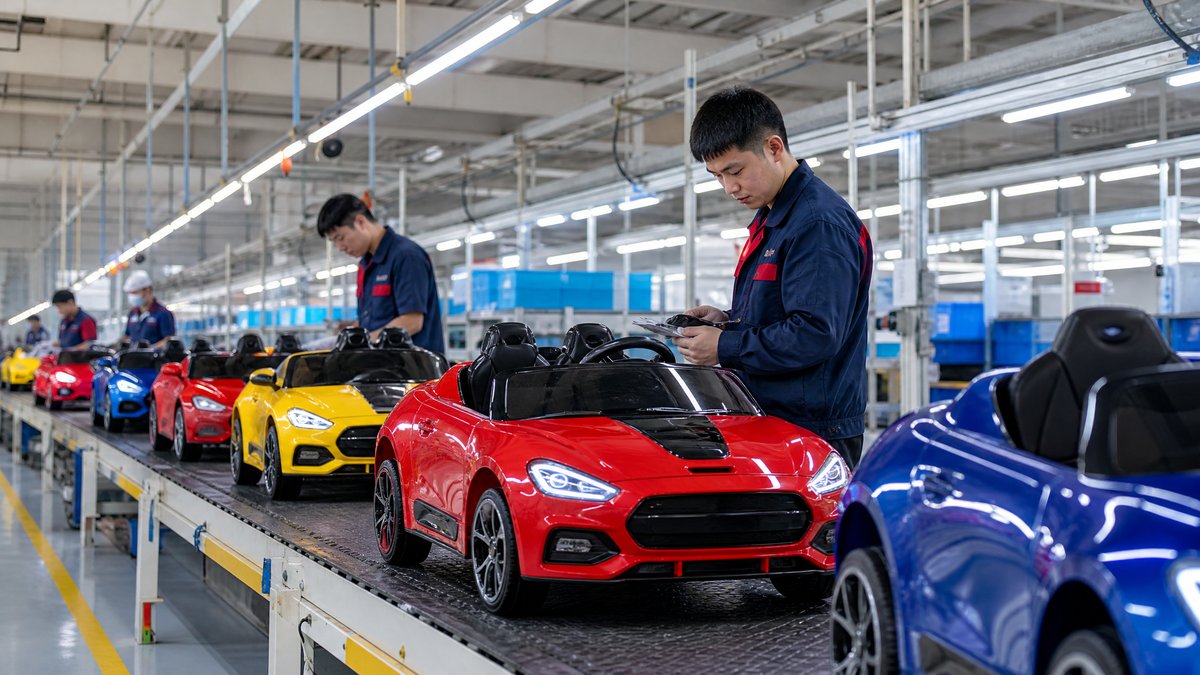
A wholesale catalog is more than a gallery of attractive vehicle photos. For importers, distributors, retailers, and OEM buyers, it is a decision-making document: it should make each model easy to compare, quote, approve, list, ship, sell, and support. Missing or ambiguous data creates follow-up emails, inaccurate listings, purchasing delays, and avoidable returns.
A useful catalog presents a consistent data set for every SKU, separates confirmed specifications from quote-only options, and shows what varies by market or configuration.
1. Start with a clear SKU identity and commercial overview
Every catalog page should begin with an unambiguous product identity. Include the model name, model number, internal SKU, version or revision, and a concise one-sentence positioning statement. A buyer should be able to refer to one model in an RFQ or purchase order without guessing which image or configuration is meant.
Add the information that helps a buyer decide whether the model belongs in an assortment:
- Recommended age grade, stated as a product-use guide rather than a substitute for supervision or local requirements.
- Seat configuration, such as single-seat or two-seat, with a note on whether the seating arrangement affects other specifications.
- Intended use context, such as indoor smooth floors, paved outdoor surfaces, or suitable supervised play areas, based on the actual model design.
- Design category, body style, color options, and whether the appearance is generic or licensed.
- A short list of selling points, limited to features that are present on the specified configuration.
Avoid marketing claims such as “fastest,” “safest,” or “all-terrain” unless they are supported by an appropriate, documented basis and carefully qualified. If a buyer wants a similar model with different features, link contextually to related products such as [/products/kr-s900](/products/kr-s900), [/products/kr-l700](/products/kr-l700), or [/products/kr-t600](/products/kr-t600), but do not imply that the linked models share identical specifications.
2. Make technical specifications comparable across SKUs
The core of a wholesale catalog is a standardized specification table. Use the same field order for every model, show units consistently, and identify “optional,” “to be confirmed,” or configuration-dependent fields. At minimum, include:
- Product dimensions and net weight.
- Carton dimensions, gross weight, cartons per unit, and packing method.
- Recommended user age or age grade, seat count, and stated maximum user load where the manufacturer has confirmed it.
- Motor type and quantity, drive wheels, battery chemistry, nominal voltage, capacity, charger input and output information, and charging interface.
- Control methods, including foot pedal, steering control, parental remote, speed modes, forward/reverse selection, and any soft-start behavior if fitted.
- Wheel or tire material, wheel size, suspension components, seat material, seat belt configuration, doors, lights, sounds, and dashboard functions.
- Assembly status, approximate assembly scope, included tools, and whether batteries or chargers are included.
Do not turn an estimated runtime into a promise. Runtime depends on load, surface, temperature, battery condition, driving behavior, and configuration. A catalog can state that operating time is a reference estimate and should be confirmed for the exact model and battery specification. Similarly, do not publish an unsupported speed, gradeability, or load figure merely to make a comparison table look complete.
A labeled technical drawing is valuable for warehouse planning and retailer fit checks. If a buyer is calculating carton volume, provide the packing dimensions and state whether accessories are packed separately.
3. Document compliance and responsible product claims
Compliance data helps professional buyers evaluate launch risk. Identify the destination market and list available reports, declarations, labels, manuals, and other technical-file materials for the exact model and configuration.
Include, where applicable and available:
- Applicable market or region for each document.
- Product and model identification shown on the report or declaration.
- Testing or assessment scope, date, issuing organization, and document reference.
- Relevant warnings, age grading, supervision language, battery and charger information, and required markings.
- Whether documentation covers the finished product, a component, or a particular variant.
Do not present a logo, laboratory report, or declaration as universal approval. Market compliance must be confirmed for the destination market and model, including the buyer’s sales channel and any current local requirements. Buyers should review the original documents and obtain professional regulatory advice where necessary. A catalog can facilitate that review, but it cannot replace it.
Claims should be traceable. If a feature is optional, label it as optional. If a licensed design is offered, identify the licensing status that applies to the quoted configuration rather than implying that every color or market is covered. Avoid unsupported statements about safety, environmental performance, battery life, or legal status.
4. Add wholesale, packaging, and logistics data
A buyer cannot convert a product selection into an order without commercial and shipping information. For each SKU, show the minimum order quantity, available mixed-model or mixed-color terms if offered, sample policy, quotation currency, and the pricing basis or Incoterm used in the quote. Price lists should state what is included and excluded, such as packaging, accessories, tooling, artwork, inland freight, or taxes.
The catalog should also explain:
- Standard packaging, retail-ready packaging options, and neutral or private-label packaging availability.
- Product carton dimensions, gross weight, pallet or container loading assumptions, and whether figures are estimated or confirmed.
- Order lead-time assumptions without guaranteeing delivery dates; production timing depends on approvals, materials, capacity, and transport.
- Payment terms, quotation validity, and the process for confirming final specifications before production.
- Spare-parts availability, replacement battery handling, warranty framework, and the correct route for claims.
These details help distributors compare landed cost, let online retailers check dimensional-weight exposure, and help warehouses plan receiving space. Link to the [/inquiry](/inquiry) page when buyers need a model-specific quote, mixed-container calculation, packaging option, or destination review.
5. Supply the content needed for listings and sales teams
A catalog converts better when it doubles as a controlled content source. Provide high-resolution product, lifestyle, detail, packaging, dimension, and accessory images. Label image files by model and revision so a retailer does not attach one model’s charger or remote to another listing.
For each SKU, include a short product description, bullet-point features, a plain-language specification table, included-items list, assembly notes, care guidance, and the approved warnings. Retailers may need carton labels, barcode fields, country-of-origin information, materials, and translated copy for their channel. A download area can contain manuals, assembly instructions, remote-control guidance, battery charging information, line drawings, and editable listing assets.
Keep promotional copy distinct from technical data. “Parental remote control included” is a factual inclusion statement; “gives parents complete control in every situation” is a broader claim that may be misleading. Product content should explain that children require appropriate supervision and that use conditions, age guidance, and local instructions must be followed.
A simple revision-control block is essential: document version, last updated date, responsible contact, and change notes. When a motor, battery, charger, wheel, color, or package changes, the supplier and buyer should know which files and listings require review. The [/blog](/blog) resource can support buyer education, but the catalog should remain the authoritative reference for the quoted SKU.
6. Design the catalog for a buyer’s conversion path
Organize the catalog around procurement questions rather than factory departments. Start with a quick comparison matrix, then provide one consistent page per model, followed by packaging, compliance, OEM, and after-sales sections. Filters for voltage, seat count, age grade, battery type, package size, and customization status help buyers create a shortlist quickly.
Use an inquiry-ready call to action on every model page. Ask buyers to provide destination country, target channel, quantity, desired packaging, battery preference, and required documents. This turns a vague “please send price” request into a quoteable brief. A downloadable RFQ template or product-selection worksheet can reduce errors, especially when several similar body styles are involved.
For OEM buyers, include a separate customization checklist: logo placement, colors, artwork ownership, packaging, accessories, languages, tooling responsibilities, sample approval, change control, MOQ, and document review. Mark each field as standard, optional, or subject to feasibility confirmation. Never imply that a catalog option is available at every order quantity.
Before release, compare the catalog with samples, approved drawings, packaging, and the latest compliance file. Check that photos, dimensions, voltage, charger details, included items, and model numbers agree everywhere. Verified fields are better than placeholders or contradictions.
FAQ: Wholesale catalog product data
1. What is the most important information on a kids ride-on car catalog page?
The model number, configuration, dimensions, weight, age guidance, maximum load if confirmed, motor and battery data, included accessories, packaging details, MOQ, and available documentation are the essentials. They allow a buyer to compare, quote, and plan a launch.
2. Should a catalog list runtime and speed?
It may list reference figures only when they are confirmed for the exact configuration and clearly qualified. Actual results vary with load, surface, temperature, battery condition, and use. Unsupported or absolute performance claims should be excluded.
3. How should compliance documents be presented?
Identify the model, configuration, market, document type, issuing organization, date, and scope. Make the original documents available for review. Market compliance must be confirmed for the destination market and model; a catalog alone is not proof of universal compliance.
4. What packaging data do importers need before ordering?
Importers generally need product and carton dimensions, net and gross weights, cartons per unit, packing method, pallet or loading assumptions, and whether the figures are confirmed. They also need to know what is included in the quoted price and how packaging changes affect MOQ or cost.
5. How often should a wholesale catalog be updated?
Update it whenever a specification, component, package, image, document, price condition, or customization option changes. Show a revision date and change notes, and ask buyers to confirm the final specification in the quotation and purchase order.
Conclusion
A high-performing catalog moves buyers from discovery to a controlled order with clear SKU identity, comparable specifications, responsible claims, compliance references, logistics facts, sales assets, and a direct inquiry path. Standardize the fields, qualify variable information, and keep every file aligned with the approved model. The result is a catalog that supports procurement accuracy and buyer confidence without overpromising.
For model selection, OEM customization, documentation review, or a destination-specific wholesale quotation, contact KidsRideCar at info@kidsridecar.com.
Official references
Explore these external resources for current regulatory and trade guidance. Confirm requirements with the relevant authority before placing an order.
Ready to Start?
Factory-Direct · CE & ASTM Certified · MOQ from 50 Units
Our export team works with buyers in 60+ countries. Get a quote within 24 hours.
KR
Written by KidsRideCar
China's leading kids electric ride-on car manufacturer. 500,000+ units shipped annually to 60+ countries. CE, ASTM & EN71 certified.